


To align design and business, visualize the shared narratives
Just Enough Research — MULE BOOKS
The bestselling design research classic. Essential knowledge, also jokes.

Welcome to the Relational Design Lab | LX Cast | 19 comments
Today I am VERY excited to share with all of you about my new home, Relational Design Lab! This R&D studio brings together a number of projects and will, I hope, grow to encompass many more. I imagine this lab as a gathering place for curious people who want to think about systems, and not in the typical mechanistic way they are described and implemented in technology. Instead, we'll feel into living systems, fractal ways of being, where the how is as important as the what. Over time, I hope the Lab will be a home or a waypoint for designers, researchers, community organizations, artists, storytellers, and technologists to explore togetherness together. Our 'theory of change' focuses on paradigm shift. Big change takes practice and possibility. Paradoxically, paradigm shift is a result of many small changes and repetitions in our behaviour and belief systems. We embrace emergence, mutual support, collective practice, and storytelling. One thing feels pretty clear, we need technology that is designed in solidarity with mutual care, does not depend on the whims of big corporations or its surveillance, and is joyful to use. To live in this reality, we also need to consider how business, funding, governance, scale, and context affect our work. We need embodied ways of knowing and sharing knowledge alongside our technical reasoning. And we need to face the reality of the consequences of our actions and those of our ancestors. This is not a project that aims to solve all the world's problems, but instead, to nurture the capacity for doing things together. We support and practice responding with curiosity and care, not with answers or attachment to ideals that no longer make sense amid collapsing systems. We are not "hiring" for this project now but there are many ways to get involved and would welcome opportunities to collaborate. Some of the projects we're holding include Folk Tech, Spacious, SEED Founding, and Relational Source License. We're also developing a very cool workshop process to help other organizations explore relational design through a community-driven futurism process. As ecosystem supporters, we are developing relationships with many aligned groups and projects as well. There will be more communications coming! If this all sounds like something you would like to support, contribute to, keep track of, or develop relationship with, for now you can subscribe to our calendar here https://lnkd.in/gPRFW7zC and message me directly! | 19 comments on LinkedIn

Designs for the pluriverse: radical interdependence, autonomy, and the making of worlds
"Arturo Escobar presents a new vision of design theory by arguing for the creation of what he calls 'autonomous design'--a design practice aimed at channeling design's world-making capacity toward ways of being and doing that are deeply attuned to justice and the Earth"--Publisher description

DesignABetterBusiness.tools | Tool Overview
Search and download all of the tools from the book Design A Better Business
tldraw's Steve Ruiz: The Infinite Canvas & the Death of Traditional Design

High-Tech Anthropology® Process Tour
Come learn about the benefits of observing end users, creating and mapping personas, and assessing iterative designs. Additionally, see the other tools we use and visuals we create to capture and distill information that will help us mitigate the risk of a failed end product. These steps build the foundation for user-friendly designs tailored to target persona(s) – for products that are actually adopted (and even enJOYed!) rather than tossed to the side or treated like paperweights.

Design Thinking
In the past, design has most often occurred fairly far downstream in the development process and has focused on making new products aesthetically attractive or enhancing brand perception through smart, evocative advertising. Today, as innovation’s terrain expands to encompass human-centered processes and services as well as products, companies are asking designers to create ideas rather than to simply dress them up. Brown, the CEO and president of the innovation and design firm IDEO, is a leading proponent of design thinking—a method of meeting people’s needs and desires in a technologically feasible and strategically viable way. In this article he offers several intriguing examples of the discipline at work. One involves a collaboration between frontline employees from health care provider Kaiser Permanente and Brown’s firm to reengineer nursing-staff shift changes at four Kaiser hospitals. Close observation of actual shift changes, combined with brainstorming and rapid prototyping, produced new procedures and software that radically streamlined information exchange between shifts. The result was more time for nursing, better-informed patient care, and a happier nursing staff. Another involves the Japanese bicycle components manufacturer Shimano, which worked with IDEO to learn why 90% of American adults don’t ride bikes. The interdisciplinary project team discovered that intimidating retail experiences, the complexity and cost of sophisticated bikes, and the danger of cycling on heavily trafficked roads had overshadowed people’s happy memories of childhood biking. So the team created a brand concept—“Coasting”—to describe a whole new category of biking and developed new in-store retailing strategies, a public relations campaign to identify safe places to cycle, and a reference design to inspire designers at the companies that went on to manufacture Coasting bikes. [hbr_brightcove id=”4443548301001″]

We need to talk about the social graph - Philip Sheldrake
Concepts are the fundamental building blocks of thinking, of designing. While there are plenty of things in the mix when it comes to contemplating system design, if the primary concepts remain unchallenged and unchanged from what came before, then the outcome will likely look very familiar.

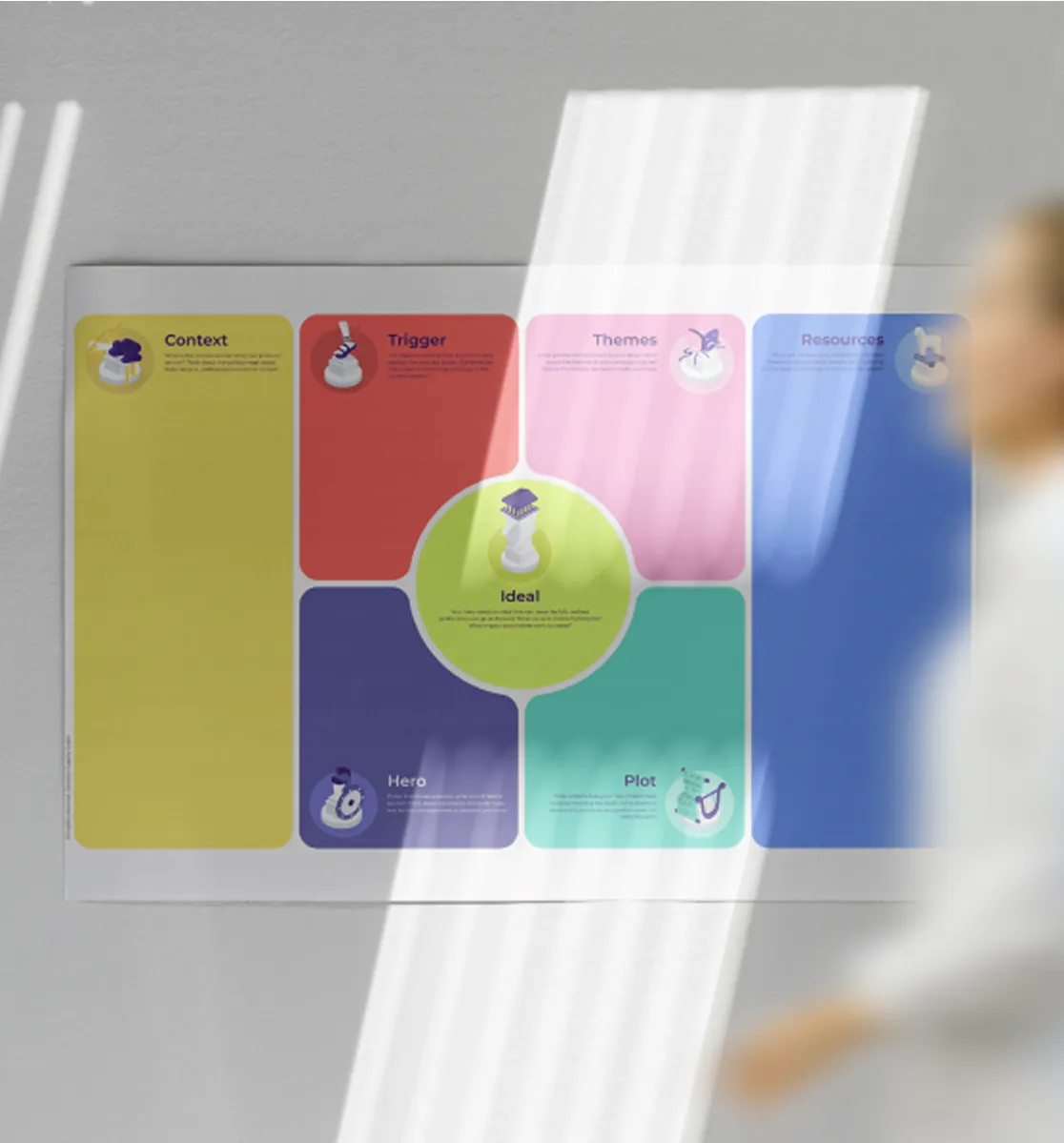
The Brand Story Canvas — Strategic Tool for Storytelling
Craft powerful brand stories with our Brand Story Canvas. Trusted by HEC Paris, EPFL & ESSEC, it guides you through 7 steps to an engaging, authentic narrative.
BIS Publishers | Convivial Toolbox
This book introduces an emerging domain of design research that is of immense interest today: Generative design research. This is an approach to bring ...
Read the Principles — Design Justice Network
Design mediates so much of our realities and has tremendous impact on our lives, yet very few of us participate in design processes. In particular, the people who are most adversely affected by design decisions — about visual culture, new technologies, the planning of our communities, or the structure of our political and economic systems — tend to have the least influence on those decisions and how they are made.

Inside Design Tokens: Modeling & Communication
Design system architecture with focus on design tokens, that form the vocabulary of your visual design language, helping to streamline the communication amongst stakeholders. Modeling the system with boundaries to ensure clear purpose and predictability for design tokens and stability guarantees wit
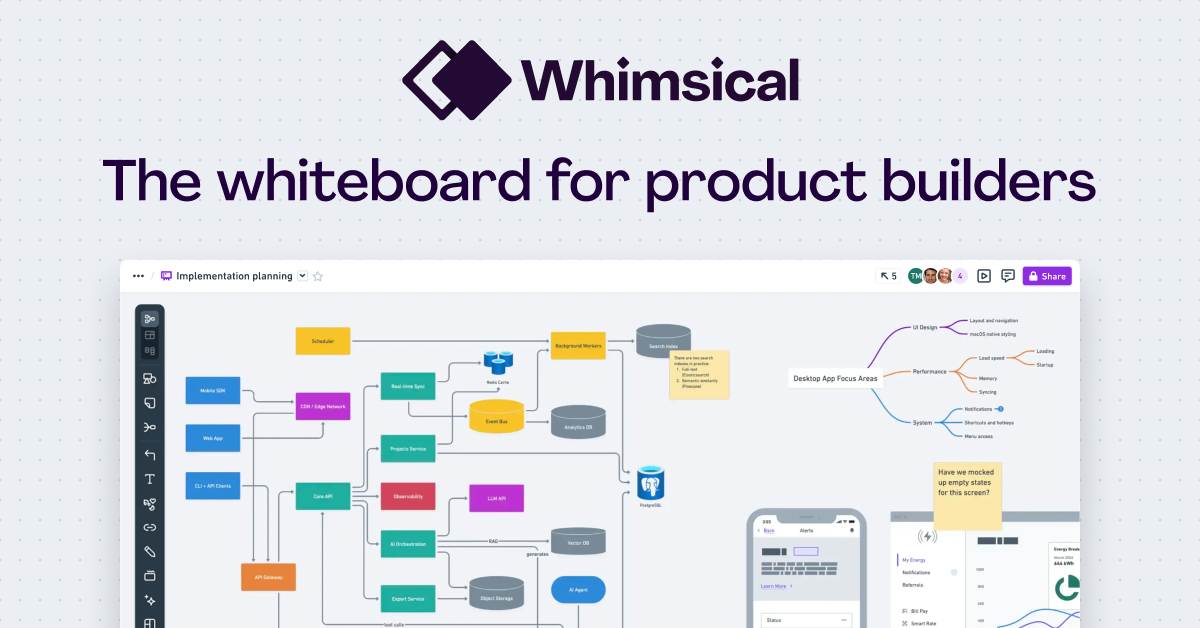
Whimsical — The whiteboard for product builders
Design and document implementation with diagrams. Shape UI with wireframes. Collaborate with your team and AI.

Semble Product Inspiration

Products we take design, functionality or organizational inspiration from for semble

Elicit: AI for scientific research

Alerts | Elicit: Al for scientific research

Embed Bsky
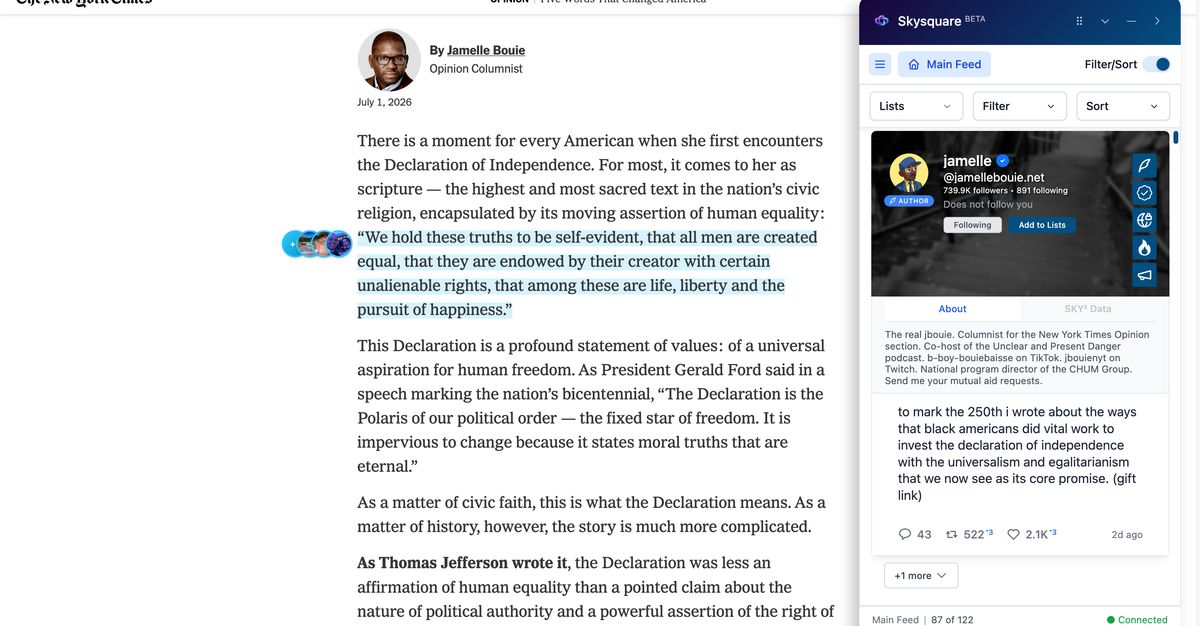
Skysquare — Public conversation, anchored to the web

alphaXiv
Hark, a link blog! - Boris Mann Tech Blog