


The unsung hero of music production, Burgess has been there or thereabouts in just about every major innovation of the last 50 years…
First recording of computer-generated music – created by Alan Turing – restored
Researchers restore 1951 recording generated on machine built by computer scientist famous for breaking Enigma code

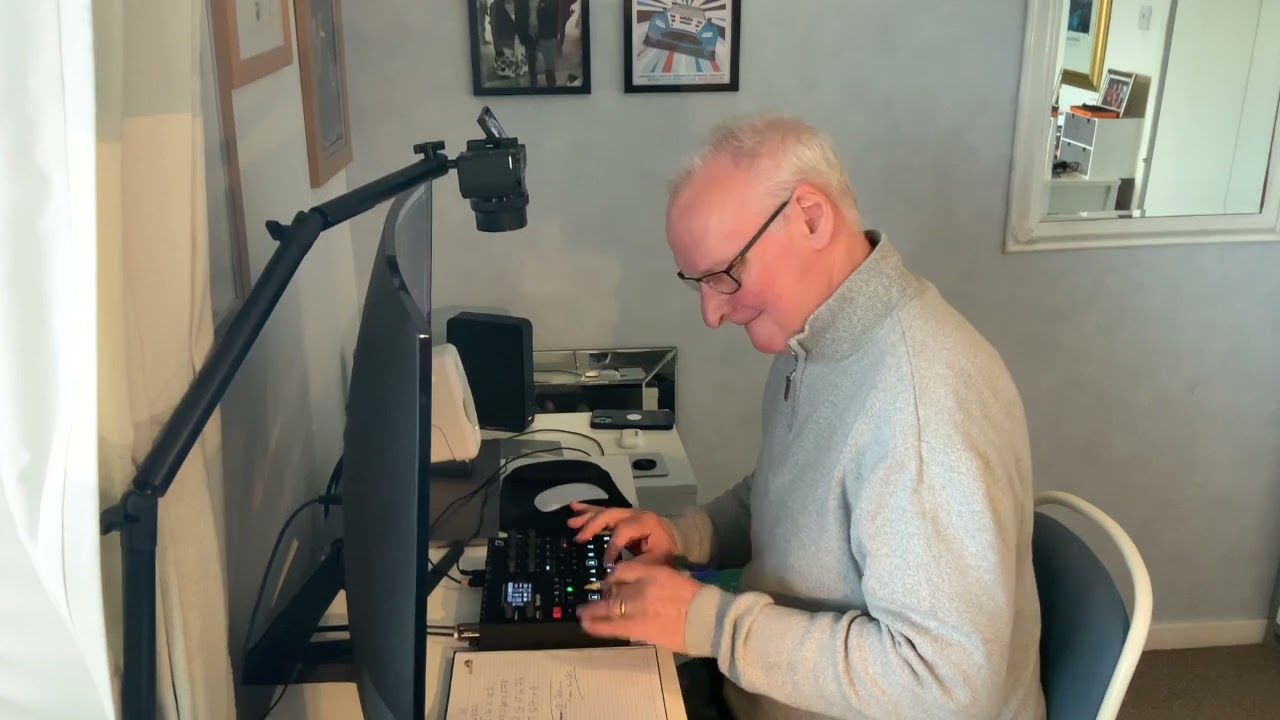
"Last night I got an email from someone who said 'I'm 46, is it okay to start producing music?' I said 'yes, start now!'": How a 67-year-old pensioner went viral performing industrial techno at home
What started as a post-retirement hobby has led The Last DJ to runaway success and his first gig in 40 years. Now he's on a mission to inspire others to do the same
Computer: A History of the Information Machine
Computer: A History of the Information Machine is a history of computing written by Martin Campbell-Kelly and William Aspray first published in 1996. It follows the history of "information machines" from Charles Babbage's difference engine through Herman Hollerith's tabulating machines to the invention of the modern electronic digital computer. A revised 2nd edition published in 2004 included new material on the Internet and World Wide Web, while the updated 3rd edition published in 2013 includes contributions from historians Nathan Ensmenger and Jeffrey Yost. The 3rd edition extends the story to include recent phenomena such as social networking and revises the discussion of early history to reflect new insights from the literature.

Humanities in the Machine - Blain Smith
There is something quietly remarkable about the people who built the foundations of modern computing. Not their technical achievements, though those are extraordinary. What is remarkable is where they came from before they ever touched a machine.
Matt Webb
I have worked with some of the world’s largest firms on design-led product invention using new technology for over 20 years. I was MD of two London startup accelerators with R/GA Ventures, and co-founder and CEO of pioneering design studio BERG, where we shipped connected products and got work into the New York MoMA.
The Mythos of the Electronic Revolution
JAMES W. CAREY, JOHN J. QUIRK, The Mythos of the Electronic Revolution, The American Scholar, Vol. 39, No. 3 (Summer, 1970), pp. 395-424
Graham Fleming | Software & Hardware Engineer
The Human Co-Pilot for Early-Stage Founders. Expert software & hardware engineer specializing in Next.js, AI integration, scaling infrastructure, and fixing tech debt.
Jimi Hendrix Was a Systems Engineer
How did Jimi Hendrix turn his guitar into a wave synthesizer? Dive into the engineering behind his iconic sound.

The Mythos of the Electronic Revolution
JAMES W. CAREY, JOHN J. QUIRK, The Mythos of the Electronic Revolution, The American Scholar, Vol. 39, No. 2 (Spring, 1970), pp. 219-241
Ross Wintle - Curious and Creative Software Developer - Ross Wintle
LLMs are not just machines. They are machine-building machines! This comes with way more responsibility. And understanding it may change how you use them.

The Knowledge Ecology
The important thing here is that the music is not in the piano. And knowledge and edification is not in the computer. The computer is simply an instrument whose music is ideas. Yes? No? Yes-no-yes-no-yes-no.
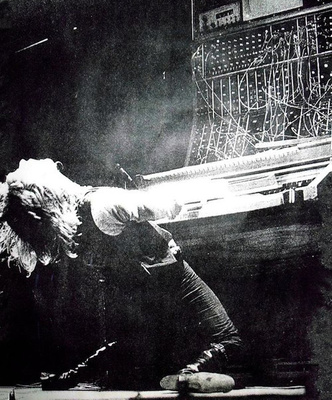
Rise of the Synthesizer: How an Electronics Whiz Kid Gave the 1980s Its Signature Sound
In the summer of 1970, after popping into a pub for a pint, rock keyboardist Keith Emerson sat down at his enormous Moog modular synthesizer in London’s...
50 Years Later, We Still Don't Grasp the Mother of All Demos
Doug Engelbart didn't just want to show off new technology. He wanted to demonstrate a system for improving humanity.

Has AI Changed Work Forever? Not Really... | Cal Newport
Stuart K. Card and Thomas P. Moran, "User Technology—From Pointing to Pondering"
Jeff Mills Drifts Into the Cosmos
AI is the latest of a long succession of tools trying to make things easier for us, and it’s always been there, and it’s always affected the music. Maybe we didn’t fear as much, but musicians just have to be more creative and to be more elusive.
