


Science, technology, engineering, and mathematics (STEM) live in the American imagination as promising tools for solving pressing global challenges and enhancing quality of life. Despite the importance of the STEM disciplines in the landscape of U.S. political, economic, and social priorities, STEM learning opportunities are unevenly distributed, and the experiences an individual has in STEM education are likely to vary tremendously based on their race, ethnicity, socio-economic class, gender, and a myriad of other factors. Equity in K-12 STEM Education: Framing Decisions for the Future approaches equity in STEM education not as a singular goal but as an ongoing process that requires intentional decision-making and action toward addressing and disrupting existing inequities and envisioning a more just future. Stakeholders at all levels of the education system - including state, district, and school leaders and classroom teachers - have roles as decision-makers who can advance equity. This consensus study report provides five equity frames as a guide to help decision-makers articulate short- and long-term goals for equity and make decisions about policy and practice.
Seven Theses Against Viewpoint Diversity
Demands for “viewpoint diversity,” a pillar of the Right’s strategy to remake higher education, collide with the pursuit of truth.

Women in STEM Program - Henry Luce Foundation
Through the Clare Boothe Luce Program for Women in STEM and STEM Convergence, we aspire to close the gender gap in the field, broaden the participation of women from diverse backgrounds, and advance women-led STEM innovation for positive social change.
OPT Reforms and the Relative Supply of STEM Skills
Since the late 2000s, reforms to the optional practical training (OPT) program have allowed international STEM graduates to work in the United States for up to three years after graduation. We study how these reforms affected the supply of STEM skills in the United States. Exploiting the staggered 2008, 2011, 2012, and 2016 STEM-OPT expansions, we find that OPT reforms increased STEM degree completions by 14–15 percent, with gains evident at the bachelor’s and master’s levels. Domestic completions increased as well, suggesting that OPT expansions may have crowded in domestic STEM students rather than crowding them out.
OPT Reforms and the Relative Supply of STEM Skills
Since the late 2000s, reforms to the optional practical training (OPT) program have allowed international STEM graduates to work in the United States for up to three years after graduation. We study how these reforms affected the supply of STEM skills in the United States. Exploiting the staggered 2008, 2011, 2012, and 2016 STEM-OPT expansions, we find that OPT reforms increased STEM degree completions by 14–15 percent, with gains evident at the bachelor’s and master’s levels. Domestic completions increased as well, suggesting that OPT expansions may have crowded in domestic STEM students rather than crowding them out.
This is how we build the future: Teaching Regenerative Economics at all levels with Jennifer Brandsberg-Engelmann
How do we let go of the sense of scarcity, separation and powerlessness that defines the ways we live, care and do business together? How can we best equip our young people for the world that is coming - which is so, so different from the future we grew up believing was possible?

Foundational research — Passing the Message Stick
We can build widespread support for self-determination and justice when we lead with our strength and solutions.

Contextualizing the 2024 Election: It's the (Knowledge) Economy, Stupid
The urban v. rural divide, the gender divide and the diploma divide are all proxies for the most fundamental division in contemporary U.S. politics

Developing Competencies for the Future of Data and Computing: The Role of K-12
Skills in computing and data are critical for students to thrive in a data-driven world. While efforts to expand learning in these areas have grown, opportunities to participate are unevenly distributed and lack coherence across grades and subjects. Our new report identifies seven shared competencies for data and computing and how they align with existing STEM standards and classroom practice. Through addressing curriculum, teacher preparation, professional learning, technology access, assessment, and system-level coordination, the report calls for sustained, coordinated action to ensure that all students have meaningful opportunities to develop literacy in data and computing.
Center for Educational Progress | CEP | Substack
A think tank centered on orienting education toward a culture of excellence. Click to read Center for Educational Progress, a Substack publication with thousands of subscribers.
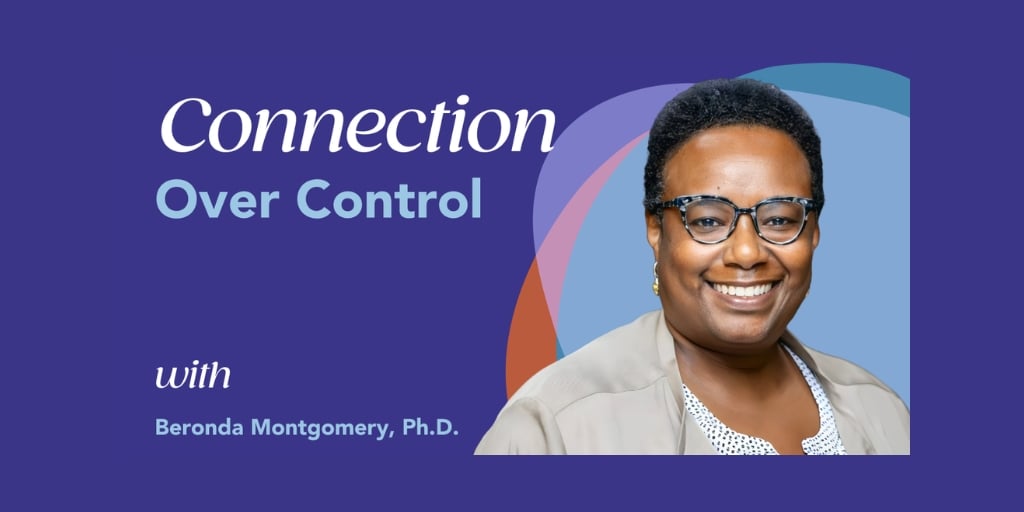
How to Break the Academic Silo Mindset - The Community Solution Education System
What’s stopping higher education from reaching its full potential? In this episode of Radical Cooperation, Dr. Michael Horowitz sits down with Dr. Beronda Montgomery—biologist, author of Lessons from Plants, and former Vice President for Academic Affairs and Dean at Grinnell College—to unpack why silos persist in colleges and universities, and how those divisions hold institutions […]
Transforming Curriculum and Building Capacity in K–12 Data Science Education · Issue 4.4, Fall 2022
The recently released and updated Pre-K–12 Guidelines for Assessment and Instruction in Statistics Education (GAISE II; Bargagliotti et al., 2020) provides guidance as to how teachers can support the development of data literacy for all students in the pre-K–12 curriculum. However, to truly meet the vision of the GAISE II report and to support all students in developing data literacy for today’s societies, significant transformations need to be made to the educational system as a whole to build capacity for such development. In this article we discuss the current state of the K–12 curriculum focusing on the mathematics curriculum where statistics and data concepts are most frequently situated, presenting some challenges and exciting examples. We then discuss areas of need for capacity building that must come at all levels, including: K–12 school curriculum, K–12 teacher professional development, K–12 teacher preparation, statistics and data science education research, and policies. We also provide a set of recommendations for building capacity to develop the data literacy of all students through the teaching of data science and statistics concepts and practices in the K–12 mathematics curriculum to support democratic equity through engaged citizenship.

Standardized Education | The Paper Pilot
The Paper Pilot's digital garden of thoughts on philosophy, politics, and sociology
Diversity, equity and inclusion
I'm in favour of diversity, equity and inclusion in open source communities, and here's why I think it matters.

Equity for Europeans
Equity combines legal fairness, ownership, and upside in one everyday concept.

Shifting the Level of Selection in Science
Criteria for recognizing and rewarding scientists primarily focus on individual contributions. This creates a conflict between what is best for scientists’ careers and what is best for science. In this article, we show how the theory of multilevel selection provides conceptual tools for modifying incentives to better align individual and collective interests. A core principle is the need to account for indirect effects by shifting the level at which selection operates from individuals to the groups in which individuals are embedded. This principle is used in several fields to improve collective outcomes, including animal husbandry, team sports, and professional organizations. Shifting the level of selection has the potential to ameliorate several problems in contemporary science, including accounting for scientists’ diverse contributions to knowledge generation, reducing individual-level competition, and promoting specialization and team science. We discuss the difficulties associated with shifting the level of selection and outline directions for future development in this domain.

A large gender gap persists in STEM disciplines across the world that is bad for innovation, talent attraction & against fairness principles. On International Day of Women and Girls in Science, @ansolassen.bsky.social @cairosofie.bsky.social @valentinatartari.bsky.social are sharing our findings ⬇️
