


Convened by the National Academies’ Action Collaborative on Education and Workforce Trajectories in Tech, The Impact of Artificial Intelligence on Education and Workforce Trajectories in Tech is a one-day exploratory workshop examining how AI is altering the value of human expertise, organizational workforce structures, and career pathways in the tech sector. Bringing together leaders from higher education, industry, and research institutions, discussions will consider how education and workforce systems can prepare individuals with the ethical, technical, and analytical capabilities needed to adapt and thrive in an AI-impacted landscape.
AI in the workplace vs. AI in education
Quoting Dan Willingham: Students should only use AI for things that they already know how to do well.
PhD students who write dissertation with AI less likely to stay in academia
US PhD graduates who used artificial intelligence were more likely to work in industry.

What do professional software developers need to know to succeed in an age of Artificial Intelligence?
Generative AI is showing early evidence of productivity gains for software developers, but concerns persist regarding workforce disruption and deskilling. We describe our research with 21 developers at the cutting edge of using AI, summarizing 12 of their work goals we uncovered, together with 75 associated tasks and the skills & knowledge for each, illustrating how developers use AI at work. From all of these, we distilled our findings in the form of 5 insights. We found that the skills & knowledge to be a successful AI-enhanced developer are organized into four domains (using Generative AI effectively, core software engineering, adjacent engineering, and adjacent non-engineering) deployed at critical junctures throughout a 6-step task workflow. In order to "future proof" developers for this age of AI, on-the-job learning initiatives and computer science degree programs will need to target both "soft" skills and the technical skills & knowledge in all four domains to reskill, upskill and safeguard against deskilling.

Artificial intelligence, cognitive offloading and implications for education
This report investigates the challenge driven by the rapidly expanding use of artificial intelligence (AI) in schooling: the risk that students will outsource too much of the cognitive work that is crucial to establishing knowledge, skill and ‘thinking infrastructure’. The report includes specific recommendations for policy and teaching and learning strategies.
AI Economy Institute - Microsoft Research
The AI Economy Institute (AIEI) is Microsoft’s flagship think tank dedicated to shaping an inclusive, trustworthy AI economy. We building a network of scholars and convening that network with our subject matter experts to explore how artificial intelligence is transforming work, education, and productivity – and making this knowledge base available to policy-makers, educators, and […]


Is AI ruining our skills? Early results are in — and they’re not good
Reliance on artificial-intelligence tools degrades the abilities of physicians and software engineers, studies show.

Bridging the gap: inequalities that divide those who can and cannot create sustainable outcomes with AI
The widespread use of AI technologies impacts individuals, organisations, and societies in ways that warrant more comprehensive investigation. Inequalities in benefiting from AI advancements may le...
AI’s Next Chapter Requires Human Expertise
The future of AI doesn’t just require technical skills; it demands deep human expertise, writes Annie K. Lamar.
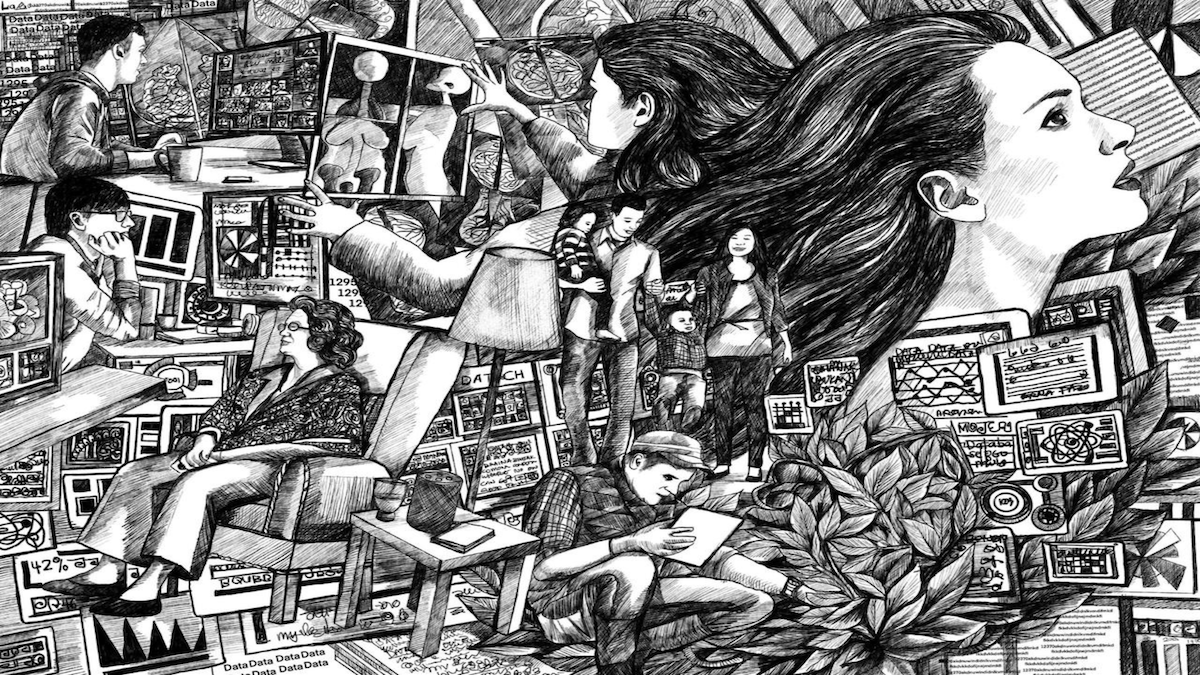
AI Gender Pay Gap - Emerging Tech - I by IMD
As AI investment grows, unequal access to emerging tech skills is widening the AI gender pay gap. New research shows how organisations can reverse it.

Can the adoption of AI technology widen the gender gap in science? postdocs' use of AI technology
There is a known gender gap in science. Some studies suggest that this gap is decreasing, others that it is not. Although many studies have been conducted on gender equity in science, none have yet focused on the possibility that generative artificial intelligence (AI), a technology that promises to revolutionize research and academic work can have on widening or narrowing the gender gap in science. Postdoctoral researchers are a particularly important population to study in this context, as they have already demonstrated scientific maturity and independence and are poised to become the next generation in science and academia. Thus, this paper focuses on the gendered use of AI technology by postdocs. By using data from the 2023 Nature Post-Doctoral Survey, this paper investigates how postdocs are adopting AI and whether the usage of AI technology is likely to affect the gender gap in science and academia. The results show that females are less engaged with AI than male postdocs by 34%. This disparity may put female researchers at a disadvantage, potentially causing the gender gap to increase or be maintained. The study also reveals variations in AI adoption within gender groups. Younger female postdocs tend to use AI more than their older counterparts. Compared to female postdocs without promising job opportunities, those with good job prospects tend to use AI more frequently. Additionally, female postdocs working outside their native country are more engaged with AI than those working within their native country. For male postdocs, the results indicate that employment is an important factor in AI adoption. Regardless of age, male postdocs tend to use AI as part of their postdoc: they start using it once they begin their postdocs positions and use it more if they are satisfied with their postdoctoral experience.

How AI Is Fueling the Gender Pay Gap in Tech
A new Wharton study finds that too few women are working with emerging tech, and that exclusion is driving a growing divide in pay.

AI as the Catalyst of the New Paradigm of Science? | Cadmus Journal
The rapid advancement of Artificial Intelligence (AI) is reshaping the landscape of scientific inquiry. This article examines the challenges confronting modern science, including knowledge fragmentation, diminishing returns of current paradigms, and the disconnect between science and society. It explores how AI offers solutions enhancing collaboration and integrating knowledge—as well as considers the possible “darker side” of using AI in research. However, the advent of AI in science not only enhances scientific research but also redefines the role of human researchers and fosters a new paradigm of human understanding. By embracing these transformations, a more cohesive and responsive scientific enterprise can emerge.
The real AI economy is being built by ordinary people
Far from Silicon Valley pitch decks, workers across Asia and Africa are bypassing tech industry hype to quietly rewire their daily jobs — one prompt, workflow, and local problem at a time.

A Collectivist, Economic Perspective on AI
Information technology is in the midst of a revolution in which omnipresent data collection and machine learning are impacting the human world as never before. The word ``intelligence'' is being...
The AI Roles Continuum: Blurring the Boundary Between Research and...
The rapid scaling of deep neural networks and large language models has collapsed the once-clear divide between "research" and "engineering" in AI organizations. Drawing on a qualitative synthesis...