

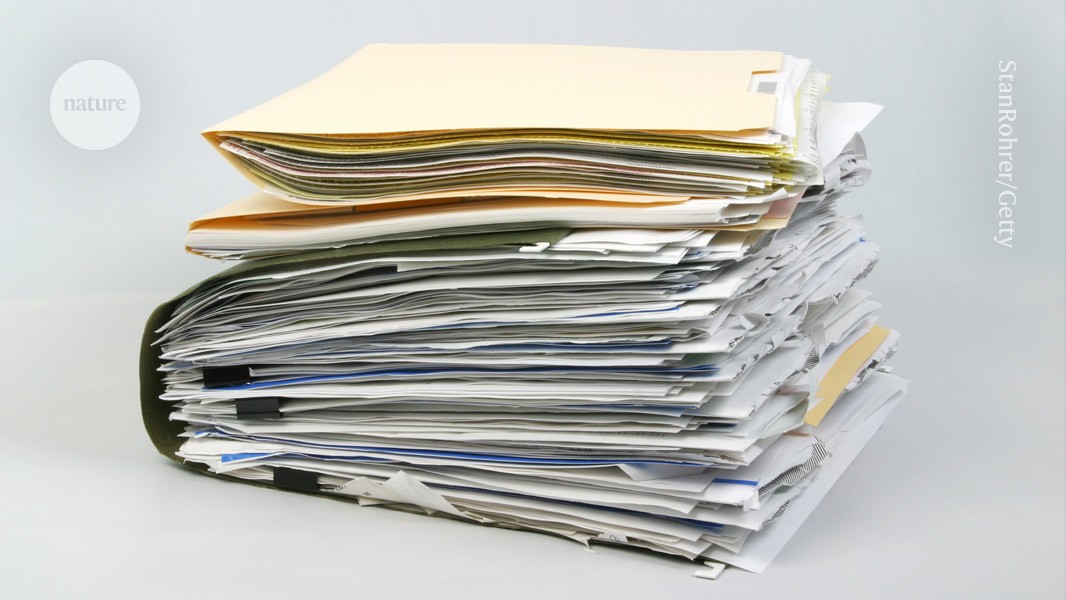
A hefty paper published in Nature has raised the question of whether data-dense research tomes can still be digestible.
Paperstars
A better way to evaluate scientific papers. Methodological soundness and transparency, not citation counts.
Are Scientific Papers Bad?
The new way we’ll do science
Papers should become human-readable views over a graph of data, tools, results, and certificates.
The Micro-Paper: Towards cheaper, citable research ideas and conversations
Academic, peer-reviewed short papers are a common way to present a late-breaking work to the academic community that outlines preliminary findings, research ideas, and novel conversations. By comparison, blogging or writing posts on social media are an unstructured and open way to discuss ideas and start new conversations. Both have limitations in the proliferation of research ideas. The short paper format relies on the conference and journal submission process while blogging does not operate within a structured format or set of expectations at all. However, at times the demand exists for late-breaking ideas and conversations to arise in a raw form or with urgency but should still be archived and recorded in a way that promotes citational honesty and integrity. To address this, I present: The Micro-Paper, as a micro-paper itself. The Micro-Paper is a small, cheap, accessible, digital document that is self-published and archived, akin to a pre-print of a short paper. This meta micro-paper discusses the context, goals, and considerations of micro-paper authoring.

The Bazaar of Scientific Knowledge | shishyko!
Is the current form of the scientific paper still optimal in 2025? How do we preserve, and efficiently leverage, the uncut gems of the scientific process?
Standard Paper — Independent writing, beautifully read
Discover articles from across the atmosphere, gathered in one place for focused reading.

Standard Paper — Independent writing, beautifully read
Discover articles from across the atmosphere, gathered in one place for focused reading.
A protocol for attributable modular research contribution - Matsuthoughts
I wrote this essay in response to Seemay Chou's call for essays on systemic bottlenecks to science. Structural change in scholarly communication practices i…
#predictingthefuture #newfutureofwork | Jaime Teevan
🌱 Prediction: Knowledge will outgrow publication. We’re already seeing academic publication start to buckle under AI, sometimes absurdly. I still publish research more or less the way Darwin did. I run a study, write it up, a few other scientists check it over, and the result gets filed away as a document with my name on the front. Faster than Darwin, with better figures, but the same basic shape. I predict that shape won’t last another decade. Academic authors are starting to slip hidden instructions into papers to flatter the AI that might review them. Reviewers are spending time checking whether citations exist or were hallucinated. Researchers asking AI to tell them about a paper instead of reading it directly. These are signs that the creation of new knowledge is outgrowing the articles that used to contain it. An academic paper serves many purposes at once. It makes an argument legible. It lets strangers check one's reasoning. It assigns credit and responsibility. It records who knew what and when. A paper was the only container we had for these different jobs, so it carried all of them together. With AI, they can be separated. My guess is that means the unit of publication will get smaller. Much of my research has focused on microproductivity, developing the idea that large accomplishments can be built from many small contributions. Publication will start to become a form of microproductivity. Instead of holding onto a result until it can be wrapped in a narrative large enough to justify a paper, researchers will publish it the moment it’s solid. Each finding, method, or negative result will be citable and carry its own provenance, so credit and reasoning travel with it. Reviewing will shrink to match, so claims get checked as they’re made instead of in one verdict at the end. But more than changing publication, the deeper change will be to how research itself is done. You may have heard the term “compound engineering,” where every bug fixed, evaluation written, workflow documented, or lesson learned becomes part of the system’s memory. I predict we’re about to see “compound science,” where every experiment, evaluation, insight, artifact, and learned capability becomes a reusable asset for future discovery. Findings will become evidence. Methods will become building blocks. Failed approaches will become constraints. For centuries, science has relied on humans to navigate an ever-growing body of knowledge. Soon that body of knowledge will help navigate itself. Scientists will spend less time searching for hypotheses and more time deciding which opportunities to pursue. AI systems will propose explanations, design experiments, run analyses, and explore many possibilities in parallel. Every discovery will become a part of the machinery that produces the next one. Papers ten years from now will look less like my current papers than my current papers look like Darwin’s. If they exist at all. #PredictingTheFuture #NewFutureOfWork

Who's downloading pirated papers? Everyone
Data from the controversial website Sci-Hub reveal that the whole world turns to it for journal articles.

Scientific production in the era of Large Language Models
Large Language Models (LLMs) are rapidly reshaping scientific research. We analyze these changes in multiple, large-scale datasets with 2.1M preprints, 28K peer review reports, and 246M online accesses to scientific documents. We find: 1) scientists adopting LLMs to draft manuscripts demonstrate a large increase in paper production, ranging from 23.7-89.3% depending on scientific field and author background, 2) LLM use has reversed the relationship between writing complexity and paper quality, leading to an influx of manuscripts that are linguistically complex but substantively underwhelming, and 3) LLM adopters access and cite more diverse prior work, including books and younger, less-cited documents. These findings highlight a stunning shift in scientific production that will likely require a change in how journals, funding agencies, and tenure committees evaluate scientific works.
datasetpapers — a public research experiment
An experimental approach to versioned, forkable, machine-readable analyses. A prototype, not a product or service.
datasetpapers — a public research experiment
An experimental approach to versioned, forkable, machine-readable analyses. A prototype, not a product or service.
It’s time to get rid of the peer-reviewed paper
The peer-reviewed journal article, perhaps the single most important device behind the expansion of scientific knowledge in the last century, is an extraordinarily expensive way to share novelty: e…

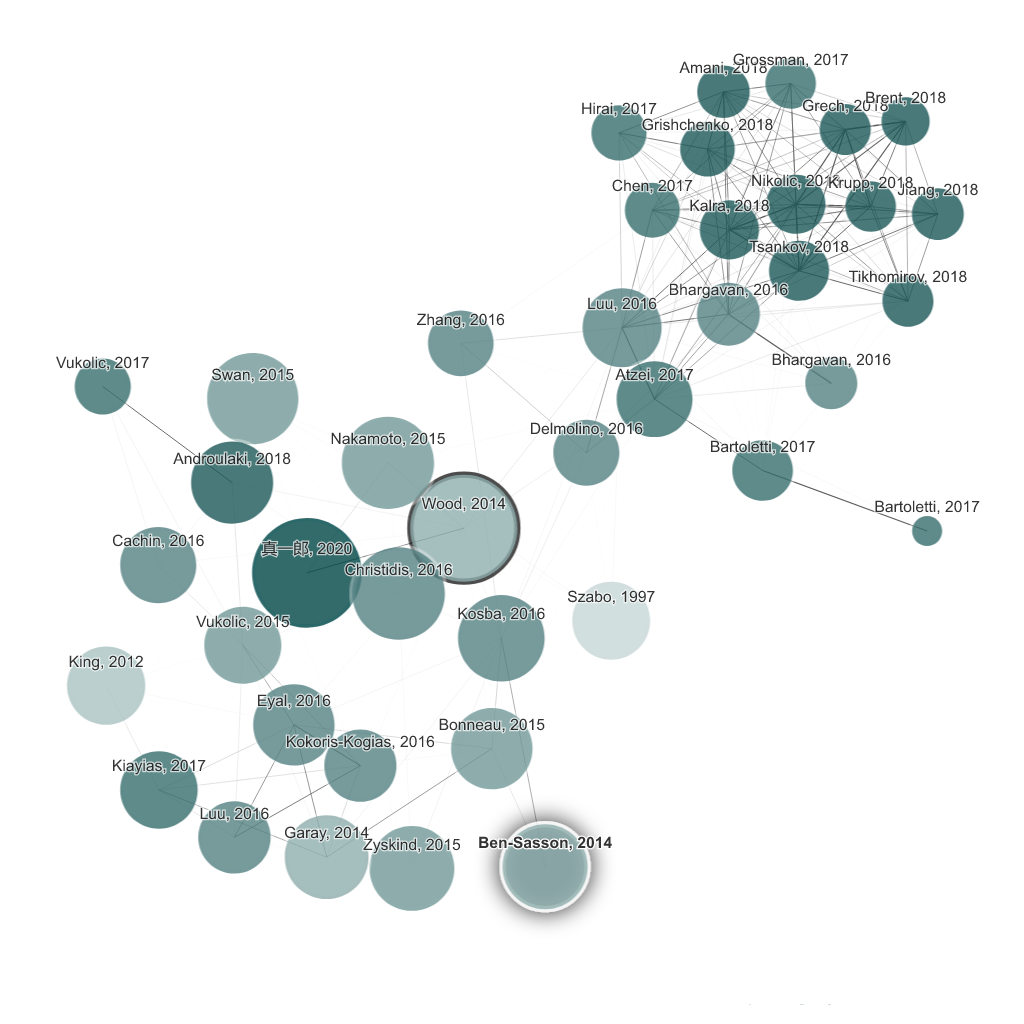
Connected Papers | Find and explore academic papers
A unique, visual tool to help researchers and applied scientists find and explore papers relevant to their field of work.
James then uses probably the biggest overinflator here: papermills. Papermills are like a bogeyman of #ScientificPublishing. Today, if you want to raise alarm about a paper (or besmirch someone you don't like, it really goes both ways), you can just claim the study comes from a papermill /22
