The world needs non-fossil sources of carbon. It’s a no-brainer for nations working towards this goal to join forces.
The geopolitical fight to come over green energy
The struggle for sustainable energy will soon put China, the US and Europe on a geopolitical collision course. But moving away from fossil fuels is a Herculean task, and a greener politics will not transcend tragedy.
Cleaning up a coal-fired mess
China’s green-industrial complex makes deep decarbonisation possible, but far from inevitable

The Death of the Carbon Coalition
Existing models of U.S. politics are wrong. Here’s how the system really works.

The growing Brics divide between carbon nations and electrostates
Energy systems can shape political institutions and make some nations more vulnerable to trade wars than others

Carbon Captured
How the fossil fuel industry turned the plan to solve climate change into a plan to save itself

China’s Shift to Clean Energy Is Saving the Paris Climate Accord
Beijing’s massive manufacturing investments have driven the costs of clean energy down.

The New Geopolitics Of The Green Transition
The only path forward for tackling the climate crisis hinges on cooperative industrial strategies to coordinate clean energy investment and infrastructure development.
China Is The World's First Electrostate - CleanTechnica
Carbon emissions in China fell slightly int he first quarter of 2025 as more renewable energy and storage came available.

Cycling like the Dutch would slash the world’s carbon footprint
If everybody cycled like the Dutch, we could offset the UK or Australia’s entire carbon footprint.

The world’s renewable-energy superpower
China’s moment for climate leadership has arrived

Europe must choose between AI and climate goals, data center lobby says
Tech sector says only carbon-emitting gas plants are reliable enough today to power the EU’s AI goals.

Le paradoxe de la mondialisation de la Chine
Traduction française du billet de blog "China’s globalisation paradox. How can China dominate abroad while becoming less export-dependent?" de Richard

Why unilateral decarbonisation can pay for itself
Anthropogenic greenhouse gas emissions are rapidly warming our planet, with potentially severe economic, social, and health consequences. Conventional estimates of climate damages suggest that while coordinated global efforts are desirable, unilateral action is rarely cost-effective due to a classic free-rider problem. Why should a country bear the costs of reducing emissions when the benefits are shared globally? This column re-evaluates this view in light of new climate damage estimates based on global temperature variation, showing that the economic case for unilateral decarbonisation is far stronger than previously thought.

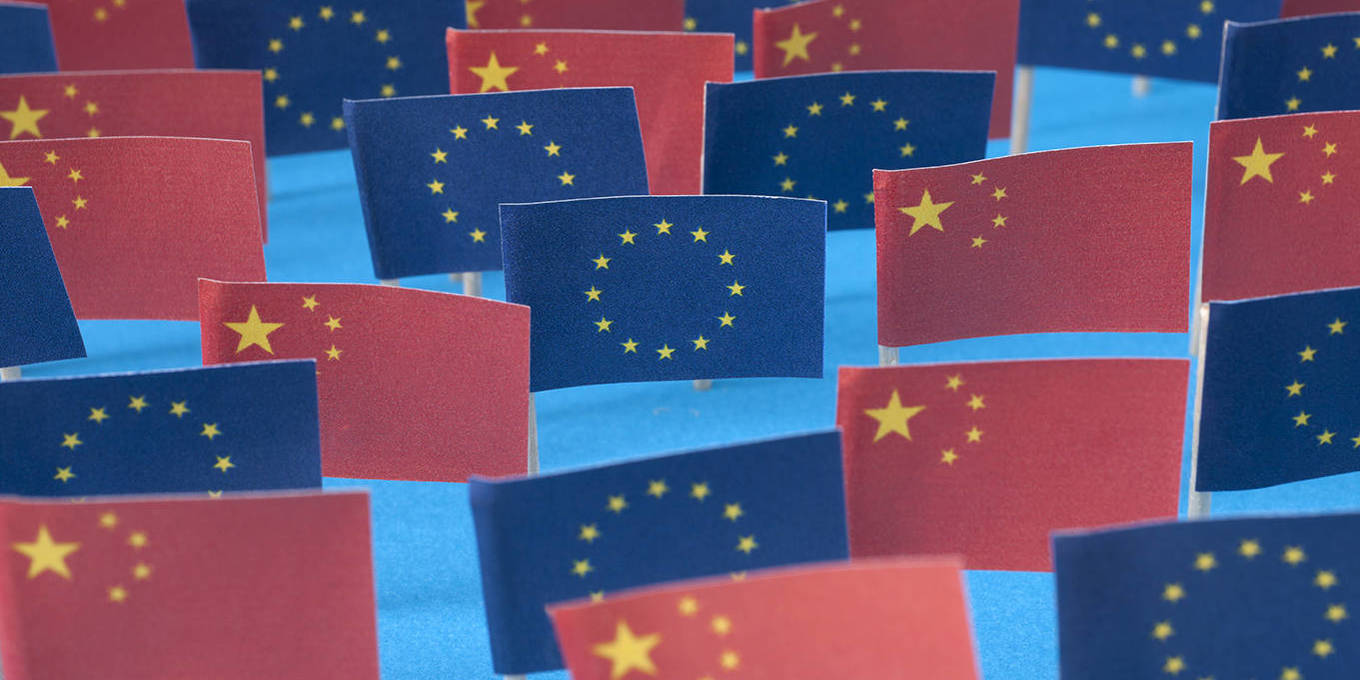
The Case for a European-Chinese Green Pact
Jean Pisani-Ferry & Beatrice Weder di Mauro think both sides have much to gain from pursuing closer economic ties through clean energy and technology.
Green economic planning as ‘directed entanglement’
Sustainability transformations depend on ambitious state action. We propose green economic planning as a framework for states to set ambitious climate plans and ensure policy coherence across three dimensions: inputs (sources of information, planning directors, and political regimes), processes (technical expertise and political negotiation), and outputs (monetary-financial, fiscal, and state ownership strategies). To capture how green economic planning works across democratic and authoritarian institutions, we conducted a comparative case study of three countries. France’s intersectoral non-green and Denmark’s sectoral green planning covers democratic institutions, while China’s intersectoral green planning covers authoritarian institutions. Through these cases, we show that 1) green economic planning is both feasible and adaptable across diverse political economies, 2) effective planning requires balancing decentralized information flow with strong central coordination, 3) successful planning depends on managing tensions between autonomous planning agencies, market discipline, and long-term political legitimacy. We term this ‘directed entanglement,’ positioning it as a cornerstone for the emerging research agenda on green economic planning—a blueprint for navigating the use of the state to steer a green transition under capitalism.n analytical framework of elite and resistant imaginaries to trace how these actors construct competing futures of platform labour in EU regulation. These imaginaries transpire in response to the reorganisation of labour relations amidst the digital transformation of socioeconomic institutions. They reveal how platform infrastructures challenge institutional boundaries and reshape the governance of work in the EU. Through a qualitative methodology that combines critical thematic and discourse analysis of stakeholder submissions, the study investigates the frictions that transpire when elite and resistant imaginaries encounter one another. The inductive framework of ‘elite’ and ‘resistant’ imaginaries of platform work illuminates the strategic negotiation of categories and its evolution throughout the policymaking process. The research contributes to scholarship on digital labour and the governance of platforms and algorithmic systems within the EU by offering a critical communications account of how competing imaginaries interact within the regulatory infrastructures of the digital economy. The central empirical contribution of the project lies in re-situating regulatory arbitrage through the analytical lens of elite/resistant imaginaries and discursive friction. The analysis demonstrates how BusinessEurope takes advantage of longstanding techniques of regulatory escape, such as burden shifting and legal fragmentation, and combines them with the systemic structural asymmetries within the European single market to incentivise lenience for platform self-governance models and soft law (Scharpf, 1999). By analysing digital transformation and status classification, the thesis demonstrates how the future of the platform labour economy is co-constructed through frictions that culminate in a sophisticated arbitrage strategy, organised around the ontological construction of the platform as an ‘intermediary’ (Gillespie, 2010). The next chapter discusses the conceptual map of regulatory arbitrage in the PWD as a critical output of the research and considers the limitations of this project, and the future trajectory of trade union discourse on platform work.
The future is made of energy | Orca Notes
A megatrend way bigger than decarbonization is probably the key to abundance and sustainability both.