


Results from massive, ‘eagerly awaited’ initiative reinforce concerns about the credibility of science — but raise hope for solutions.
Publication bias in the social sciences: Unlocking the file drawer
The file drawer is full. Should we worry? Experiments that produce null results face a higher barrier to publication than those that yield statistically significant differences. Whether this is a problem depends on how many null but otherwise valid results might be trapped in the file drawer. Franco et al. use a Time-sharing Experiments in the Social Sciences archive of nearly 250 peer-reviewed proposals of social science experiments conducted on nationally representative samples. They find that only 10 out of 48 null results were published, whereas 56 out of 91 studies with strongly significant results made it into a journal. Science , this issue p. 1502 , Fully half of peer-reviewed and implemented social science experiments are not published. , We studied publication bias in the social sciences by analyzing a known population of conducted studies—221 in total—in which there is a full accounting of what is published and unpublished. We leveraged Time-sharing Experiments in the Social Sciences (TESS), a National Science Foundation–sponsored program in which researchers propose survey-based experiments to be run on representative samples of American adults. Because TESS proposals undergo rigorous peer review, the studies in the sample all exceed a substantial quality threshold. Strong results are 40 percentage points more likely to be published than are null results and 60 percentage points more likely to be written up. We provide direct evidence of publication bias and identify the stage of research production at which publication bias occurs: Authors do not write up and submit null findings.

Science has been in a “replication crisis” for a decade. Have we learned anything?
Bad papers are still published. But some other things might be getting better.

Have people stopped trusting science? The data tell a surprising story
Some say there’s a global crisis of trust — but research reveals where the real problems lie.
New Studies: How Commercial Forces Make Science Less Reliable
Computational social science has been distorted by commercial forces, and AI is making it worse.

Nova Scotia’s Experiment in Research That Solves Real Problems
Locally focused research investments enable coalitions of scientists and citizens to serve community needs.

Nova Scotia’s Experiment in Research That Solves Real Problems
Locally focused research investments enable coalitions of scientists and citizens to serve community needs.
Why we don’t really know what the public thinks about science
Measuring trust isn’t enough. Furthering knowledge about the institutions and norms of science is the best way to build credibility.
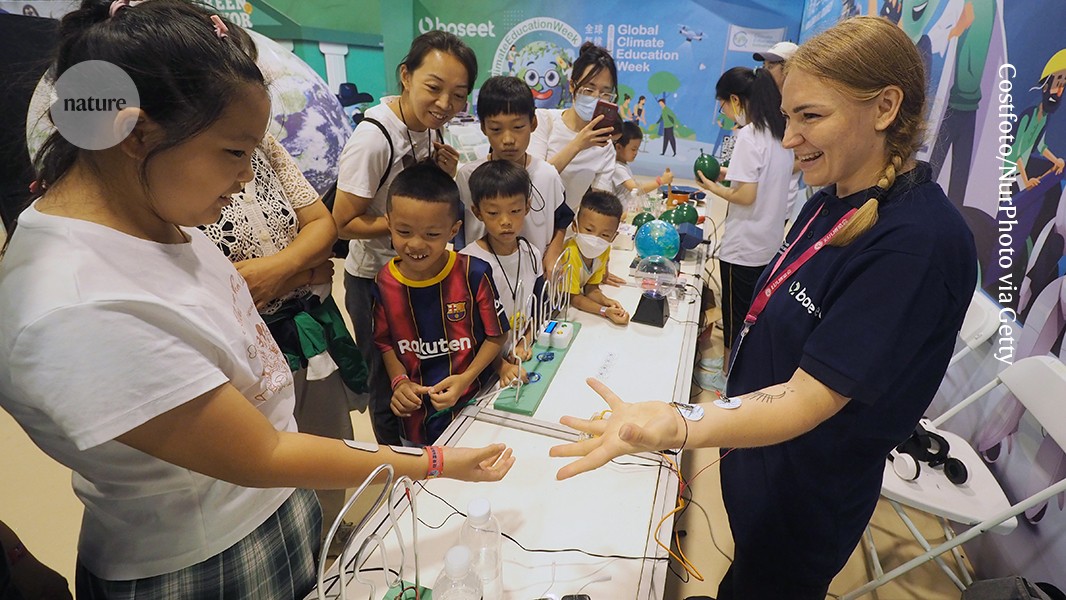
Andreas De Block on Twitter / X
It took Nature three years to publish this rebuttal, which clearly demonstrates the fundamental flaws in the original paper. In the meantime, the paper's conclusions influenced scientific debate and policy decisions. Such delays in correcting flawed research do real damage. https://t.co/QI3Ei3PE70— Andreas De Block (@DeblockBlock) August 13, 2026
Dark-Moneyed Denialists Are Running 'Fixing Science' Symposium of Doubt
The “Fixing Science” symposium, which is hosted by the National Association of Scholars and kicks off today in Oakland, California, includes credible speakers who want to improve some areas of science hurt by the use of poor statistical methods or making irreproducible claims. Unfortunately, they are outnumbered by people who have often cast doubt on mainstream climate, environmental, and health sciences. For […]
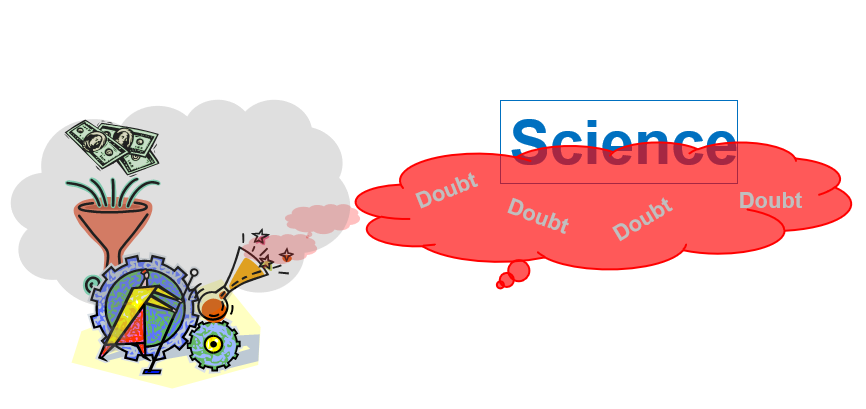
ReScience organization
Reproducible Science is good. Replicated Science is better. - ReScience organization

The natural selection of bad science
Abstract. Poor research design and data analysis encourage false-positive findings. Such poor methods persist despite perennial calls for improvement, sugg
How can citizen science reduce psychological distance to science? Insights from three projects in contested environmental contexts
Citizen science (CS) is a participatory mode of knowledge production, enabling non-scientific actors to contribute to and sometimes contest scientific agendas and interpretations, making it a way to bridge science and society. This paper examines how that potential unfolds by analysing the individual perspectives of citizen scientists through the lens of Psychological Distance to Science (PSYDISC). Drawing on three case studies of contested environmental CS, we identify which contextual aspects of CS shape citizen scientists' experiences of social, spatial, temporal, or hypothetical distance to relevant science, and how these experiences may relate to trust. Our findings underscore the role of science communication as both a channel for dissemination, and as a constitutive element of participatory research; crucial for reducing psychological distance and enabling socially robust knowledge production, especially in contested, policy-relevant science settings.
The one science reform we can all agree on, but we're too cowardly to do
OR: the long overdue forest fire
How times change! A decade ago, a failed replication of work by the same lab led to 'repligate' and blog posts such as psychol.cam.ac.uk/cece/blog Now, failed replications can be published an no one blinks an eye. That is progress due to all the scholars working hard to improve science!
Remarkable how over a decade ago @michaelnielsen.bsky.social pointed the way towards solving long standing issues plaguing science to this day (issues that are all the more relevant in the age of AI mediated science)

Ronen Tamari
This is why @atproto.science is so relevant rn This compilation of essays indicates that scientists are most frustrated by insufficient “community tools and resources... Essential infrastructure for sharing, maintaining and building on existing work and data is also badly underdeveloped." >
One of the issues that has come up again and again in my reporting on misinformation and social media is the massive influence social media companies have on research in the field. Last night a preprint dropped that tries to get at this with some numbers. My piece in @science.org (and 🧪🧵 coming):

Nearly a third of social media research has undisclosed ties to industry, preprint claims
www.science.org
