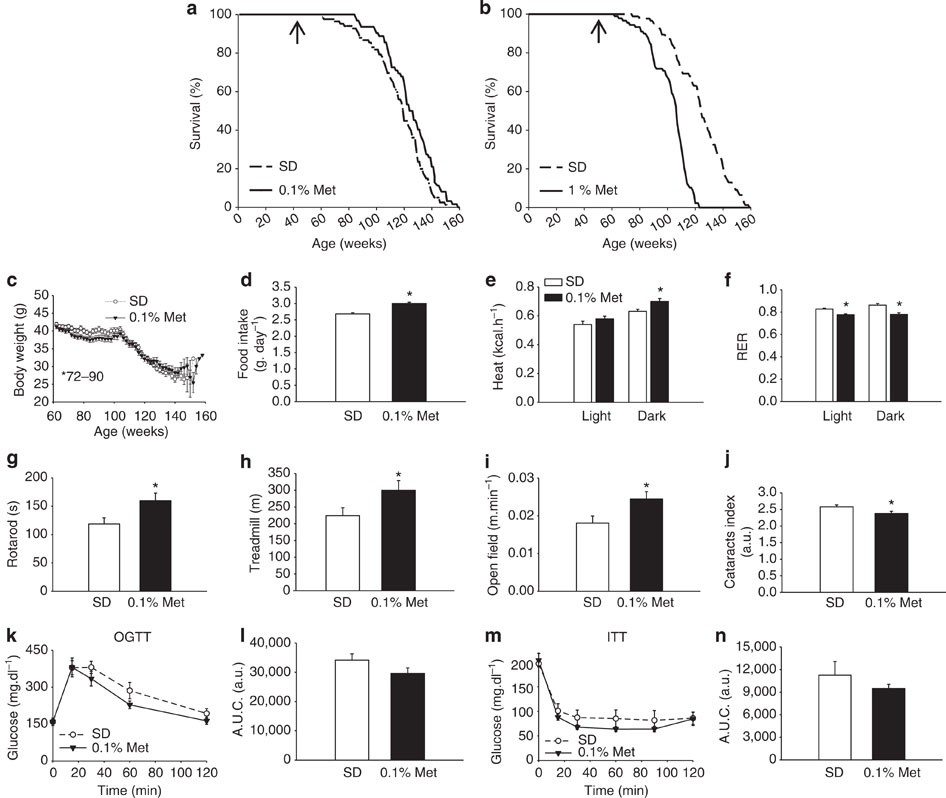
Metformin is a drug commonly prescribed to treat patients with type 2 diabetes. Here we show that long-term treatment with metformin (0.1% w/w in diet) starting at middle age extends healthspan and lifespan in male mice, while a higher dose (1% w/w) was toxic. Treatment with metformin mimics some of the benefits of calorie restriction, such as improved physical performance, increased insulin sensitivity, and reduced low-density lipoprotein and cholesterol levels without a decrease in caloric intake. At a molecular level, metformin increases AMP-activated protein kinase activity and increases antioxidant protection, resulting in reductions in both oxidative damage accumulation and chronic inflammation. Our results indicate that these actions may contribute to the beneficial effects of metformin on healthspan and lifespan. These findings are in agreement with current epidemiological data and raise the possibility of metformin-based interventions to promote healthy aging.
Dietary Carbohydrates Impair Healthspan and Promote Mortality
The prospective cohort study, named PURE, found that in >135,000 participants from 18 countries, nutritive carbohydrates increase human mortality, whereas dietary fat reduces it, requesting a fundamental change of current nutritional guidelines. Experimental evidence from animal models provides synergizing mechanistic concepts as well as pharmacological options to mimic low-carb or ketogenic diets.

Loss of Bone and Wnt10b Expression in Male Type 1 Diabetic Mice Is Blocked by the Probiotic Lactobacillus reuteri
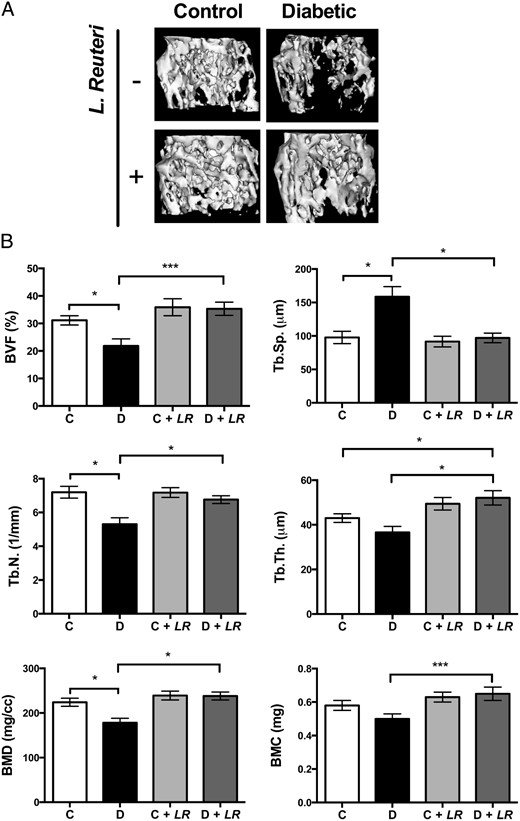
Type 1 diabetes (T1D)–induced osteoporosis is characterized by a predominant suppression of osteoblast number and activity, as well as increased bone marrow adiposity but no change in osteoclast activity. The fundamental mechanisms and alternative anabolic treatments (with few side effects) for T1D bone loss remain undetermined. Recent studies by our laboratory and others indicate that probiotics can benefit bone health. Here, we demonstrate that Lactobacillus reuteri, a probiotic with anti-inflammatory and bone health properties, prevents T1D-induced bone loss and marrow adiposity in mice. We further found that L. reuteri treatment prevented the suppression of Wnt10b in T1D bone. Consistent with a role for attenuated bone Wnt10b expression in T1D osteoporosis, we observed that bone-specific Wnt10b transgenic mice are protected from T1D bone loss. To examine the mechanisms of this protection, we focused on TNF-α, a cytokine up-regulated in T1D that causes suppression of osteoblast Wnt10b expression in vitro. Addition of L. reuteri prevented TNF-α–mediated suppression of Wnt10b and osteoblast maturation markers. Taken together, our findings reveal a mechanism by which T1D causes bone loss and open new avenues for use of probiotics to benefit the bone.
Mitochondrial Signaling and Stress Responses, Key Regulators of Aging and Longevity
ABSTRACT Mitochondria are vital not only for energy production but also for regulating signaling pathways that influence aging. While mitochondrial dysfunction contributes to age‐related decline, emerging evidence shows that mild, regulated mitochondrial stress can paradoxically promote longevity. This review highlights recent advances in mitochondrial biology and aging across species. We explore the dual role of reactive oxygen species (ROS) as both damaging agents and signaling molecules that activate adaptive stress responses. Key pathways such as the mitochondrial unfolded protein response (UPR MT ) and integrated stress response (ISR) are discussed, including their tissue‐specific as well as non‐cell‐autonomous effects on aging. Additionally, we examine the impact of mitochondrial protein import/export, dynamics (fission, fusion, mitophagy, biogenesis), and quality control in aging. Finally, we address challenges in understanding context‐dependent mitochondrial responses and mitonuclear communication. Together, these insights position mitochondria as central regulators of aging and highlight their potential as therapeutic targets to enhance health span and longevity.

Specific inulin‐type fructan fibers protect against autoimmune diabetes by modulating gut immunity, barrier function, and microbiota homeostasis
Scope Dietary fibers capable of modifying gut barrier and microbiota homeostasis affect the progression of type 1 diabetes (T1D). Here, we aim to compare modulatory effects of inulin‐type fructans (ITFs), natural soluble dietary fibers with different degrees of fermentability from chicory root, on T1D development in nonobese diabetic mice. Methods and results Female nonobese diabetic mice were weaned to long‐ and short‐chain ITFs [ITF(l) and ITF(s), 5%] supplemented diet up to 24 weeks. T1D incidence, pancreatic‐gut immune responses, gut barrier function, and microbiota composition were analyzed. ITF(l) but not ITF(s) supplementation dampened the incidence of T1D. ITF(l) promoted modulatory T‐cell responses, as evidenced by increased CD25 + Foxp3 + CD4 + regulatory T cells, decreased IL17A + CD4 + Th17 cells, and modulated cytokine production profile in the pancreas, spleen, and colon. Furthermore, ITF(l) suppressed NOD like receptor protein 3 caspase‐1‐p20‐IL‐1β inflammasome in the colon. Expression of barrier reinforcing tight junction proteins occludin and claudin‐2, antimicrobial peptides β‐defensin‐1, and cathelicidin‐related antimicrobial peptide as well as short‐chain fatty acid production were enhanced by ITF(l). Next‐generation sequencing analysis revealed that ITF(l) enhanced Firmicutes/Bacteroidetes ratio to an antidiabetogenic balance and enriched modulatory Ruminococcaceae and Lactobacilli . Conclusion Our data demonstrate that ITF(l) but not ITF(s) delays the development of T1D via modulation of gut‐pancreatic immunity, barrier function, and microbiota homeostasis.

Home - Peter Attia MD
Explore evidence-informed insights on longevity, nutrition, exercise, sleep, and disease prevention from Dr. Peter Attia to optimize your healthspan and lifespan
Drug 'reverses' ageing in animal tests
Mice had more stamina, hair and improved organ function with the drug.

Brains of overweight people ‘ten years older’ than lean counterparts at middle-age
Our brains naturally shrink with age, but scientists are increasingly recognising that obesity – already linked to conditions such as diabetes, cancer and heart disease – may also affect the onset and progression of brain ageing; however, direct studies to support this link are lacking.

The Regulation of Bone Metabolism and Disorders by Wnt Signaling
Wnt, a secreted glycoprotein, has an approximate molecular weight of 40 kDa, and it is a cytokine involved in various biological phenomena including ontogeny, morphogenesis, carcinogenesis, and maintenance of stem cells. The Wnt signaling pathway can be classified into two main pathways: canonical and non-canonical. Of these, the canonical Wnt signaling pathway promotes osteogenesis. Sclerostin produced by osteocytes is an inhibitor of this pathway, thereby inhibiting osteogenesis. Recently, osteoporosis treatment using an anti-sclerostin therapy has been introduced. In this review, the basics of Wnt signaling, its role in bone metabolism and its involvement in skeletal disorders have been covered. Furthermore, the clinical significance and future scopes of Wnt signaling in osteoporosis, osteoarthritis, rheumatoid arthritis and neoplasia are discussed.

Montmorency tart cherry protects against age-related bone loss in female C57BL/6 mice and demonstrates some anabolic effects
Age-related bone loss is a consequence of endocrine and immune changes that disrupt bone remodeling. Functional foods (e.g., tart cherries) with antioxidant, anti-inflammatory and prebiotic activity can potentially counter this age-related phenomenon. The aim of this study was to determine if Montmorency tart cherry protects against early age-related bone loss and the culpable alterations in bone metabolism.

The pleiotropic effects of prebiotic galacto-oligosaccharides on the aging gut
Prebiotic galacto-oligosaccharides (GOS) have an extensively demonstrated beneficial impact on intestinal health. In this study, we determined the impact of GOS diets on hallmarks of gut aging: microbiome dysbiosis, inflammation, and intestinal barrier defects (“leaky gut”). We also evaluated if short-term GOS feeding influenced how the aging gut responded to antibiotic challenges in a mouse model of Clostridioides difficile infection. Finally, we assessed if colonic organoids could reproduce the GOS responder—non-responder phenotypes observed in vivo.

Relationships between type 2 diabetes, cell dysfunction, and redox signaling: A meta‐analysis of single‐cell gene expression of human pancreatic α‐ and β‐cells
Abstract Background Type 2 diabetes mellitus (T2DM) is a chronic disease characterized by insulin resistance and failure of β‐cells to meet the metabolic demand for insulin. Recent advances in single‐cell RNA sequencing (sc‐RNA‐Seq) have allowed for in‐depth studies to further understand the underlying cellular mechanisms of T2DM. In β‐cells, redox signaling is critical for insulin production. A meta‐analysis of human pancreas islet sc‐RNA‐Seq data was conducted to evaluate how T2DM may modify the transcriptomes of α‐ and β‐cells. Methods Annotated sc‐RNA‐Seq data from six studies of human pancreatic islets from metabolically healthy and donors with T2DM were collected. α‐ and β‐cells, subpopulations of proliferating α‐cells, immature, and senescent β‐cells were identified based on expression levels of key marker genes. Each dataset was analyzed individually before combining, using weighted comparisons. Pathways of significant genes and individual redox‐related gene expression were then evaluated to further understand the role that redox signaling may play in T2DM‐induced β‐cell dysfunction. Results α‐ and β‐cells from T2DM donors modified genes involved in energy metabolism, immune response, autophagy, and cellular stress. α‐ and β‐cells also had an increased nuclear factor erythroid 2‐related factor 2 (NFE2L2)‐mediated antioxidant response in T2DM donors. The proportion of immature and senescent β‐cells increased in T2DM donors, and in immature and senescent β‐cells, genes regulated by NFE2L2 were further upregulated. Conclusions These findings suggest that NFE2L2 plays a role in β‐cell maturation and dysfunction. Redox singling maybe a key pathway for β‐cell restoration and T2DM therapeutics. , 摘要 背景 2型糖尿病(T2D)是一种以胰岛素抵抗和β细胞无法满足胰岛素代谢需求为特征的慢性疾病。近年来在单细胞RNA测序(sc‐RNA‐Seq)方面的进展为进一步深入研究T2D的细胞机制奠定了基础。在β细胞中, 氧化还原信号对胰岛素的产生至关重要。本研究对人胰岛sc‐RNA‐Seq数据进行 meta 分析, 以评估T2D如何调控α‐和β‐细胞的转录组。 方法 收集6项研究的sc‐RNA‐Seq数据, 这些数据来自代谢正常的人胰岛和T2D供者。根据关键标记基因的表达水平鉴定α‐细胞和β‐细胞、增殖中的α‐细胞亚群、未成熟和衰老的β‐细胞。在使用加权比较进行组合之前, 每个数据集都被单独分析。然后评估重要基因的通路和单个氧化还原相关基因的表达, 以进一步了解氧化还原信号在T2D诱导的β‐细胞功能障碍中可能扮演的角色 结果 来自T2D供者的α‐和β‐细胞修饰了与能量代谢、免疫反应、自噬和细胞应激相关的基因, 在T2D供者中α‐和β‐细胞NFE2L2介导的抗氧化反应增强。在T2D供者中, 未成熟和衰老的β‐细胞比例增加, 并且在未成熟和衰老的β‐细胞中, 受NFE2L2调控的基因进一步上调。 结论 这些发现提示NFE2L2在β‐细胞成熟和功能障碍中起作用。氧化还原信号通路可能是β‐细胞修复和T2D治疗的关键途径。

Probiotic <i>L. reuteri</i> Treatment Prevents Bone Loss in a Menopausal Ovariectomized Mouse Model
Abstract Estrogen deficiency is a major risk factor for osteoporosis that is associated with bone inflammation and resorption. Half of women over the age of 50 will experience an osteoporosis related fracture in their lifetime, thus novel therapies are needed to combat post‐menopausal bone loss. Recent studies suggest an important role for gut‐bone signaling pathways and the microbiota in regulating bone health. Given that the bacterium Lactobacillus reuteri ATCC PTA 6475 ( L. reuteri ) secretes beneficial immunomodulatory factors, we examined if this candidate probiotic could reduce bone loss associated with estrogen deficiency in an ovariectomized (Ovx) mouse menopausal model. Strikingly, L. reuteri treatment significantly protected Ovx mice from bone loss. Osteoclast bone resorption markers and activators (Trap5 and RANKL) as well as osteoclastogenesis are significantly decreased in L. reuteri ‐treated mice. Consistent with this, L. reuteri suppressed Ovx‐induced increases in bone marrow CD4+ T‐lymphocytes (which promote osteoclastogenesis) and directly suppressed osteoclastogenesis in vitro. We also identified that L. reuteri treatment modifies microbial communities in the Ovx mouse gut. Together, our studies demonstrate that L. reuteri treatment suppresses bone resorption and loss associated with estrogen deficiency. Thus, L. reuteri treatment may be a straightforward and cost‐effective approach to reduce post‐menopausal bone loss. J. Cell. Physiol. 229: 1822–1830, 2014. © 2014 Wiley Periodicals, Inc.

Interactions between gut microbiota and skeletal muscle
The gut microbiota is now recognized as a major contributor to the host’s nutrition, metabolism, immunity, and neurological functions. Imbalanced microbiota (ie, dysbiosis) is linked to undernutrition-induced stunting, inflammatory and metabolic diseases, and cancers. Skeletal muscle also takes part in the interorgan crosstalk regulating substrate metabolism, immunity, and health. Here, we review the reciprocal influence of gut microbiota and skeletal muscle in relation to juvenile growth, performance, aging, and chronic diseases. Several routes involving the vascular system and organs such as the liver and adipose tissue connect the gut microbiota and skeletal muscle, with effects on fitness and health. Therapeutic perspectives arise from the health benefits observed with changes in gut microbiota and muscle activity, further encouraging multimodal therapeutic strategies.

Switching Off One Crucial Protein Appears to Reverse Brain Aging in Mice - Slashdot
A research team just discovered older mice have more of the protein FTL1 in their hippocampus, reports ScienceAlert. The hippocampus is the region of the brain involved in memory and learning. And the researchers' paper says their new data raises "the exciting possibility that the beneficial effec...
Four Red Flags and One Truth Amid the Peptide Hype - KFF Health News
Experimental peptides are all the rage on longevity and “optimization” podcasts, but a lot of the chatter is misleading.

The gut microbiota in osteoarthritis: where do we stand and what can we do?
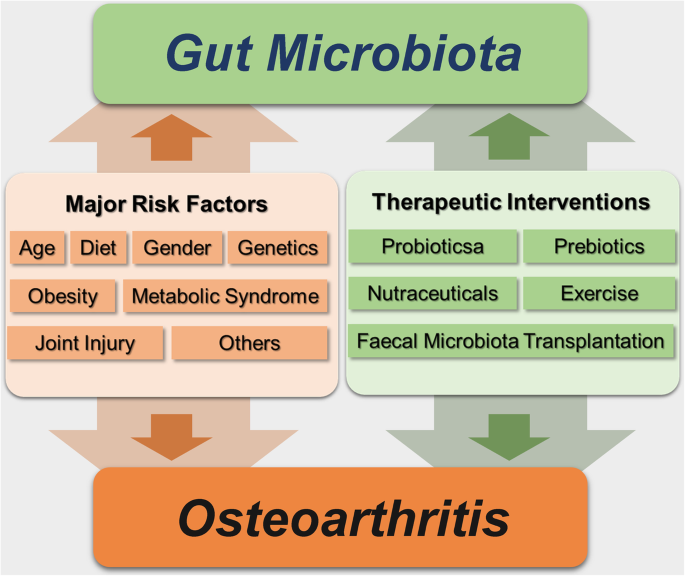
Osteoarthritis (OA) is one of the most frequent musculoskeletal diseases characterized by degeneration of articular cartilage, subchondral bone remodeling, and synovial membrane inflammation, which is a leading cause of global disability, morbidity, and decreased quality of life. Interpreting the potential mechanisms of OA pathogenesis is essential for developing novel prevention and disease-modifying therapeutic interventions. Gut microbiota is responsible for a series of metabolic, immunological, and structural and neurological functions, potentially elucidating the heterogeneity of OA phenotypes and individual features. In this narrative review, we summarized research evidence supporting the hypothesis of a “gut-joint axis” and the interaction between gut microbiota and the OA-relevant factors, including age, gender, genetics, metabolism, central nervous system, and joint injury, elucidating the underlying mechanisms of this intricate interaction. In the context, we also speculated the promising manipulation of gut microbiota in OA management, such as exercise and fecal microbiota transplantation (FMT), highlighting the clinical values of gut microbiota. Additionally, future research directions, such as more convincing studies by the interventions of gut microbiota, the gene regulation of host contributing to or attributed to the specific phenotypes of gut microbiota related to OA, and the relevance of distinct cell subgroups to gut microbiota, are expected. Moreover, gut microbiota is also the potential biomarker related to inflammation and gut dysbiosis that is able to predict OA progression and monitor the efficacy of therapeutic intervention.