Potted plants have demonstrated abilities to remove airborne volatile organic compounds (VOC) in small, sealed chambers over timescales of many hours or days. Claims have subsequently been made suggesting that potted plants may reduce indoor VOC concentrations. These potted plant chamber studies reported outcomes using various metrics, often not directly applicable to contextualizing plants’ impacts on indoor VOC loads. To assess potential impacts, 12 published studies of chamber experiments were reviewed, and 196 experimental results were translated into clean air delivery rates (CADR, m3/h), which is an air cleaner metric that can be normalized by volume to parameterize first-order loss indoors. The distribution of single-plant CADR spanned orders of magnitude, with a median of 0.023 m3/h, necessitating the placement of 10–1000 plants/m2 of a building’s floor space for the combined VOC-removing ability by potted plants to achieve the same removal rate that outdoor-to-indoor air exchange already provides in typical buildings (~1 h−1). Future experiments should shift the focus from potted plants’ (in)abilities to passively clean indoor air, and instead investigate VOC uptake mechanisms, alternative biofiltration technologies, biophilic productivity and well-being benefits, or negative impacts of other plant-sourced emissions, which must be assessed by rigorous field work accounting for important indoor processes.
We Need More Research on how CO2 Affects Cognition
A growing body of research indicates there are potentially large health benefits to improving indoor air quality.
Oxygen producing plants in the home are great factors of longevity.
Green oxygen producing plants are abundant in nature. Incorporating air cleaning plants into your every day environment is a great addition to your longevity lifestyle through adequate oxygenation.

Microbiome interplay: plants alter microbial abundance and diversity within the built environment
The built indoor microbiome has importance for human health. Residents leave their microbial fingerprint but nothing is known about the transfer from plants. Our hypothesis that indoor plants contribute substantially to the microbial abundance and diversity in the built environment was experimentally confirmed as proof of principle by analyzing the microbiome of the spider plant Chlorophytum comosum in relation to their surroundings. The abundance of Archaea, Bacteria, and Eukaryota (fungi) increased on surrounding floor and wall surfaces within 6 months of plant isolation in a cleaned indoor environment, whereas the microbial abundance on plant leaves and indoor air remained stable. We observed a microbiome shift: the bacterial diversity on surfaces increased significantly but fungal diversity decreased. The majority of cells were intact at the time of samplings and thus most probably alive including diverse Archaea as yet unknown phyllosphere inhabitants. LEfSe and network analysis showed that most microbes were dispersed from plant leaves to the surrounding surfaces. This led to an increase of specific taxa including spore-forming fungi with potential allergic potential but also beneficial plant-associated bacteria, e.g., Paenibacillus. This study demonstrates for the first time that plants can alter the microbiome of a built environment, which supports the significance of plants and provides insights into the complex interplay of plants, microbiomes and human beings.

We Need a Revolution in Clean Indoor Air | The Tyee
Why it will take re-engineering, not just medicine, to close the door on COVID.

Stuffy offices can halve cognitive scores
The bad air quality found in many office buildings may also affect performance, health.

The Air That We Breathe: Neutral and Volatile PFAS in Indoor Air
Abstract. Sources of exposure to per- and polyfluorinated alkyl substances (PFAS) include food, water, and, given that humans spend typically 90% of their

Atmospheric concentrations of per- and polyfluoroalkyl substances in Michigan's ambient air using passive sampling
Supplemental data for "Atmospheric concentrations of per- and polyfluoroalkyl substances in Michigan's ambient air using passive sampling". Atmospheric passive samplers were deployed at 27 sites around Michigan, USA to measure atmospheric PFAS concentrations. Data includes information for sites, analytical information, and concentrations measured.
Pollution · Patrick Collison
Air pollution is a very big deal. Its adverse effects on numerous health outcomes and general mortality are widely documented. However, our understanding of its cognitive costs is more recent and those costs are almost certainly still significantly under-emphasized. For example, cognitive effects are not mentioned in most EPA materials.
De la pollution de l’air à l’usage du vélo, l’impact sanitaire des choix d’urbanisme évalué
L’agence Santé publique France publie jeudi une étude menée dans trois métropoles pour évaluer les leviers environnementaux permettant de réduire la mortalité des populations urbaines.

Evaluation of Microwave Steam Bags for the Decontamination of Filtering Facepiece Respirators
Reusing filtering facepiece respirators (FFRs) has been suggested as a strategy to conserve available supplies for home and healthcare environments during an influenza pandemic. For reuse to be possible, used FFRs must be decontaminated before redonning to reduce the risk of virus transmission; however, there are no approved methods for FFR decontamination. An effective method must reduce the microbial threat, maintain the function of the FFR, and present no residual chemical hazard. The method should be readily available, inexpensive and easily implemented by healthcare workers and the general public. Many of the general decontamination protocols used in healthcare and home settings are unable to address all of the desired qualities of an efficient FFR decontamination protocol. The goal of this study is to evaluate the use of two commercially available steam bags, marketed to the public for disinfecting infant feeding equipment, for FFR decontamination. The FFRs were decontaminated with microwave generated steam following the manufacturers' instructions then evaluated for water absorption and filtration efficiency for up to three steam exposures. Water absorption of the FFR was found to be model specific as FFRs constructed with hydrophilic materials absorbed more water. The steam had little effect on FFR performance as filtration efficiency of the treated FFRs remained above 95%. The decontamination efficacy of the steam bag was assessed using bacteriophage MS2 as a surrogate for a pathogenic virus. The tested steam bags were found to be 99.9% effective for inactivating MS2 on FFRs; however, more research is required to determine the effectiveness against respiratory pathogens.
The ultimate indoor plant system
Soil C Sequestration as a Biological Negative Emission Strategy
Soil carbon (C) sequestration in one of three main approaches to carbon dioxide removal and storage through management of terrestrial ecosystems. Soil C sequestration relies of the adoption of improved management practices that increase the amount of carbon stored as soil organic matter, primarily in cropland and grazing lands. These C sequestering practices act by increasing the rate of input of plant-derived residues to soils and/or by reducing the rates of turnover of organic C stocks already in the soil. In addition to carbon dioxide removal potential, increases in soil organic matter/soil C content are highly beneficial from the standpoint of soil health and soil fertility Practices to increase soil C stocks include well-known, proven techniques or “best management practices” (BMP) for building soil carbon. A second category includes what we refer to as frontier technologies for which significant technological and/or economic barriers exist today, but for which further R&D and/or economic incentives might offer the potential for greater sequestration over the longer term. We reviewed published estimates of global soil carbon sequestration potential, representing the biophysical potential for managed cropland and/or grassland systems to store additional carbon assuming widespread (near complete) adoption of BMPs. The majority of studies suggests that 4 to 5 GtCO2/y as an upper limit for global biophysical potential with near complete adoption of BMPs. In the longer-term, if frontier technologies are successfully deployed, the global estimate might grow to 8 GtCO2/y. There is a strong scientific basis for managing agricultural soils to act as a significant carbon (C) sink over the next several decades. A two-stage strategy, to first incentivize adoption of well developed, conventional soil C sequestering practices, while investing in R&D on new frontier technologies that could come on-line in the next 2-3 decades, could maximize benefits. Implementation of such policies will require robust, scientifically-sound measurement, reporting, and verification (MRV) systems to track that policy goals are being met and that claimed increases in soil C stocks are real.

Bioaerosols generated from toilet flushing in rooms of patients with Clostridioides difficile infection
Background:Clostridioides difficile infection (CDI) is the most frequently reported hospital-acquired infection in the United States. Bioaerosols generated during toilet flushing are a possible mechanism for the spread of this pathogen in clinical settings.Objective:To measure the bioaerosol concentration from toilets of patients with CDI before and after flushing.Design:In this pilot study, bioaerosols were collected 0.15 m, 0.5 m, and 1.0 m from the rims of the toilets in the bathrooms of hospitalized patients with CDI. Inhibitory, selective media were used to detect C. difficile and other facultative anaerobes. Room air was collected continuously for 20 minutes with a bioaerosol sampler before and after toilet flushing. Wilcoxon rank-sum tests were used to assess the difference in bioaerosol production before and after flushing.Setting:Rooms of patients with CDI at University of Iowa Hospitals and Clinics.Results:Bacteria were positively cultured from 8 of 24 rooms (33%). In total, 72 preflush and 72 postflush samples were collected; 9 of the preflush samples (13%) and 19 of the postflush samples (26%) were culture positive for healthcare-associated bacteria. The predominant species cultured were Enterococcus faecalis, E. faecium, and C. difficile. Compared to the preflush samples, the postflush samples showed significant increases in the concentrations of the 2 large particle-size categories: 5.0 µm (P = .0095) and 10.0 µm (P = .0082).Conclusions:Bioaerosols produced by toilet flushing potentially contribute to hospital environmental contamination. Prevention measures (eg, toilet lids) should be evaluated as interventions to prevent toilet-associated environmental contamination in clinical settings.

Field Validation of a Novel Passive Sampler for Dissolved PFAS in Surface Waters
Abstract Numerous per- and polyfluoroalkyl substances (PFAS) are of growing concern worldwide due to their ubiquitous presence, bioaccumulation and adverse effects. Surface waters in the United States have displayed elevated concentrations of PFAS, but so far discrete water sampling has been the commonly applied sampling approach. In the present study we field-tested a novel integrative passive sampler, a microporous polyethylene tube, and derived sampling rates (Rs) for nine PFAS in surface waters. Three sampling campaigns were conducted, deploying polyethylene tube passive samplers in the effluent of two wastewater treatment plant (WWTP) effluents and across Narragansett Bay (Rhode Island, USA) for 1 month each in 2017 and 2018. Passive samplers exhibited linear uptake of PFAS in the WWTP effluents over 16–29 days, with in situ Rs for nine PFAS ranging from 10 ml day−1 (perfluoropentanoic acid) to 29 ml day−1 (perfluorooctanesulfonic acid). Similar sampling rates of 19 ± 4.8 ml day−1 were observed in estuarine field deployments. Applying these Rs values in a different WWTP effluent predicted dissolved PFAS concentrations mostly within 50% of their observations in daily composite water samples, except for perfluorobutanoic acid (where predictions from passive samplers were 3 times greater than measured values), perfluorononanoic acid (1.9 times), perfluorodecanoic acid (1.7 times), and perfluoropentanesulfonic acid (0.1 times). These results highlight the potential use of passive samplers as measurement and assessment tools of PFAS in dynamic aquatic environments. Environ Toxicol Chem 2022;41:2375–2385. © 2022 SETAC Abstract A novel integrative passive sampler was field-tested and sampling rates derived for nine per- and polyfluoroalkyl substances in two wastewater treatment plant effluents and in Narragansett Bay surface waters.


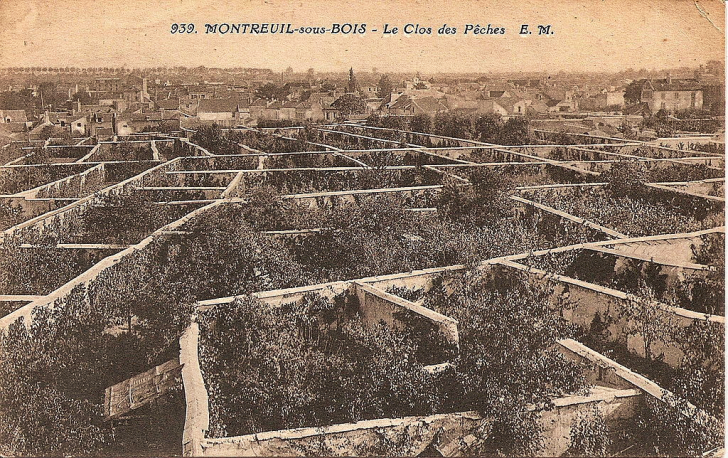
Fruit Walls: Before Greenhouses, Walled Gardens Created Urban Micro-Climates - 99% Invisible
Imagine being able to plant things in your garden that would normally never grow in that climate, outdoors and without any electricity. Architects and urban designers often factor thermal mass into their designs, employing materials that absorb heat by day and release it at night to help warm human occupants. And though we rarely see it today,