

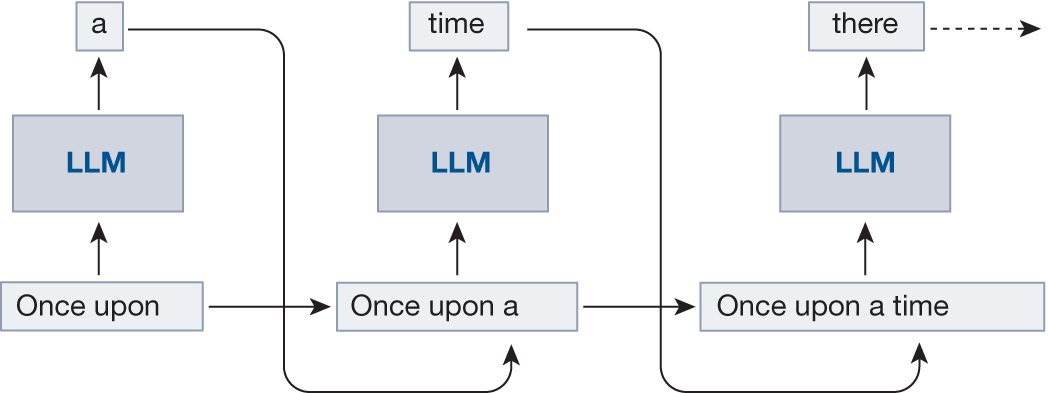
As dialogue agents become increasingly human-like in their performance, we must develop effective ways to describe their behaviour in high-level terms without falling into the trap of anthropomorphism. Here we foreground the concept of role play. Casting dialogue-agent behaviour in terms of role play allows us to draw on familiar folk psychological terms, without ascribing human characteristics to language models that they in fact lack. Two important cases of dialogue-agent behaviour are addressed this way, namely, (apparent) deception and (apparent) self-awareness.
Consistently Simulating Human Personas with Multi Turn Reinforcement Learning
Understanding Understanding: A Pragmatic Framework Motivated by...
Motivated by the rapid ascent of Large Language Models (LLMs) and debates about the extent to which they possess human-level qualities, we propose a framework for testing whether any agent (be it...

Quantifying the Persona Effect in LLM Simulations
Large language models (LLMs) have shown remarkable promise in simulating human language and behavior. This study investigates how integrating persona variables—demographic, social, and behavioral factors—impacts LLMs' ability to simulate diverse perspectives. We find that persona variables account for \ensuremath<10% variance in annotations in existing subjective NLP datasets. Nonetheless, incorporating persona variables via prompting in LLMs provides modest but statistically significant improvements. Persona prompting is most effective in samples where many annotators disagree, but their disagreements are relatively minor. Notably, we find a linear relationship in our setting: the stronger the correlation between persona variables and human annotations, the more accurate the LLM predictions are using persona prompting. In a zero-shot setting, a powerful 70b model with persona prompting captures 81% of the annotation variance achievable by linear regression trained on ground truth annotations. However, for most subjective NLP datasets, where persona variables have limited explanatory power, the benefits of persona prompting are limited.
Human-Simulation Interaction: From Prediction to Exploration in LLM Agent Simulations for Policy
Agent-based models have historically served as tools for generative explanation, constructing testbeds in which candidate micro-level behavioral rules can be tested for their capacity to produce observed macro-level phenomena. The integration of Large Language Models into agent-based simulation has expanded what these models can represent, but it has also introduced an unexamined shift in how users engage them. We argue that current generative agent-based models (GABMs) inherit the dominant interaction metaphor of conversational LLM interfaces - a question-answer pattern that positions users as consumers of system output rather than explorers of a possibility space. In the context of policy, where problems are wicked and ground truth is unknowable in advance, this metaphor produces a trust deficit that cannot be resolved through improved model accuracy alone. We open a design space we call human-simulation interaction, and argue that warranted trust requires interaction metaphors that restore the exploratory capacity simulation has historically supported.
Activation-Steered Personas in Task-Oriented LLM Agent Simulations
Large language models are increasingly used to simulate both user and system behavior in task-oriented dialogue (TOD). Yet personality control in these simulations remains largely prompt-based, making trait expression difficult to regulate and verify across dialogue turns. We investigate activation steering as an inference-time mechanism for inducing and adapting personality in TOD simulation. In our framework, user-side steering (US) applies fixed Big Five trait-pole activation vectors with scalar coefficients to generate users with different trait intensities. System-side adaptive steering (SA) dynamically adapts the system agent at each turn by predicting system-side steering coefficients from the dialogue context. We evaluate four steering conditions: an unsteered Baseline, SA, US, and US+SA, using the Schema-Guided Dialogue benchmark across the Restaurants and Movies domains. Qwen2.5-7B-Instruct is used as the primary model, and Llama-3.1-8B-Instruct is used as a robustness setting. Our results show that activation-level personality control affects TOD behavior, but its benefits depend on domain, trait observability, and steering strength. Compared with the unsteered Baseline, SA improves standard task metrics slightly, with larger gains in pairwise-judged user satisfaction and truthfulness, mainly in Restaurants, where dialogues contain richer personality-relevant slots and preferences. User-side steering produces observable personality expression only for some traits: socially or affectively expressive traits such as careless, outgoing, compassionate, and nervous become more detectable at stronger steering, while consistent and solitary remain difficult to observe in short TOD interactions. Adding SA to steered users yields modest task-level changes but a statistically significant improvement in pairwise-judged truthfulness (+8.3 pp) and user satisfaction (+2.7 pp). System-side composition analysis further shows that SA does not directly mirror the user's trait; it usually defaults to Conscientiousness-centered system behavior and becomes more socially adaptive when user trait expression is observable especially at higher steering scalar. Overall, activation steering is a viable alternative to prompt-based personality conditioning for controlled TOD simulation, but its effects must be evaluated with respect to trait observability, steering strength, and the personality relevance of the task domain.
The interactive-alignment model: Developments and refinements
The interactive-alignment model of dialogue provides an account of dialogue at the level of explanation normally associated with cognitive psychology. We develop our claim that interlocutors align their mental models via priming at many levels of linguistic representation, explicate our notion of automaticity, defend the minimal role of “other modeling,” and discuss the relationship between monologue and dialogue. The account can be applied to social and developmental psychology, and would benefit from computational modeling.
Position: Synthetic Persona Needs Explicit Grounding and Standardized Reporting
This position paper argues that synthetic personas used in Large Language Models (LLM) social simulations need explicit grounding. By grounding, we mean that researchers should state where persona information comes from, what social actor or population it is meant to represent, what evidence supports it, and what kinds of simulation claims it can justify. Without such grounding, persona-based simulations risk treating appearance of plausible descriptions or vivid narratives as evidence of realism. We identify several recurring failure modes that explicit grounding can help expose, and argue that these failures should not be diagnosed only after simulation results are produced; they should be addressed at the level of persona construction and reporting. We conclude by proposing lightweight reporting standards for persona provenance, construction process, selection or sampling logic, internal consistency checks, model enactment checks, and intended inference.
Measuring Mutual Confirmation Bias Amplification in Simulated User-AI Dialogue: A Multi-Agent Simulation Framework
Conversational AI can reinforce user confirmation bias not just by being agreeable, but by mutually amplifying it as user bias and AI sycophancy co-evolve across a dialogue. We specify and instrument mutual amplification of confirmation bias and AI sycophancy across dialogue using a controlled simulation framework. A simulated user agent — an LLM—with a confirmation-biased persona interacts with real LLM assistants; a dual-Judge architecture independently tracks the agent’s belief evolution and the assistant’s accommodation at each turn. We vary topic epistemic type and bias intensity to measure whether, and under what conditions, these biases co-amplify. This addresses a gap in social simulation research, which has largely treated cognitive bias as an isolated property rather than an interactive dynamic.
Shall We Play a Game? Language Models for Open-ended Wargames
LLM-based social simulations can make a generated transcript look like a single behavioral signal, but the model behind that transcript may be doing several different jobs: choosing what an actor says or does, deciding what happens after an action, or both. The difference matters especially in open-ended wargames, where models are prized for handling unusual actions and ambiguous consequences. We report a scoping review of 223 de-duplicated AI-in-wargames and strategic-simulation papers retrieved through May 1, 2026, describing each simulation by its model-control profile: whether the language model has open-ended control over player actions, adjudication, or both. Only 20 of 223 studies (≈9%) give language models both roles. Before treating LM outputs as social simulations, researchers need to know how much creative control the model has over actions and consequences. For open-ended simulations, fidelity depends not only on whether agents behave plausibly, but also on whether language models can reliably act as adjudicators or world models.
Small Language Models are the Future of Agentic AI
Large language models (LLMs) are often praised for exhibiting near-human performance on a wide range of tasks and valued for their ability to hold a general conversation. The rise of agentic AI systems is, however, ushering in a mass of applications in which language models perform a small number of specialized tasks repetitively and with little variation. Here we lay out the position that small language models (SLMs) are sufficiently powerful, inherently more suitable, and necessarily more economical for many invocations in agentic systems, and are therefore the future of agentic AI. Our argumentation is grounded in the current level of capabilities exhibited by SLMs, the common architectures of agentic systems, and the economy of LM deployment. We further argue that in situations where general-purpose conversational abilities are essential, heterogeneous agentic systems (i.e., agents invoking multiple different models) are the natural choice. We discuss the potential barriers for the adoption of SLMs in agentic systems and outline a general LLM-to-SLM agent conversion algorithm. Our position, formulated as a value statement, highlights the significance of the operational and economic impact even a partial shift from LLMs to SLMs is to have on the AI agent industry. We aim to stimulate the discussion on the effective use of AI resources and hope to advance the efforts to lower the costs of AI of the present day. Calling for both contributions to and critique of our position, we commit to publishing all such correspondence at https://research.nvidia.com/labs/lpr/slm-agents.
GermanPartiesQA: Benchmarking Commercial Large Language Models and AI Companions for Political Alignment and Sycophancy
Large language models (LLMs) are increasingly shaping citizens’ information ecosystems. Products incorporating LLMs, such as chatbots and AI Companions, are now widely used for decision support and information retrieval, including in sensitive domains, raising concerns about hidden biases and growing potential to shape individual decisions and public opinion. This paper introduces GermanPartiesQA, a benchmark of 418 political statements from German Voting Advice Applications across 11 elections to evaluate six commercial LLMs. We evaluate their political alignment based on role-playing experiments with political personas. Our evaluation reveals three specific findings: (1) Factual limitations: LLMs show limited ability to accurately generate factual party positions, particularly for centrist parties. (2) Model-specific ideological alignment: We identify consistent alignment patterns and degree of political steerability for each model across temperature settings and experiments. (3) Claim of sycophancy: While models adjust to political personas during role-play, we find this reflects persona-based steerability rather than the increasingly popular, yet contested concept of sycophancy. Our study contributes to evaluating the political alignment of closed-source LLMs that are increasingly embedded in electoral decision support tools and AI Companion chatbots.
GermanPartiesQA: Benchmarking Commercial Large Language Models and AI Companions for Political Alignment and Sycophancy
Large language models (LLMs) are increasingly shaping citizens’ information ecosystems. Products incorporating LLMs, such as chatbots and AI Companions, are now widely used for decision support and information retrieval, including in sensitive domains, raising concerns about hidden biases and growing potential to shape individual decisions and public opinion. This paper introduces GermanPartiesQA, a benchmark of 418 political statements from German Voting Advice Applications across 11 elections to evaluate six commercial LLMs. We evaluate their political alignment based on role-playing experiments with political personas. Our evaluation reveals three specific findings: (1) Factual limitations: LLMs show limited ability to accurately generate factual party positions, particularly for centrist parties. (2) Model-specific ideological alignment: We identify consistent alignment patterns and degree of political steerability for each model across temperature settings and experiments. (3) Claim of sycophancy: While models adjust to political personas during role-play, we find this reflects persona-based steerability rather than the increasingly popular, yet contested concept of sycophancy. Our study contributes to evaluating the political alignment of closed-source LLMs that are increasingly embedded in electoral decision support tools and AI Companion chatbots.
LLMs and people both learn to form conventions -- just not with each other
Humans align to one another in conversation -- adopting shared conventions that ease communication. We test whether LLMs form the same kinds of conventions in a multimodal communication game. Both humans and LLMs display evidence of convention-formation (increasing the accuracy and consistency of their turns while decreasing their length) when communicating in same-type dyads (humans with humans, AI with AI). However, heterogenous human-AI pairs fail -- suggesting differences in communicative tendencies. In Experiment 2, we ask whether LLMs can be induced to behave more like human conversants, by prompting them to produce superficially humanlike behavior. While the length of their messages matches that of human pairs, accuracy and lexical overlap in human-LLM pairs continues to lag behind that of both human-human and AI-AI pairs. These results suggest that conversational alignment requires more than just the ability to mimic previous interactions, but also shared interpretative biases toward the meanings that are conveyed.
The Chameleon's Limit Investigating Persona Collapse and Homogenization in Large Language Models
The Chameleon's Limit Investigating Persona Collapse and Homogenization in Large Language Models
Can LLMs Faithfully Enact Superforecaster Personas?
Superforecasters are people that make forecasts that are statistically better than the average person; they offer an interesting testbed for persona modelling. In this preliminary work, we investigate whether large language models (LLMs) can faithfully model superforecaster-like personas making similar forecasts and generating similar rationales behind the forecasts. When we compare LLM-generated responses to the ground truth responses of superforecasters, we find that few-shot prompting generates numerically closer forecasts than instruction-prompting baselines. We also measure the similarity of generated and real rationales, finding that the rationales generated based on examples are judged more similar to those of superforecasters than instruction-prompting baselines. However, an analysis of the reasoning patterns in the rationales shows significant differences between human and LLM forecasters, pointing to a gap between stylistic imitation and deep reasoning similarity. These preliminary results raise several interesting questions about how getting superforecaster-like behaviour from LLMs actually works, and open new avenues to explore for improving the forecasting behaviour of LLMs.