


Intake of sweet food, beverages and added sugars has been linked with depressive symptoms in several populations. Aim of this study was to investigate systematically cross-sectional and prospective associations between sweet food/beverage intake, common mental disorder (CMD) and depression and to examine the role of reverse causation (influence of mood on intake) as potential explanation for the observed linkage. We analysed repeated measures (23,245 person-observations) from the Whitehall II study using random effects regression. Diet was assessed using food frequency questionnaires, mood using validated questionnaires. Cross-sectional analyses showed positive associations. In prospective analyses, men in the highest tertile of sugar intake from sweet food/beverages had a 23% increased odds of incident CMD after 5 years (95% CI: 1.02, 1.48) independent of health behaviours, socio-demographic and diet-related factors, adiposity and other diseases. The odds of recurrent depression were increased in the highest tertile for both sexes, but not statistically significant when diet-related factors were included in the model (OR 1.47; 95% CI: 0.98, 2.22). Neither CMD nor depression predicted intake changes. Our research confirms an adverse effect of sugar intake from sweet food/beverage on long-term psychological health and suggests that lower intake of sugar may be associated with better psychological health.
Depression link to processed food
Eating a diet high in processed food increases the risk of depression, research suggests.
Is Sugar Toxic? (Published 2011)
That it makes us fat is something we take for granted. That it might also be making us sick is harder to accept.

Gut bacteria may have impact on mental health, study says
Research opens door to possible treatments for depression based on probiotics

It’s the Sugar, Folks
A new study shows solid links between added sugar and the onset of diabetes.

Nut intake and hyperuricemia risk in young adults
Objective:The relationship between dietary nut intake and hyperuricemia risk remains unclear. The aim of this study was to investigate the relationship between different nut intake and hyperuricemia risk with a cross-sectional study.Design:A semi-quantitative FFQ was adopted to collect dietary information. Biochemical and anthropometric parameters were measured by standard methods. Multivariate-adjusted logistic regression models were implemented to analyse the relationship between individual nut intake and hyperuricemia risk.Setting:Qingdao University in Shandong Province, China.Participants:During 2018–2019, a total of 14 056 undergraduates (6862 males and 7194 females) aged 15–25 years participated in the study.Results:After adjusting for multiple confounding factors, compared with the lowest quartile, the highest quartile intakes of pine nut (95 % CI (0·51, 0·98)) was significantly associated with 29 % reduction in hyperuricemia risk, the highest quartile intake of walnut (OR = 0·78; 95 % CI (0·58, 1·05)) was marginally negatively associated with hyperuricemia risk.Conclusions:The present study showed that the relationships between intakes of different nuts and hyperuricemia risk were different. Increased dietary intakes of walnut and pine nut are negatively associated with the hyperuricemia.

The sugar conspiracy: sugar—not fat—is the greatest danger to our health | Hacker News
I've lost about 100lbs in 2.5 years... The only thing that I really changed was doing a Keto diet. I've learned a lot about nutrition along the way, and it's amazing how bad nutrition info was when I was growing up..
What The Industry Knew About Sugar's Health Effects, But Didn't Tell Us
The sugar industry pulled the plug on an animal study it funded in the 1960s. Initial results pointed to a link between sugar consumption and elevated triglycerides, which raises heart disease risk.

Sugar 'has similar effect on brain as cocaine'
Withdrawal from chronic sugar consumption would be similar to going 'cold turkey' from drugs, say Australian scientists
Acute Effects of Coffee Consumption on Health among Ambulatory Adults
Coffee is one of the most commonly consumed beverages in the world, but the acute health effects of coffee consumption remain uncertain. We conducted a prospective, randomized, case-crossover trial...

Caffeine could limit damage of chronic stress
A cup of joe wards off depression following chronic stress.

Association Between Eating Speed and Metabolic Syndrome in a Three-Year Population-Based Cohort Study
Background Metabolic syndrome has received increased global attention over the past few years. Eating behaviors, particularly eating speed, have long been of interest as factors that contribute to the development of obesity and diabetes. The aim of this study was to assess the relationship between eating speed and incidence of metabolic syndrome among middle-aged and elderly Japanese people. Methods A total of 8941 community residents from Soka City in Saitama Prefecture, aged from 40 to 75 years and without a diagnosis of metabolic syndrome, participated in the baseline survey in 2008 and were followed until 2011. Anthropometric measurements and lifestyle factors were measured at baseline and follow-up. The association between eating speed and incidence of metabolic syndrome was evaluated using Cox proportional hazards models adjusted for potential confounding variables. Results During the 3-year follow-up, 647 people were diagnosed with metabolic syndrome (25.0 cases/1000 person-years). The incidence rates of metabolic syndrome among non-fast-eating and fast-eating participants were 2.3% and 3.1%, respectively. The multivariate-adjusted hazard ratio for incidence of metabolic syndrome in the fast-eating group compared to the not-fast-eating group was 1.30 (95% confidence interval [CI], 1.05–1.60) after adjustment for the potential confounding factors. Eating speed was significantly correlated with waist circumference and high-density lipoprotein cholesterol (HDL-C) components of metabolic risk factors. Hazard ratios in the fast-eating group compared with the reference group were 1.35 (95% CI, 1.10–1.66) for waist circumference and 1.37 (95% CI, 1.12–1.67) for HDL-C. Conclusions Eating speed was associated with the incidence of metabolic syndrome. Eating slowly is therefore suggested to be an important lifestyle factor for preventing metabolic syndrome among the Japanese.

Scientists reveal foods to eat now to stave off cognitive decline later
Data on over 3,000 people shows only 8 percent with low-quality diets maintained high cognitive abilities into their 70s, a new study reveals.

Association Among Dietary Supplement Use, Nutrient Intake, and Mortality Among U.S. Adults: A Cohort Study
A contributory citizen science project reveals the impact of dietary keys to microbiome health in Spain
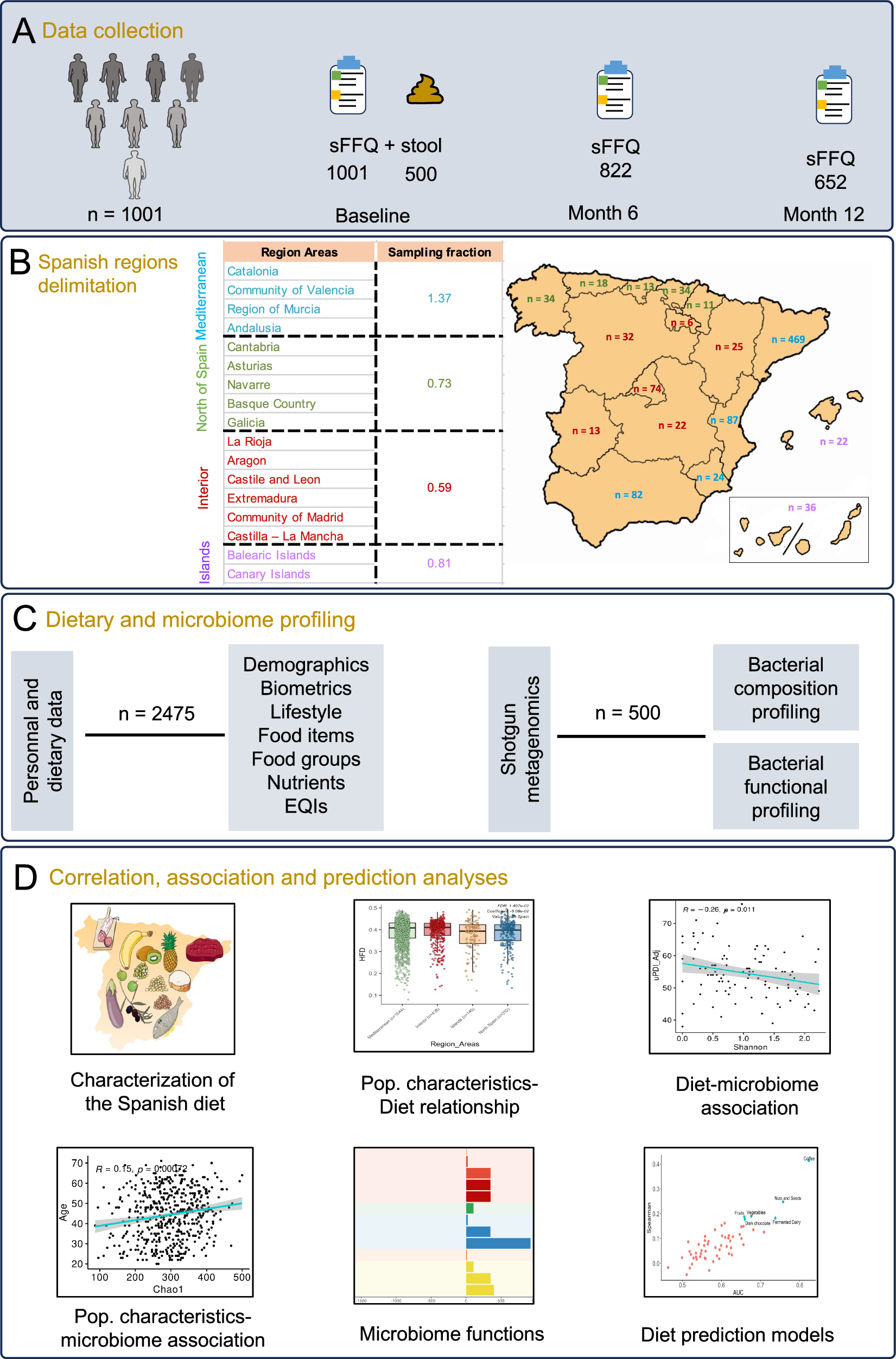
Low consumption of whole grains, fruits, and vegetables has been identified as dietary risks for non-communicable diseases such as inflammatory bowel diseases (IBDs). We explore how individual and lifestyle factors influence these risks by shaping gut microbiome composition. 1001 healthy participants from all Spanish regions provided personal and dietary data at baseline, six, and twelve months, yielding 2475 responses. Gut microbiome data were analyzed for 500 healthy participants and 321 IBD patients. Our findings reveal that adherence to national dietary guidelines—characterized by diets rich in nuts, seeds, fruits, and vegetables—was associated with greater microbial diversity and reduced IBD-related dysbiosis. Finally, we observed variations in dietary patterns and microbiome diversity and composition across age groups, genders, regions, seasons, and transit time. This study is among the first to uncover dietary intake associated with IBD-related dysbiosis and to propose an interactive website for participants (https://manichanh.vhir.org/POP/en).
The sugar conspiracy | Ian Leslie
The Long Read: In 1972, a British scientist sounded the alarm that sugar – and not fat – was the greatest danger to our health. But his findings were ridiculed and his reputation ruined. How did the world’s top nutrition scientists get it so wrong for so long?

The sugar conspiracy | Ian Leslie
The Long Read: In 1972, a British scientist sounded the alarm that sugar – and not fat – was the greatest danger to our health. But his findings were ridiculed and his reputation ruined. How did the world’s top nutrition scientists get it so wrong for so long?