

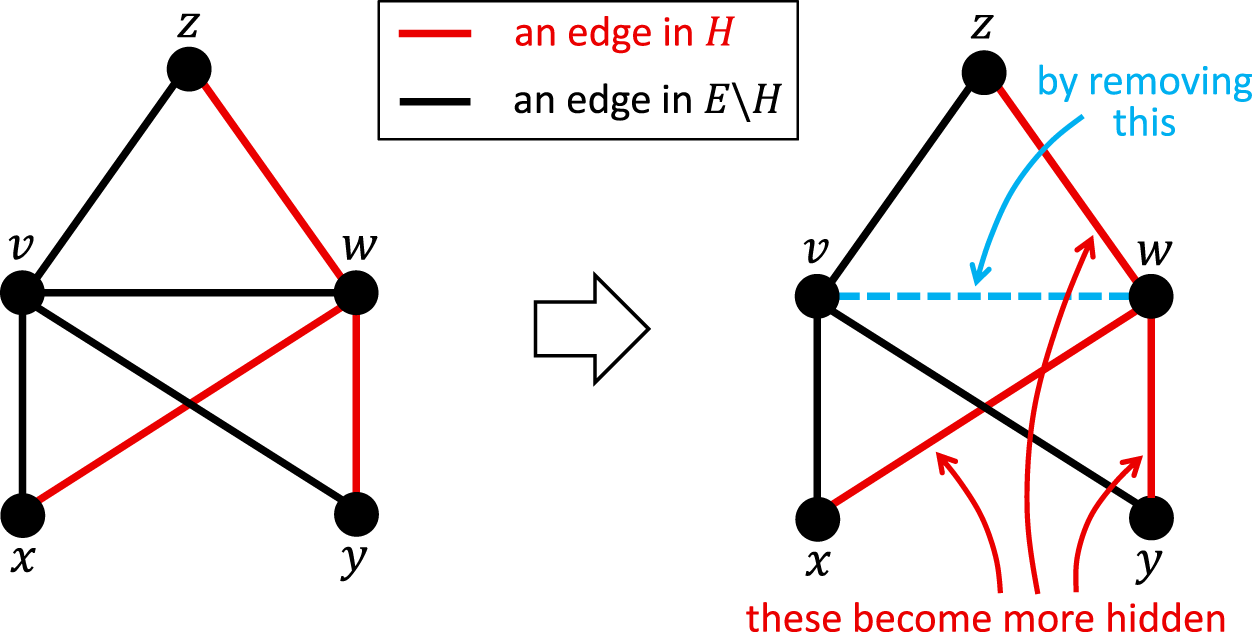
Our private connections can be exposed by link prediction algorithms. To date, this threat has only been addressed from the perspective of a central authority, completely neglecting the possibility that members of the social network can themselves mitigate such threats. We fill this gap by studying how an individual can rewire her own network neighborhood to hide her sensitive relationships. We prove that the optimization problem faced by such an individual is NP-complete, meaning that any attempt to identify an optimal way to hide one’s relationships is futile. Based on this, we shift our attention towards developing effective, albeit not optimal, heuristics that are readily-applicable by users of existing social media platforms to conceal any connections they deem sensitive. Our empirical evaluation reveals that it is more beneficial to focus on “unfriending” carefully-chosen individuals rather than befriending new ones. In fact, by avoiding communication with just 5 individuals, it is possible for one to hide some of her relationships in a massive, real-life telecommunication network, consisting of 829,725 phone calls between 248,763 individuals. Our analysis also shows that link prediction algorithms are more susceptible to manipulation in smaller and denser networks. Evaluating the error vs. attack tolerance of link prediction algorithms reveals that rewiring connections randomly may end up exposing one’s sensitive relationships, highlighting the importance of the strategic aspect. In an age where personal relationships continue to leave digital traces, our results empower the general public to proactively protect their private relationships.
Models for Trust Inference in Social Networks
Interpersonal trust between any two people in social networks is hard to gauge, and even harder to infer, given that these two people are not connected by an immediate social link, such as friendship or acquaintanceship. In order to be able to make accurate inferences for an arbitrary tuple of people in a given social environment, we present an approach, named Appleseed, that is based on mechanics taken from neuropsychology, known as spreading activation models. Compelling in its simplicity, we relate the concept to trust propagation and evaluation in an intuitive fashion. While Appleseed works very well when paths between two arbitrary people in the network can be established, no inference of trust is possible when this is not the case. To this end, we present several algorithms for inferring trust that go beyond network structure and demonstrate their accuracy in real social networks. We also show how these algorithms can be augmented with additional data that may be available in some contexts.

Modelling Opinion Dynamics in the Age of Algorithmic Personalisation
Modern technology has drastically changed the way we interact and consume information. For example, online social platforms allow for seamless communication exchanges at an unprecedented scale. However, we are still bounded by cognitive and temporal constraints. Our attention is limited and extremely valuable. Algorithmic personalisation has become a standard approach to tackle the information overload problem. As result, the exposure to our friends' opinions and our perception about important issues might be distorted. However, the effects of algorithmic gatekeeping on our hyper-connected society are poorly understood. Here, we devise an opinion dynamics model where individuals are connected through a social network and adopt opinions as function of the view points they are exposed to. We apply various filtering algorithms that select the opinions shown to users i) at random ii) considering time ordering or iii) their current beliefs. Furthermore, we investigate the interplay between such mechanisms and crucial features of real networks. We found that algorithmic filtering might influence opinions' share and distributions, especially in case information is biased towards the current opinion of each user. These effects are reinforced in networks featuring topological and spatial correlations where echo chambers and polarisation emerge. Conversely, heterogeneity in connectivity patterns reduces such tendency. We consider also a scenario where one opinion, through nudging, is centrally pushed to all users. Interestingly, even minimal nudging is able to change the status quo moving it towards the desired view point. Our findings suggest that simple filtering algorithms might be powerful tools to regulate opinion dynamics taking place on social networks

Human-Algorithm Collaboration with Private Information: Naïve Advice-Weighting Behavior and Mitigation
Even if algorithms make better predictions than humans on average, humans may sometimes have private information that an algorithm does not have access to that can improve performance. How can we help humans effectively use and adjust recommendations made by algorithms in such situations? When deciding whether and how to override an algorithm’s recommendations, we hypothesize that people are biased toward following naïve advice-weighting (NAW) behavior; they take a weighted average between their own prediction and the algorithm’s prediction, with a constant weight across prediction instances regardless of whether they have valuable private information. This leads to humans overadhering to the algorithm’s predictions when their private information is valuable and underadhering when it is not. In an online experiment where participants were tasked with making demand predictions for 20 products while having access to an algorithm’s predictions, we confirm this bias toward NAW and find that it leads to a 20%–61% increase in prediction error. In a second experiment, we find that feature transparency—even when the underlying algorithm is a black box—helps users more effectively discriminate how to deviate from algorithms, resulting in a 25% reduction in prediction error. We make further improvements in a third experiment via an intervention designed to move users away from advice weighting and instead, use only their private information to inform deviations, leading to a 34% reduction in prediction error. This paper was accepted by Elena Katok, Special Issue on the Human-Algorithm Connection. Supplemental Material: The online appendix and data files are available at https://doi.org/10.1287/mnsc.2022.03850 .

Large-scale online deanonymization with LLMs
We show that large language models can be used to perform at-scale deanonymization. With full Internet access, our agent can re-identify Hacker News users and Anthropic Interviewer participants at high precision, given pseudonymous online profiles and conversations alone, matching what would take hours for a dedicated human investigator. We then design attacks for the closed-world setting. Given two databases of pseudonymous individuals, each containing unstructured text written by or about that individual, we implement a scalable attack pipeline that uses LLMs to: (1) extract identity-relevant features, (2) search for candidate matches via semantic embeddings, and (3) reason over top candidates to verify matches and reduce false positives. Compared to classical deanonymization work (e.g., on the Netflix prize) that required structured data, our approach works directly on raw user content across arbitrary platforms. We construct three datasets with known ground-truth data to evaluate our attacks. The first links Hacker News to LinkedIn profiles, using cross-platform references that appear in the profiles. Our second dataset matches users across Reddit movie discussion communities; and the third splits a single user's Reddit history in time to create two pseudonymous profiles to be matched. In each setting, LLM-based methods substantially outperform classical baselines, achieving up to 68% recall at 90% precision compared to near 0% for the best non-LLM method. Our results show that the practical obscurity protecting pseudonymous users online no longer holds and that threat models for online privacy need to be reconsidered.
The "Majority Illusion" in Social Networks
Individual’s decisions, from what product to buy to whether to engage in risky behavior, often depend on the choices, behaviors, or states of other people. People, however, rarely have global knowledge of the states of others, but must estimate them from the local observations of their social contacts. Network structure can significantly distort individual’s local observations. Under some conditions, a state that is globally rare in a network may be dramatically over-represented in the local neighborhoods of many individuals. This effect, which we call the “majority illusion,” leads individuals to systematically overestimate the prevalence of that state, which may accelerate the spread of social contagions. We develop a statistical model that quantifies this effect and validate it with measurements in synthetic and real-world networks. We show that the illusion is exacerbated in networks with a heterogeneous degree distribution and disassortative structure.
The Difficulty Of Private Contact Discovery
Building a social network is not easy. Social networks have value proportional to their size, so participants aren’t motivated to join new social networks which aren’t already large. It’s a paradox where if people haven’t already joined, people aren’t motivated to join. The trouble is that whi...

How to beat LinkedIn: The Game
A strategy guide for using a semi-pointless social network in all the wrong ways.

Artificial intelligence in communication impacts language and social relationships
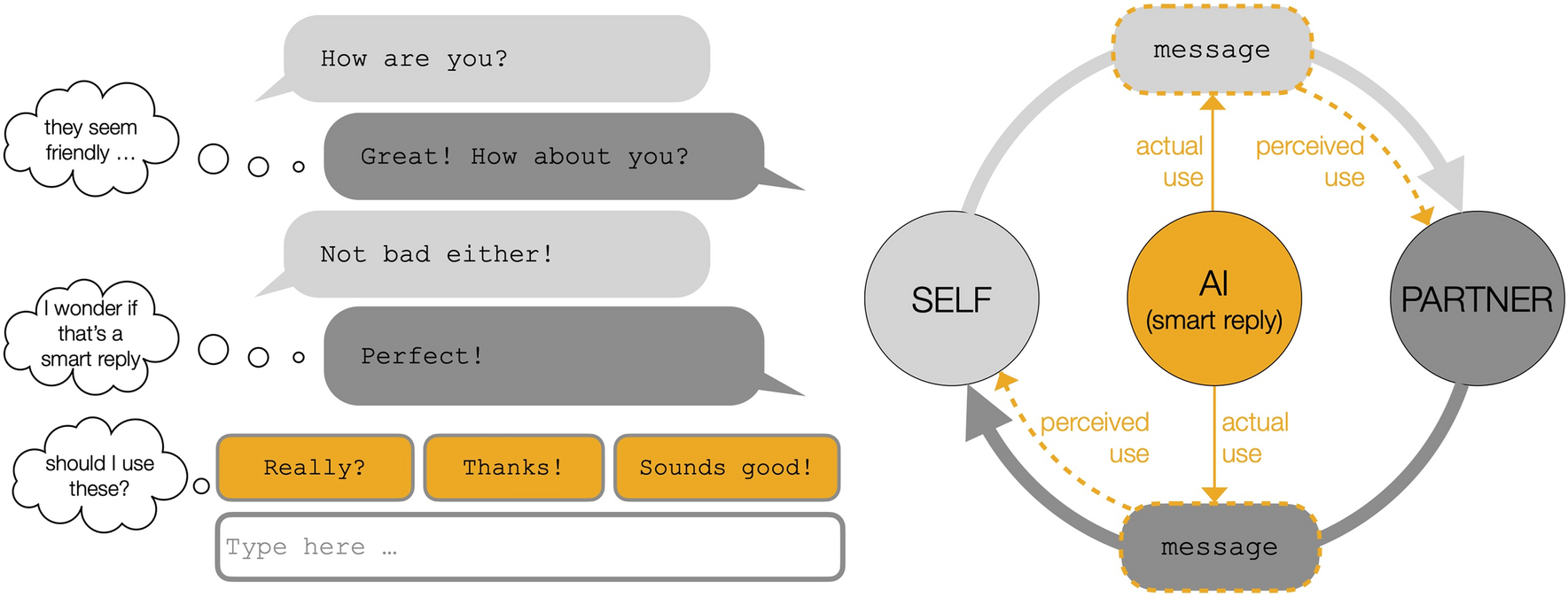
Artificial intelligence (AI) is already widely used in daily communication, but despite concerns about AI’s negative effects on society the social consequences of using it to communicate remain largely unexplored. We investigate the social consequences of one of the most pervasive AI applications, algorithmic response suggestions (“smart replies”), which are used to send billions of messages each day. Two randomized experiments provide evidence that these types of algorithmic recommender systems change how people interact with and perceive one another in both pro-social and anti-social ways. We find that using algorithmic responses changes language and social relationships. More specifically, it increases communication speed, use of positive emotional language, and conversation partners evaluate each other as closer and more cooperative. However, consistent with common assumptions about the adverse effects of AI, people are evaluated more negatively if they are suspected to be using algorithmic responses. Thus, even though AI can increase the speed of communication and improve interpersonal perceptions, the prevailing anti-social connotations of AI undermine these potential benefits if used overtly.
The Majority Illusion in Social Networks
Social behaviors are often contagious, spreading through a population as individuals imitate the decisions and choices of others. A variety of global phenomena, from innovation adoption to the emergence of social norms and political movements, arise as a result of people following a simple local rule, such as copy what others are doing. However, individuals often lack global knowledge of the behaviors of others and must estimate them from the observations of their friends' behaviors. In some cases, the structure of the underlying social network can dramatically skew an individual's local observations, making a behavior appear far more common locally than it is globally. We trace the origins of this phenomenon, which we call "the majority illusion," to the friendship paradox in social networks. As a result of this paradox, a behavior that is globally rare may be systematically overrepresented in the local neighborhoods of many people, i.e., among their friends. Thus, the "majority illusion" may facilitate the spread of social contagions in networks and also explain why systematic biases in social perceptions, for example, of risky behavior, arise. Using synthetic and real-world networks, we explore how the "majority illusion" depends on network structure and develop a statistical model to calculate its magnitude in a network.
Machine Unlearning
Once users have shared their data online, it is generally difficult for them to revoke access and ask for the data to be deleted. Machine learning (ML) exacerbates this problem because any model trained with said data may have memorized it, putting users at risk of a successful privacy attack exposing their information. Yet, having models unlearn is notoriously difficult. We introduce SISA training, a framework that expedites the unlearning process by strategically limiting the influence of a data point in the training procedure. While our framework is applicable to any learning algorithm, it is designed to achieve the largest improvements for stateful algorithms like stochastic gradient descent for deep neural networks. SISA training reduces the computational overhead associated with unlearning, even in the worst-case setting where unlearning requests are made uniformly across the training set. In some cases, the service provider may have a prior on the distribution of unlearning requests that will be issued by users. We may take this prior into account to partition and order data accordingly, and further decrease overhead from unlearning. Our evaluation spans several datasets from different domains, with corresponding motivations for unlearning. Under no distributional assumptions, for simple learning tasks, we observe that SISA training improves time to unlearn points from the Purchase dataset by 4.63x, and 2.45x for the SVHN dataset, over retraining from scratch. SISA training also provides a speed-up of 1.36x in retraining for complex learning tasks such as ImageNet classification; aided by transfer learning, this results in a small degradation in accuracy. Our work contributes to practical data governance in machine unlearning.
Resampling reduces bias amplification in experimental social networks
Large-scale social networks are thought to contribute to polarization by amplifying people’s biases. However, the complexity of these technologies makes it difficult to identify the mechanisms responsible and evaluate mitigation strategies. Here we show under controlled laboratory conditions that transmission through social networks amplifies motivational biases on a simple artificial decision-making task. Participants in a large behavioural experiment showed increased rates of biased decision-making when part of a social network relative to asocial participants in 40 independently evolving populations. Drawing on ideas from Bayesian statistics, we identify a simple adjustment to content-selection algorithms that is predicted to mitigate bias amplification by generating samples of perspectives from within an individual’s network that are more representative of the wider population. In two large experiments, this strategy was effective at reducing bias amplification while maintaining the benefits of information sharing. Simulations show that this algorithm can also be effective in more complex networks.


Digital Social Norm Enforcement: Online Firestorms in Social Media
Actors of public interest today have to fear the adverse impact that stems from social media platforms. Any controversial behavior may promptly trigger temporal, but potentially devastating storms of emotional and aggressive outrage, so called online firestorms. Popular targets of online firestorms are companies, politicians, celebrities, media, academics and many more. This article introduces social norm theory to understand online aggression in a social-political online setting, challenging the popular assumption that online anonymity is one of the principle factors that promotes aggression. We underpin this social norm view by analyzing a major social media platform concerned with public affairs over a period of three years entailing 532,197 comments on 1,612 online petitions. Results show that in the context of online firestorms, non-anonymous individuals are more aggressive compared to anonymous individuals. This effect is reinforced if selective incentives are present and if aggressors are intrinsically motivated.