

Artificial intelligence (AI) is often framed as replacing scientific expertise, especially in bioinformatics. We argue instead that AI is a powerful accelerant whose value depends on expert guidance in design, data curation, interpretation, and governance. Because AI cannot judge biological meaning or verify scientific validity, bioinformaticians remain essential. Their role is shifting from workflow execution toward AI design, complex discovery, and responsible institutional leadership across research, translation, and clinical practice.
AI Scientists as Engines of Discovery: A Case for Development within Reformed Institutions
Agentic artificial intelligence (AI) systems are beginning to assist, accelerate, and partially automate scientific discovery, performing tasks that span literature synthesis, code generation, data analysis, hypothesis proposal, and model criticism. We argue that this transition is qualitative rather than incremental, and that suitably designed multi-agent systems may evolve from passive computational tools into ``AI scientists'' that can expand the hypothesis-generating and verification capacity of science. Such systems must be developed and deployed within a scientific ecosystem fit for purpose: institutions must be redesigned for verification, accountability, interpretability, and dual-use safety. We sketch how multi-agent architectures, illustrated by the prototype framework \textit{Denario}, accelerate the discovery cycle and traverse model spaces beyond human reach; examine what this implies for authorship, peer review, and the enduring role of human scientists; and close with recommendations for governing AI as an epistemic actor rather than a mere instrument.

Artificial intelligence and illusions of understanding in scientific research
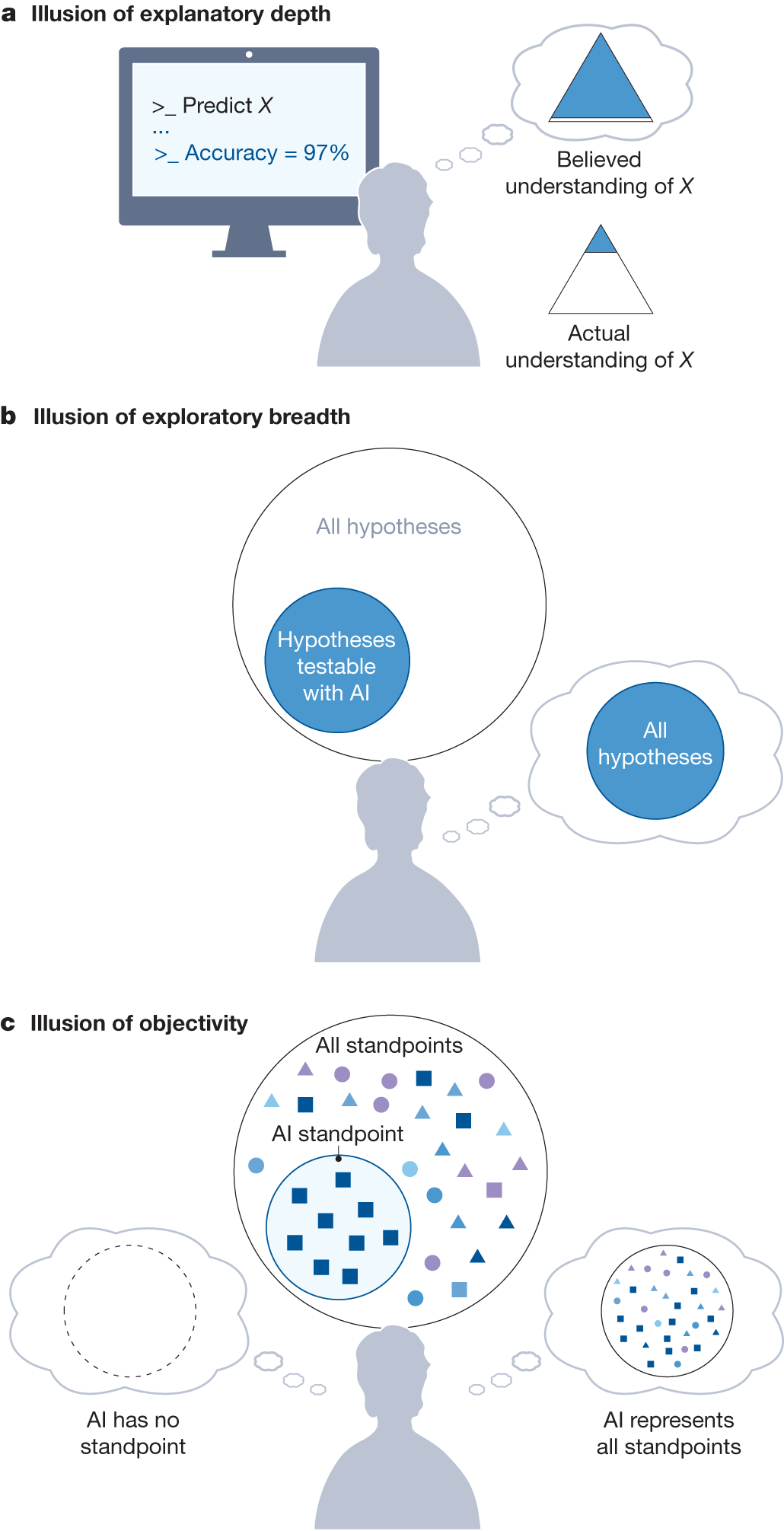
Scientists are enthusiastically imagining ways in which artificial intelligence (AI) tools might improve research. Why are AI tools so attractive and what are the risks of implementing them across the research pipeline? Here we develop a taxonomy of scientists’ visions for AI, observing that their appeal comes from promises to improve productivity and objectivity by overcoming human shortcomings. But proposed AI solutions can also exploit our cognitive limitations, making us vulnerable to illusions of understanding in which we believe we understand more about the world than we actually do. Such illusions obscure the scientific community’s ability to see the formation of scientific monocultures, in which some types of methods, questions and viewpoints come to dominate alternative approaches, making science less innovative and more vulnerable to errors. The proliferation of AI tools in science risks introducing a phase of scientific enquiry in which we produce more but understand less. By analysing the appeal of these tools, we provide a framework for advancing discussions of responsible knowledge production in the age of AI.
Panel: Biodesign x AI: Interactions in the Algorithmic Wet Lab
#bioinformatics #computationalbiology #aiforscience #singlecell #spatialtranscriptomics #opensource #codex #claudecode #mcp #agenticai | Herry Z.
BioNexus: A Scientific Reliability Layer for Agentic Biology As coding agents such as OpenAI Codex, Claude Code, and Cursor become increasingly capable of running bioinformatics workflows, a new problem emerges: Knowing how to run an analysis does not mean knowing when that analysis is scientifically valid. BioNexus is an open-source project exploring a reliability layer for biological coding agents rather than another standalone AI scientist. Its current architecture focuses on: Machine-readable Capability Contracts — define input semantics, scientific preconditions, canonical backends, refusal conditions, and evidence requirements. EvidenceCard 2.1 — separates execution state from scientific evidence and grades conclusions as PRELIMINARY, SUPPORTED, ROBUST, REPLICATED, FRAGILE, or ABSTAIN. Scientific Intent & Invariant Routing — detects invalid analyses such as pseudoreplication, incompatible data representations, or missing backends. BioNexus Eval — evaluates routing, unsafe claims, refusal behavior, and scientific outcomes. RunBundle Artifact Contract — packages inputs, parameters, results, provenance, environment, and evidence into reproducible machine-readable runs. The long-term goal is simple: Make scientific reliability a first-class infrastructure layer for agentic biology. BioNexus is still evolving, and I am actively looking for contributors in bioinformatics, single-cell/spatial omics, scientific benchmarking, MCP, reproducibility, and AI coding agents. PRs, issues, benchmark datasets, scientific critiques, and failure cases are especially welcome. GitHub: HERRY423/BioNexus #Bioinformatics #ComputationalBiology #AIForScience #SingleCell #SpatialTranscriptomics #OpenSource #Codex #ClaudeCode #MCP #AgenticAI

No. 027: AGMAI advisory group, Millennium Problems for biology, autonomous research pipelines - The Hallway Track
The Hallway Track No. 027 - How AI is affecting the practice of science
No. 022: Palomar proof registry, autonomous protein design, synthetic consensus - The Hallway Track
The Hallway Track No. 022 - How AI is affecting the practice of science
Verification in the Age of AI Scientists
AI Scientists now operate at a scale that outpaces human capacity for manual review. Systems such as Sakana’s AI Scientist write entire workshop papers end-to-end. Lila Sciences runs autonomous ``AI Science Factories’’ that hypothesize, experiment, and iterate without human guidance. FutureHouse’s Kosmos and Robin generate thousands of candidate hypotheses in a single run, and Google’s Co-Scientist proposes testable experiments at a rate no laboratory can fully evaluate. Each of these systems emphasizes verified results, yet that standard ranges from near-perfect formal proof in mathematics to decade-long clinical trials in medicine, with no shared framework for judging sufficiency across domains. As outputs scale beyond what humans can manually inspect, the question of which results to trust becomes as hard as generating them. The bottleneck for AI for Science is no longer hypothesis generation, it is verification.
ScientistTwo: Pioneering the Human Knowledge Frontier with Autonomous AI
Scientific discovery is defined by the ability to identify the boundaries of existing knowledge and venture into unexplored territory. The ultimate vision for AI in science is problem-driven autonomous research: given a fundamental challenge by a human expert, the AI independently navigates the scientific landscape, uncovers theoretical and empirical bottlenecks, and systematically expands the frontier of knowledge. In this paper, we introduce ScientistTwo, a fully autonomous multi-agent framework designed to realize this vision. Specifically, ScientistTwo takes an initial problem as input, establishes state-of-the-art baselines, formulates novel hypotheses, and coordinates specialized agents to orchestrate an end-to-end discovery cycle without human intervention. Moreover, the framework rigorously conducts experiments using diverse datasets and metrics, refines methodologies through automated ablation studies, and validates research findings via a closed-loop simulated peer-review rebuttal engine. To evaluate ScientistTwo's capabilities against the highest standards of human scientific achievement, we benchmark it across papers accepted at top-tier conferences such as ICLR, ICML, and NeurIPS. As a result, ScientistTwo autonomously generates expert-level, publishable papers and fully verified, executable codebases. Its solutions consistently outperform human state-of-the-art models, and achieve higher average review ratings than human-authored papers under automated AI review agents. These results show that ScientistTwo is not merely an assistive tool but an autonomous scientific pioneer capable of pushing the frontiers of human discovery. Project website: https://scientist-two.github.io/
AI as the Catalyst of the New Paradigm of Science? | Cadmus Journal
The rapid advancement of Artificial Intelligence (AI) is reshaping the landscape of scientific inquiry. This article examines the challenges confronting modern science, including knowledge fragmentation, diminishing returns of current paradigms, and the disconnect between science and society. It explores how AI offers solutions enhancing collaboration and integrating knowledge—as well as considers the possible “darker side” of using AI in research. However, the advent of AI in science not only enhances scientific research but also redefines the role of human researchers and fosters a new paradigm of human understanding. By embracing these transformations, a more cohesive and responsive scientific enterprise can emerge.
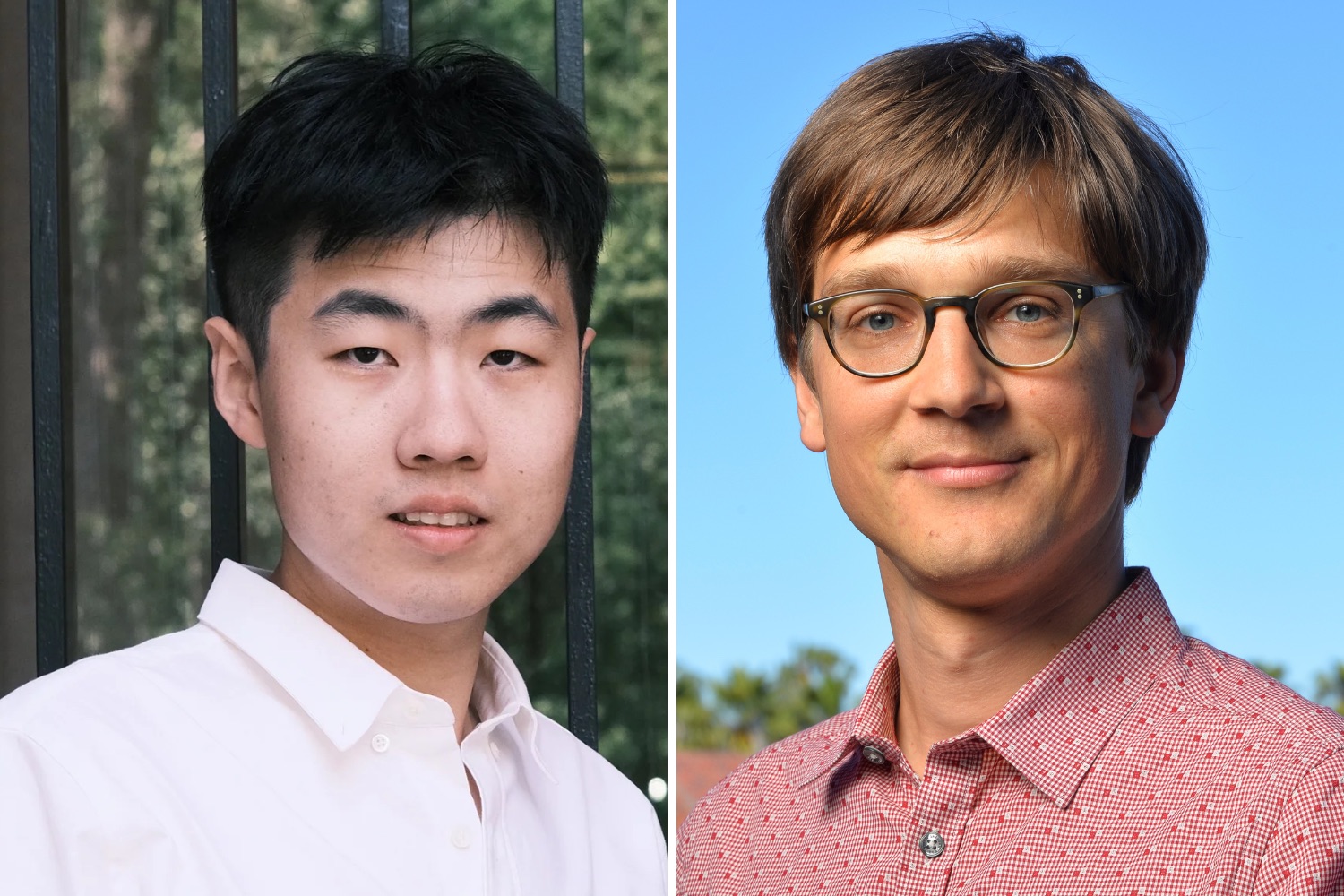
Meet Biomni – an AI-powered biomedical co-scientist
In creating a comprehensive, AI-enabled research agent for the biomedical sciences, Stanford researchers hope to speed innovation by eliminating the tedium of scientific legwork.
No. 016: Biomni in Science, Co-Scientist in Nature, open-vs-closed AI workbenches - The Hallway Track
The Hallway Track No. 016 - How AI is affecting the practice of science
No. 010: AutoScientists governance, AI-agent monoculture, nonsense-term retractions - The Hallway Track
The Hallway Track No. 010 - How AI is affecting the practice of science
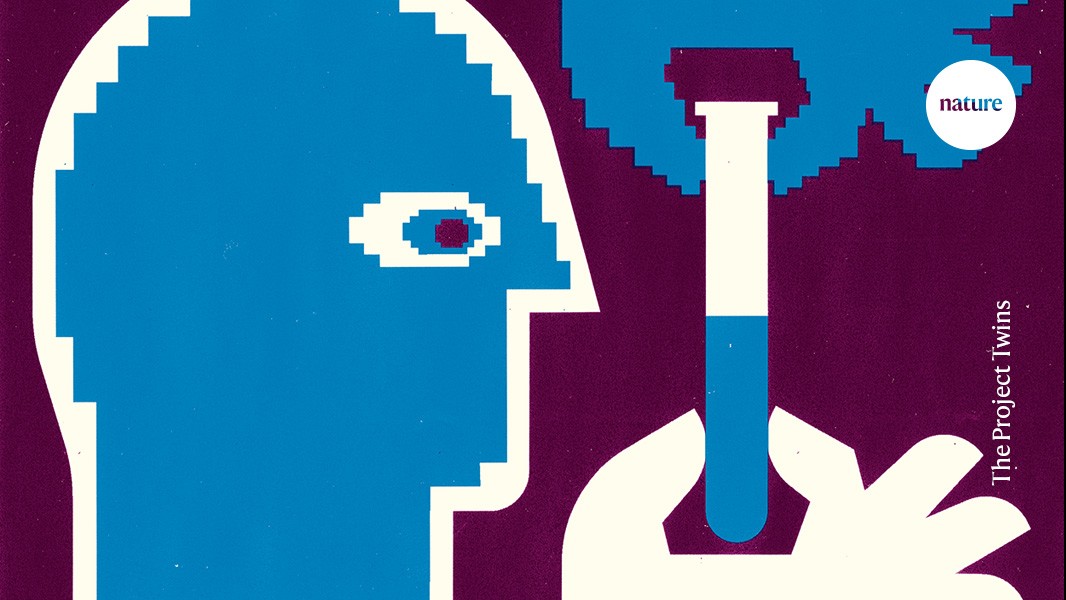
AI co-scientists are revolutionizing how research is done
Artificial-intelligence systems can generate hypotheses, design experiments and analyse data — but humans still need to decide what makes sense.
Company Offering ‘100% Human-Written, Never AI’ Medical Research Is Entirely AI
Research Gold's team of human methodologists are either AI generated or using the identity of real people without their permission
Company Offering ‘100% Human-Written, Never AI’ Medical Research Is Entirely AI
Research Gold's team of human methodologists are either AI generated or using the identity of real people without their permission
Artificial intelligence tools expand scientists’ impact but contract science’s focus
Developments in artificial intelligence (AI) have accelerated scientific discovery1. Alongside recent AI-oriented Nobel prizes2–9, these trends establish the role of AI tools in science10. This advancement raises questions about the influence of AI tools on scientists and science as a whole, and highlights a potential conflict between individual and collective benefits11. To evaluate these questions, we used a pretrained language model to identify AI-augmented research, with an F1-score of 0.875 in validation against expert-labelled data. Using a dataset of 41.3 million research papers across the natural sciences and covering distinct eras of AI, here we show an accelerated adoption of AI tools among scientists and consistent professional advantages associated with AI usage, but a collective narrowing of scientific focus. Scientists who engage in AI-augmented research publish 3.02 times more papers, receive 4.84 times more citations and become research project leaders 1.37 years earlier than those who do not. By contrast, AI adoption shrinks the collective volume of scientific topics studied by 4.63% and decreases scientists’ engagement with one another by 22%. By consequence, adoption of AI in science presents what seems to be a paradox: an expansion of individual scientists’ impact but a contraction in collective science’s reach, as AI-augmented work moves collectively towards areas richest in data. With reduced follow-on engagement, AI tools seem to automate established fields rather than explore new ones, highlighting a tension between personal advancement and collective scientific progress.
