

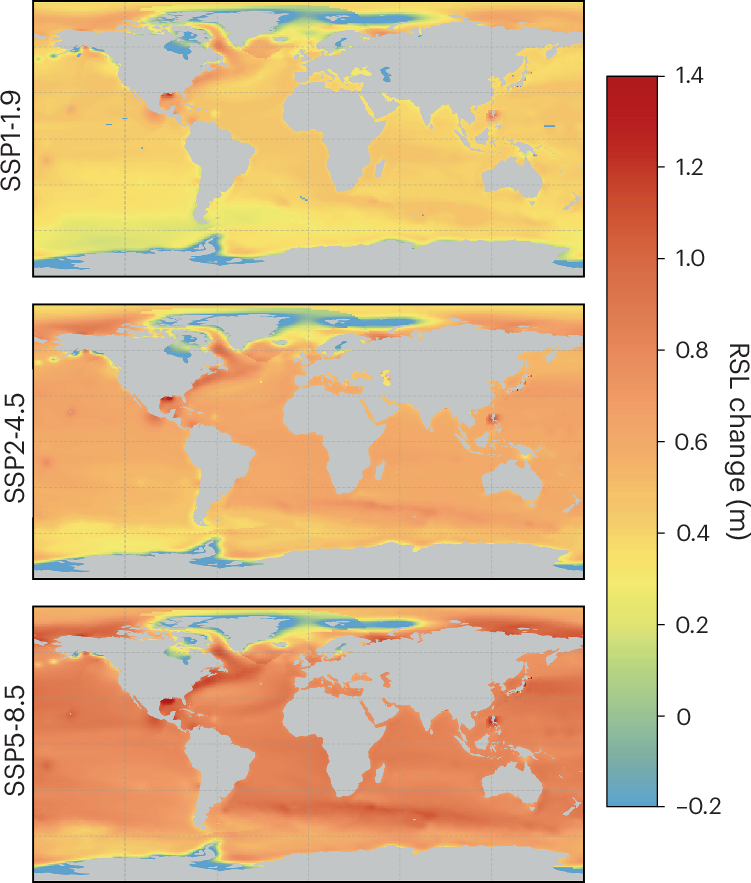
With global temperatures poised to exceed the 1.5 °C Paris Agreement threshold—a level that triggered substantial ice-sheet collapse during the Last Interglacial—low-elevation coastal zones face sea-level commitments far beyond current planning horizons. With this geological frame of reference, we examine the impact of sea-level rise on what may be the most physically vulnerable coastal zone in the world using prehistoric and contemporary patterns of human mobility. We highlight the positive aspects of the recently commenced out-migration in this region and argue that the fate of communities landwards of this coastal zone will be decided in the next few decades.
How Climate Migration Will Reshape America (Published 2020)
Millions will be displaced in the coming decades by fires, hurricanes, extreme heat and rising seas. Where will they go?

Wildlife destruction 'not a slippery slope but a series of cliff edges'
New study finds ocean ecosystems likely to collapse in 2020s and land species in 2040s unless global warming stemmed

The Gargantuan Lie That is Collapsing The World’s Climate
Thinking we have time left to address climate change, or that “Net Zero by 2050” will save us, is driving us toward full social collapse in ways that become more obvious with every new broken temperature record.

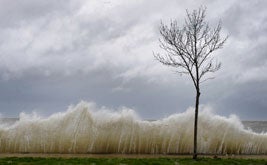
We Are All From New Orleans Now: Climate Change, Hurricanes and the Fate of America's Coastal Cities
Without immediate action, cities like New York and Washington face a future of massive levees, floodgates and ecological catastrophe.
Home
reimagining civilizationwith floating cities Seasteading means building floating societies with significant political autonomy. Nearly half the world’s surface is unclaimed by any nation-state, and many coastal nations can legislate seasteads in their territorial waters.
Manage derailment risks to avoid Hothouse Earth
The risk of a ‘Hothouse Earth’ trajectory has become increasingly prominent in debates about Earth system stability and climate overshoot. Existing analyses primarily focus on biophysical feedbacks that may amplify warming beyond direct anthropogenic forcing. We argue the concept has not previously incorporated how social destabilisation lowers the effective threshold at which biophysical tipping dynamics become self-sustaining, independently of further anthropogenic forcing and so undermines the capacity for planetary stewardship. We define ‘derailment risk’ as the possibility that escalating Earth system disruption weakens the social, political, and economic conditions required to sustain mitigation, adaptation, and ecological restoration. Such risks emerge when climate impacts contribute to a wide range of challenges, including debt crises, institutional erosion, political fragmentation, supply-chain instability, and declining public support for environmental action. These reinforcing feedbacks may reduce humanity’s capacity to respond even before biophysical tipping thresholds are crossed. We therefore extend the Hothouse Earth framework by incorporating social dynamics into the Earth system stability landscape. We propose a three-stage framework for assessing and managing derailment risks: conceptual mapping of socio-biophysical feedbacks; anticipatory resilience-building interventions; responsive governance strategies for periods of escalating instability. We conclude that planetary stewardship should prioritise maintaining and expanding collective agency under worsening Earth system stress.
Earth on verge of five catastrophic climate tipping points, scientists warn
Humanity faces ‘devastating domino effects’ including mass displacement and financial ruin as planet warms
Social tipping dynamics for stabilizing Earth’s climate by 2050 | PNAS
Safely achieving the goals of the Paris Climate Agreement requires a worldwide transformation to carbon-neutral societies within the next 30 y. Acc...

A recent doubling of global warming rate signals a 1.5 °C breach by 2028
Timely and accurate projections of when global warming will exceed the Paris Agreement’s 1.5 °C threshold are essential for effective climate policy. Existing estimates place this exceedance in the early 2030 s but carry substantial uncertainty. Here we analyze the latest observational temperature records through 2025 and identify a statistically significant doubling of the global warming rate during 2011–2025 (0.40 °C per decade) compared to 1971–2025 (0.20 °C per decade). Extrapolating this accelerated rate projects a crossing of the 1.5 °C threshold by 2028, nearly a decade earlier than previous estimates. Regional analyses attribute this acceleration primarily to intensified warming over East Asia–the North Pacific, mid-latitude Eurasia, and the South Atlantic–Antarctic regions. The ensemble mean of 26 climate models fails to capture the observed doubling of the warming rate, simulating a rate of only 0.29 °C per decade. These findings suggest a narrower window remains to limit warming to 1.5 °C, underscoring the urgency for rapid and substantial reductions in greenhouse gas emissions.
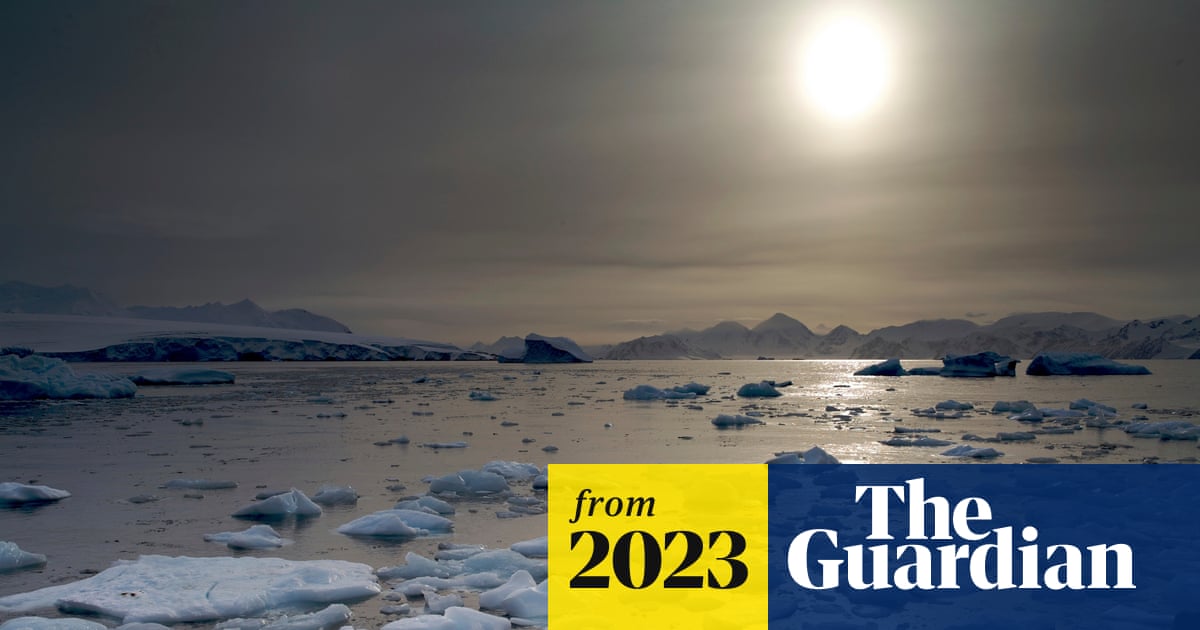
‘Simply mind-boggling’: world record temperature jump in Antarctic raises fears of catastrophe
An unprecedented leap of 38.5C in the coldest place on Earth is a harbinger of a disaster for humans and the local ecosystem
Scientists Trace Society’s Myths to Primordial Origins
Analyzing how stories change in the retelling down through the generations sheds light on the history of human migration going as far back as the Paleolithic period

Scientists Trace Society’s Myths to Primordial Origins
Analyzing how stories change in the retelling down through the generations sheds light on the history of human migration going as far back as the Paleolithic period
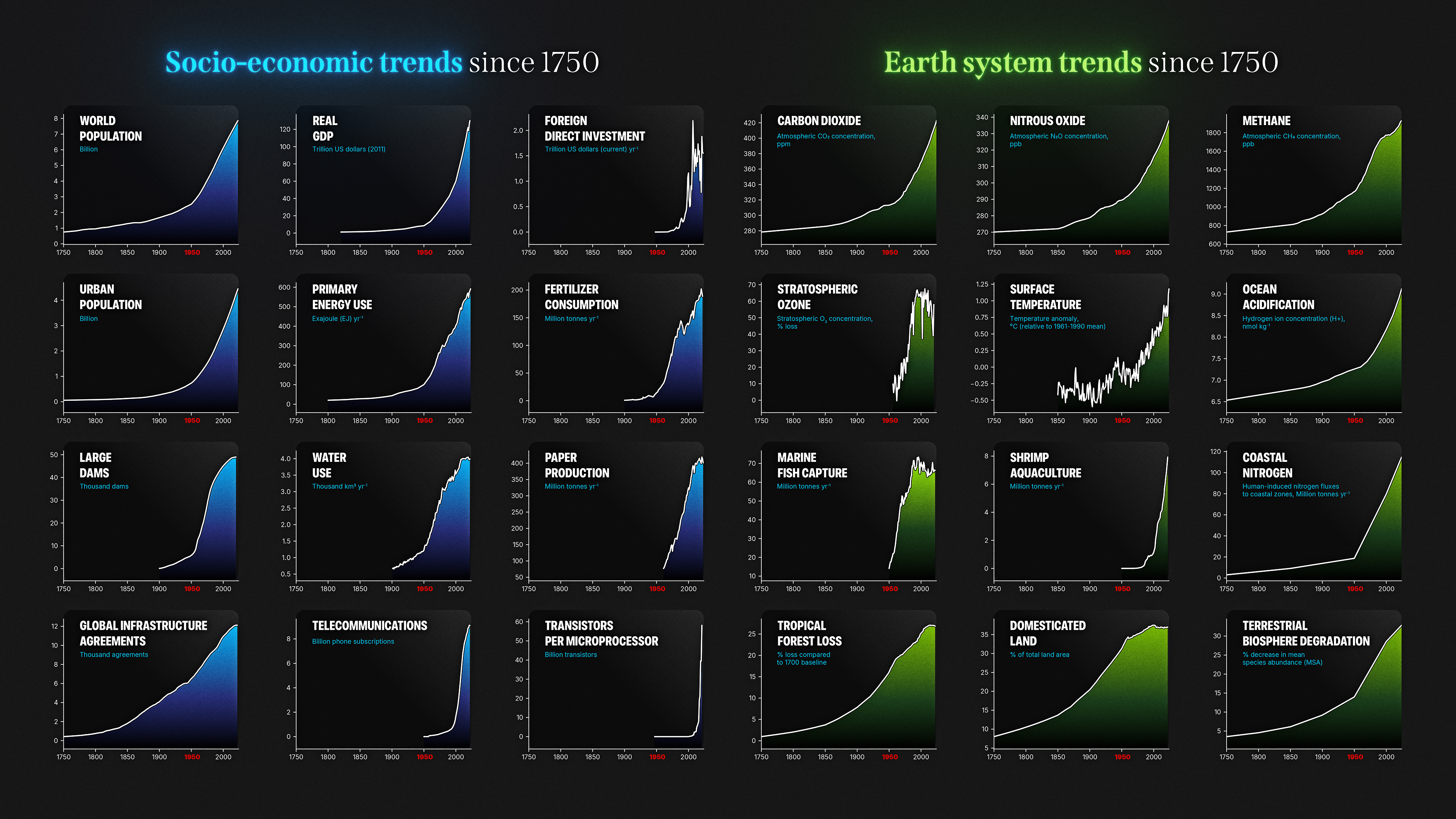
The Great Acceleration: How Humanity Changed Earth
Explore the Great Acceleration — the explosive post-1950 surge in human activity reshaping Earth's climate, biodiversity, and ocean systems.
Combating ecosystem collapse from the tropics to the Antarctic
Abstract Globally, collapse of ecosystems—potentially irreversible change to ecosystem structure, composition and function—imperils biodiversity, human health and well‐being. We examine the current state and recent trajectories of 19 ecosystems, spanning 58° of latitude across 7.7 M km 2 , from Australia's coral reefs to terrestrial Antarctica. Pressures from global climate change and regional human impacts, occurring as chronic ‘presses’ and/or acute ‘pulses’, drive ecosystem collapse. Ecosystem responses to 5–17 pressures were categorised as four collapse profiles—abrupt, smooth, stepped and fluctuating. The manifestation of widespread ecosystem collapse is a stark warning of the necessity to take action. We present a three‐step assessment and management framework (3As Pathway Awareness , Anticipation and Action ) to aid strategic and effective mitigation to alleviate further degradation to help secure our future.

We only have 8 years left before: deglaciation of W. Antarctica begins 80% of coral reefs die Arctic sea ice disappears world crops fail simultaneously 40% of N. American birds go extinct rainforest collapse is locked in The planet you think you're living on no longer exists.
We only have 8 years left before:deglaciation of W. Antarctica begins80% of coral reefs dieArctic sea ice disappearsworld crops fail simultaneously40% of N. American birds go extinctrainforest collapse is locked inThe planet you think you're living on no longer exists.— Ben See (@ClimateBen) January 25, 2020