


Estimating the epileptogenic zone network (EZN) is an important part of the diagnosis of drug-resistant focal epilepsy and has a pivotal role in treatment and intervention. Virtual brain twins provide a modeling method for personalized diagnosis and treatment. They integrate patient-specific brain topography with structural connectivity from anatomical neuroimaging such as magnetic resonance imaging, and dynamic activity from functional recordings such as electroencephalography (EEG) and stereo-EEG (SEEG). Seizures show rich spatial and temporal features in functional recordings, which can be exploited to estimate the EZN. Stimulation-induced seizures can provide important and complementary information. Here we consider invasive SEEG stimulation and non-invasive temporal interference stimulation as a complementary approach. This paper offers a high-resolution virtual brain twin framework for EZN diagnosis based on stimulation-induced seizures. It provides an important methodological and conceptual basis to make the transition from invasive to non-invasive diagnosis and treatment of drug-resistant focal epilepsy.
E11 Bio | Moonshot Neuroscience
An FRO building scalable single-cell brain circuit mapping.

Foundation Model Predicts Brain Responses to Visual and Auditory Stimuli | Elisa Cascardi posted on the topic | LinkedIn
Thrilled to share this work with the world! Today, we're releasing a foundation model that predicts how the human brain responds to almost any sight or sound -- and replace the need for human scans to significantly fast-track neuroscience and clinical research. 🧠 With this model, we can simulate brain responses to advance our understanding of the brain -- without the need for costly human brain scans 🌐 By using improved understanding of how efficient our brains perceive the world around us, we can guide the development of more advanced AI systems 👩⚕️ With computer-simulated experimentation, we can now speedup clinical research to diagnose neurological diseases and find treatments faster We've open sourced the model and code for researchers to use and build on, and an interactive demo for you to learn more -- see below! 📄 Paper: https://lnkd.in/e7cbunJp 💻 Code: https://lnkd.in/ebwBVuJp ▶️ Demo: https://lnkd.in/eEUVxP4S 🤗 Model: https://lnkd.in/e2T8nPJP So thrilled to be a part of this team with Stéphane d'Ascoli Jean-Rémi King Jérémy RAPIN Yohann Benchetrit Teon Brooks Katelyn Begany Joséphine Raugel Hubert Banville and for the great teamwork with Diego Marcos Dominic Giardini bringing this research to life! #neuroscience #AI #aiforscience #opensource #neuroAI
Inventing the future: A neuroscience research roadmap
The past decade of transformative advances in neurotechnology portends an exciting future for neuroscience. This NeuroView charts a strategic path to accelerate and integrate research discovery and speed the development of new cures for human brain disorders.

Introducing TRIBE v2: AI Model Predicts Human Brain Responses | AI at Meta posted on the topic | LinkedIn
Today we're introducing TRIBE v2, a foundation model trained to predict how the human brain responds to almost any sight or sound. Building on our Algonauts 2025 award-winning architecture, TRIBE v2 draws on 500+ hours of fMRI recordings from 700+ people to create a digital twin of neural activity. It enables zero-shot predictions for new subjects, languages, and tasks, consistently outperforming standard modeling approaches. We’re releasing the model, codebase, paper, and an interactive demo to help researchers advance neuroscience, apply brain insights to build better AI, and use computational simulation to speed up breakthroughs in neurological disease diagnosis and treatment. Try the demo and learn more here: https://go.meta.me/tribe2 | 175 comments on LinkedIn
DANDI
DANDI: Distributed Archives for Neurophysiology Data Integration The DANDI platform is supported by the BRAIN Initiative for publishing, sharing, and processing neurophysiology data. The archive accepts cellular neurophysiology data including electrophysiology, optophysiology, and behavioral time-series, and images from immunostaining experiments. The platform is now available for data upload and distribution. The storage of data in the archive is also supported by the Amazon Opendata program. The data in the archive can be browsed using the Data Portal. For detailed instructions on how to interact (view, upload, download, process) with DANDI click here.
#neuroscience #ai #python #opensource #neuroai | Jean-Rémi King | 34 comments
⚡ We're happy to release NeuralSet: a fast, simple, and scalable Python framework for Neuro-AI. Already supports: 🧠 fMRI, EEG, MEG, iEEG, spikes… recordings 💬 text, 🔊 audio, ▶️ video, 🏞️ image… embeddings 📦 `pip install neuralset` 💻 Code: https://lnkd.in/eamwxBUY 📄 Paper: https://lnkd.in/epbreyDy Made possible thanks to: Hubert Banville, Katie Begany, Corentin Bel, Yohann Benchetrit, Teon Brooks, Marlène Careil, Simon Dahan, Stéphane d'Ascoli, Alexandre Défossez, Linnea Evanson, PhD, Pablo J. Diego Simón, Julien Gadonneix, Sophia Houhamdi, Shubh Khanna, Jarod Lévy, Pierre Orhan, Antoine Ratouchniak, Joséphine Raugel, Andrea Elena Santos Revilla, Alexis Thual, Lucy (Mingfang) Zhang, Jérémy RAPIN #Neuroscience #AI #Python #OpenSource #NeuroAI | 34 comments on LinkedIn
#neuroscience #ai #python #opensource #neuroai | Jean-Rémi King | 34 comments
⚡ We're happy to release NeuralSet: a fast, simple, and scalable Python framework for Neuro-AI. Already supports: 🧠 fMRI, EEG, MEG, iEEG, spikes… recordings 💬 text, 🔊 audio, ▶️ video, 🏞️ image… embeddings 📦 `pip install neuralset` 💻 Code: https://lnkd.in/eamwxBUY 📄 Paper: https://lnkd.in/epbreyDy Made possible thanks to: Hubert Banville, Katie Begany, Corentin Bel, Yohann Benchetrit, Teon Brooks, Marlène Careil, Simon Dahan, Stéphane d'Ascoli, Alexandre Défossez, Linnea Evanson, PhD, Pablo J. Diego Simón, Julien Gadonneix, Sophia Houhamdi, Shubh Khanna, Jarod Lévy, Pierre Orhan, Antoine Ratouchniak, Joséphine Raugel, Andrea Elena Santos Revilla, Alexis Thual, Lucy (Mingfang) Zhang, Jérémy RAPIN #Neuroscience #AI #Python #OpenSource #NeuroAI | 34 comments on LinkedIn

BrainWave: A Brain Signal Foundation Model for Clinical Applications
Neural electrical activity is fundamental to brain function, underlying a range of cognitive and behavioral processes, including movement, perception, decision-making, and consciousness. Abnormal patterns of neural signaling often indicate the presence of underlying brain diseases. The variability among individuals, the diverse array of clinical symptoms from various brain disorders, and the limited availability of diagnostic classifications, have posed significant barriers to formulating reliable model of neural signals for diverse application contexts. Here, we present BrainWave, the first foundation model for both invasive and non-invasive neural recordings, pretrained on more than 40,000 hours of electrical brain recordings (13.79 TB of data) from approximately 16,000 individuals. Our analysis show that BrainWave outperforms all other competing models and consistently achieves state-of-the-art performance in the diagnosis and identification of neurological disorders. We also demonstrate robust capabilities of BrainWave in enabling zero-shot transfer learning across varying recording conditions and brain diseases, as well as few-shot classification without fine-tuning, suggesting that BrainWave learns highly generalizable representations of neural signals. We hence believe that open-sourcing BrainWave will facilitate a wide range of clinical applications in medicine, paving the way for AI-driven approaches to investigate brain disorders and advance neuroscience research.

Deep learning-based electroencephalography analysis: a systematic review
CONTEXT: Electroencephalography (EEG) is a complex signal and can require several years of training, as well as advanced signal processing and feature extraction methodologies to be correctly interpreted. Recently, deep learning (DL) has shown great promise in helping make sense of EEG signals due to its capacity to learn good feature representations from raw data. Whether DL truly presents advantages as compared to more traditional EEG processing approaches, however, remains an open question. OBJECTIVE: In this work, we review 154 papers that apply DL to EEG, published between January 2010 and July 2018, and spanning different application domains such as epilepsy, sleep, brain-computer interfacing, and cognitive and affective monitoring. We extract trends and highlight interesting approaches from this large body of literature in order to inform future research and formulate recommendations. METHODS: Major databases spanning the fields of science and engineering were queried to identify relevant studies published in scientific journals, conferences, and electronic preprint repositories. Various data items were extracted for each study pertaining to (1) the data, (2) the preprocessing methodology, (3) the DL design choices, (4) the results, and (5) the reproducibility of the experiments. These items were then analyzed one by one to uncover trends. RESULTS: Our analysis reveals that the amount of EEG data used across studies varies from less than ten minutes to thousands of hours, while the number of samples seen during training by a network varies from a few dozens to several millions, depending on how epochs are extracted. Interestingly, we saw that more than half the studies used publicly available data and that there has also been a clear shift from intra-subject to inter-subject approaches over the last few years. About [Formula: see text] of the studies used convolutional neural networks (CNNs), while [Formula: see text] used recurrent neural networks (RNNs), most often with a total of 3-10 layers. Moreover, almost one-half of the studies trained their models on raw or preprocessed EEG time series. Finally, the median gain in accuracy of DL approaches over traditional baselines was [Formula: see text] across all relevant studies. More importantly, however, we noticed studies often suffer from poor reproducibility: a majority of papers would be hard or impossible to reproduce given the unavailability of their data and code. SIGNIFICANCE: To help the community progress and share work more effectively, we provide a list of recommendations for future studies and emphasize the need for more reproducible research. We also make our summary table of DL and EEG papers available and invite authors of published work to contribute to it directly. A planned follow-up to this work will be an online public benchmarking portal listing reproducible results.
#neuroscience #ai #python #opensource #neuroai | Jean-Rémi King
⚡ We're happy to release NeuralSet: a fast, simple, and scalable Python framework for Neuro-AI. Already supports: 🧠 fMRI, EEG, MEG, iEEG, spikes… recordings 💬 text, 🔊 audio, ▶️ video, 🏞️ image… embeddings 📦 `pip install neuralset` 💻 Code: https://lnkd.in/eamwxBUY 📄 Paper: https://lnkd.in/epbreyDy Made possible thanks to: Hubert Banville, Katie Begany, Corentin Bel, Yohann Benchetrit, Teon Brooks, Marlène Careil, Simon Dahan, Stéphane d'Ascoli, Alexandre Défossez, Linnea Evanson, PhD, Pablo J. Diego Simón, Julien Gadonneix, Sophia Houhamdi, Shubh Khanna, Jarod Lévy, Pierre Orhan, Antoine Ratouchniak, Joséphine Raugel, Andrea Elena Santos Revilla, Alexis Thual, Lucy (Mingfang) Zhang, Jérémy RAPIN #Neuroscience #AI #Python #OpenSource #NeuroAI
Joshua Park on Twitter / X
It’s hard to categorize or evaluate second-brain systems because there’s no single right answer.But I found one useful lens every second brain should be evaluated through: the lifecycle of your data.Collect -> Organize -> Evolve -> Use -> GovernSo I made a curated… pic.twitter.com/GrmBFLwvEW— Joshua Park (@JoshuaIPark) May 31, 2026

Neuropeek — Accelerating the Neuro-AI convergence
Where brain data becomes shared knowledge. A community-driven platform federating neuroscience datasets, models, and tools to accelerate discovery.

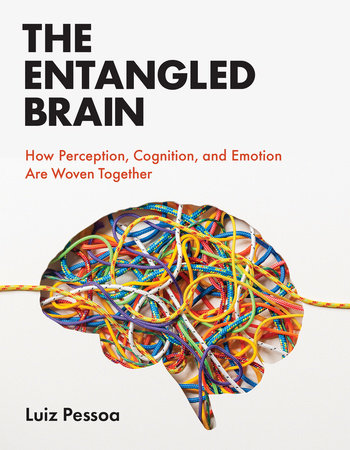
The Entangled Brain: How Perception, Cognition, and Emotion Are Woven Together
A new vision of the brain as a fully integrated, networked organ.Popular neuroscience accounts often focus on specific mind-brain aspects like addiction, c
#brainfoundationmodels #neuroai #eeg #meg #fmri #neuroscience #machinelearning #opensource #fair | Jarod Lévy
Today, the Brain&AI team announces a new release with NeuralBench. 📊📊📊 A unified framework for benchmarking foundation models of brain activity. This wouldn’t have been possible without the tremendous work of Hubert Banville 🎉 🎉 🎉 - 🧠 36 EEG tasks - 🗄️ 94 public datasets. - 💻 Code: https://lnkd.in/dPDMwja3 - 📄 Paper: https://lnkd.in/ddDU2p6d This package allows systematic evaluation of any foundation models. NeuralBench addresses this by defining each task end-to-end with config files (data source, preprocessing, splits, optimizer, metrics, architecture) so all models can be evaluated on the same footing. We invite the community to contribute new tasks, datasets, and models, especially for fMRI, MEG, and iEEG. The long-term goal is a fully unified benchmark across neuroimaging tasks and modalities. What's in the first release, NeuralBench-EEG v1.0: - 36 EEG tasks across 94 public datasets, spanning motor imagery, clinical classification, cognitive decoding, and phenotype prediction. - Task-specific deep learning architectures (EEGNet, Deep4, EEGConformer, CTNet, ...) benchmarked side-by-side with recent EEG foundation models (BENDR, LaBraM, BIOT, CBraMod, LUNA, REVE). - Extensible to other neuroimaging modalities: the framework already runs MEG and fMRI tasks, leveraging our NeuralSet ecosystem for accessing brain imaging data and the broader neuroscientific software stack. - Released under the MIT license. Big team effort with Stéphane d'Ascoli, Simon Dahan, Jérémy RAPIN, Marlène Careil, Yohann Benchetrit, Saarang P., Antoine Ratouchniak, Lucy (Mingfang) Zhang, Elisa Cascardi, Katie Begany Teon Brooks, and Jean-Rémi King. And special thanks: Alexandre Gramfort Thomas Moreau Arnaud Delorme Bruno A. Pierre Guetschel #BrainFoundationModels #NeuroAI #EEG #MEG #fMRI #Neuroscience #MachineLearning #OpenSource #FAIR
