

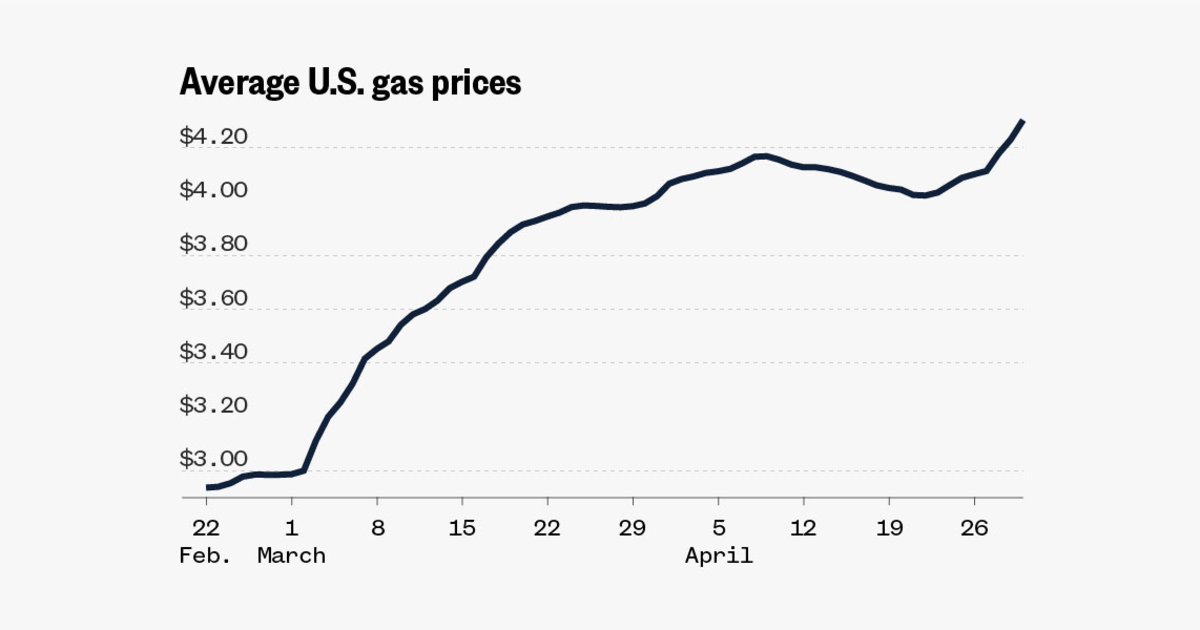
Gas prices across the country, after declining much of April, are spiking again.
Gasoline - Price - Chart - Historical Data - News
Gasoline rose to 3.72 USD/Gal on May 4, 2026, up 3.50% from the previous day. Over the past month, Gasoline's price has risen 12.48%, and is up 83.65% compared to the same time last year, according to trading on a contract for difference (CFD) that tracks the benchmark market for this commodity. Gasoline - values, historical data, forecasts and news - updated on May of 2026.
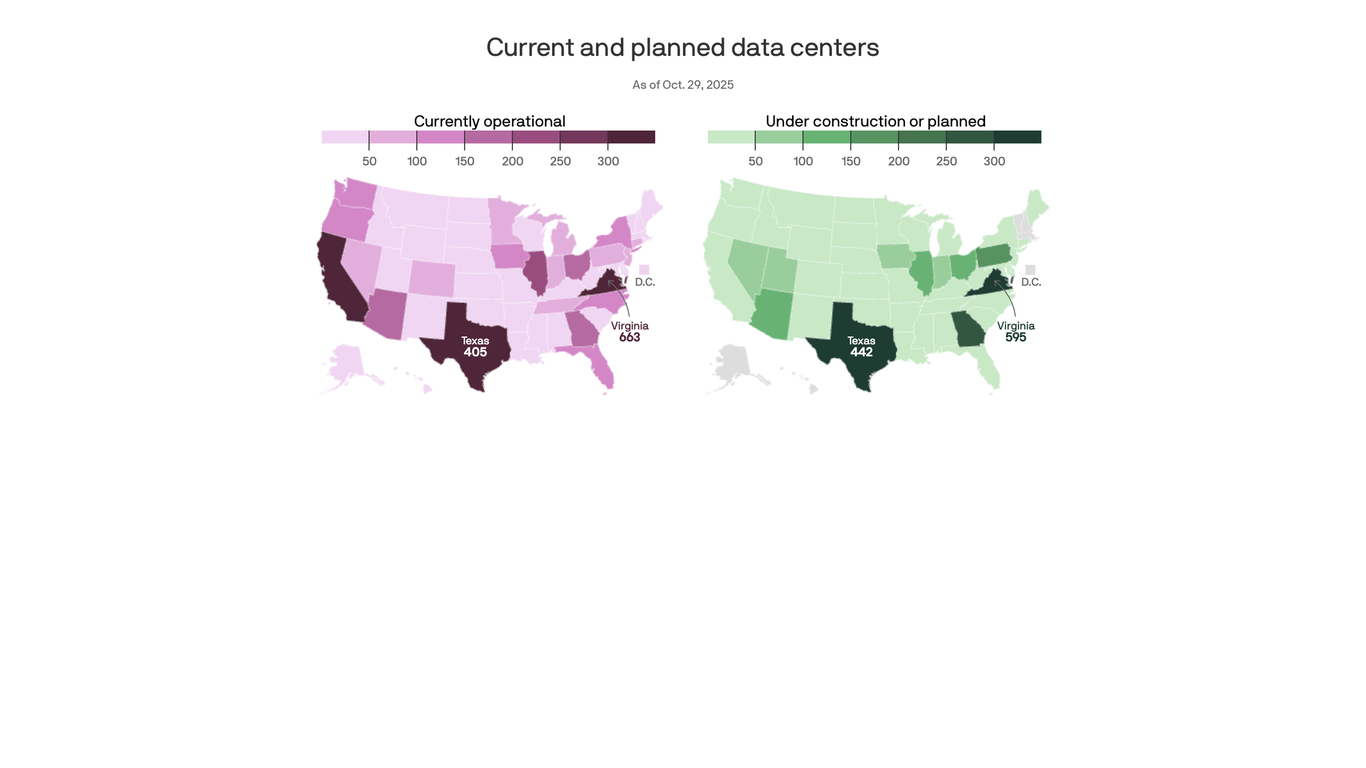
America's data center growth hot spots, mapped
Virginia and Texas lead the way, but they're becoming a major political fight.
Electricity prices rising by double the rate of inflation. Data center demand means no relief ahead, analysts say
The impact of the AI industry on electricity prices has turned into a major political flashpoint ahead of the midterm elections this November.

Why Climateflation Will Drive Food Prices More Than War
Economists expect this summer's heatwaves to drive 2027 food prices more than the Iran war. Climateflation, explained: from your grocery bill to your mortgage rate.

AAA Fuel Prices
After Falling for a Week, National Average Climbing Again Read more »
What's Driving Token Prices? January 14, 2026
This week on What’s Driving Token Prices, Katie Talati examines Zcash governance issues, Polygon’s payments shift, and planned changes at Pump.fun.

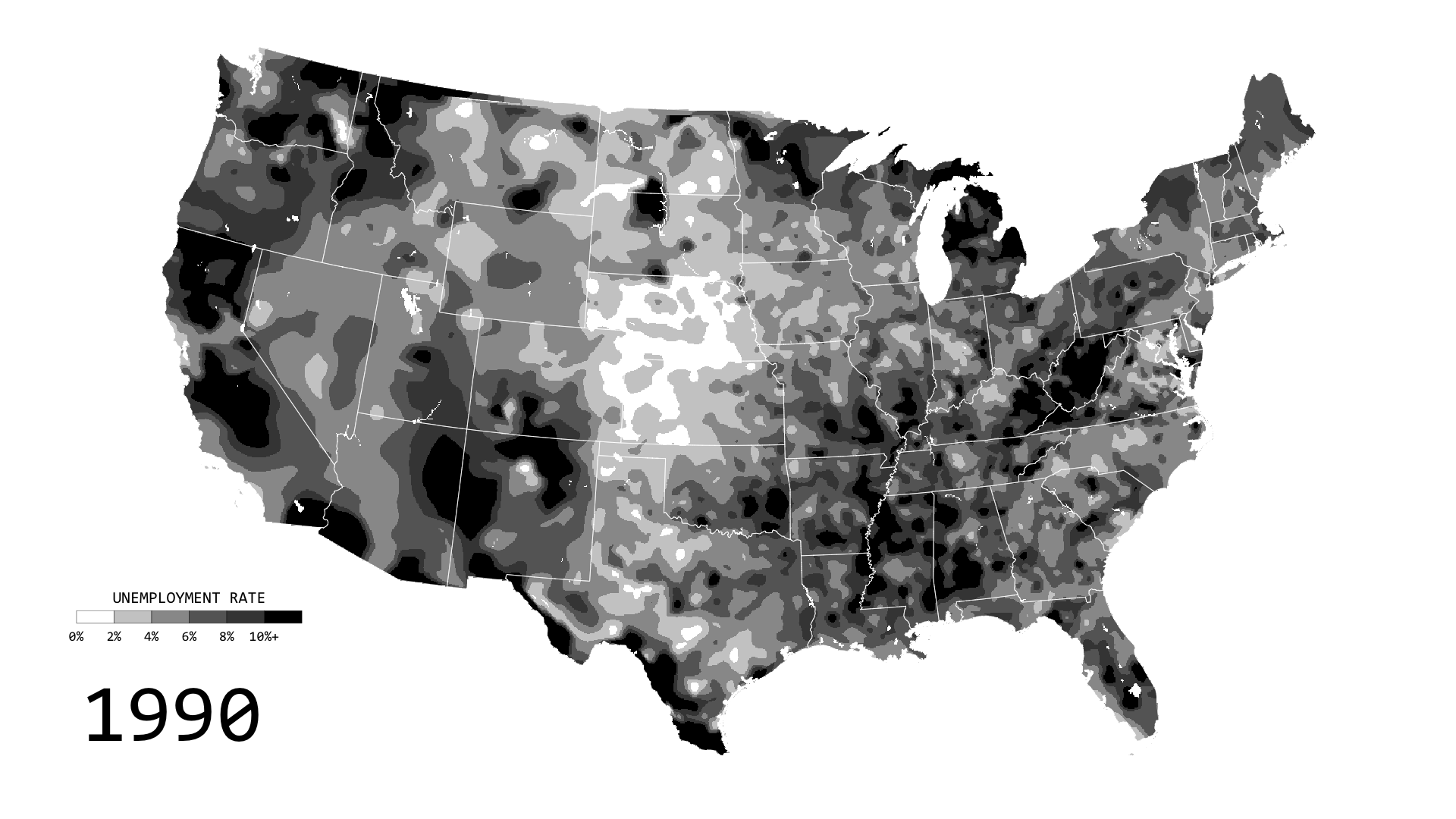
Unemployment in America, Mapped Over Time
Watch the regional changes across the country from 1990 to 2016.
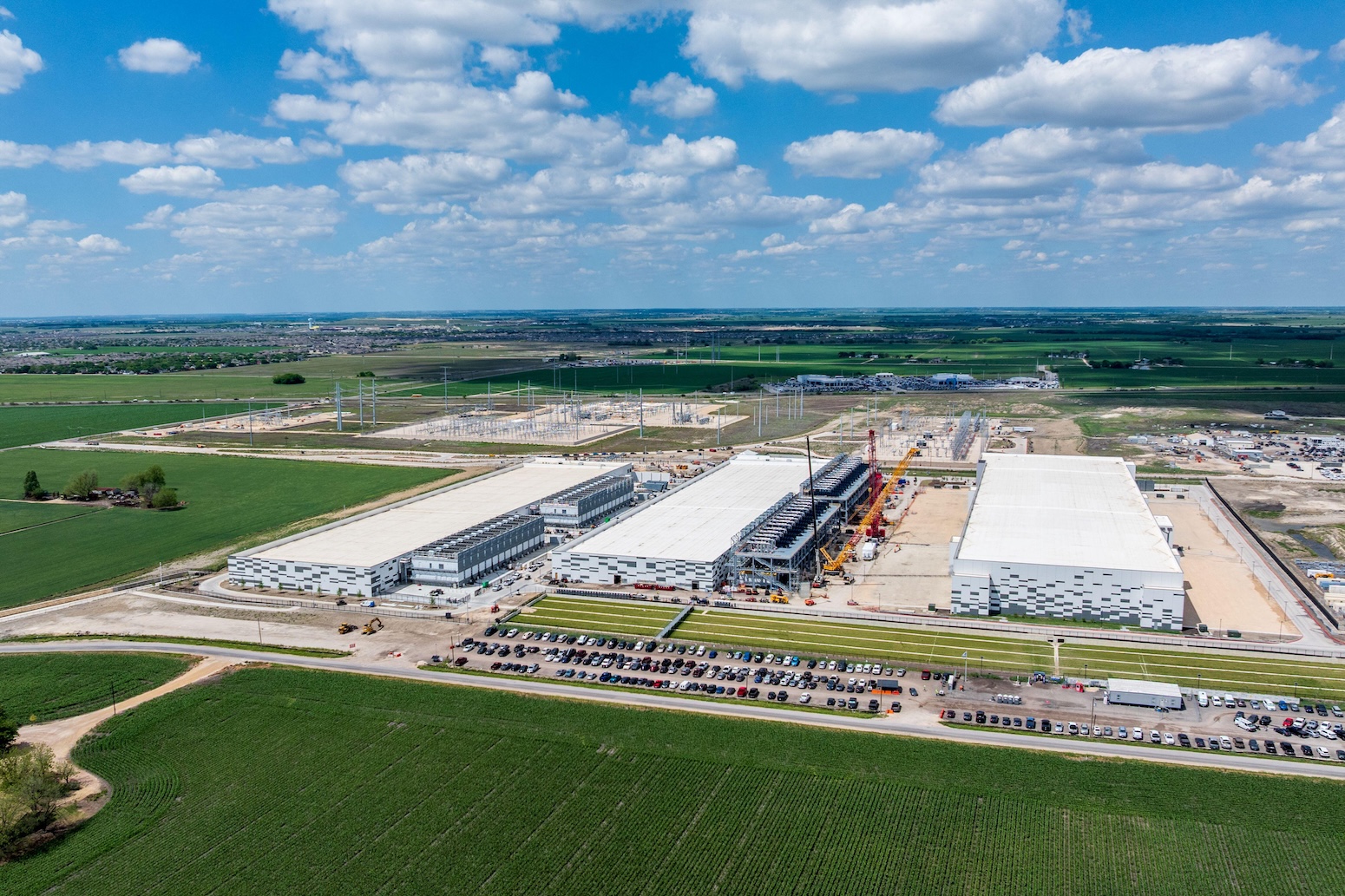
AI boom means US is now ‘investing more’ in fossil-fuel power than China - Carbon Brief
The “data-centre boom” is driving a surge in gas investment in the US, pushing its fossil-power spending ahead of China, according to the IEA
Have Data Centers Raised Your Electric Bill? Causal Evidence from the United States
We estimate that data centers caused average retail electricity rates to fall modestly in the United States from 2015 to 2024 using an instrumental variables approach. Despite prevailing sentiment, the finding is consistent with economic reasoning: existing large power system fixed costs, economies of scale in transmission and distribution, and declining unit costs for generation imply that durable demand growth lowers average prices. We find patterns of economies of scale for transmission, distribution, and generation costs as well as within and across retail customer classes. We caution that future supply constraints could reverse the effect.

Have Data Centers Raised Your Electric Bill? Causal Evidence from the United States
We estimate that data centers caused average retail electricity rates to fall modestly in the United States from 2015 to 2024 using an instrumental variables approach. Despite prevailing sentiment, the finding is consistent with economic reasoning: existing large power system fixed costs, economies of scale in transmission and distribution, and declining unit costs for generation imply that durable demand growth lowers average prices. We find patterns of economies of scale for transmission, distribution, and generation costs as well as within and across retail customer classes. We caution that future supply constraints could reverse the effect.
Energy Production and Consumption
Explore data on how energy production and use varies across the world.
Data Supply Chains
Data is a critical resource. Like oil, gold, or lithium, both companies and countries covet data. Ultimately, like oil, data’s flow can enrich those that posses

What comes next with the energy shock?
The disruption to oil supply, oil prices and the world economy has been surprisingly manageable so far

‘Nothing worse’: Energy prices are closing in on GOP’s midterm chances
Relentlessly rising fuel costs are feeding inflation and threatening Republican reelection chances.

The New Gulf War: Epic Fubar Goes Global
Why there is much more at stake here than rising prices

DAWG WE'RE DOING STATE-RUN GAS PRICES AT PRICE CONTROLLED RATES DESPITE INCREASING SHORTAGES TO PACIFY THE PEOPLE AND THEY'RE SCREAMING ABOUT HOW THEIR OPPONENTS WANT COMMUNISM I AM GOING TO LOSE MY ENTIRE GODDAMN MIND

USA TODAY
The White House launched 25 Freedom Fuel gas stations, all selling fuel at $3.47 a gallon.
