


In Places versus People: The Ins and Outs of Labor Market Adjustment to Globalization (NBER Working Paper 33424), David Autor, David Dorn, Gordon H. Hanson, Maggie R. Jones, and Bradley Setzler examine how local labor markets and the workers in these markets adjusted to increased Chinese import competition in the first two decades of this century. They analyze comprehensive employer-employee data from the Census Bureau’s Longitudinal Employer-Household Dynamics program over the 2000–19 period. Their analysis exploits location-specific variation in the impact of growing imports from China following China’s accession to the World Trade Organization (WTO) in 2001, which is due to the heterogeneity in industry composition across local labor markets.
Unauthorized Immigration Effects on Local Labor Markets
The large increase and subsequent decline of unauthorized immigrant workers in recent years have raised questions about the impact of these changes on local labor markets across the United States. New analysis linking immigration data with employment data for specific areas suggests that the rapid rise in unauthorized immigrant worker flows increased local employment roughly one-for-one. Extending the analysis to the industry level further suggests that the slowdown of net immigration had a large negative impact on local employment, particularly for construction and manufacturing.

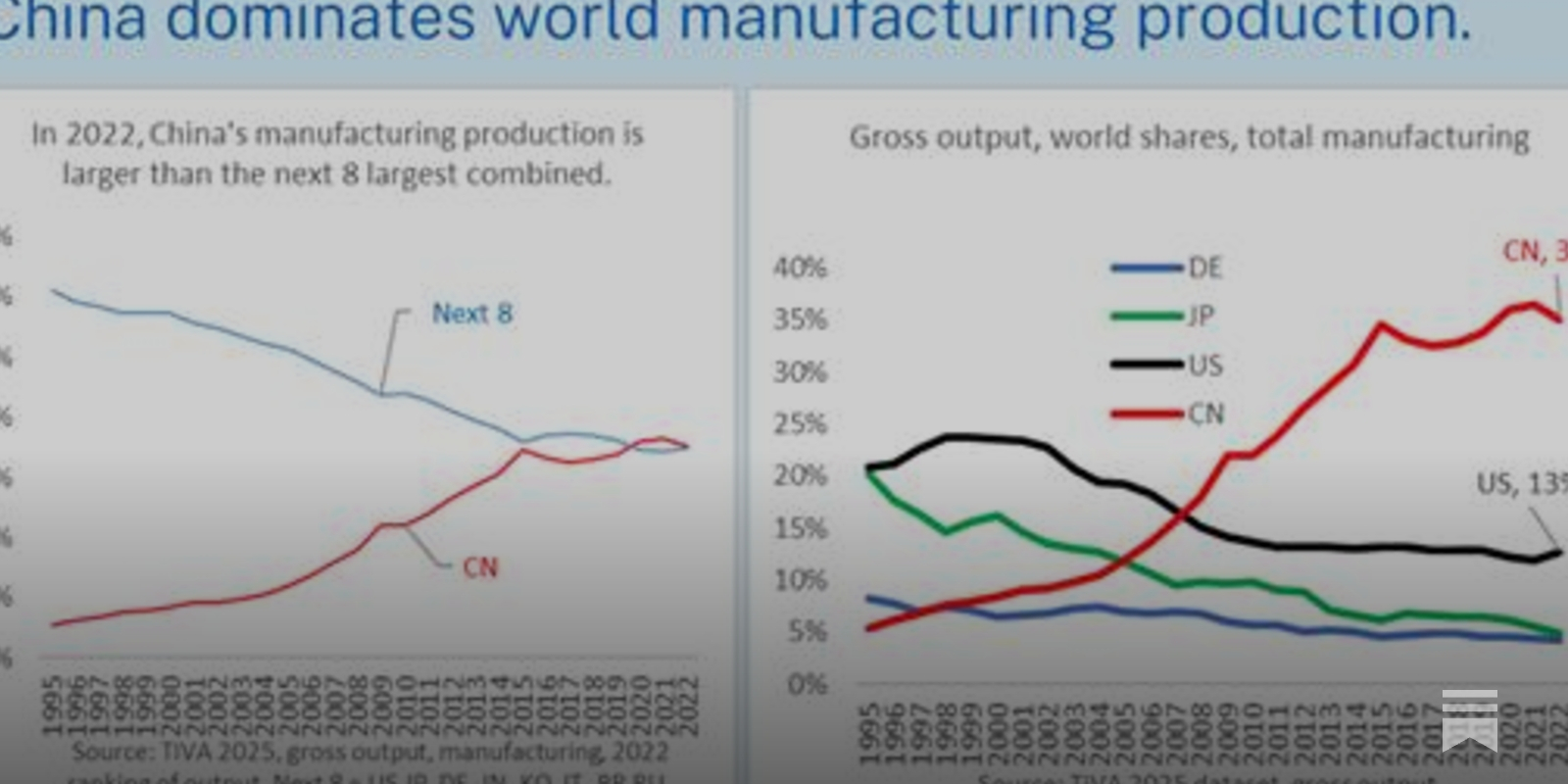
China’s globalisation paradox.
How can China dominate abroad while becoming less export-dependent?
Do Employers Have More Monopsony Power in Slack Labor Markets?
This article confronts monopsony theory’s predictions regarding workers’ wages with observed wage patterns over the business cycle. Using German administrative data for the years 1985 to 2010 and an estimation framework based on duration models, the authors construct a time series of the labor supply elasticity to the firm and estimate its relationship to the unemployment rate. They find that firms possess more monopsony power during economic downturns. Half of this cyclicality stems from workers’ job separations being less wage driven when unemployment rises, and the other half mirrors that firms find it relatively easier to poach workers. Results show that the cyclicality is more pronounced in tight labor markets with low unemployment, and that the findings are robust to controlling for time-invariant unobserved worker or plant heterogeneity. The authors further document that cyclical changes in workers’ entry wages are of similar magnitude as those predicted under pure monopsonistic wage setting.

Le paradoxe de la mondialisation de la Chine
Traduction française du billet de blog "China’s globalisation paradox. How can China dominate abroad while becoming less export-dependent?" de Richard

Unequal exchange of labour in the world economy
Researchers have argued that wealthy nations rely on a large net appropriation of labour and resources from the rest of the world through unequal exchange in international trade and global commodity chains. Here we assess this empirically by measuring flows of embodied labour in the world economy from 1995–2021, accounting for skill levels, sectors and wages. We find that, in 2021, the economies of the global North net-appropriated 826 billion hours of embodied labour from the global South, across all skill levels and sectors. The wage value of this net-appropriated labour was equivalent to €16.9 trillion in Northern prices, accounting for skill level. This appropriation roughly doubles the labour that is available for Northern consumption but drains the South of productive capacity that could be used instead for local human needs and development. Unequal exchange is understood to be driven in part by systematic wage inequalities. We find Southern wages are 87–95% lower than Northern wages for work of equal skill. While Southern workers contribute 90% of the labour that powers the world economy, they receive only 21% of global income.

Global labor arbitrage
Global labor arbitrage is an economic phenomenon where, as a result of the removal of or disintegration of barriers to international trade, jobs move to nations where labor and the cost of doing business are inexpensive and/or impoverished labor moves to nations with higher paying jobs.

Labor Market Adaptation | Windfall Policy Atlas
How can workers, firms, and education systems adapt to an AI-transformed economy?


Nobody Wants The Jobs
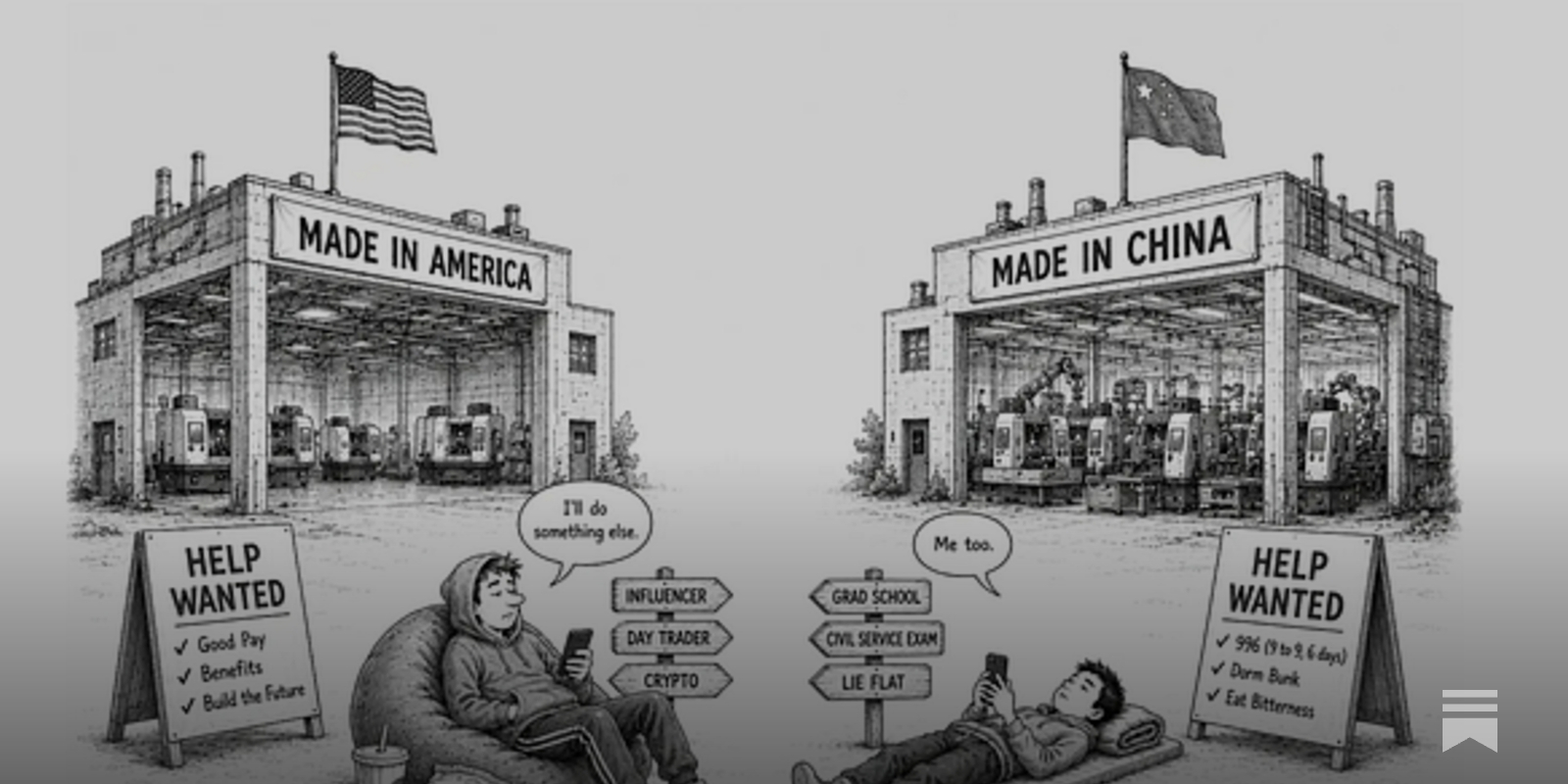
10,000 US boomers retire every day. China has 12.22 million new grads and 19% youth unemployment. Both superpowers are quietly running out of the one thing they can't import.
Handbook of Labor Economics
What new tools and models are enriching labor economics?Developments in Research Methods and their Application, Volume 4A summarizes recent advances in the ways economists study wages, employment, and labor markets. Mixing conceptual models and empirical work, contributors cover subjects as diverse as field and laboratory experiments, program evaluation, and behavioral models. The combinations of these improved empirical findings with new models reveal how labor economists are developing new and innovative ways to measure key parameters and test important hypotheses. - Investigates recent advances in methods and models used in labor economics - Demonstrates what these new tools and techniques can accomplish - Documents how conceptual models and empirical work explain important practical issues
Analytique des déficits commerciaux et de l'emploi manufacturier
traduction française du billet de blog "Analytics of trade deficits and manufacturing employment" de Paul Krugman

Trump’s tariffs: Disregarding lessons from history and scenarios and probable outcomes
History is full of evidence that tariffs harm economic performance. This column assesses the two waves of globalisation in modern history and how they were interrupted by barriers to trade. The first wave started in the mid-19th century and lasted until WWI, while the second wave started after WWII and lasted until the Global Crisis of 2008-09. The most likely scenario going forward will feature tariffs around 12-14% on average, a mild recession, and a small hit to US longer-run potential. However, achieving diplomatic normalcy may take years of good US behaviour, and it is unlikely during the Trump administration.

China’s $143 billion push to dominate the global EV industry
After years of investing in Europe, Chinese EV and battery firms are turning to Asia, Africa, and Latin America

The real reason the West is warmongering against China
China’s spectacular economic development has brought up the price of its labour and undermined Western corporate profits.

The Labor Market for Childcare Workers - Federal Reserve Bank of Chicago
Each day, millions of parents rely on childcare workers to care for their young children. The labor market for childcare workers determines the wages paid to these workers and affects the operating costs of childcare businesses as well as the price and availability of childcare.

Une note sur les déficits commerciaux et l’industrie
Traduction française du billet de blog "A note on trade deficits and manufacturing. Some perspective on the eve of trade war" de Paul Krugman
