


Founded in 1920, the NBER is a private, non-profit, non-partisan organization dedicated to conducting economic research and to disseminating research findings among academics, public policy makers, and business professionals.
Climbing the Ivory Tower: How Socio-Economic Background Shapes Academia
Founded in 1920, the NBER is a private, non-profit, non-partisan organization dedicated to conducting economic research and to disseminating research findings among academics, public policy makers, and business professionals.
The Impact of Unconditional Cash Transfers on Consumption and Household Balance Sheets: Experimental Evidence from Two US States
Founded in 1920, the NBER is a private, non-profit, non-partisan organization dedicated to conducting economic research and to disseminating research findings among academics, public policy makers, and business professionals.
Algorithms As a Vehicle to Reflective Equilibrium: Behavioral Economics 2.0
Founded in 1920, the NBER is a private, non-profit, non-partisan organization dedicated to conducting economic research and to disseminating research findings among academics, public policy makers, and business professionals.
Science in the Age of Algorithms
Founded in 1920, the NBER is a private, non-profit, non-partisan organization dedicated to conducting economic research and to disseminating research findings among academics, public policy makers, and business professionals.
Writing Code vs. Shipping Code: Productivity Effects Across Generations of AI Coding Tools
Founded in 1920, the NBER is a private, non-profit, non-partisan organization dedicated to conducting economic research and to disseminating research findings among academics, public policy makers, and business professionals.
Investing in Enterprises That Work for Everyone (SSIR)
Impact investors can support a more just economy by prioritizing alternative ownership enterprises that shift power away from shareholders to workers, the community, and the planet. <meta property=

When Does Worker Ownership Work? ESOPs, Law Firms, Codetermination, and Economic Democracy

The Breakdown of Capitalist Realism | Mediations | Journal of the Marxist Literary Group
Benjamin Noys examines the “substance” of Mark Fisher’s Capitalist Realism in order to argue that the text serves more than a diagnostic function in our…
Denizen / Post-Growth Economics (Deep Dive)
Rather than money accumulating into fewer private hands, not-for-profit businesses loop their profits back into the economy. Rather than money going into someone’s bank account, it comes back into the system. This is not the same as a non-profit, which may not have a business model. These are businesses that make a profit but do not extract that capital but rather circulate it
annotations: Solow sur les rentes et le découplage entre productivité et salaires
Traduction française du billet de blog "Bob Solow on rents and decoupling of productivity and wages" de Branko Milanovic
Universal Basic Income is Capitalism 2.0 | TimJRobinson
A Universal Basic Income (UBI) would improve everyone’s lives, increase our free time, empower workers, and ensure everyone has food and a roof over their head. These are noble goals, but obviously there’s a downside or it would already be implemented, right?
Les nations peuvent-elles continuer de prospérer sans travailler dur ?
Traduction française du billet "To work or not to work. Can nations not work hard and continue to prosper?" de Branko Milanovic

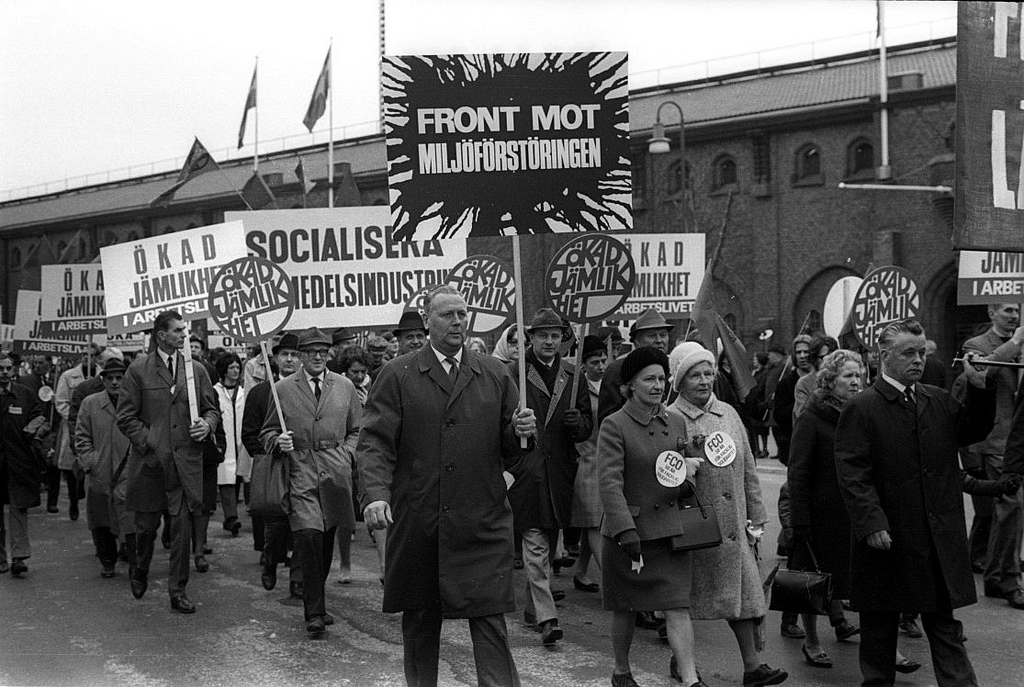
Revisiting the Meidner Plan
In the 1970s, the Swedish labor movement developed a plan to gradually socialize ownership. What can we learn from it today?
Overcoming Barriers to Employee Ownership: Insights From Small and Medium-Sized Businesses
This research investigates the limited adoption of employee stock ownership plans (ESOPs) among small-to-medium sized businesses (SMBs) in the U.S. Through interviews with 30 SMB owners across various industries, we identify the key barriers to ESOP adoption as lack of time, money, and skills on the part of the owners. In doing so, the study suggests that a “shared ownership light” model, which involves sharing profits, information, and decision-making opportunities with employees, appears more feasible for SMBs than ESOPs. For SMBs that are interested in ESOP adoption, our research suggests that organizations providing employee ownership services could better assist SMBs by offering templatized models and best practices for profit-sharing plans, open-book management, and structured employee participation. The paper aims to broaden the discussion around shared ownership by considering a spectrum of options that have the potential to increase both value creation by and value-sharing among employees.

And I did an episode where I explain what I'm interested in -- orgs that have some 1) form of sharing, 2) some transparency about their finances, 3) a non-growth goal in the form of knowing when they are sufficient, and 4) #multisolving. buzzsprout.com/2396702/episodes/16595444-the…

The Four Factors for Organizations - Future Mending Radio
www.buzzsprout.com