


The population of the United States, as with the rest of the world, is aging rapidly, with the most rapid growth occurring among the age 85 and older population, those who rely most on long-term care. In this chapter, we review the delivery and financing of long-term care in the U.S. We show that the resources of most elderly in the U.S. are insufficient to finance these ongoing long-term care needs and the public sector finances the majority of long-term care spending. At the same time, informal care plays a critical role, with the elderly at every age and every disability level receiving informal care more frequently than formal care. Indeed, when properly valued, informal care accounts for more than one-third of the nearly 2 percent of U.S. GDP devoted to long-term care.
Long-term care in the Netherlands
We describe the financing and use of long-term care in the Netherlands. Public long-term care insurance is universal and comprehensive; user fees are low compared to other countries. We use linked survey and administrative data to document the distribution of the need for long-term care in the 65+ population, long-term care costs and how they are paid for. The findings reveal that no other country spends more per capita on publicly financed formal care than The Netherlands. A potential reason is that the threshold to receive formal care appears to be lower in the Netherlands than in other countries. Still, a considerable share of the adult population provides informal care. Caregiving is concentrated in specific demographic groups. The costs of informal care provision are considerable, but as a share of total spending on long term care they are smaller than in most developed countries. Adding the costs of informal care to formal care expenditures changes the view on who bears the costs of long-term care.
Facing Financial Ruin as Costs Soar for Elder Care (Published 2023)
The United States has no coherent system for providing long-term care, leading many who are aging to struggle to stay independent or to rely on a patchwork of solutions.

The Affordability of Long-Term Care and Support Services: Findings from a KFF Survey | KFF
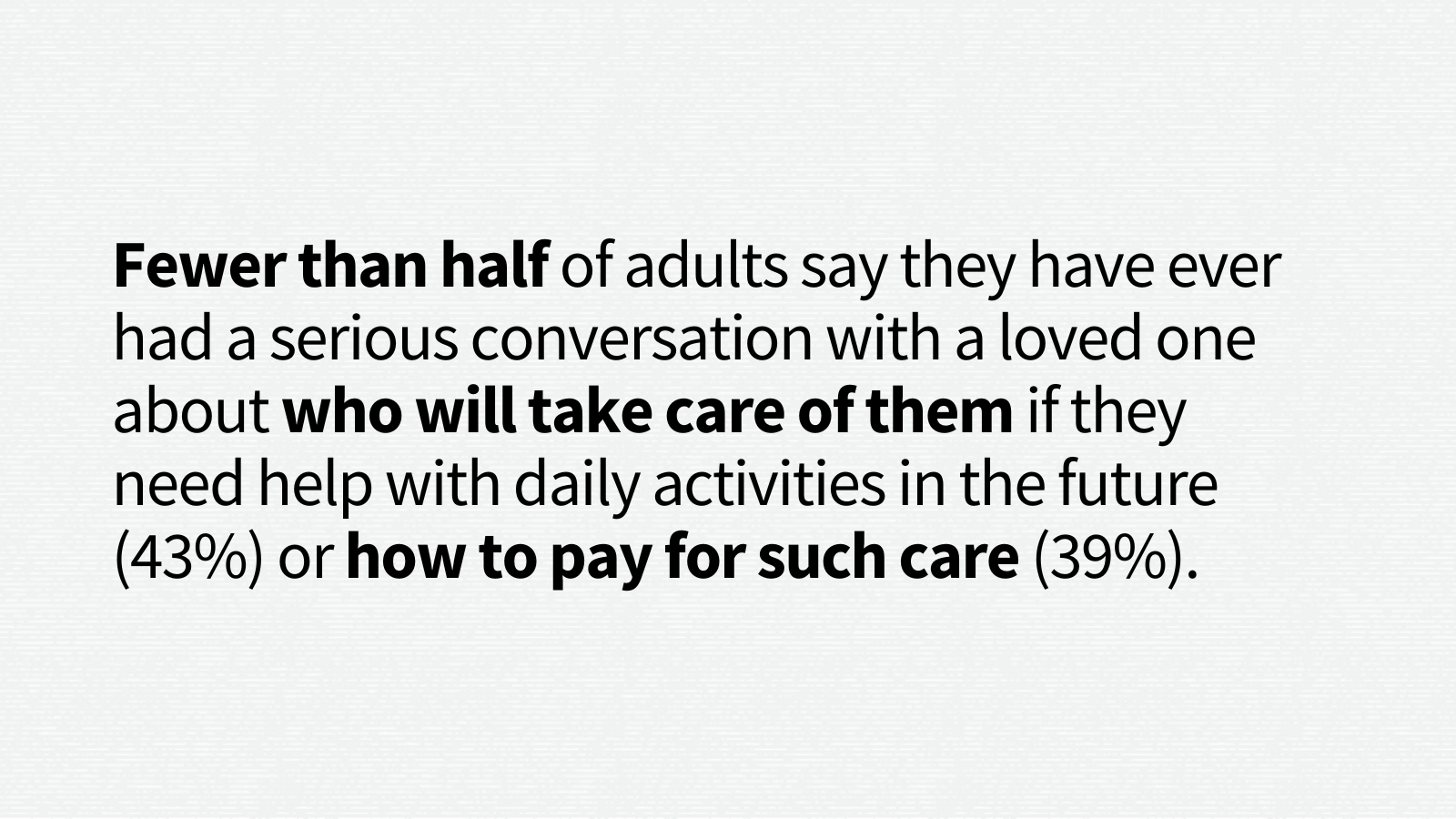
This survey shows that most adults feel unprepared for affording the cost of long-term care and support service, and just under half are not confident they will have the financial resources to pay for care they might need as they age. Most older adults have not taken financial or practical steps to plan for their potential future care needs.
Long-term Care in the United States
Long‐Term Care Across Europe and the United States: The Role of Informal and Formal Care
Abstract Large cross‐country variation in long‐term‐care (LTC) policy in conjunction with household‐level data on caregiving provides a valuable laboratory for policy analysis. However, there is a lack of comprehensive cross‐country data on how care is provided. In order to close this gap, we draw on data from the Survey of Health, Ageing, and Retirement in Europe (SHARE) and the Health and Retirement Study (HRS) in the United States. Because care hours are missing for some care forms (especially for nursing‐home residents), we propose a selection model to impute these. The model allows selection into care forms to differ by country. Our estimates imply that nursing‐home residents have higher care needs, even when conditioning on observed characteristics. In contrast to the bulk of the literature, we also take into account care provision from persons in the same household, and we find that this contributes one‐third of all care hours. Informal‐care provision in Europe follows a steep North–South gradient, with the United States falling in between Central European and Southern European countries. The results are robust to alternative imputation schemes.

(PDF) Long‐Term Care Across Europe and the United States: The Role of Informal and Formal Care
PDF | Large cross‐country variation in long‐term‐care (LTC) policy in conjunction with household‐level data on caregiving provides a valuable laboratory... | Find, read and cite all the research you need on ResearchGate

How Caregiving for Parents Reduces Women’s Employment: Patterns across Sociodemographic Groups
Abstract Abstract: This chapter examines the social patterns of elder caregiving among women ages 50 and older in the United States. We find that women who provide personal care for parents or parents-in-law, tend to be from more advantaged sociodemographic groups, with larger differences by socio-economic status than by race and ethnicity. Prior to initiating care, caregivers also have greater labor market attachment than non-caregivers. In contrast, although less likely to provide care, women from less advantaged groups tend to provide more time-intensive care when they do provide care, particularly in the extreme upper-end of the distribution of care hours. We find strong negative associations between caregiving and employment, hours, and earnings, both immediately and over a longer 10-year period. The relationship between care and work is similar across the sociodemographic groups that we examine.
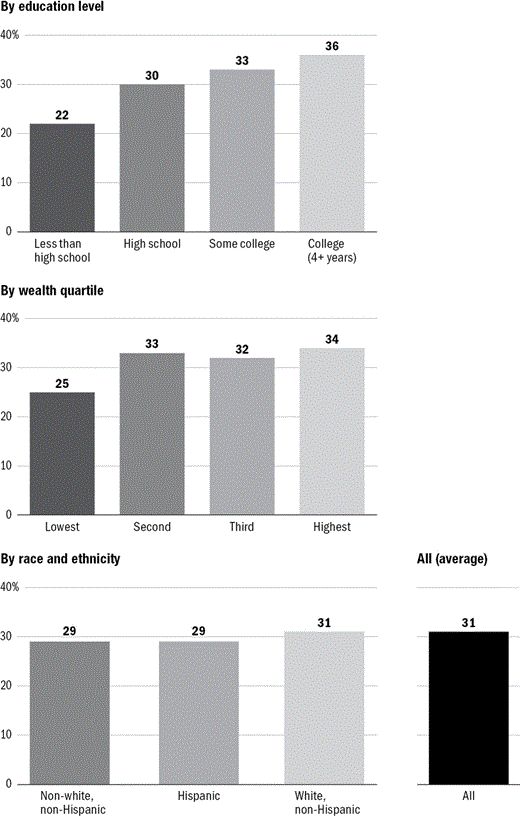
How Caregiving for Parents Reduces Women’s Employment: Patterns across Sociodemographic Groups
AbstractAbstract: This chapter examines the social patterns of elder caregiving among women ages 50 and older in the United States. We find that women who
Long-term care in the Netherlands
A Comprehensive Measure of the Costs of Caring For a Parent
Providing unpaid care for an older parent has costs that go well beyond a caregiver’s lost wages. A new estimate suggests that the median direct and indirect costs of caregiving are $180,000…

Why Do Americans Have Shorter Life Expectancy and Worse Health Than Do People in Other High-Income Countries?
Americans lead shorter and less healthy lives than do people in other high-income countries. We review the evidence and explanations for these variations in longevity and health. Our overview suggests that the US health disadvantage applies to multiple mortality and morbidity outcomes. The American health disadvantage begins at birth and extends across the life course, and it is particularly marked for American women and for regions in the US South and Midwest. Proposed explanations include differences in health care, individual behaviors, socioeconomic inequalities, and the built physical environment. Although these factors may contribute to poorer health in America, a focus on proximal causes fails to adequately account for the ubiquity of the US health disadvantage across the life course. We discuss the role of specific public policies and conclude that while multiple causes are implicated, crucial differences in social policy might underlie an important part of the US health disadvantage.

Is it fair that the taxes paid by young people go towards social expenditure for the elderly?
Own Gender, Sibling’s Gender, Parent’s Gender: The Division of Elderly Parent Care among Adult Children
Research on the gender division of family labor largely focuses on housework and childcare in spousal couples. This article advances scholarship by examining the gender division of elderly parent care in sibling groups. Using the Health and Retirement Study, a nationally representative survey of elderly Americans, I find that caregiving to elderly parents varies not only by an adult child’s own gender, but also by the gender of the siblings with whom caregiving is shared and by the gender of the parent to whom care is provided. The salience of an adult child’s gender manifests in two primary ways: not only do daughters provide more care than do sons to their elderly parents, but daughters’ caregiving is also more elastic with respect to their own and their parents’ attributes than is sons’ caregiving. With respect to the gender of the siblings, sons provide relatively less care if they have sisters, whereas daughters provide relatively more care if they have brothers. With respect to the gender of the parent, sons provide relatively more care to fathers, and daughters provide relatively more care to mothers. Finally, analyses did not reveal changes over time.

Seniors Are Fighting New Senior Housing as US Faces Shortage
America’s elders need more places to live, but even in liberal enclaves that recognize the problem, developers are facing the fiercest foes of all: America’s elders.

Experiences of Direct Care Workers and Family Caregivers of Home- and Community-Based Services (HCBS) | KFF
This issue brief presents findings from the focus groups including caregiver characteristics; physical, emotional, and mental caregiving demands of caregiving; their wages, finances, and opportunities for advancement; and what caregivers would like policymakers to know about their work.
This is worth paying attention to, but be careful excluding government transfers which create huge amounts of spending that should *not* be assumed away. Also an aging population will naturally increase their role over time.

Carl Quintanilla
“.. Real personal income per capita has not grown in 15 months and is meaningfully below the pre-pandemic trend.” - @thedailyshot.bsky.social
