
Founded in 1920, the NBER is a private, non-profit, non-partisan organization dedicated to conducting economic research and to disseminating research findings among academics, public policy makers, and business professionals.
The Effects of Mandatory Profit-Sharing on Workers and Firms: Evidence from France
Founded in 1920, the NBER is a private, non-profit, non-partisan organization dedicated to conducting economic research and to disseminating research findings among academics, public policy makers, and business professionals.
Climbing the Ivory Tower: How Socio-Economic Background Shapes Academia
Founded in 1920, the NBER is a private, non-profit, non-partisan organization dedicated to conducting economic research and to disseminating research findings among academics, public policy makers, and business professionals.
Algorithms As a Vehicle to Reflective Equilibrium: Behavioral Economics 2.0
Founded in 1920, the NBER is a private, non-profit, non-partisan organization dedicated to conducting economic research and to disseminating research findings among academics, public policy makers, and business professionals.
Science in the Age of Algorithms
Founded in 1920, the NBER is a private, non-profit, non-partisan organization dedicated to conducting economic research and to disseminating research findings among academics, public policy makers, and business professionals.
Writing Code vs. Shipping Code: Productivity Effects Across Generations of AI Coding Tools
Founded in 1920, the NBER is a private, non-profit, non-partisan organization dedicated to conducting economic research and to disseminating research findings among academics, public policy makers, and business professionals.
Household Debt: Facts, Puzzles, Theories, and Policies
Borrowing decisions affect most households, with large stakes and implications for research subfields as varied as macroeconomics and industrial organization. I review theoretical and empirical work on household debt: its prevalence, level, growth, and composition, as well as various measures of consumer choice and market (in)efficiency, elasticities, and prices, including new evidence on how borrowing heterogeneity affects the distribution of the opportunity cost of consumption. I also discuss opportunities and challenges in policy evaluation. A key takeaway is that puzzles abound, and I highlight numerous avenues for further research.

The Co-holding Puzzle: New Evidence from Transaction-Level Data
Using detailed and highly disaggregated data on household finances, we examine the<br>tendency of consumers to “co-hold” savings and debt simultaneously. The di

Debt and the Response to Household Income Shocks: Validation and Application of Linked Financial Account Data
The increasing availability of data derived from linked consumer financial accounts has the potential to dramatically expand the potential for research. Examining the most comprehensive existing set of linked-account data, consisting of transaction and balance sheet data for millions of Americans, I demonstrate the power and versatility of such sources. I discuss advantages and concerns arising from this type of data and match a range of distributional moments to external sources. As one application, I test consumption elasticities across households with varying levels, and types, of debt. I find that heterogeneity in consumption elasticity can be explained entirely by credit and liquidity.

How Are SNAP Benefits Spent? Evidence from a Retail Panel
We use a novel retail panel with detailed transaction records to study the effect of the Supplemental Nutrition Assistance Program (SNAP) on house-hold spending. We use administrative data to motivate three approaches to causal inference. The marginal propensity to consume SNAP-eligible food (MPCF) out of SNAP benefits is 0.5 to 0.6. The MPCF out of cash is much smaller. These patterns obtain even for households for whom SNAP benefits are economically equivalent to cash because their benefits are below their food spending. Using a semiparametric framework, we reject the hypothesis that households respect the fungibility of money. A model with mental accounting can match the facts.
Cash versus Debit Card: The Role of Budget Control
Due to the financial crisis, an increasing number of households face financial problems. This may lead to an increasing need for monitoring spending and budgets. We demonstrate that both cash and the debit card are perceived as helpful in this respect. We show that, on average, consumers responsible for financial decision making within a household find cash and the debit card equally helpful for monitoring their household finances. Individuals differ in major respects, however. In particular, low earners and the liquidity‐constrained prefer cash as a budgeting tool. Finally, we present evidence that at an aggregated level, such preferences strongly affect consumer payment behavior. These findings suggest that the substitution of cash by cards may slow down because of the financial crisis.

Co-holding behaviour: unlocking the puzzle
This article seeks to explain why households decide to simultaneously hold both credit and savings products. Beyond the arguments of ignorance or behavioural biases commonly used in the literature,...

Families' Use of Payment Instruments During a Decade of Change in the U.S. Payment System
The Federal Reserve Board of Governors in Washington DC.

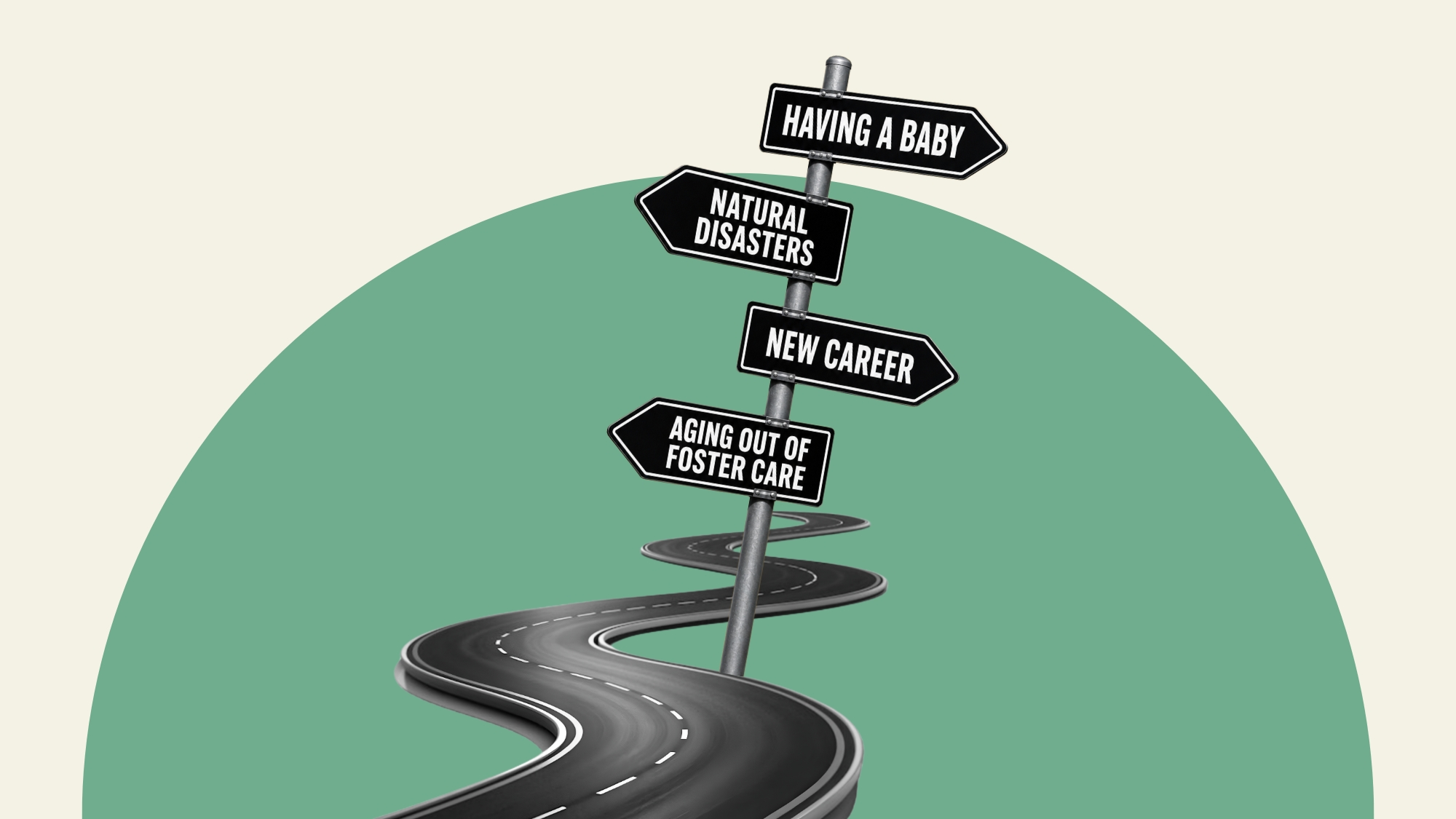
Right on Time: How Cash Helps Families Move Through Life's Transitions - Economic Security Project
Executive Summary Over the past decade, more than 250 guaranteed income pilots, programs that provide people with regular cash with no restrictions on how they use it, have run across 40 states and the District of Columbia. That research has revealed many learnings, and this report focuses on one clear takeaway: cash has its largest…
Intra-Household Frictions, Anchoring, and the Credit Card Debt Puzzle
Abstract I study how intra-household frictions and anchoring contribute to the credit card debt puzzle, the co-holding of high-cost debt, and low-yield liquid assets. First, I find couples co-hold 42% more as units than as individuals relative to income. Moreover, in a natural experiment, couples do not cooperate to reduce high-cost debt, suggesting that intra-household frictions contribute to co-holding. Second, I find individuals who regularly make credit card debt payments equal to or near the minimum account for 59% of individual co-holding. The evidence suggests anchoring to the minimum payment contributes to co-holding via these low payments.
Why Sweden's cashless society is no longer a utopia
Switching fully to card and app payments would put access to our money in the hands of private organizations for the first time in history.

Cash Works. Place and Amount Matter.
Two excellent new reports from our friends at the Economic Security Project make a strong case for direct cash — and reveal why rural, county-level research matters. Right on Time argues that cash is particularly effective during major transitions: * having a child * losing a job * leaving foster care or incarceration