
We evaluate the economic and environmental consequences of taxes on imported goods based on their carbon content. The analysis uses the simplest possible partial equilibrium framework, with one small open economy and a global pollution externality. It relies on graphs of supply and demand, rather than equations or formulas, hoping to reach readers familiar with basic economics. Despite its simplicity, the framework imparts numerous lessons. (1) Absent a domestic price on carbon, a carbon tariff imposes the same costs on domestic consumers as a domestic carbon price, but a carbon tariff also subsidizes domestic pollution. (2) If one small country imposes a carbon tariff, with or without a domestic carbon tax, the economic incidence of the tariff falls on its consumers. (3) If a holdout country joins the rest of the world by enacting its own carbon regulation and consequently imports more from other countries, those increased imports are not “leakage.” They are the cessation of leakage from when the holdout country’s policy was lax. And (4) if other countries do not appropriately regulate emissions, no single small country can use a combination of carbon taxes and carbon tariffs to fully correct the problem caused by its consumers or producers.
Shaping Preferences with Pigouvian Taxes
A Pigouvian tax is a tax that is imposed to correct an externality, which arises when a person engages in behavior that harms others without their consent. Pigouvian taxes are popular among academics—with prominent economists and legal scholars arguing for their imposition on myriad goods and activities that harm third parties, like carbon emissions and alcohol. Policymakers have recently been receptive to at least some of these arguments as evidenced by taxes imposed on or proposed for a variety of externality-generating goods, including guns, plastic bags, and sugary drinks.The conventional economic rationale for Pigouvian taxes assumes that they affect behavior by increasing the prices of taxed goods and not by altering people’s underlying preferences for them. For example, a carbon tax reduces driving by making gasoline more expensive, but it otherwise leaves people’s desire to drive unchanged. This conclusion follows from the standard assumption in economics that people’s tastes and preferences are fixed and determined exogenously to public policy.Contrary to standard analysis, I argue that Pigouvian taxes can in fact shape preferences and that policymakers should consider using them for that purpose. A carbon tax, for instance, would not only make driving more expensive, it might also modify preferences such that people develop a taste for alternative modes of transportation—making driving less desirable, even if we ignore the increase in gas prices.I make an original contribution to the literature on Pigouvian taxes by explaining in detail the psychological mechanisms through which these taxes can alter preferences. I also argue that once we relax the assumption of fixed preferences, the already strong case for Pigouvian taxes often becomes even more compelling. Specifically, preference endogeneity means that the loss in consumer utility resulting from Pigouvian taxes will often be smaller than standard analysis suggests. Moreover, malleable preferences dramatically expand the potential scope for Pigouvian taxes and enhance their impact on behavior through a social multiplier effect that can make taxes more effective in achieving public policy goals than scholars have traditionally assumed. I illustrate these points in a variety of policy-relevant contexts, including environmental law, gun control, and public health policy.
Carbon Captured
How the fossil fuel industry turned the plan to solve climate change into a plan to save itself

The growing Brics divide between carbon nations and electrostates
Energy systems can shape political institutions and make some nations more vulnerable to trade wars than others

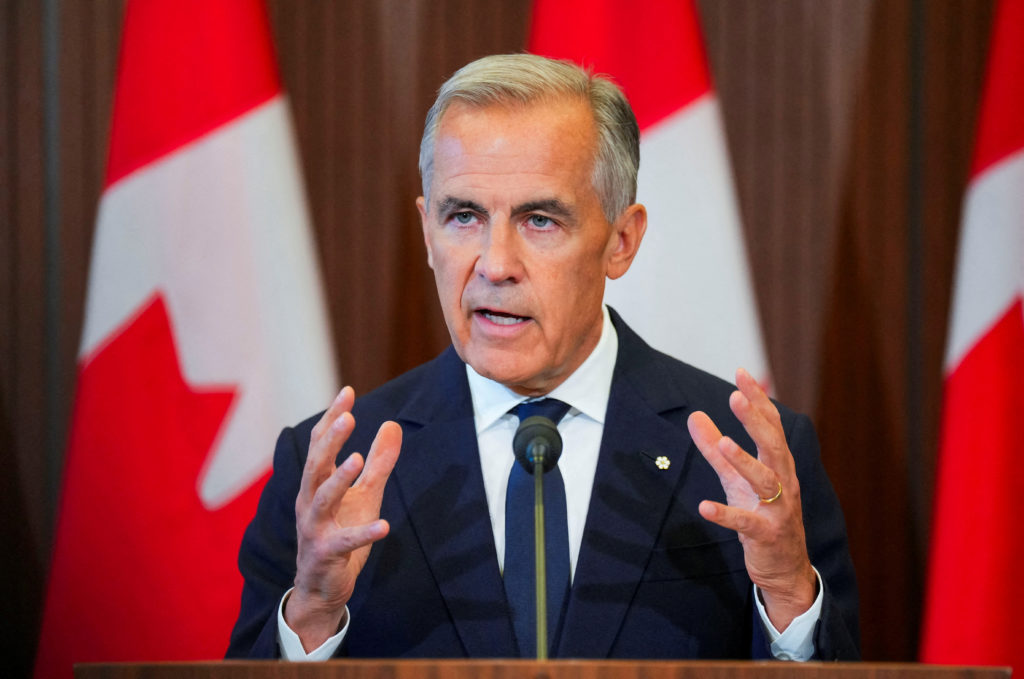
Canadian Prime Minister Mark Carney calls new U.S. tariffs ‘a miscalculation’ after trade talks collapse
The U.S. import taxes will apply to hockey sticks, building materials, liquors and certain kinds of clothing. Carney said “Canada will match those tariffs dollar for dollar.”

Quel chemin vers la neutralité carbone ? - Insee Analyses - 103
L’Union européenne et la France sont engagées à atteindre la neutralité carbone d’ici 2050. Or, plusieurs chemins y conduisent, qui diffèrent par le profil de baisse des émissions et les implications
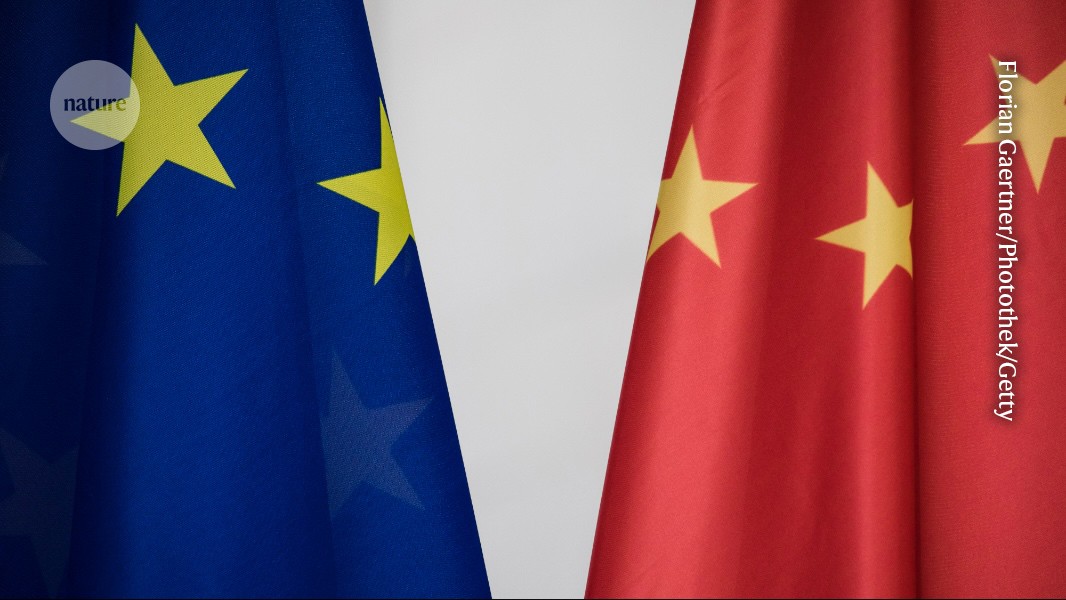
Why China and Europe should collaborate to ‘defossilize’ the world’s carbon
The world needs non-fossil sources of carbon. It’s a no-brainer for nations working towards this goal to join forces.
The Death of the Carbon Coalition
Existing models of U.S. politics are wrong. Here’s how the system really works.

Why unilateral decarbonisation can pay for itself
Anthropogenic greenhouse gas emissions are rapidly warming our planet, with potentially severe economic, social, and health consequences. Conventional estimates of climate damages suggest that while coordinated global efforts are desirable, unilateral action is rarely cost-effective due to a classic free-rider problem. Why should a country bear the costs of reducing emissions when the benefits are shared globally? This column re-evaluates this view in light of new climate damage estimates based on global temperature variation, showing that the economic case for unilateral decarbonisation is far stronger than previously thought.

Opinion | One Senator’s Plea for Tariff Breaks
How protectionism works in practice: Public support, but seeking exemptions in private.
Cycling like the Dutch would slash the world’s carbon footprint
If everybody cycled like the Dutch, we could offset the UK or Australia’s entire carbon footprint.

L’incontournable trilemme de l'économie mondiale
Traduction française de Dani Rodrik (2012), « The inescapable trilemma of the world economy »
.png)
Move fast and break kings
There is another policy response to tariffs, one that will substantially lower prices for Canadians, while incubating profitable, export-oriented Canadian tech firms, whose products can be sold by community-based small and medium enterprises, to the benefit of the Canadian news and culture industry, Canadian software firms, and Canadian consumers.

U.S. and Canada fall deeper into a trade war with new tariffs as talks collapse and blame is spread
President Donald Trump’s import taxes will hit about 5% of what Canada ships to the United States every year, including products ranging from hockey sticks to tongue depressors.
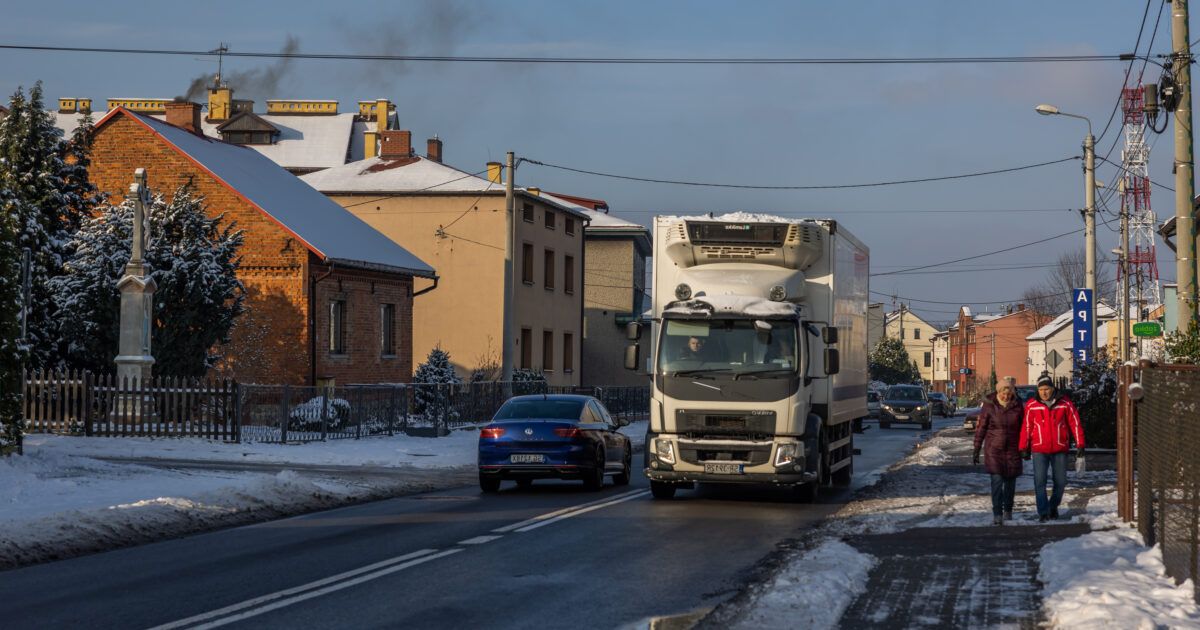
The economic cost of air pollution in Europe - Clean Air Fund
Air pollution causes €600 billion in losses each year in the European Union – equal to 4% of annual GDP. Implementing clean air measures boosts economic growth by €50 billion to €60 billion every year, according to Bruegel’s new analysis.
Imperialist appropriation in the world economy: Drain from the global South through unequal exchange, 1990–2015
Unequal exchange theory posits that economic growth in the “advanced economies” of the global North relies on a large net appropriation of resources and labour from the global South, extracted through price differentials in international trade. Past attempts to estimate the scale and value of this drain have faced a number of conceptual and empirical limitations, and have been unable to capture the upstream resources and labour embodied in traded goods. Here we use environmental input-output data and footprint analysis to quantify the physical scale of net appropriation from the South in terms of embodied resources and labour over the period 1990 to 2015. We then represent the value of appropriated resources in terms of prevailing market prices. Our results show that in 2015 the North net appropriated from the South 12 billion tons of embodied raw material equivalents, 822 million hectares of embodied land, 21 exajoules of embodied energy, and 188 million person-years of embodied labour, worth $10.8 trillion in Northern prices – enough to end extreme poverty 70 times over. Over the whole period, drain from the South totalled $242 trillion (constant 2010 USD). This drain represents a significant windfall for the global North, equivalent to a quarter of Northern GDP. For comparison, we also report drain in global average prices. Using this method, we find that the South’s losses due to unequal exchange outstrip their total aid receipts over the period by a factor of 30. Our analysis confirms that unequal exchange is a significant driver of global inequality, uneven development, and ecological breakdown.
As Europe swelters, Paris judges say consumers aren’t to blame — TotalEnergies is
A Paris judicial tribunal has just ruled on a case brought against TotalEnergies by environmental groups and the City of Paris. The judgment does not halt the company's fossil-fuel expansion. But it does something the industry has spent half a century resisting: it holds TotalEnergies legally responsible not just for the emissions from its operations, but for the emissions produced when the oil and gas it sells are ultimately burned.