


We measure differences in US households’ access to credit and explore the mechanisms driving such differences using newly constructed population-level linked credit bureau and Census data. We find large differences in credit scores by race, class, and hometown that emerge in one’s 20s and persist throughout the life cycle. These gaps are primarily driven by differences in delinquencies that emerge in young adulthood. By age 30, 73% of Black individuals, 62% of those from low-income families, and 51% of those from Appalachia and the South have a 90+ day delinquency on their credit report, in contrast to 36% for White individuals, 20% for high-income families, and 31% for those from the upper Midwest. These delinquencies are correlated with income and wealth, but observed income profiles and wealth account for at most 10–35% of the gaps in delinquencies across groups. In contrast, movers-based estimates of hometown effects imply that childhood exposure accounts for around 50% of the differences in delinquencies across hometowns. Counties that promote repayment also promote upward income mobility, but adult income mediates only a small fraction of this relationship: growing up in a place where others are likely to repay improves credit outcomes even for those who do not have higher income in adulthood. We provide suggestive evidence on the mechanisms driving these patterns. JEL Codes: G5, H0.
Credit Card Debt and Consumer Payment Choice: What Can We Learn from Credit Bureau Data?
We estimate a two-stage Heckman selection model of credit card adoption and use with a unique dataset that combines administrative data from the Equifax credit bureau and self-reported data from a representative survey of consumers. Higher-income consumers carry higher credit card balances, but they tend to repay those balances each month. Credit card revolvers have lower income and are less educated. Revolvers are twice as likely to use debit cards as credit cards for payments, but they carry much higher balances on their credit cards. The high cost of paying off credit card debt likely exacerbates existing inequalities in disposable income. Unlike the mortgage market, we find no evidence for lenders’ cutoff between subprime and prime consumers in the credit card market.
The persistence of cognitive biases in financial decisions across economic groups
While economic inequality continues to rise within countries, efforts to address it have been largely ineffective, particularly those involving behavioral approaches. It is often implied but not tested that choice patterns among low-income individuals may be a factor impeding behavioral interventions aimed at improving upward economic mobility. To test this, we assessed rates of ten cognitive biases across nearly 5000 participants from 27 countries. Our analyses were primarily focused on 1458 individuals that were either low-income adults or individuals who grew up in disadvantaged households but had above-average financial well-being as adults, known as positive deviants. Using discrete and complex models, we find evidence of no differences within or between groups or countries. We therefore conclude that choices impeded by cognitive biases alone cannot explain why some individuals do not experience upward economic mobility. Policies must combine both behavioral and structural interventions to improve financial well-being across populations.

The Credit Card Debt Puzzle and Noncognitive Ability
Abstract Many households concurrently hold low-yield liquid assets while incurring costly credit card debt. In our sample, more than 80% of households with credit card debt also have low-yield liquid assets. Using data from the Health and Retirement Study (N = 30,517), we examine the role of noncognitive skills as well as the economic, financial, and demographic factors that affect the likelihood of co-holding. We find that the “Big Five” personality traits have a statistically significant and economically important effect: households with a more agreeable, introvert, and less conscientious head of household are more likely to co-hold. We also examine the role of intra-household dynamics.

Experienced Segregation
We estimate a measure of segregation, experienced isolation, that captures individuals’ exposure to diverse others in the places they visit over the course of their days. Using Global Positioning System (GPS) data collected from smartphones, we measure experienced isolation by race. We find that the isolation individuals experience is substantially lower than standard residential isolation measures would suggest, but that experienced and residential isolation are highly correlated across cities. Experienced isolation is lower relative to residential isolation in denser, wealthier, more educated cities with high levels of public transit use, and is also negatively correlated with income mobility.
The Artist Loft: Affordable Housing (for White People)
Do these tax-subsidized apartments perpetuate segregation by excluding some low-income households?

Associations of Sociodemographic and Neighborhood Vulnerability With Cardiovascular Health in Midlife Women in the United States
BACKGROUND: Many women have suboptimal cardiovascular health (CVH), which declines during midlife. Few studies have characterized CVH across the menopausal transition or identified its sociodemographic and neighborhood determinants. METHODS: We analyzed a prospective cohort of women in eastern Massachusetts enrolled during pregnancy (1999–2002) and followed to midlife (2019–2024). Exposures included household income, education, race and ethnicity, and neighborhood Social Vulnerability Index (categorized from very low [<20th percentile] to very high [≥80th percentile]; higher categories=greater neighborhood vulnerability). Women self-reported their menopause status using questionnaires. Using Life’s Essential 8, we derived CVH scores (0–100 points; higher score=better CVH) at 3-, 8-, 13-, 18-, and 23-year follow-up visits. Linear spline mixed-effect models examined associations of sociodemographics and neighborhood Social Vulnerability Index with differences in CVH across different menopause stages (premenopause, perimenopause, and postmenopause). RESULTS: Among 1200 women (mean enrollment age, 32.1 years; 67.5% Non-Hispanic White), 15.4% had household incomes ≤$40 000/y, 8.8% had ≤high school education, and 17.4% resided in very high Social Vulnerability Index neighborhoods. After covariate adjustment, women with lower income, lower education, or identifying as Non-Hispanic Black exhibited lower CVH across follow-up. Independent of individual sociodemographics, continued residence in vulnerable neighborhoods over time was associated with lower CVH and unfavorable CVH trajectories across follow-up. For example, residence in very high (versus very low) Social Vulnerability Index neighborhoods from enrollment to 3-year follow-up corresponded to mean CVH differences of −6.7 (95% CI, −12.3 to −1.2) at 3-year, −9.8 (95% CI, −15.6 to −4.0) at 8-year, −8.9 (95% CI, −13.9 to −3.9) at 13-year, −6.7 (95% CI, −12.9 to −0.5) at 18-year, and −7.2 (95% CI, −12.5 to −1.9) at 23-year follow-up, and with faster CVH score decline during premenopause (−0.62 points/y; 95% CI, −1.22 to −0.02). CONCLUSIONS: Women from disadvantaged sociodemographic backgrounds or residing in vulnerable neighborhoods exhibit poorer CVH across the menopausal transition, highlighting opportunities to optimize long-term CVH and mitigate cardiovascular disease risk.

The Credit Card Debt Puzzle: The Role of Preferences, Credit Access Risk, and Financial Literacy
Abstract. We use the 1979 National Longitudinal Survey of Youth to revisit what is termed the credit card debt puzzle: why consumers simultaneously co-hold high-interest credit card debt and low-interest assets that could be used to pay down this debt. Relative to individuals with no credit card debt but positive liquid assets, borrower-savers have very different perceptions of future credit access risk and use credit cards for precautionary motives. Moreover, changing perceptions about credit access risk are essential for predicting transitions among the two groups. Preferences and the composition of financial portfolios also play a role in these transitions.
The Impact of Payment Frequency on Consumer Spending and Subjective Wealth Perceptions
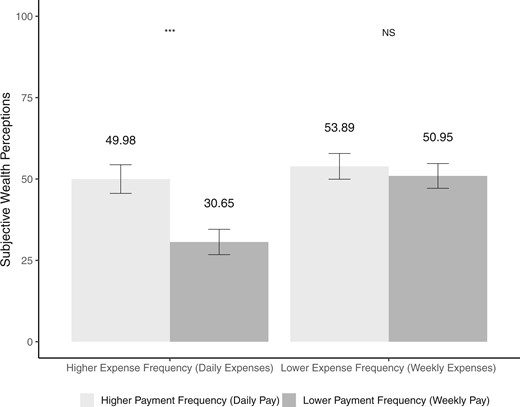
Abstract Payment frequency is a fundamental yet underexplored feature of consumers’ finances. As higher payment frequencies are becoming more prevalent, consumers are receiving more frequent yet smaller paychecks. An analysis of income and expenditure data of over 30,000 consumers from a financial services provider demonstrates a naturally occurring relationship between higher payment frequencies and increased spending. A series of lab studies support this finding, providing causal evidence that higher (vs. lower) payment frequencies increase spending. The effect of payment frequency on spending is driven by changes in consumers’ subjective wealth perceptions. Specifically, higher payment frequencies reduce consumers’ uncertainty in predicting whether they will have enough resources throughout a period, increasing their subjective wealth perceptions. As such, situational factors that reduce prediction uncertainty for those paid less frequently (e.g., the timing of consumers’ expenses, income levels) moderate the impact of payment frequency. The effects of payment frequency on subjective wealth and spending can occur even when objective wealth favors those with lower payment frequencies. More broadly, the current work underscores a need to understand how timing variations in consumers’ income impact their perceptions, behaviors, and general well-being.
Household Finance
Household financial decisions are complex, interdependent, and heterogeneous, and central to the functioning of the financial system. We present an overview of the rapidly expanding literature on household finance (with some important exceptions) and suggest directions for future research. We begin with the theory and empirics of asset market participation and asset allocation over the life cycle. We then discuss household choices in insurance markets, trading behavior, decisions on retirement saving, and financial choices by retirees. We survey research on liabilities, including mortgage choice, refinancing, and default, and household behavior in unsecured credit markets, including credit cards and payday lending. We then connect the household to its social environment, including peer effects, cultural and hereditary factors, intra-household financial decision-making, financial literacy, cognition, and educational interventions. We also discuss literature on the provision and consumption of financial advice.
An Empirical Analysis of Personal Bankruptcy and Delinquency
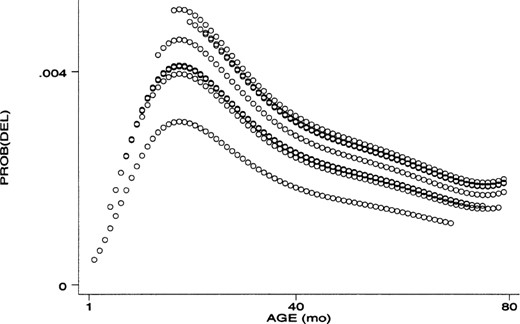
Abstract. This article uses a new dataset of credit card accounts to analyze credit card delinquency, personal bankruptcy, and the stability of credit risk
Intra-Household Frictions, Anchoring, and the Credit Card Debt Puzzle
Abstract I study how intra-household frictions and anchoring contribute to the credit card debt puzzle, the co-holding of high-cost debt, and low-yield liquid assets. First, I find couples co-hold 42% more as units than as individuals relative to income. Moreover, in a natural experiment, couples do not cooperate to reduce high-cost debt, suggesting that intra-household frictions contribute to co-holding. Second, I find individuals who regularly make credit card debt payments equal to or near the minimum account for 59% of individual co-holding. The evidence suggests anchoring to the minimum payment contributes to co-holding via these low payments.
The Effect of Credit on Spending Decisions: The Role of the Credit Limit and Credibility
The objective of the present research is to study consumer decisions to utilize a line of credit. The life-cycle hypothesis from economics argues that consumers should intertemporally reallocate their incomes over their life stream to maximize lifetime utility. One form of intertemporal allocation is to use past income (in the form of savings) in the future. A second form is the use of future income in the present. This can only be done if consumers have access to a temporary pool of money that they can draw from and replenish in the future—a function performed by consumer credit. However, our research reinforces prior findings that consumers are unable to correctly value their future incomes, and that they lack the cognitive capability to solve the intertemporal optimization problem required by the life-cycle hypothesis. Instead, we argue that consumers use information such as the credit limit as a signal of their future earnings potential. Specifically, if consumers have access to large amounts of credit, they are likely to infer that their lifetime income will be high and hence their willingness to use credit (and their spending) will also be high. Conversely, consumers who are granted lower amounts of credit are likely to infer that their lifetime income will be low and hence their spending will be lower. However, based on research in the area of consumer skepticism and inference making, we also argue for a moderating role of the credibility associated with the credit limit. Specifically, we argue that the above effect of credit availability would be particularly strong for consumers who believe that the credit limit credibly signals their future earnings potential (i.e., a naïve consumer who has limited experience with consumer credit). However, as consumers gain experience with credit, they start discounting credit availability as a predictor of their future and start questioning the validity of the process used to set the credit limit. Hence, with experience the effect of credit limit on the willingness to use credit should be attenuated. We test these predictions in five separate studies. In the first experimental study, we manipulate credit limit and credibility and pose subjects with a hypothetical purchase opportunity. Consistent with our prediction, credit limit impacted the propensity to spend, but only when the credibility was high. In the second experimental study, we replicate these findings even when subjects were given information about their expected future salaries, and also show that the credit limit influences their expectation of future earnings potential. In the third study, we show that the mere availability (and increase) of current liquidity cannot explain our findings. In the fourth study, we conduct a survey of consumers in which we measure a number of demographic characteristics and also ask them for their propensity to spend in a given purchase situation. In the fifth study we use the Survey of Consumer Finances (SCF) dataset, a triennial survey of U.S. families that is designed to provide detailed information on the use of financial services, spending behaviors, and selected demographic characteristics. Results from both studies 4 and 5 provide further support for our proposed framework—credit limits influence spending to a greater extent for consumers with lower credibility: younger consumers and less-educated consumers. Across all studies we achieved triangulation by using a variety of approaches (surveys and experiments), subjects types (young students and older consumers), nature of predictor variables (manipulated and measured), dependent measures (purchase likelihood, credit card balance, new charges), and methods of analysis (ANOVA and regression), and consistently found that increasing credit limits on a credit card increases spending, especially when the credibility of the limit is high. This paper joins a growing body of literature in marketing and behavioral decision theory that goes beyond the traditional domains of inquiry (e.g., product choice, effects of marketing mix variables) and focuses on consumer decisions relating to the appropriate use of income to finance consumption. Our framework differs from prior research on the effect of payment mechanisms on spending in two significant ways. First, we are interested in the effects of the availability of credit on spending, and not necessarily in the effect of the transaction format that is associated with each payment mechanism. Second, while prior research has studied the point-of-purchase and historic (i.e., prepurchase) effects of credit, the present research is concerned with the availability of credit in the future. Specifically, our framework is invariant to the current and prior usage of credit by the consumer.

Shaming Microloan Delinquents: Evidence from a Field Experiment in China
We study the effects of village credit information sharing on individual microloan repayment, using a randomized experiment with loan applicants from 40 villages in rural China. In our main treatment, customers received a message on the loan application form that “overdue payment (40 days after each installment due date) will be considered for public disclosure among the village by showing debtors’ names on a blackboard outside the village office of the microlending institution.” On average, this social appeal reduces the share of delinquents and the individual delinquency rate by 18.6% and 5.6% from baseline rates of 79.5% and 15.2%, respectively. The effects appear more pronounced among male and older borrowers. Additional treatments help to benchmark the effect against lender credit information sharing and separate the effects on adverse selection and moral hazard. Mechanism analysis shows that the publicly disclosed “blacklist” of delinquents affects borrowers’ repayment behaviors, partially through borrowers’ fear of losing informal risk insurance from the village society and predominately through public shaming penalties. Overall, these results support that, in traditional societies, social appeals can provide not only pecuniary, but also psychological incentives to improve loan repayment. Psychological incentives, to some extent, have stronger effects. This paper was accepted by Gustavo Manso, finance.

Cash Works. Place and Amount Matter.
Two excellent new reports from our friends at the Economic Security Project make a strong case for direct cash — and reveal why rural, county-level research matters. Right on Time argues that cash is particularly effective during major transitions: * having a child * losing a job * leaving foster care or incarceration

Debt and the Response to Household Income Shocks: Validation and Application of Linked Financial Account Data
The increasing availability of data derived from linked consumer financial accounts has the potential to dramatically expand the potential for research. Examining the most comprehensive existing set of linked-account data, consisting of transaction and balance sheet data for millions of Americans, I demonstrate the power and versatility of such sources. I discuss advantages and concerns arising from this type of data and match a range of distributional moments to external sources. As one application, I test consumption elasticities across households with varying levels, and types, of debt. I find that heterogeneity in consumption elasticity can be explained entirely by credit and liquidity.

As diversity increases, people paradoxically perceive social groups as more similar
With globalization and immigration, societal contexts differ in sheer variety of resident social groups. Social diversity challenges individuals to think in new ways about new kinds of people and where their groups all stand, relative to each other. However, psychological science does not yet specify how human minds represent social diversity, in homogeneous or heterogenous contexts. Mental maps of the array of society’s groups should differ when individuals inhabit more and less diverse ecologies. Nonetheless, predictions disagree on how they should differ. Confirmation bias suggests more diversity means more stereotype dispersion: With increased exposure, perceivers’ mental maps might differentiate more among groups, so their stereotypes would spread out (disperse). In contrast, individuation suggests more diversity means less stereotype dispersion, as perceivers experience within-group variety and between-group overlap. Worldwide, nationwide, individual, and longitudinal datasets ( n = 12,011) revealed a diversity paradox: More diversity consistently meant less stereotype dispersion. Both contextual and perceived ethnic diversity correlate with decreased stereotype dispersion. Countries and US states with higher levels of ethnic diversity (e.g., South Africa and Hawaii, versus South Korea and Vermont), online individuals who perceive more ethnic diversity, and students who moved to more ethnically diverse colleges mentally represent ethnic groups as more similar to each other, on warmth and competence stereotypes. Homogeneity shows more-differentiated stereotypes; ironically, those with the least exposure have the most-distinct stereotypes. Diversity means less-differentiated stereotypes, as in the melting pot metaphor. Diversity and reduced dispersion also correlate positively with subjective wellbeing.
