


Using a comparative framework, the study examines how variations in political regimes across Israel and Europe shape patterns of international migration. In both contexts, episodes of democratic backsliding serve as quasi-exogenous shocks that reveal the causal link between institutional erosion and outward mobility. In Israel, the origin of democratic backsliding lies in a corruption shock—the criminal indictment of the prime minister—which escalated into an executive–judicial shock as the government launched an anti-democratic judicial overhaul. This confrontation between the executive and judiciary provides a natural experiment for identifying how institutional breakdowns shape migration decisions. In Europe, the origin of democratic backsliding stems from a “Syrian shock”—a massive refugee inflow that strained administrative capacity, polarized politics, and weakened liberal institutions. The resulting governance erosion triggered emigration responses structurally like those observed in Israel. Using a difference-in-differences (DiD) estimation, the study identifies causal effects of democratic erosion on migration flows. Across both settings, out-migration emerges as a market-minded response to illiberal regime change—a behavioral signal of sensitivity to policies that features nationalizing industries, restrict free speech, and undermine the rule of law. Together, the Israeli and European experiences demonstrate that illiberal governance functions as a systemic push factor for emigration, beyond standard economic explanations.
Israel: What Went Wrong?
A leading Israeli American scholar of the Holocaust explores and explains his native country's intensifying turn toward violence and exclusion.The distinguished historian Omer Bartov was born on a kibbutz, grew up in Tel Aviv, and served in the Israel Defense Forces during the Yom Kippur War. He went on to become a leading scholar of the German army and the Holocaust, before turning his attention to his native country.In Israel: What Went Wrong?, Bartov sketches the tragic transformation of Zionism, a movement that sought to emancipate European Jewry from oppression, into a state ideology of ethno-nationalism. How is it possible, he asks, that a state founded in the immediate aftermath of the Holocaust, an event that gave legitimacy to a national home for the Jews, stands credibly accused of perpetrating large-scale war crimes? How do we come to terms with the fact that Israel’s war of destruction is being conducted with the support, laced with denial and indifference, of so many of its Jewish citizens?Tracing the roots of the violent events currently unfolding in Israel and the occupied territories, Bartov tracks his country's moral tribulations and considers the origins of Zionism, the intertwining of Israel’s independence with Palestinian displacement, the politics of the Holocaust, controversies over the term "genocide," and the uncertain future. The result is a searing and urgent critique that addresses today’s debates over Zionism and the future of Israel with rigor and depth.
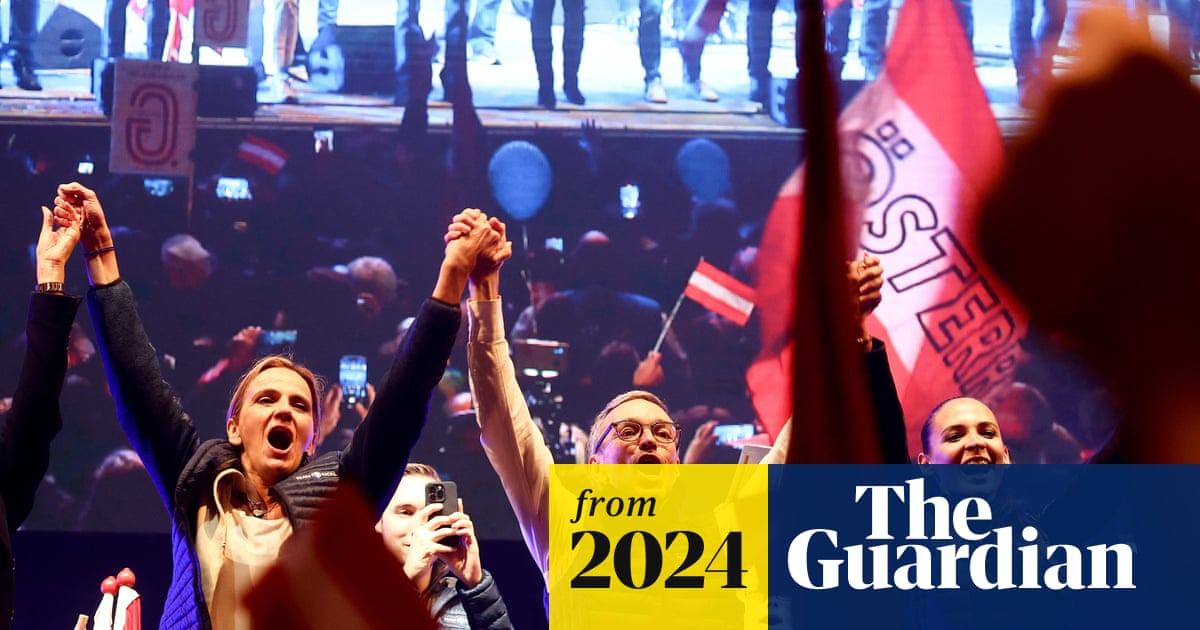
How remigration became a buzzword for global far right
Electoral success of parties in Germany and Austria backing mass deportation linked to the term’s growing use by mainstream politicians, say experts
Foreign aid and the ‘root causes’ of migration
Foreign aid is often used to address the root causes of migration as a way to reduce migrant flows. However, the effectiveness of such approaches remains unclear. This column combines individual survey data with data on World Bank projects and on bilateral migration flows to examine how foreign aid influences migration preferences and flows. Results show that aid can temporarily reduce irregular migration but may lead to increased regular migration as conditions improve over time. Policymakers should consider these dynamics when designing migration strategies to balance immediate and long-term effects.

A Theory of Forced Labour Migration
This book focuses on labour dislocation and migration of Palestinians between 1967 and 1990. In particular, it highlights the social transformations in the occupied Palestinian territory where Palestinian labour was permitted to work in Israel from 1968 onwards.
Time and the Neo-Monarchist Turn
One of the classical arguments against democracy concerns its supposed short-termism. Early-modern political thought contrasted the pitfalls of elected authority, whose timebound character was seen to invite inconstancy, instability and plunder, with the merits of indefinite rule on the model of kingship. Such reasoning has seen two revivals in recent years, first in a neo-liberal form as an argument for technocracy (see independent central banking), second in a neo-reactionary form as an argument for an all-powerful executive or ‘monarch’ (see the contemporary international far Right). This article looks at the structure of these political arguments and the work they do. Having reconstructed their historical background, it charts how the neo-monarchist turn marks a radicalisation in democracy-scepticism, guided by a patrimonial logic of authority as property ownership. The article goes on to examine the political-economic factors to which this responds, as well as the contradictions to which neo-monarchism is prone. As the article concludes, temporal arguments for authoritarian politics may be dubious in substance but merit careful observation in a context of widespread disaffection with existing institutions.

Hyperpolitics: Extreme Politicization without Political Consequences
POLITICS AFTER THE END OF THE END OF HISTORYWhat happens when politics is everywhere, yet nothing seems to change? From the abandoned dance floors of Thatcher’s London to the mass mobilizations of Black Lives Matter, Anton Jäger traces how public life has become infused with protest, spectacle, and moral urgency — while the old infrastructure of parties, unions, and civic solidarity has been hollowed out.Hyperpolitics revisits the illusions of the “end of history” and dissects the strange energies that replaced them: viral outrage, endless culture wars, and the digital rush of causes that flare and vanish overnight. Jäger shows how the promises of post–Cold War liberalism gave way to a restless, unsteady public sphere where private passions overflow into politics but rarely build enduring power.Ranging from Guy Debord and Wolfgang Tillmans to Houellebecq’s disenchanted fictions, Hyperpolitics makes sense of a world in which collective action remains fragmented and the social fabric thinner than ever. For anyone trying to grasp why our age feels so charged yet so inconsequential, this book offers a vital map through the new contradictions of our hyperpolitical moment.
Left-Wing Governments and Far-Right Success
In recent decades, support for the far right has surged in many countries. One common explanation for this is that far-right support is a backlash against left-wing governments and their policies. We investigate the causal effect of the partisan make-up of governments on the electoral results of far-right parties. Evidence from over-time comparative data and a quasi-experimental analysis based on a regression discontinuity design in Spain indicates that far-right parties benefit electorally when the current government is on the left. In further analyses, we employ a novel regression discontinuity design (RDD)-based sampling strategy to examine original individual-level survey data from Spanish municipalities close to the discontinuity cutoff. These data show that the likely mechanism underlying the backlash effect is an ideological shift to the right among the electorate when left-wing parties govern. Overall, the far right benefits more when the mainstream left governs than when the mainstream right does.
When Do Parties Lie? Misinformation and Radical-Right Populism Across 26 Countries
The spread of misinformation has emerged as a global concern. Academic attention has recently shifted to emphasize the role of political elites as drivers of misinformation. Yet, little is known of the relationship between party politics and the spread of misinformation—in part due to a dearth of cross-national empirical data needed for comparative study. This article examines which parties are more likely to spread misinformation, by drawing on a comprehensive database of 32M tweets from parliamentarians in 26 countries, spanning 6 years and several election periods. The dataset is combined with external databases such as Parlgov and V-Dem, linking the spread of misinformation to detailed information about political parties and cabinets, thus enabling a comparative politics approach to misinformation. Using multilevel analysis with random country intercepts, we find that radical-right populism is the strongest determinant for the propensity to spread misinformation. Populism, left-wing populism, and right-wing politics are not linked to the spread of misinformation. These results suggest that political misinformation should be understood as part and parcel of the current wave of radical right populism, and its opposition to liberal democratic institution.
Citizens Above the Law
The growing sovereign citizen movement reflects an America that has lost faith in its democratic institutions.

Legitimize or Delegitimize? Mainstream Party Strategy toward (Former) Pariah Parties and How Voters Respond
Mainstream parties have often shifted from initially portraying new competitors as undemocratic pariahs (i.e., a delegitimizing strategy) to portraying the same parties later as democratic (i.e., a legitimizing strategy). I argue that voters follow mainstream parties’ legitimizing strategies in their legitimacy evaluations of these parties. I investigate this argument with two independent survey experiments and a quantitative media content analysis in two countries that differ sharply in the nature of party competition—from mainstream parties delegitimizing a far-right party (i.e., Germany) to mainstream parties legitimizing it (i.e., Sweden). I find strong evidence that (a) mainstream parties can effectively legitimize pariah parties in the eyes of voters, (b) turning back to delegitimization has little effect, (c) legitimization is no less effective in the face of a third party’s delegitimizing strategy, and (d) legitimization resonates beyond co-partisans. The results suggest that mainstream party legitimization of pariah parties has far-reaching consequences.
The Rise and Fall of the Palestinian-Arab Middle Class Under the British Mandate, 1920–39
The Palestinian-Arab middle class under the Mandate may be characterized as bourgeois and educated, similarly to bourgeois classes that have developed in the West in the Modern era. The bourgeois characteristics of the Palestinian-Arab middle class, and their influence on its historical trajectory during the Mandate era, have not been studied in depth yet. This article aims to focus on a local aspect of the rise of the middle class in the region in that period: the rise of the Palestinian-Arab middle class under the Mandate, until the Palestinian-Arab Revolt (1936–9). The main hypothesis is that particular bourgeois social and cultural characteristics prevented the middle class full incorporation into the Palestinian-Arab National Movement, and even led to estrangement between the middle class and the national leadership, as well as members of lower strata, especially the villagers. Members of the middle class, mostly Christians but Muslims as well, espoused in their daily life modern habits, ideas, and customs, as a means to distinguish between themselves and other classes, similarly to their parallels in the West, and like their contemporaries elsewhere in the Eastern Mediterranean, as has demonstrated by Watenpaugh. Those gaps reached their climax during the years of revolt.
Hypernormalisation | Full Documentary | Adam Curtis
Lobbying for Zionism on Both Sides of the Atlantic | Oneworld
In 1896, a Jewish state was a pipe dream. Today the overwhelming majority of Jews identify as Zionists. How did this happen? Ilan Pappe unveils how over a century of aggressive lobbying changed the map of the Middle East. Pro-Israel lobbies convinced British and American policymakers to condone Israel’s flagrant breaches of international law, […]

A Decline in the Quality of Debate? The Evolution of Cognitive Complexity in Swiss Parliamentary Debates on Immigration (1968–2014)
Abstract This article explores the evolution of debate quality in the Swiss parliament. Focusing on immigration debates, we employ a psychological construct—cognitive complexity (CC)—which captures both epistemic and accommodative dimensions of political argumentation. We find a decrease in CC in parliamentary immigration debates over time, but this decrease was driven by the rise of the SVP (Swiss People's Party). However, there was almost no “spillover” of this new communication style to other parties. Moreover, we also find a constant difference between the Ständerat and the Nationalrat, with the former scoring higher on CC and thus asserting its role as a “chambre de réflexion” in immigration debates. Our diachronic focus on the quality of political debate takes a novel perspective on the dynamics of consensus democracy as well as on elite political culture. While our results indicate that the rise of the SVP has transformed the traditional consensual and deliberative pattern of Swiss policy‐making style into one which is geared towards less accommodation and a higher simplicity of political talk, there is still remarkable resilience against this new style of political interaction.

A Decline in the Quality of Debate? The Evolution of Cognitive Complexity in Swiss Parliamentary Debates on Immigration (1968–2014)
Abstract This article explores the evolution of debate quality in the Swiss parliament. Focusing on immigration debates, we employ a psychological construct—cognitive complexity (CC)—which captures both epistemic and accommodative dimensions of political argumentation. We find a decrease in CC in parliamentary immigration debates over time, but this decrease was driven by the rise of the SVP (Swiss People's Party). However, there was almost no “spillover” of this new communication style to other parties. Moreover, we also find a constant difference between the Ständerat and the Nationalrat, with the former scoring higher on CC and thus asserting its role as a “chambre de réflexion” in immigration debates. Our diachronic focus on the quality of political debate takes a novel perspective on the dynamics of consensus democracy as well as on elite political culture. While our results indicate that the rise of the SVP has transformed the traditional consensual and deliberative pattern of Swiss policy‐making style into one which is geared towards less accommodation and a higher simplicity of political talk, there is still remarkable resilience against this new style of political interaction.

🧵 Democracy feels like it's in a rough state at the moment across the globe, and we hear various explanations, like polarisation, extremism, disinformation, and loss of trust. But what if those explanations are mainly symptoms and we've been trying to treat them rather than the underlying causes?
