


One of the major findings in wellbeing research until recently was that happiness was U-shaped by age and unhappiness hump-shaped by age. There was a midlife crisis — a finding reported in well over 600 published papers using data on 145 countries. It was present in both developing and developed countries. And it was persistent over time. The finding of a peak in ill-being in midlife was consistent with Anne Case and Angus Deaton’s work on mortality and the so-called “deaths of despair.”1 In the US in particular and to a lesser extent in other countries, White prime-aged individuals without a college degree had high death rates from suicide, drug overdoses, and cirrhosis of the liver. Drug overdose deaths in the US, for example, peaked at midlife ages. In 2023, the Centers for Disease Control and Prevention (CDC) reported that overdose death rates per 100,000 by age rose from 13.5 for 15-to-24-year-olds to 45.6 for 25-to-34-year-olds and 60.8 for 35-to-44-year-olds, and then declined to 53.3 for 45-to-54-year-olds, 49.2 for 55-to-64-year-olds, and 14.7 for those over the age of 65.2 The morbidity data matched the mortality data.
Why older people are happier and what we can learn from them | Psyche Ideas
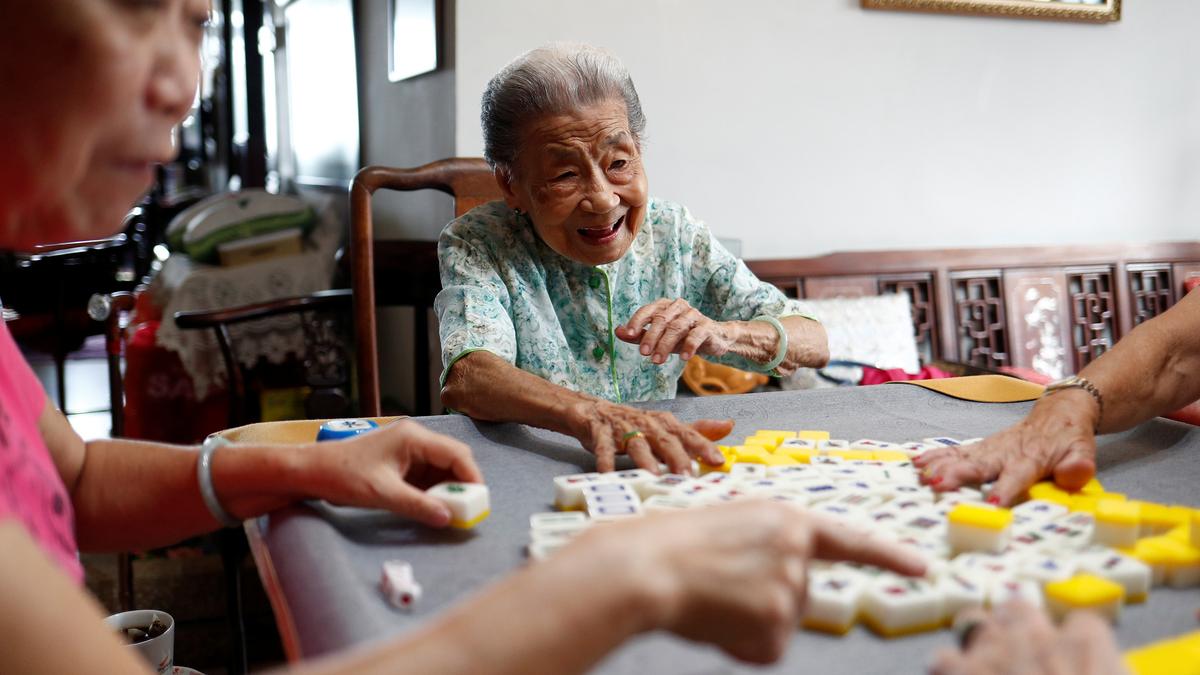
Around the world, happiness tends to peak later in life. It has more to do with balancing priorities than elderly wisdom
Open source confronts its midlife crisis | The Observation Deck
Midlife is tough: the idealism of youth has faded, as has inevitably some of its fitness and vigor. At the same time, the responsibilities of adulthood have grown: the kids that were such a fresh adventure when they were infants and toddlers are now grappling with their own transition into adulthood – and you try to remind yourself that the kids that you have sacrificed so much for probably don’t actually hate your guts, regardless of that post they just liked on the ‘gram. Making things more challenging, while you are navigating the turbulence of teenagers, your own parents are likely entering life’s twilight, needing help in new ways from their adult children. By midlife, in addition to the singular joys of life, you have also likely experienced its terrible sorrows: death, heartbreak, betrayal. Taken together, the fading of youth, the growth in responsibility and the endurance of misfortune can lead to cynicism or (worse) drastic and poorly thought-out choices. Add in a little fear of mortality and some existential dread, and you have the stuff of which midlife crises are made…
Why Do Americans Have Shorter Life Expectancy and Worse Health Than Do People in Other High-Income Countries?
Americans lead shorter and less healthy lives than do people in other high-income countries. We review the evidence and explanations for these variations in longevity and health. Our overview suggests that the US health disadvantage applies to multiple mortality and morbidity outcomes. The American health disadvantage begins at birth and extends across the life course, and it is particularly marked for American women and for regions in the US South and Midwest. Proposed explanations include differences in health care, individual behaviors, socioeconomic inequalities, and the built physical environment. Although these factors may contribute to poorer health in America, a focus on proximal causes fails to adequately account for the ubiquity of the US health disadvantage across the life course. We discuss the role of specific public policies and conclude that while multiple causes are implicated, crucial differences in social policy might underlie an important part of the US health disadvantage.

Despair and anxiety among UK youth
For years, the age profile of mental ill health was hump-shaped, peaking when people were in their late 40s or early 50s. But in recent years the mental health of the young has deteriorated to such an extent that, today, anxiety and despair peak when UK citizens are in their mid-20s. In most international surveys, adolescents in England, Scotland, and Wales are among the least happy in the world. This column focuses on one of the many likely contributory factors to young people’s mental health – the rise in social media, underpinned by the smartphone.

Over nearly 80 years, Harvard study has been showing how to live a healthy and happy life
For nearly 80 years, the Harvard Study of Adult Development has been producing data and lessons on how to live longer, happier, and healthier lives.
How Health Disparities Develop over the Lifecycle
In the Netherlands, there are striking socioeconomic differences in mortality among older adults, with a 4.4 percentage point (67 percent) higher five-year mortality rate for 70-year-old individuals with below-median income than for those with above-median income. To better understand the role of chronic disease in these health disparities, Kaveh Danesh, Jonathan T. Kolstad, William D. Parker, and Johannes Spinnewijn develop an index of chronic disease burden in The Chronic Disease Index: Analyzing Health Inequalities over the Lifecycle (NBER Working Paper 32577). This index is a measure of health status that can be measured earlier in life and shows how chronic health evolves with age and differs across income groups.
America has a loneliness epidemic. Here are 6 steps to address it
Lacking connection can increase the risk for premature death to levels comparable to smoking 15 cigarettes a day, according to a new advisory from the U.S. Surgeon General.
Does adolescence really last until age 32?
Those “turning points” in brain aging aren’t quite what you think

Learning From Older Adults: An Intergoal Compatibility Account for Successful Happiness Pursuit
Academic Abstract People want to pursue happiness but often fail, a phenomenon known as the paradox of pursuing happiness. The mechanisms underlying this paradox remain elusive. Age differences in happiness—specifically that older adults appear more successful in pursuing happiness (the emotion paradox of aging)—provide valuable insights into effective happiness pursuit. Drawing on this literature, we propose an intergoal compatibility account to interpret both paradoxes through the lens of intergoal interactions, an intuitively critical yet underexplored factor in existing interpretations. This account asserts that greater compatibility (fewer conflicts and greater facilitation) between happiness pursuit and other important personal goals enhances the effectiveness of happiness pursuit, and such compatibility can be enhanced through contextual influences (e.g., age-graded developmental tasks) and strategic self-regulation (e.g., goal adjustments). This account generates testable predictions and practical implications for enhancing happiness pursuit across the lifespan. Public Abstract Why do people often struggle to achieve happiness? And why are older adults happier than younger adults, even though they face more losses in life? While these questions have drawn extensive attention, they remain puzzling. A crucial yet insufficiently explored factor in successful happiness pursuit is intergoal compatibility —the extent to which the pursuit of happiness aligns or conflicts with other important personal goals. For younger adults, the demands of age-related developmental tasks (e.g., educational and career aspirations) often create conflicts with the pursuit of happiness, diminishing its effectiveness. Conversely, in older adults, happiness becomes more prioritized and compatible with other important personal goals, thereby enhancing the effectiveness of pursuing happiness. A lesson we can learn from older adults is to pursue happiness in ways compatible with other important personal goals.

Want to Be Happy? Think Like an Old Person (Published 2017)
In a series update, we catch up with a group of New Yorkers over age 90: warm, cranky, funny and three years older than when we first met them.

Use it or lose it: How cognitive skills change with age
Cognitive skills are commonly assumed to begin deteriorating from the age of 30, which could pose a significant challenge for rapidly ageing populations. But this assumption relies largely on cross-sectional data that cannot distinguish between ageing patterns and cohort differences. Using German longitudinal data, this column finds that skills, on average, increase markedly into one’s 40s before decreasing slightly in literacy and more severely in numeracy. In addition, skills decline at older ages only for those with below-average skill usage, outlining a clear policy pathway for avoiding skill declines.

Researchers Confront an Epidemic of Loneliness (Published 2016)
Social isolation is linked to physical illness and to functional and cognitive decline. Programs to reach out to the elderly are growing, particularly in Britain.

Homebound: The Long-Term Rise in Time Spent at Home Among U.S. Adults
The changes in daily life induced by the COVID-19 pandemic brought renewed attention to longstanding concerns about social isolation in the United States. Despite the links between the physical setting for individuals' daily lives and their connections with family, friends, and the various institutions of collective life, trends in where American adults spend their time have been largely overlooked as researchers have focused on how and with whom they spend their time. This article analyzes data from the American Time Use Survey over a timeframe spanning nineteen years and argues that the changes in Americans' daily routines induced by the COVID era should be seen as an acceleration of a longer-term trend: the rise of time spent at home. Results show that from 2003 to 2022, average time spent at home among American adults has risen by one hour and 39 minutes in a typical day. Time at home has risen for every subset of the population and for virtually all activities. Preliminary analysis indicates that time at home is associated with lower levels of happiness and less meaning, suggesting the need for enhanced empirical attention to this major shift in the setting of American life.

Homebound: The Long-Term Rise in Time Spent at Home Among U.S. Adults
The changes in daily life induced by the COVID-19 pandemic brought renewed attention to longstanding concerns about social isolation in the United States. Despite the links between the physical setting for individuals' daily lives and their connections with family, friends, and the various institutions of collective life, trends in where American adults spend their time have been largely overlooked as researchers have focused on how and with whom they spend their time. This article analyzes data from the American Time Use Survey over a timeframe spanning nineteen years and argues that the changes in Americans' daily routines induced by the COVID era should be seen as an acceleration of a longer-term trend: the rise of time spent at home. Results show that from 2003 to 2022, average time spent at home among American adults has risen by one hour and 39 minutes in a typical day. Time at home has risen for every subset of the population and for virtually all activities. Preliminary analysis indicates that time at home is associated with lower levels of happiness and less meaning, suggesting the need for enhanced empirical attention to this major shift in the setting of American life.
Degeneracy is a Symptom
On Conspicuous Despair, the Ponzi stage of being alive, and why your grandparents are wrong about you.

Has anyone looked at this paper more closely? I've seen many of my bachelor students refer to it when it comes to depressive disorders. Authors find worldwide depression rates doubled from 1990 to 2020, which seems like a lot. pubmed.ncbi.nlm.nih.gov/40313474/

Trends in Prevalent Cases and Disability-Adjusted Life-Years of Depressive Disorders Worldwide: Findings From the Global Burden of Disease Study From 1990 to 2021 - PubMed
pubmed.ncbi.nlm.nih.gov