


Tetrahydrocannabinol (THC) has been the primary focus of cannabis research since 1964, when Raphael Mechoulam isolated and synthesized it. More recently, the synergistic contributions of cannabidiol to cannabis pharmacology and analgesia have been scientifically demonstrated. Other phytocannabinoids, including tetrahydrocannabivarin, cannabigerol and cannabichromene, exert additional effects of therapeutic interest. Innovative conventional plant breeding has yielded cannabis chemotypes expressing high titres of each component for future study. This review will explore another echelon of phytotherapeutic agents, the cannabis terpenoids: limonene, myrcene, α-pinene, linalool, β-caryophyllene, caryophyllene oxide, nerolidol and phytol. Terpenoids share a precursor with phytocannabinoids, and are all flavour and fragrance components common to human diets that have been designated Generally Recognized as Safe by the US Food and Drug Administration and other regulatory agencies. Terpenoids are quite potent, and affect animal and even human behaviour when inhaled from ambient air at serum levels in the single digits ng·mL−1. They display unique therapeutic effects that may contribute meaningfully to the entourage effects of cannabis-based medicinal extracts. Particular focus will be placed on phytocannabinoid-terpenoid interactions that could produce synergy with respect to treatment of pain, inflammation, depression, anxiety, addiction, epilepsy, cancer, fungal and bacterial infections (including methicillin-resistant Staphylococcus aureus). Scientific evidence is presented for non-cannabinoid plant components as putative antidotes to intoxicating effects of THC that could increase its therapeutic index. Methods for investigating entourage effects in future experiments will be proposed. Phytocannabinoid-terpenoid synergy, if proven, increases the likelihood that an extensive pipeline of new therapeutic products is possible from this venerable plant.
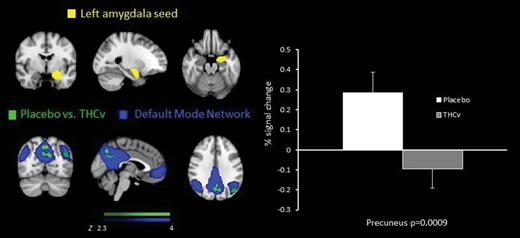
The CB1 Neutral Antagonist Tetrahydrocannabivarin Reduces Default Mode Network and Increases Executive Control Network Resting State Functional Connectivity in Healthy Volunteers
AbstractBackground:. The cannabinoid cannabinoid type 1 (CB1) neutral antagonist tetrahydrocannabivarin (THCv) has been suggested as a possible treatment f
Cannabinoids promote embryonic and adult hippocampus neurogenesis and produce anxiolytic- and antidepressant-like effects
The hippocampal dentate gyrus in the adult mammalian brain contains neural stem/progenitor cells (NS/PCs) capable of generating new neurons, i.e., neurogenesis. Most drugs of abuse examined to date decrease adult hippocampal neurogenesis, but the effects of cannabis (marijuana or cannabinoids) on hippocampal neurogenesis remain unknown. This study aimed at investigating the potential regulatory capacity of the potent synthetic cannabinoid HU210 on hippocampal neurogenesis and its possible correlation with behavioral change. We show that both embryonic and adult rat hippocampal NS/PCs are immunoreactive for CB1 cannabinoid receptors, indicating that cannabinoids could act on CB1 receptors to regulate neurogenesis. This hypothesis is supported by further findings that HU210 promotes proliferation, but not differentiation, of cultured embryonic hippocampal NS/PCs likely via a sequential activation of CB1 receptors, Gi/o proteins, and ERK signaling. Chronic, but not acute, HU210 treatment promoted neurogenesis in the hippocampal dentate gyrus of adult rats and exerted anxiolytic- and antidepressant-like effects. X-irradiation of the hippocampus blocked both the neurogenic and behavioral effects of chronic HU210 treatment, suggesting that chronic HU210 treatment produces anxiolytic- and antidepressant-like effects likely via promotion of hippocampal neurogenesis.
The Word “Marijuana” Versus the Word “Cannabis”
Why do we call marijuana marijuana? Growing up, I assumed that "marijuana" was the original Latin name for the plant I discuss every week in...

PTAB Reverses §101 Rejection of Cannabis Composition Claims
Patent Trial and Appeal Board Finds That Cannabis Delivery System Is Not a Natural Product

Cytochrome P450 Enzyme Inhibition and Herb-Drug Interaction Potential of Medicinal Plant Extracts Used for Management of Diabetes in Nigeria
The use of herbal medicines is common in Africa, and patients often use a combination of herbs and drugs. Concurrent herbal and pharmaceuticals treatments can cause adverse effects through herb-drug interactions (HDI). This study evaluated the potential risk of HDI for five medicinal plants, Vernonia amygdalina, Ocimum gratissimum, Moringa oleifera, Azadirachta indica, and Picralima nitida, using in vitro assays. Patients with diabetes and some other disease conditions commonly use these medicinal plants in Nigeria, and little is known regarding their potential for drug interaction, despite their enormous use.

How Your Genes Impact Your Response to Cannabis - Live Webinar Recording
Organic Medicinal Herb Seeds & Plants | Strictly Medicinal Seeds
Organic medicinal herb seeds, live roots and plants, grown on our farm in Williams, Oregon, and shipped across the US. Rare and common varieties.

Psychedelics and Immunomodulation: Novel Approaches and Therapeutic Opportunities
Classical psychedelics are psychoactive substances, which, besides their psychopharmacological activity, have also been shown to exert significant modulatory effects on immune responses by altering signaling pathways involved in inflammation, cellular proliferation and cell survival via activating NF-κB and MAPKs. Recently, several neurotransmitter receptors involved in the pharmacology of psychedelics, such as serotonin and sigma-1 receptors, have also been shown to play crucial roles in numerous immunological processes. This emerging field also offers promising treatment modalities in the therapy of various diseases including autoimmune and chronic inflammatory conditions, infections, and cancer. However, the scarcity of available review literature renders the topic unclear and obscure, mostly posing psychedelics as illicit drugs of abuse and not as physiologically relevant molecules or as possible agents of future pharmacotherapies. In this paper, the immunomodulatory potential of classical serotonergic psychedelics, including N,N-dimethyltryptamine (DMT), 5-methoxy-N,N-dimethyltryptamine (5-MeO-DMT), lysergic acid diethylamide (LSD), 2,5-dimethoxy-4-iodoamphetamine (DOI) and 3,4-methylenedioxy-methamphetamine (MDMA) will be discussed from a perspective of molecular immunology and pharmacology. Special attention will be given to the functional interaction of serotonin and sigma-1 receptors and their cross-talk with Toll-like and RIG-I-like pattern recognition receptor-mediated signaling. Furthermore, novel approaches will be suggested feasible for the treatment of diseases with chronic inflammatory etiology and pathology, such as atherosclerosis, rheumatoid arthritis, multiple sclerosis, schizophrenia, depression and Alzheimer's disease.

Biophoton emission promotes the modern scientific utilization of medicinal plants: from theoretical integration to research applications
Medicinal plants constitute the primary pharmacological source of Chinese medicine and their scientific interpretation is crucial for quality standardization and clinical guidance. Paradoxically, the contemporary evaluation model primarily adopts ...
Labrador Tea – Tonic or Toxic? - Paul Kirtley
Labrador tea is the name given to three closely related Rhododendron species. These plants were traditionally used for many medicines as well as Labrador tea, most commonly made from

Massive scientific report on marijuana confirms medical benefits
Effective pain treatment is a top conclusion, but risks and unanswered questions remain.
Marijuana May Grow Neurons in the Brain
SASKATOON, Saskatchewan - Marijuana may promote the growth of new neurons in the hippocampus, perhaps relieving anxiety and depression, according to a Canadian team.

Progesterone – Friend or foe?
Estradiol is the “prototypic” sex hormone of women. Yet, women have another sex hormone, which is often disregarded: Progesterone. The goal of this article is to provide a comprehensive review on progesterone, and its metabolite allopregnanolone, emphasizing three key areas: biological properties, main functions, and effects on mood in women. Recent years of intensive research on progesterone and allopregnanolone have paved the way for new treatment of postpartum depression. However, treatment for premenstrual syndrome and premenstrual dysphoric disorder as well as contraception that women can use without risking mental health problems are still needed. As far as progesterone is concerned, we might be dealing with a two-edged sword: while its metabolite allopregnanolone has been proven useful for treatment of PPD, it may trigger negative symptoms in women with PMS and PMDD. Overall, our current knowledge on the beneficial and harmful effects of progesterone is limited and further research is imperative.
Psychedelics reopen the social reward learning critical period
Psychedelics are a broad class of drugs defined by their ability to induce an altered state of consciousness1,2. These drugs have been used for millennia in both spiritual and medicinal contexts, and a number of recent clinical successes have spurred a renewed interest in developing psychedelic therapies3–9. Nevertheless, a unifying mechanism that can account for these shared phenomenological and therapeutic properties remains unknown. Here we demonstrate in mice that the ability to reopen the social reward learning critical period is a shared property across psychedelic drugs. Notably, the time course of critical period reopening is proportional to the duration of acute subjective effects reported in humans. Furthermore, the ability to reinstate social reward learning in adulthood is paralleled by metaplastic restoration of oxytocin-mediated long-term depression in the nucleus accumbens. Finally, identification of differentially expressed genes in the ‘open state’ versus the ‘closed state’ provides evidence that reorganization of the extracellular matrix is a common downstream mechanism underlying psychedelic drug-mediated critical period reopening. Together these results have important implications for the implementation of psychedelics in clinical practice, as well as the design of novel compounds for the treatment of neuropsychiatric disease.

A Dose of a Hallucinogen From a ‘Magic Mushroom,’ and Then Lasting Peace (Published 2016)
Two studies used psilocybin to see if the drug could reduce depression and anxiety in cancer patients. The results were striking.

From treating PTSD to quitting tobacco: researchers say public investment into psychedelic drugs essential | CBC News
Magic mushrooms to treat depression, ecstasy to cure PTSD and LSD to combat alcoholism; just some of the drug-affliction pairings that have been tested in recent years.
