Erinacine A-enriched Hericium erinaceus mycelia is a well-established potential therapeutic agent for neurodegenerative disorders. However, the effect of erinacine A-enriched H. erinaceus mycelia on promoting longevity remains unclear. This is the first study to investigate the effect of erinacine A-enriched H. erinaceus mycelia on lifespan-prolonging activity in Drosophila melanogaster and senescence-accelerated P8 (SAMP8) mice. Two hundred D. melanogaster and 80 SAMP8 mice of both sexes were randomly divided into four groups and were administered with either the standard, low-dose, mid-dose, or high-dose erinacine A-enriched H. erinaceus mycelia. After treatment, the lifespan was measured in D. melanogaster, and the lifespan, food intake and oxidative damage were evaluated in SAMP8 mice. Results showed that supplementation with erinacine A-enriched H. erinaceus mycelia extended the lifespan in both D. melanogaster and SAMP8 by a maximum of 32% and 23%, respectively, compared to the untreated controls. Moreover, erinacine A-enriched H. erinaceus mycelia decreased TBARS levels and induced the anti-oxidative enzyme activities of superoxide dismutase, catalase, and glutathione peroxidase. Together, these findings suggest that erinacine A-enriched H. erinaceus mycelia supplement could promote longevity, mediated partly through the induction of endogenous antioxidants enzymes.
Increase in muscle endurance in mice by dietary Yamabushitake mushroom ( <i>Hericium erinaceus</i> ) possibly via activation of <span style="font-variant:small-caps;">PPAR</span> δ
Abstract Skeletal muscle fiber is largely classified into two types: type 1 (slow‐twitch) and type 2 (fast‐twitch) fibers. Meat quality and composition of fiber types are thought to be closely related. Previous research showed that overexpression of constitutively active peroxisome proliferator‐activated receptor ( PPAR )δ, a nuclear receptor present in skeletal muscle, increased type 1 fibers in mice. In this study, we found that hexane extracts of Yamabushitake mushroom ( Hericium erinaceus ) showed PPAR δ agonistic activity in vitro . Eight‐week‐old C57 BL /6J mice were fed a diet supplemented with 5% (w/w) freeze‐dried Yamabushitake mushroom for 24 hr. After the treatment period, the extensor digitorum longus ( EDL ) muscles were excised. The Yamabushitake‐supplemented diet up‐regulated the PPAR δ target genes Pdk4 and Ucp3 in mouse skeletal muscles in vivo . Furthermore, feeding the Yamabushitake‐supplemented diet to mice for 8 weeks resulted in a significant increase in muscle endurance. These results indicate that Yamabushitake mushroom contains PPAR δ agonistic ligands and that dietary intake of Yamabushitake mushroom could activate PPAR δ in skeletal muscle of mice. Unexpectedly, we observed no significant alterations in composition of muscle fiber types between the mice fed control and Yamabushitake‐supplemented diets.

Mitochondrial Signaling and Stress Responses, Key Regulators of Aging and Longevity
ABSTRACT Mitochondria are vital not only for energy production but also for regulating signaling pathways that influence aging. While mitochondrial dysfunction contributes to age‐related decline, emerging evidence shows that mild, regulated mitochondrial stress can paradoxically promote longevity. This review highlights recent advances in mitochondrial biology and aging across species. We explore the dual role of reactive oxygen species (ROS) as both damaging agents and signaling molecules that activate adaptive stress responses. Key pathways such as the mitochondrial unfolded protein response (UPR MT ) and integrated stress response (ISR) are discussed, including their tissue‐specific as well as non‐cell‐autonomous effects on aging. Additionally, we examine the impact of mitochondrial protein import/export, dynamics (fission, fusion, mitophagy, biogenesis), and quality control in aging. Finally, we address challenges in understanding context‐dependent mitochondrial responses and mitonuclear communication. Together, these insights position mitochondria as central regulators of aging and highlight their potential as therapeutic targets to enhance health span and longevity.

Drug 'reverses' ageing in animal tests
Mice had more stamina, hair and improved organ function with the drug.

Montmorency tart cherry protects against age-related bone loss in female C57BL/6 mice and demonstrates some anabolic effects
Age-related bone loss is a consequence of endocrine and immune changes that disrupt bone remodeling. Functional foods (e.g., tart cherries) with antioxidant, anti-inflammatory and prebiotic activity can potentially counter this age-related phenomenon. The aim of this study was to determine if Montmorency tart cherry protects against early age-related bone loss and the culpable alterations in bone metabolism.

Yamabushitake Mushroom ( <i>Hericium erinaceus</i> ) Improved Lipid Metabolism in Mice Fed a High-Fat Diet
The gut microbiome may influence brain aging, mouse study suggests
A communication pathway between the brain and the gut may be integral to how well the brain holds on to memories
Amaranth Foundation - Longevity and Neuroscience
Amaranth Foundation funds groundbreaking work in longevity and neuroscience. Learn more about our grants, projects, and team .

The pleiotropic effects of prebiotic galacto-oligosaccharides on the aging gut
Prebiotic galacto-oligosaccharides (GOS) have an extensively demonstrated beneficial impact on intestinal health. In this study, we determined the impact of GOS diets on hallmarks of gut aging: microbiome dysbiosis, inflammation, and intestinal barrier defects (“leaky gut”). We also evaluated if short-term GOS feeding influenced how the aging gut responded to antibiotic challenges in a mouse model of Clostridioides difficile infection. Finally, we assessed if colonic organoids could reproduce the GOS responder—non-responder phenotypes observed in vivo.

Metformin improves healthspan and lifespan in mice
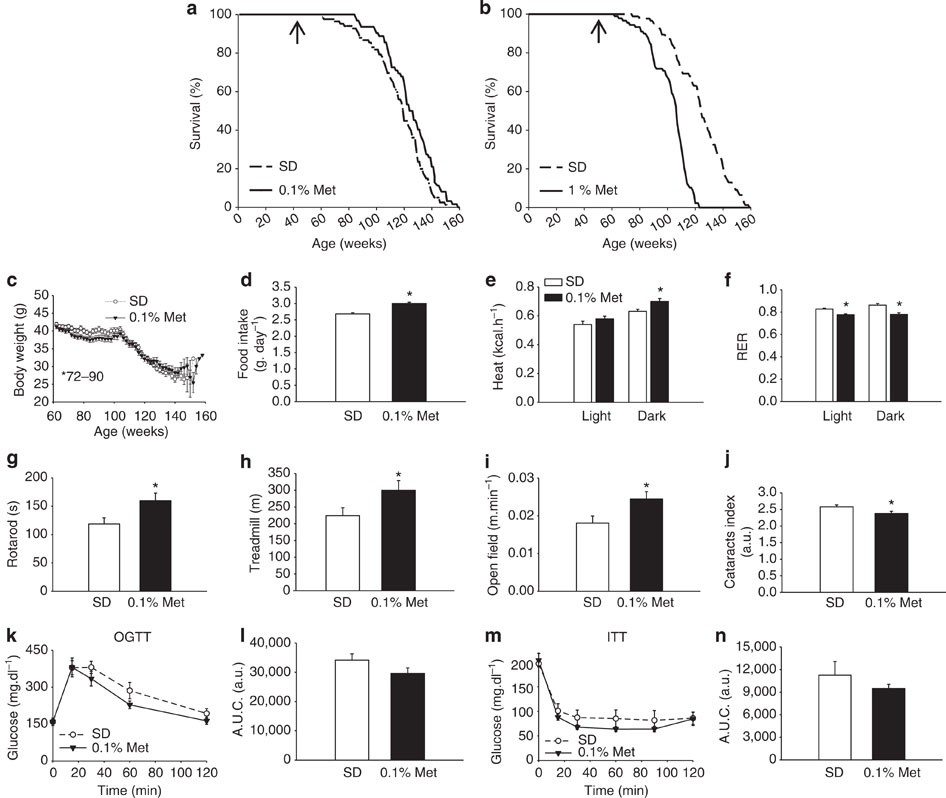
Metformin is a drug commonly prescribed to treat patients with type 2 diabetes. Here we show that long-term treatment with metformin (0.1% w/w in diet) starting at middle age extends healthspan and lifespan in male mice, while a higher dose (1% w/w) was toxic. Treatment with metformin mimics some of the benefits of calorie restriction, such as improved physical performance, increased insulin sensitivity, and reduced low-density lipoprotein and cholesterol levels without a decrease in caloric intake. At a molecular level, metformin increases AMP-activated protein kinase activity and increases antioxidant protection, resulting in reductions in both oxidative damage accumulation and chronic inflammation. Our results indicate that these actions may contribute to the beneficial effects of metformin on healthspan and lifespan. These findings are in agreement with current epidemiological data and raise the possibility of metformin-based interventions to promote healthy aging.
Effect of Long-Term Green Tea Polyphenol Supplementation on Bone Architecture, Turnover, and Mechanical Properties in Middle-Aged Ovariectomized Rats
We investigated the effects of 6-month green tea polyphenols (GTP) supplementation on bone architecture, turnover, and mechanical properties in middle-aged ovariectomized (OVX) rats. Female rats were sham-operated (n = 39, 13/group) or OVX (n = 143, 13/group). Sham-control and OVX-control rats (n = 39) receiving no GTP were assigned for sample collection at baseline, 3, or 6 months. The remaining OVX rats (n = 104) were randomized to 0.15%, 0.5%, 1%, and 1.5% (g/dL) GTP for 3 or 6 months. Blood and bone samples were collected. Relative to the OVX-control group, GTP (1% and 1.5%) lowered serum procollagen type 1 N-terminal propeptide at 3 and 6 months, C-terminal telopeptides of type I collagen at 3 months, and insulin-like growth factor-I at 6 months. GTP did not affect bone mineral content and density. At 6 months, no dose of GTP positively affected trabecular bone volume based on microCT, but a higher cortical thickness and improved biomechanical properties of the femur mid-diaphysis was observed in the 1.5% GTP-treated group. At 3 and 6 months, GTP (0.5%, 1%, and 1.5%) had lower rates of trabecular bone formation and resorption than the OVX-control group, but the inhibitory effects of GTP on periosteal and endocortical bone mineralization and formation at the tibial midshaft were only evident at 3 months. GTP at higher doses suppressed bone turnover in the trabecular and cortical bone of OVX rats and resulted in improved cortical bone structural and biomechanical properties, although it was not effective in preventing the ovariectomy-induced dramatic cancellous bone loss.

Probiotics Protect Mice from Ovariectomy-Induced Cortical Bone Loss
The gut microbiota (GM) modulates the hosts metabolism and immune system. Probiotic bacteria are defined as live microorganisms which when administered in adequate amounts confer a health benefit on the host and can alter the composition of the GM. Germ-free mice have increased bone mass associated with reduced bone resorption indicating that the GM also regulates bone mass. Ovariectomy (ovx) results in bone loss associated with altered immune status. The purpose of this study was to determine if probiotic treatment protects mice from ovx-induced bone loss. Mice were treated with either a single Lactobacillus (L) strain, L. paracasei DSM13434 (L. para) or a mixture of three strains, L. paracasei DSM13434, L. plantarum DSM 15312 and DSM 15313 (L. mix) given in the drinking water during 6 weeks, starting two weeks before ovx. Both the L. para and the L. mix treatment protected mice from ovx-induced cortical bone loss and bone resorption. Cortical bone mineral content was higher in both L. para and L. mix treated ovx mice compared to vehicle (veh) treated ovx mice. Serum levels of the resorption marker C-terminal telopeptides and the urinary fractional excretion of calcium were increased by ovx in the veh treated but not in the L. para or the L. mix treated mice. Probiotic treatment reduced the expression of the two inflammatory cytokines, TNFα and IL-1β, and increased the expression of OPG, a potent inhibitor of osteoclastogenesis, in cortical bone of ovx mice. In addition, ovx decreased the frequency of regulatory T cells in bone marrow of veh treated but not probiotic treated mice. In conclusion, treatment with L. para or the L. mix prevents ovx-induced cortical bone loss. Our findings indicate that these probiotic treatments alter the immune status in bone resulting in attenuated bone resorption in ovx mice.
Enhancing Human Cognition with Cocoa Flavonoids
Enhancing cognitive abilities has become a fascinating scientific challenge, recently driven by the interest in preventing age-related cognitive decline and sustaining normal cognitive performance in response to cognitively demanding environments. In recent years cocoa and cocoa-derived products, as a rich source of flavonoids, mainly the flavanols sub-class, have been clearly shown to exert cardiovascular benefits. More recently, neuromodulation and neuroprotective actions have been also suggested. Here, we discuss human studies specifically aimed at investigating the effects of acute and chronic administration of cocoa flavanols on different cognitive domains, such as executive functions, attention and memory. Through a variety of direct and indirect biological actions, in part still speculative, cocoa and cocoa-derived food have been suggested to possess the potential to counteract cognitive decline and sustain cognitive abilities, particularly among patients at risk. Although still at a preliminary stage, research investigating the relations between cocoa and cognition shows dose-dependent improvements in general cognition, attention, processing speed and working memory. Moreover, cocoa flavanols administration could also enhance normal cognitive functioning and exert a protective role on cognitive performance and cardiovascular function specifically impaired by sleep loss, in healthy subjects. Together, these findings converge at pointing to cocoa as a new interesting nutraceutical tool to protect human cognition and counteract different types of cognitive decline, thus encouraging further investigations. Future research should include complex experimental designs combining neuroimaging techniques with physiological and behavioral measures to better elucidate cocoa neuromodulatory properties and directly compare immediate versus long-lasting cognitive effects.

Chronic methylphenidate abuse: Effects on behaviour, redox homeostasis, and cholinergic system
Methylphenidate (MPH) (metil 2-fenil-2-(piperidin-2-il) acetato) is used as a drug of abuse as well as a cognitive enhancer owing to its amphetaminic structure. The objective of this study was to evaluate whether chronic exposure to an abusive context and dose of MPH (80 mg/L for 15 min/day for 7 days) in adult life causes behavioural changes related to anxiety, fear, sociability, locomotion, and memory as well as altered levels of biochemical markers, cortisol, and the cholinergic system. Here we used the zebrafish (Danio rerio) as a translatio Nnal model. We showed that fish exposed to MPH showed marked hypolocomotion and anxiogenic patterns, fear behaviour, and memory delay. MPH exposure also increased the levels of antioxidant enzymes, non-protein thiols, and reactive oxygen species compared with those in the control group, and the redox status was altered at the cerebral and peripheral levels. The cholinergic system exhibits a reduction in signalling and an increase in cortisol levels. Our results clarified the mechanisms involved in the toxicity elicited by the abusive use of MPH. Overall, our results demonstrated that chronic administration of an abusive dose of MPH in individuals without a diagnosis of attention deficit hyperactivity disorder (ADHD) can cause important damage.
Switching Off One Crucial Protein Appears to Reverse Brain Aging in Mice - Slashdot
A research team just discovered older mice have more of the protein FTL1 in their hippocampus, reports ScienceAlert. The hippocampus is the region of the brain involved in memory and learning. And the researchers' paper says their new data raises "the exciting possibility that the beneficial effec...
Study Reveals a Surprising Cause of Cognitive Decline—and the Key to Reversing It
Researchers pinpoint a lone protein that speeds up the dysfunction of an aging brain. Eliminating it, they claim, can reverse the damage. But there are big hurdles before a treatment is approved.

The gut microbiota in osteoarthritis: where do we stand and what can we do?
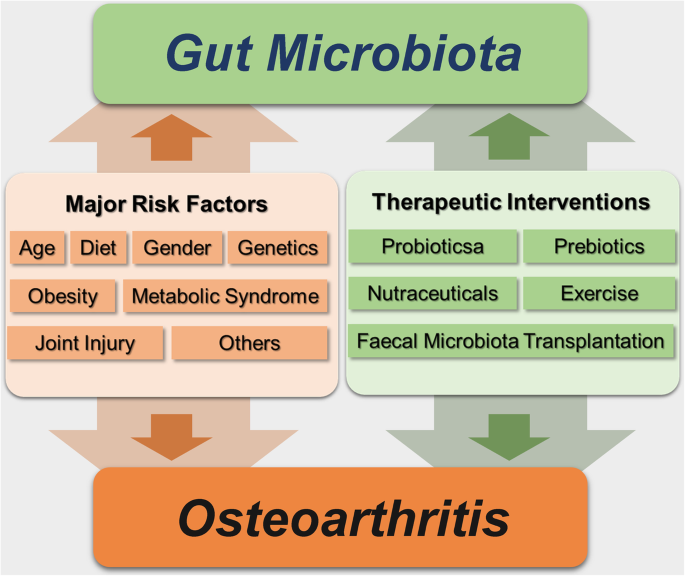
Osteoarthritis (OA) is one of the most frequent musculoskeletal diseases characterized by degeneration of articular cartilage, subchondral bone remodeling, and synovial membrane inflammation, which is a leading cause of global disability, morbidity, and decreased quality of life. Interpreting the potential mechanisms of OA pathogenesis is essential for developing novel prevention and disease-modifying therapeutic interventions. Gut microbiota is responsible for a series of metabolic, immunological, and structural and neurological functions, potentially elucidating the heterogeneity of OA phenotypes and individual features. In this narrative review, we summarized research evidence supporting the hypothesis of a “gut-joint axis” and the interaction between gut microbiota and the OA-relevant factors, including age, gender, genetics, metabolism, central nervous system, and joint injury, elucidating the underlying mechanisms of this intricate interaction. In the context, we also speculated the promising manipulation of gut microbiota in OA management, such as exercise and fecal microbiota transplantation (FMT), highlighting the clinical values of gut microbiota. Additionally, future research directions, such as more convincing studies by the interventions of gut microbiota, the gene regulation of host contributing to or attributed to the specific phenotypes of gut microbiota related to OA, and the relevance of distinct cell subgroups to gut microbiota, are expected. Moreover, gut microbiota is also the potential biomarker related to inflammation and gut dysbiosis that is able to predict OA progression and monitor the efficacy of therapeutic intervention.