


Background: Creatine monohydrate is a nutritional supplement often consumed by athletes in anaerobic sports. Creatine is naturally found in most meat products; therefore, vegetarians have reduced creatine stores and may benefit from supplementation. Objective: to determine the effects of creatine supplementation on vegetarians. Data sources: PubMed and SPORTDiscus. Eligibility criteria: Randomized controlled trials (parallel group, cross-over studies) or prospective studies. Participants: Vegetarians. Intervention: Creatine supplementation. Study appraisal and synthesis: A total of 64 records were identified, and eleven full-text articles (covering nine studies) were included in this systematic review. Results: Creatine supplementation in vegetarians increased total creatine, creatine, and phosphocreatine concentrations in vastus lateralis and gastrocnemius muscle, plasma, and red blood cells, often to levels greater than omnivores. Creatine supplementation had no effect on brain levels of phosphocreatine. Creatine supplementation increased lean tissue mass, type II fiber area, insulin-like growth factor-1, muscular strength, muscular endurance, Wingate mean power output, and brain function (memory and intelligence) in vegetarian participants. Studies were mixed on whether creatine supplementation improved exercise performance in vegetarians to a greater extent compared to omnivores. Limitations: Studies that were reviewed had moderate–high risk of bias. Conclusions: Overall, it appears vegetarian athletes are likely to benefit from creatine supplementation.
Single dose creatine improves cognitive performance and induces changes in cerebral high energy phosphates during sleep deprivation
The inverse effects of creatine supplementation and sleep deprivation on high energy phosphates, neural creatine, and cognitive performances suggest that creatine is a suitable candidate for reducing the negative effects of sleep deprivation. With this, the main obstacle is the limited exogenous uptake by the central nervous system (CNS), making creatine only effective over a long-term diet of weeks. Thus far, only repeated dosing of creatine over weeks has been studied, yielding detectable changes in CNS levels. Based on the hypothesis that a high extracellular creatine availability and increased intracellular energy consumption will temporarily increase the central creatine uptake, subjects were orally administered a high single dose of creatinemonohydrate (0.35 g/kg) while performing cognitive tests during sleep deprivation. Two consecutive 31P-MRS scans, 1H-MRS, and cognitive tests were performed each at evening baseline, 3, 5.5, and 7.5 h after single dose creatine (0.35 g/kg) or placebo during sub-total 21 h sleep deprivation (SD). Our results show that creatine induces changes in PCr/Pi, ATP, tCr/tNAA, prevents a drop in pH level, and improves cognitive performance and processing speed. These outcomes suggest that a high single dose of creatine can partially reverse metabolic alterations and fatigue-related cognitive deterioration.

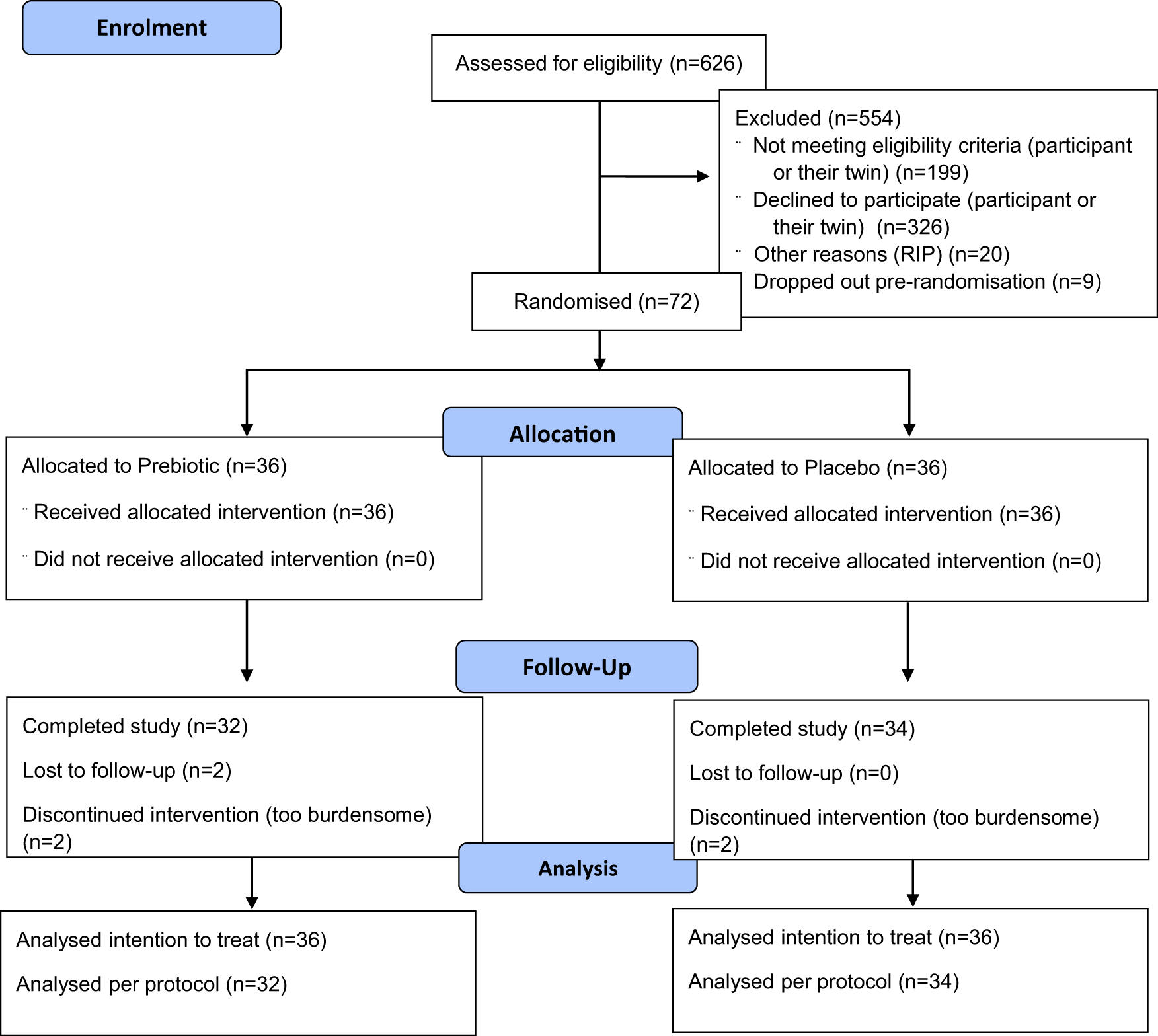
Effect of gut microbiome modulation on muscle function and cognition: the PROMOTe randomised controlled trial
Studies suggest that inducing gut microbiota changes may alter both muscle physiology and cognitive behaviour. Gut microbiota may play a role in both anabolic resistance of older muscle, and cognition. In this placebo controlled double blinded randomised controlled trial of 36 twin pairs (72 individuals), aged ≥60, each twin pair are block randomised to receive either placebo or prebiotic daily for 12 weeks. Resistance exercise and branched chain amino acid (BCAA) supplementation is prescribed to all participants. Outcomes are physical function and cognition. The trial is carried out remotely using video visits, online questionnaires and cognitive testing, and posting of equipment and biological samples. The prebiotic supplement is well tolerated and results in a changed gut microbiome [e.g., increased relative Bifidobacterium abundance]. There is no significant difference between prebiotic and placebo for the primary outcome of chair rise time (β = 0.579; 95% CI −1.080-2.239 p = 0.494). The prebiotic improves cognition (factor score versus placebo (β = −0.482; 95% CI,−0.813, −0.141; p = 0.014)). Our results demonstrate that cheap and readily available gut microbiome interventions may improve cognition in our ageing population. We illustrate the feasibility of remotely delivered trials for older people, which could reduce under-representation of older people in clinical trials. ClinicalTrials.gov registration: NCT04309292.
Creatine found to improve cognitive performance during sleep deprivation | Hacker News
Although, I could see this being beneficial in fields where labour is scarce (e.g.: the medical field), I fear it could lend towards a "sleep deprivation is okay, just take creatine" rationale in other fields.
Increase in muscle endurance in mice by dietary Yamabushitake mushroom ( <i>Hericium erinaceus</i> ) possibly via activation of <span style="font-variant:small-caps;">PPAR</span> δ
Abstract Skeletal muscle fiber is largely classified into two types: type 1 (slow‐twitch) and type 2 (fast‐twitch) fibers. Meat quality and composition of fiber types are thought to be closely related. Previous research showed that overexpression of constitutively active peroxisome proliferator‐activated receptor ( PPAR )δ, a nuclear receptor present in skeletal muscle, increased type 1 fibers in mice. In this study, we found that hexane extracts of Yamabushitake mushroom ( Hericium erinaceus ) showed PPAR δ agonistic activity in vitro . Eight‐week‐old C57 BL /6J mice were fed a diet supplemented with 5% (w/w) freeze‐dried Yamabushitake mushroom for 24 hr. After the treatment period, the extensor digitorum longus ( EDL ) muscles were excised. The Yamabushitake‐supplemented diet up‐regulated the PPAR δ target genes Pdk4 and Ucp3 in mouse skeletal muscles in vivo . Furthermore, feeding the Yamabushitake‐supplemented diet to mice for 8 weeks resulted in a significant increase in muscle endurance. These results indicate that Yamabushitake mushroom contains PPAR δ agonistic ligands and that dietary intake of Yamabushitake mushroom could activate PPAR δ in skeletal muscle of mice. Unexpectedly, we observed no significant alterations in composition of muscle fiber types between the mice fed control and Yamabushitake‐supplemented diets.

More protein in your breakfast or snacks won’t give you more muscle without more work – a biologist separates the science from the marketing
Protein powders and protein-fortified versions of all manner of foods line grocery store shelves. But just because something has added protein doesn’t necessarily make it better.
Interactions between gut microbiota and skeletal muscle
The gut microbiota is now recognized as a major contributor to the host’s nutrition, metabolism, immunity, and neurological functions. Imbalanced microbiota (ie, dysbiosis) is linked to undernutrition-induced stunting, inflammatory and metabolic diseases, and cancers. Skeletal muscle also takes part in the interorgan crosstalk regulating substrate metabolism, immunity, and health. Here, we review the reciprocal influence of gut microbiota and skeletal muscle in relation to juvenile growth, performance, aging, and chronic diseases. Several routes involving the vascular system and organs such as the liver and adipose tissue connect the gut microbiota and skeletal muscle, with effects on fitness and health. Therapeutic perspectives arise from the health benefits observed with changes in gut microbiota and muscle activity, further encouraging multimodal therapeutic strategies.

Association Among Dietary Supplement Use, Nutrient Intake, and Mortality Among U.S. Adults: A Cohort Study
Common questions and misconceptions about caffeine supplementation: what does the scientific evidence really show?
Caffeine is a popular ergogenic aid that has a plethora of evidence highlighting its positive effects. A Google Scholar search using the keywords “caffeine” and “exercise” yields over 200,000 results, emphasizing the extensive research on this topic. However, despite the vast amount of available data, it is intriguing that uncertainties persist regarding the effectiveness and safety of caffeine. These include but are not limited to: 1. Does caffeine dehydrate you at rest? 2. Does caffeine dehydrate you during exercise? 3. Does caffeine promote the loss of body fat? 4. Does habitual caffeine consumption influence the performance response to acute caffeine supplementation? 5. Does caffeine affect upper vs. lower body performance/strength differently? 6. Is there a relationship between caffeine and depression? 7. Can too much caffeine kill you? 8. Are there sex differences regarding caffeine’s effects? 9. Does caffeine work for everyone? 10. Does caffeine cause heart problems? 11. Does caffeine promote the loss of bone mineral? 12. Should pregnant women avoid caffeine? 13. Is caffeine addictive? 14. Does waiting 1.5–2.0 hours after waking to consume caffeine help you avoid the afternoon “crash?” To answer these questions, we performed an evidence-based scientific evaluation of the literature regarding caffeine supplementation.
Soy consumption and serum uric acid levels: A systematic review and meta-analysis
BackgroundSoy consumption has health benefits, but the relationship between soy and uric acid remains uncertain. This meta-analysis and systematic review evaluated effects of soy intake on plasma uric acid.MethodsPubMed, Embase, CNKI, and the Cochrane Library were searched for studies evaluating the effects of soy, soy products, soy protein, and soy isoflavones on uric acid levels. The primary outcome was serum or plasma uric acid concentration. Study quality was evaluated by the Cochrane Collaboration and SYRCLE risk-of-bias tools.ResultsSeventeen studies were included. Qualitative analysis of three human clinical studies of acute effects revealed that soy consumption increased serum uric acid concentration; however, soy-derived products, including tofu, bean curd cake, and dried bean curd sticks, had no significant effect on serum uric acid. Meta-analysis of five long-term human studies (10 data sets) revealed that soy protein and soy isoflavones had no significant effects on uric acid levels (weighted mean difference [WMD] = −2.11; 95% confidence interval [CI]: −8.78, 4.55; p = 0.53). However, most epidemiological data revealed that soy intake is inversely associated with uric acid levels. Meta-analysis of nine animal trials (29 data sets) revealed that soy protein and soy isoflavones significantly reduced serum uric acid concentrations (vs. controls; MD = −38.02; 95% CI: −50.60, −25.44; p < 0.001). ConclusionSoy and its products have different effects on serum uric acid. Soy products like tofu, bean curd cake, and dried bean curd sticks could be high-quality protein sources for individuals with hyperuricemia or gout. It can be beneficial to nutritionists and health-care decision makers reconsider their conceptions about the relationship between soy and uric acid levels according to latest and further scientific study results.

Nut intake and hyperuricemia risk in young adults
Objective:The relationship between dietary nut intake and hyperuricemia risk remains unclear. The aim of this study was to investigate the relationship between different nut intake and hyperuricemia risk with a cross-sectional study.Design:A semi-quantitative FFQ was adopted to collect dietary information. Biochemical and anthropometric parameters were measured by standard methods. Multivariate-adjusted logistic regression models were implemented to analyse the relationship between individual nut intake and hyperuricemia risk.Setting:Qingdao University in Shandong Province, China.Participants:During 2018–2019, a total of 14 056 undergraduates (6862 males and 7194 females) aged 15–25 years participated in the study.Results:After adjusting for multiple confounding factors, compared with the lowest quartile, the highest quartile intakes of pine nut (95 % CI (0·51, 0·98)) was significantly associated with 29 % reduction in hyperuricemia risk, the highest quartile intake of walnut (OR = 0·78; 95 % CI (0·58, 1·05)) was marginally negatively associated with hyperuricemia risk.Conclusions:The present study showed that the relationships between intakes of different nuts and hyperuricemia risk were different. Increased dietary intakes of walnut and pine nut are negatively associated with the hyperuricemia.
Nutrition for Hospital Workers During a Crisis: Effect of a Plant-Based Dietary Intervention on Cardiometabolic Outcomes and Quality of Life in Healthcare Employees During the COVID-19 Pandemic
The study tested the effects of a vegan diet on cardiometabolic outcomes and quality of life among healthcare employees during the COVID-19 pandemic. Overweight hospital employees were enrolled and randomly assigned (in a 1:1 ratio) to an intervention group, which was asked to follow a low-fat vegan diet, or a control group, asked to make no diet changes. However, due to COVID-19 disruptions, all participants remained on their usual diets from March to June (12 weeks), creating a de facto control period, and all (n = 12) started the vegan diet with online classes in June, which continued for 12 weeks. Nine participants completed all final assessments. A crossover ANOVA was used for statistical analysis of differences in cardiovascular health during the control period and during the intervention. Despite the ongoing crisis, body weight decreased (treatment effect −5.7 kg [95% CI −9.7 to −1.7]; P = .01); fasting plasma glucose decreased (−11.4 mg/dL [95% CI −18.8 to −4.1]; P = .007); total and LDL-cholesterol decreased (−30.7 mg/dL [95% CI −53.8 to −7.5]; P = .02; and −24.6 mg/dL [−44.8 to −4.3]; P = .02, respectively); diastolic blood pressure decreased (−8.5 mm Hg [95% CI −16.3 to −.7]; P = .03); and quality of life increased ( P = .005) during the intervention period, compared with the control period. A vegan diet improved cardiometabolic outcomes and quality of life in healthcare workers at the height of the COVID-19 pandemic.
U.S. Montmorency Tart Cherry Juice Decreases Bone Resorption in Women Aged 65–80 Years
Pre-clinical studies have demonstrated that tart cherries, rich in hydroxycinnamic acids and anthocyanins, protect against age-related and inflammation-induced bone loss. This study examined how daily consumption of Montmorency tart cherry juice (TC) alters biomarkers of bone metabolism in older women. Healthy women, aged 65–80 years (n = 27), were randomly assigned to consume ~240 mL (8 fl. oz.) of juice once (TC1X) or twice (TC2X) per day for 90 d. Dual-energy x-ray absorptiometry (DXA) scans were performed to determine bone density at baseline, and pre- and post-treatment serum biomarkers of bone formation and resorption, vitamin D, inflammation, and oxidative stress were assessed. Irrespective of osteoporosis risk, the bone resorption marker, tartrate resistant acid phosphatase type 5b, was significantly reduced with the TC2X dose compared to baseline, but not with the TC1X dose. In terms of indicators of bone formation and turnover, neither serum bone-specific alkaline phosphatase nor osteocalcin were altered. No changes in thiobarbituric acid reactive substances or high sensitivity C-reactive protein were observed in response to either TC1X or TC2X. We conclude that short-term supplementation with the higher dose of tart cherry juice decreased bone resorption from baseline without altering bone formation and turnover biomarkers in this cohort.

Exercise therapy for chronic fatigue syndrome
Exercise as treatment for adults with chronic fatigue syndrome, What is the aim of this review?, People with chronic fatigue syndrome have long‐lasting fatigue, joint pain, headaches, sleep problems, poor concentration and short‐term memory. These symptoms cause significant disability and distress. We wanted to find out whether exercise therapy can help people with chronic fatigue syndrome (myalgic encephalomyelitis)., Key messages, People who have exercise therapy probably have less fatigue at the end of treatment than those who receive more passive therapies. We are uncertain if this improvement lasts in the long term. We are also uncertain about the risk of serious side effects from exercise therapy., What was studied in the review?, We explored whether exercise therapy can reduce chronic fatigue syndrome symptoms. We searched for studies comparing the effect of exercise therapy with treatment as usual or other therapies., What are the main results of the review?, We found eight studies with 1518 participants. The studies compared participants who received exercise therapy to participants who received treatment as usual or more active treatments such as cognitive behavioural therapy., Participants had exercise therapy for 12 weeks to 26 weeks. The studies measured the effect of the therapy at the end of the treatment and also long term, after 50 or 72 weeks. Participants exercised at different levels of intensity using variations of aerobic exercising such as walking, swimming or cycling., Exercise therapy compared to treatment as usual or relaxation, Participants who have exercise therapy probably have less fatigue at the end of treatment, and they may have moderately better physical functioning. We are uncertain if these improvements last long term because we are very uncertain about the evidence., Participants who have exercise therapy may have slightly better sleep, both at the end of treatment and long term., We are uncertain about the risk of serious side effects and the effects of exercise therapy on pain, quality of life, and depression. This is because we lack evidence or because we are very uncertain about the evidence., Exercise therapy compared to cognitive behavioural therapy, Exercise therapy may make little or no difference to participants’ fatigue at end of treatment or in the long term. Exercise therapy may make little or no difference to participants’ physical functioning at end of treatment, but the long‐term effect on physical functioning is uncertain., No studies looked at the effect of exercise therapy on depression at the end of treatment, but it probably has little or no long‐term effect., We are uncertain about the risk of side effects. We are also uncertain about the effects on pain, quality of life, or sleep. This is because we lack evidence or because we are very uncertain about the evidence., Exercise therapy compared to adaptive pacing (living within limits), Participants who have exercise therapy may have slightly less fatigue and depressive symptoms and slightly better physical functioning and sleep at the end of treatment and long term than participants who have adaptive pacing., We are uncertain about the risk of serious side effects. We are also uncertain about the effect on quality of life or pain. This is because we lack evidence or we are very uncertain about the evidence., Exercise therapy compared to antidepressants, We are uncertain if exercise therapy is better than antidepressants at reducing fatigue. We are also uncertain of its effect on depression, side effects, pain, physical functioning, quality of life or sleep. This is because we lack evidence or we are very uncertain about the evidence., Why is this review important?, Exercise therapy is recommended by treatment guidelines and often used as treatment for people with chronic fatigue syndrome. People with chronic fatigue syndrome should have the opportunity to make informed decisions about their care and treatment based on robust research evidence and whether exercise therapy is effective, either as a stand‐alone intervention or as part of a treatment plan., It is important to note that the evidence in this review is from people diagnosed with 1994 criteria of the Centers for Disease Control and Prevention or the Oxford criteria. People diagnosed using other criteria may experience different effects.
Galactooligosaccharides Improve Mineral Absorption and Bone Properties in Growing Rats through Gut Fermentation
Galactooligosaccharides (GOS), prebiotic nondigestible oligosaccharides derived from lactose, have the potential for improving mineral balance and bone properties. This study examined the dose–response effect of GOS supplementation on calcium and magnesium absorption, mineral retention, bone properties, and gut microbiota in growing rats. Seventy-five 4-week-old male Sprague–Dawley rats were randomized into one of five treatment groups (n = 15/group) and fed a diet containing 0, 2, 4, 6, or 8% GOS by weight for 8 weeks. Dietary GOS significantly decreased cecal pH and increased cecal wall weight and content weight in a dose-dependent manner (p < 0.0001). Fingerprint patterns of the 16S rRNA gene PCR-DGGE from fecal DNA indicated the variance of bacterial community structure, which was primarily explained by GOS treatments (p = 0.0001). Quantitative PCR of the samples revealed an increase in the relative proportion of bifidobacteria with GOS (p = 0.0001). Net calcium absorption was increased in a dose–response manner (p < 0.01) with GOS supplementation. Dietary GOS also increased (p < 0.02) net magnesium absorption, femur 45Ca uptake, calcium and magnesium retention, and femur and tibia breaking strength. Distal femur total and trabecular volumetric bone mineral density (vBMD) and area and proximal tibia vBMD increased (p < 0.02) with GOS supplementation. Trabecular-rich bones, that is, those that rapidly turn over, were most benefited. Regression modeling showed that GOS benefited calcium and magnesium utilization and vBMD through decreased cecal pH, increased cecal wall and content weight, and increased proportion of bifidobacteria.
Health effects of dietary risks in 195 countries, 1990–2017: a systematic analysis for the Global Burden of Disease Study 2017
This study provides a comprehensive picture of the potential impact of suboptimal diet on NCD mortality and morbidity, highlighting the need for improving diet across nations. Our findings will inform implementation of evidence-based dietary interventions and provide a platform for evaluation of their impact on human health annually.

Annual Reports | CAA
For archived content, please refer to the National Diet Library's Web Archiving Project (WARP).