

The FND Formulation Tool is temporarily unavailable. Please check back later.
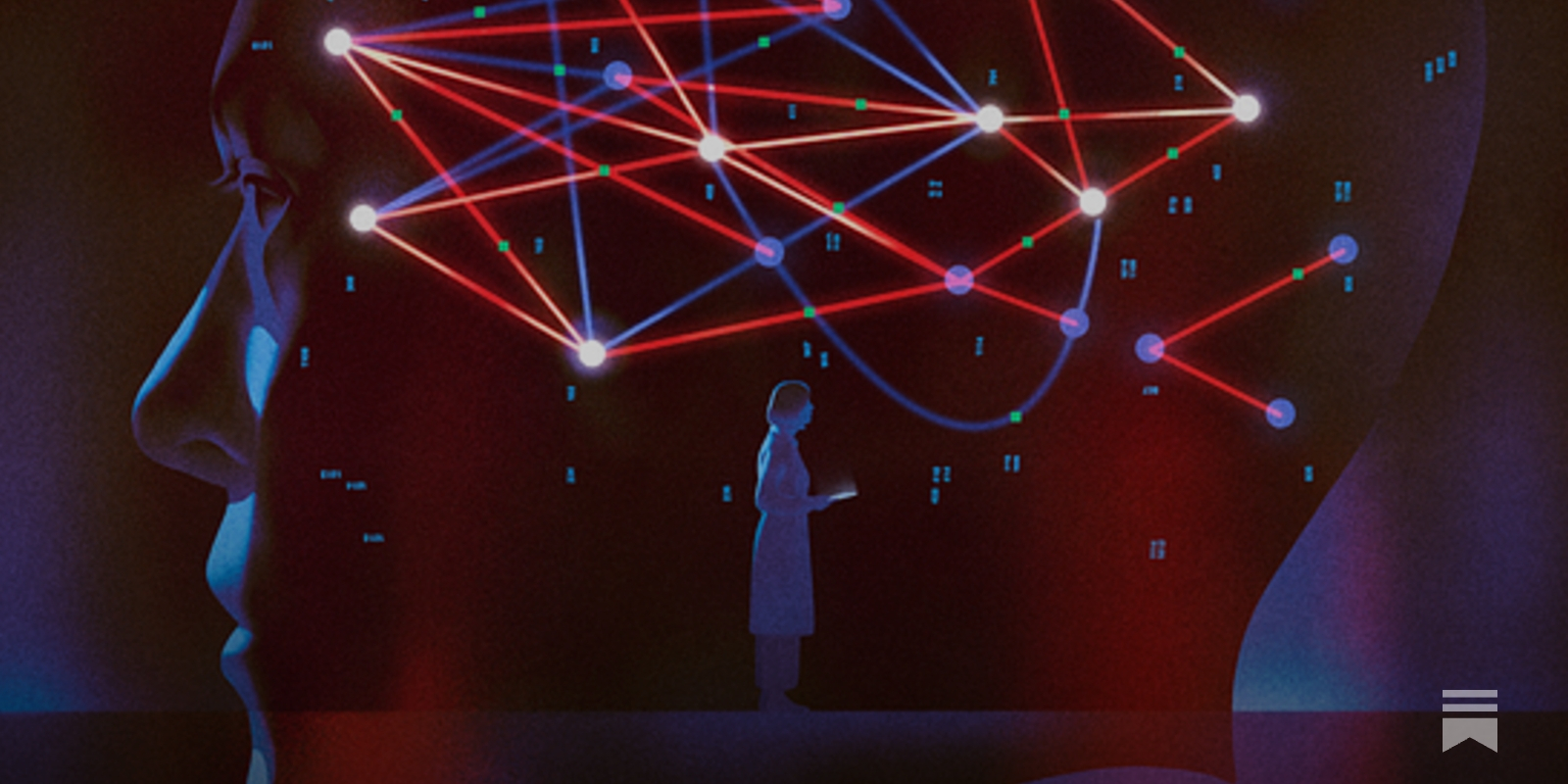
Computational Psychiatry Needs Systems Neuroscience
This piece was originally published in The Transmitter. I am adapting it here with some additional context for readers of this newsletter.
Blueprint Neurotech
The Center for Innovative NeuroTech Advancement (CINTA) & NeuroTech Harbor (NTH) announce the Cycle 6 Award Competition supported by the NIH Blueprint MedTech Program. This program is seeking collaborative projects aimed at developing emerging technologies into commercially viable, clinically focused solutions for disorders of the nervous system that are aligned with the mission and interests of the participating NIH institutes and centers.
Matthew Schrag, MD, PhD | Department of Neurology
Vanderbilt University Medical Center 1211 Medical Center Drive, Nashville, TN 37232 (615) 322-5000
Inventing the future: A neuroscience research roadmap
The past decade of transformative advances in neurotechnology portends an exciting future for neuroscience. This NeuroView charts a strategic path to accelerate and integrate research discovery and speed the development of new cures for human brain disorders.

Motif Neurotech — Therapeutic Brain Computer Interface For Mental Health
We're building devices to help you monitor and regulate your mental health and performance.

Arbor Neuroscience
Arbor Neuroscience is building the instruments, data, and models to make neuromodulation predictable – brain-circuit treatment targeted to the individual patient.
Epia Neuro | Brain-Computer Interface for Stroke
Epia Neuro is developing therapies that restore human agency, starting with lifelong support for hand function in stroke survivors.
Precision Medicine in Neuroscience: Tools, Translation, and Implementation: A Workshop
Precision medicine approaches are rapidly transforming neuroscience, driven by advances in genetics, neuroimaging, biomarkers, and data science. These tools enable more refined disease classification, improved diagnosis, and treatments tailored to individual patients across neurological and psychiatric disorders. However, challenges remain in translating these advances into routine research and clinical practice. On March 4–5, the National Academies’ Forum on Neuroscience and Nervous System Disorders, in collaboration with the Forum on Drug Discovery, Development, and Translation and the Roundtable on Genomics and Precision Health, will host a workshop exploring opportunities, challenges, and strategies for integrating precision medicine into neuroscience research and care.

New Drug Reverses Neural and Cognitive Effects of a Concussion - Slashdot
An anonymous reader quotes a report from SciTechDaily: ISRIB, a tiny molecule identified by the University of California, San Francisco (UCSF) researchers can repair the neural and cognitive effects of concussion in mice weeks after the damage, according to a new study. ISRIB blocks the integrated s...

Did therapy help with your executive function issues?
Leading Innovation in Psychiatric Treatment | Alto Neuroscience
We leverage brain biology to develop personalized medicines, helping patients get better faster.
Neuroscientists Roll Out First Comprehensive Atlas of Brain Cells - Slashdot
A slew of 17 studies reveals the first comprehensive list of all cell types in the primary motor complex, offering "a starting point for tracing cellular networks to understand how they control our body and mind and how they are disrupted in mental and physical disorders," reports ScienceDaily. From...

DeepWell DTx
DeepWell DTx makes digital therapeutic technology that can be integrated with media to create new approaches for treating mental and physical health conditions. Launched in 2022, DeepWell holds several patents, with 20 more pending, for transforming media into medicine. DeepWell DTx is part of NeuFluent, a venture studio developing neuroscience innovation — novel components, systems, […]
UCLA discovers first stroke rehabilitation drug to repair brain damage
A new study by UCLA Health has discovered what researchers say is the first drug to fully reproduce the effects of physical stroke rehabilitation in model mice.
neuroexam.com - Oxford Learning Link
Virtual brain twins for stimulation in epilepsy
Estimating the epileptogenic zone network (EZN) is an important part of the diagnosis of drug-resistant focal epilepsy and has a pivotal role in treatment and intervention. Virtual brain twins provide a modeling method for personalized diagnosis and treatment. They integrate patient-specific brain topography with structural connectivity from anatomical neuroimaging such as magnetic resonance imaging, and dynamic activity from functional recordings such as electroencephalography (EEG) and stereo-EEG (SEEG). Seizures show rich spatial and temporal features in functional recordings, which can be exploited to estimate the EZN. Stimulation-induced seizures can provide important and complementary information. Here we consider invasive SEEG stimulation and non-invasive temporal interference stimulation as a complementary approach. This paper offers a high-resolution virtual brain twin framework for EZN diagnosis based on stimulation-induced seizures. It provides an important methodological and conceptual basis to make the transition from invasive to non-invasive diagnosis and treatment of drug-resistant focal epilepsy.
