

NEW MODELS is a media channel and community addressing the emergent effects of networked technology on culture.
After the Feed: Trust, connection, and the next era of social technology | New_ Public | May 2026
After the Feed: Trust, connection, and the next era of social technology By Eli Pariser, Co-Director, Angelica Quicksey, Managing Director, Arnobio Morelix, AI Fellow May 2026 Newpublic.org

After the Feed: Trust, connection, and the next era of social technology | New_ Public | May 2026
After the Feed: Trust, connection, and the next era of social technology By Eli Pariser, Co-Director, Angelica Quicksey, Managing Director, Arnobio Morelix, AI Fellow May 2026 Newpublic.org

Appropriating Technology | Public Sphere Project — Liberating Voices Pattern Language
Dematerialization, Participatory Design, Techno-Criticism, Intermediate Technologies, Users' IT Quality Network, Wholesome Design for Wicked Problems, Labor Visions, Community Inquiry, Tactical Media
Large language models are cultural technologies. What might that mean?
Four different perspectives
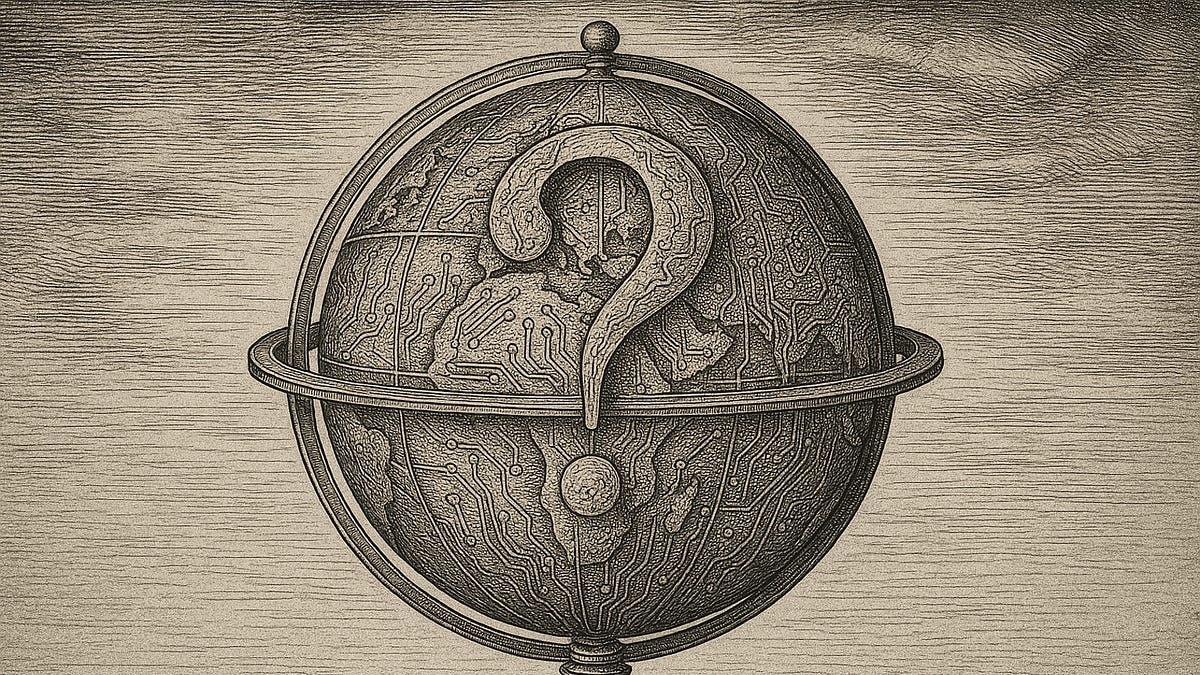
Institute of Network Cultures | Ben Grosser: Planning the Exodus from Platform Realism
Thinking about the current state of platforms, I’m reminded of Mark Fisher’s articulation of capitalist realism, the idea that we don’t imagine or build alternatives to capitalism because we can no longer envision a world without it. Big tech, in a few short years, has managed to instill within the public a similar state of platform realism. So many are unable to imagine how global communication, media, search, etc. could ever function without the platforms. Despite a growing malaise, it’s become difficult for many to consider a world without big tech platforms as a viable conception of the future.

Wrap to 2025, Proem to 2026
Technological Paradigm Shifts are fundamental changes in technology that reshape industries and society.

Advancing Women & Technology: Empowering Futures Through Digital Skills: 2025: News and Resources: About Us: Center of Excellence for Women & Technology: Indiana University Bloomington
In today’s fast-paced digital world, technology isn’t just a career path-it’s a compelling tool for empowerment.
The Malaise Of Peak Wokeism Within Online Culture
How have certain forms of education and new technology formed the template to woke culture today? This piece examines the link between social media and new technology to the outwoking of the wokest through a veritable closing of the mind.


Technopoly: The Surrender of Culture to Technology
A witty, often terrifying that chronicles our transform…

Shifts in U.S. Social Media Use, 2020–2024: Decline, Fragmentation, and Enduring Polarization
The social media ecosystem appears to be in flux. Twitter’s rebranding to X has come to symbolize a broader reorganization of online publics – political reshuffling, user attrition, and uncertainty over the role of legacy platforms. Simultaneously, the shift from text-based, networked feeds toward algorithmically curated, short-form video has accelerated, with TikTok setting the pace for the wider ecosystem [18, 14, 16]. At the same time, everyday communication increasingly migrates from large, open networks to semi-private spaces such as group chats and messaging apps. Commentators describe a digital public sphere in transition: smaller, more fragmented, less dominated by traditional social networking sites, and rise of more broadcast-oriented forms of media – with some even suggesting that we are seeing the beginning of the end of the social media era.
What technology takes from us – and how to take it back | Rebecca Solnit
The long read: Decisions outsourced, chatbots for friends, the natural world an afterthought: Silicon Valley is giving us life void of connection. There is a way out – but it’s going to take collective effort
Old Tricks, New Tech: How Legacy Media Capture Fuels Today’s Digital Authoritarianism
Marius Dragomir and Minna Aslama Horowitz discuss how digital authoritarianism is rising as states and Big Tech align, threatening independent media.
The Attention Forum: October 23/24th 2025
The internet was initially sold to us as a force for connection – a borderless, democratizing set of technologies that would amplify voices, allow us to spread ideas, and strengthen civil society.

Towards a Post-Social Media Studies
For two decades, "social media" has been the master lens through which scholars have understood digital communication—an era defined by user-generated content, networked publics, and participatory culture. That era is drawing to a close. This paper argues that three interrelated dynamics are dissolving the social media paradigm: an algorithmic shift from social-graph-based to interest-based recommendation, which is remaking the active "user" into a passive "viewer"; the generative AI revolution, which is replacing user-generated content with synthetic media and decoupling platforms from any dependence on human participation; and an exodus from public platforms toward private, closed spaces. Together, these dynamics are giving rise to three distinct post-social formations: algorithmically governed broadcasting platforms, semi-private spheres and micro-communities, and AI-mediated communication as a new media form in its own right. Understanding this transformation demands a fundamental reorientation of the field—new conceptual tools that move beyond networked publics and participatory culture, new methods suited to synthetic and ephemeral media environments, and renewed attention to the political stakes of communication systems that no longer require human participation.