


Debates about payday loans have not focussed enough on the conditions that lead people to use them.
Information Disclosure, Cognitive Biases, and Payday Borrowing
ABSTRACT Can psychology‐guided information disclosure induce borrowers to lower their use of high‐cost debt? In a field experiment at payday stores, we find that information that makes people think less narrowly (over time) about finance costs results in less borrowing. In particular, reinforcing the adding‐up dollar fees incurred when rolling over loans reduces the take‐up of future payday loans by 11% in the subsequent 4 months. Although we remain agnostic as to the overall sufficiency of better disclosure policy to “remedy” payday borrowing, we cast the 11% reduction in borrowing in light of the relative low cost of this policy.

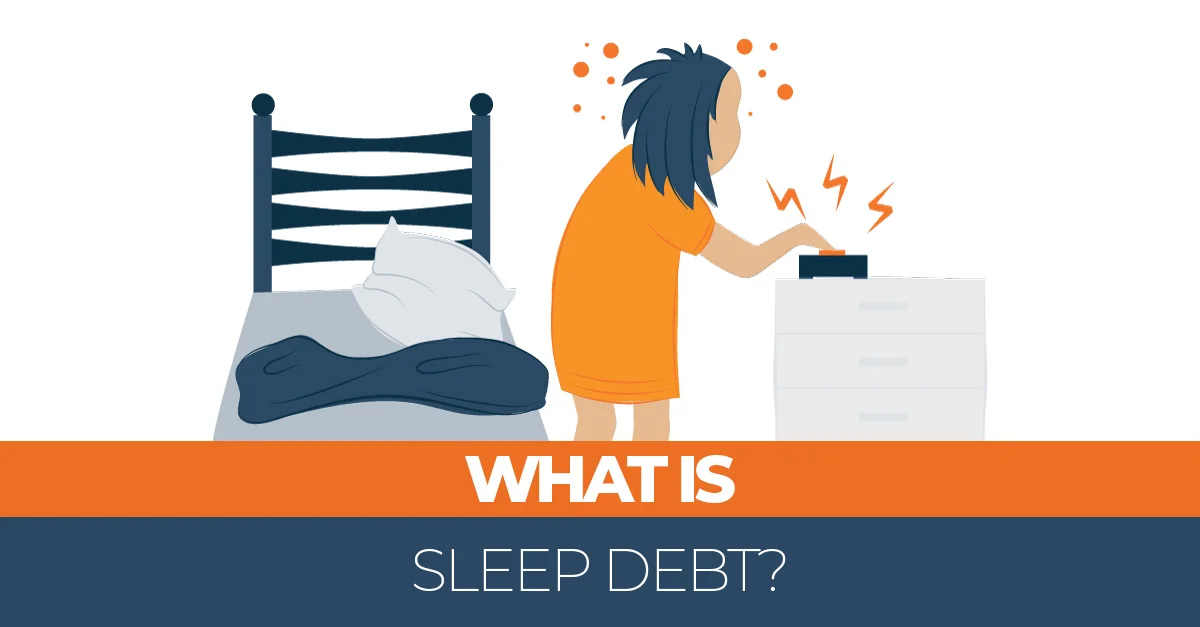
What Is Sleep Debt? Is There a Way to Catch Up On Your Sleep? - Sleep Advisor
Have you heard of a sleep debt anytime in your life? Click to see what is it and how this sleep deficit can affect your everyday life.
Is Digital Credit Filling a Hole or Digging a Hole? Evidence from Malawi
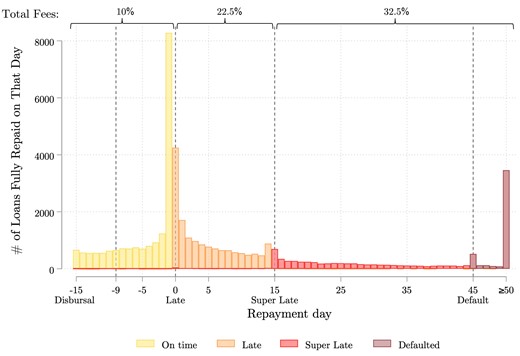
Abstract Digital credit has expanded rapidly in Africa, with opaque loan terms amidst low consumer financial literacy. Rich data from Malawi shows substantial demand for a digital loan with a base interest rate of 10% over 15 days, yet most borrowers are not aware of loan terms, repay late and incur substantial late fees. Regression discontinuity analyses show no evidence that access to small digital loans harms consumers’ perceived well-being. A short, randomised, phone-based financial literacy intervention improved knowledge, but did not increase timely loan repayment and modestly increased loan demand, ultimately increasing the likelihood of ever defaulting.
Context-Dependent Drivers of Discretionary Debt Decisions: Explaining Willingness to Borrow for Experiential Purchases
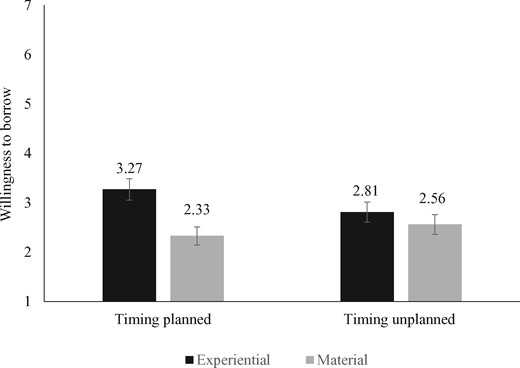
Abstract Mental accounting research suggests that consumers prefer borrowing for longer-lasting purchases in order to receive benefits from the purchases as they pay for them. In contrast, two sets of archival data and five lab studies show that consumers are more willing to borrow for experiential versus material purchases, even though experiential purchases tend to have a shorter physical duration. Further, framing the same purchase as more experiential than material increases willingness to borrow. This effect occurs because purchase timing is more important for experiential purchases—a function of consumers’ aversion to missing out on planned consumption. Thus, we moderate the proposed effect by varying whether the borrowing decision impacts planned consumption. Other differences between material and experiential purchases, such as scarcity or expected happiness, cannot similarly explain our results. Moreover, our conceptualization allows us to reconcile the apparent contradiction between the previous and current research by examining the relative impact of purchase-timing importance and payment-benefit duration matching in different contexts (i.e., “purchasing” and “source-of-funding” decisions).
‘Buy now, pay later’ is becoming a major part of how Black America affords the everyday
As “Buy now, pay later” options continue to rise in popularity, more and more question what this says about the economy.

Purchase Justifiability Drives Payment Choice: Consumers Pay with Card to Remember and Cash to Forget
AbstractAlthough consumers often have multiple payment methods at their fingertips, such as cash and credit/debit cards, prior research is silent on how consumers choose between them. We home in on a key element of purchase—purchase justifiability—that affects how consumers choose to pay. Analysis of 118,042 real-world purchases and six experiments reveals that when consumers are motivated to forget (vs. remember) a purchase because they see it as difficult (vs. easy) to justify, they have an increased preference to pay with cash (vs. card) because cards create a “paper/electronic trail” that aids memory retrieval. These payment preferences are strongest among consumers most likely to recall/track their card spending, and manifest only when card expenses are trackable. We reconcile our results with the classic effect of payment method on pain of paying and discuss implications for merchants and for financial institutions designing payment methods of the future.

Pluralistic: They’re just trying to earn a buck (07 Oct 2025) – Pluralistic: Daily links from Cory Doctorow
Life as a prisoner of the neoliberal mind palace must suck: it's a world where every person who suffers under predatory business practices is a "consumer" who has "revealed a preference" for being screwed:
Opinion | 5-Hour Workdays? 4-Day Workweeks? Yes, Please (Published 2019)
Sick of round-the-clock work emails and Slack messages? Here’s some hope.

Debt literacy, financial experiences, and overindebtedness
We analyze a national sample of Americans with respect to their debt literacy, financial experiences, and their judgments about the extent of their indebtedness. Debt literacy is a component of broader financial understanding that measures knowledge about debt and self-assessed financial knowledge. Financial experiences are the participants’ reported experiences with traditional borrowing, alternative borrowing, and investing. Overindebtedness is a self-reported measure. Debt literacy is low, with only about one-third of the population grasping the basics of interest compounding. Even after controlling for demographics, we find a relationship between debt literacy and both financial experiences and debt loads. Individuals with lower levels of debt literacy tend to transact in high-cost manners, incurring higher fees and using high-cost borrowing. We provide a rough estimate of the national implications of debt ignorance on credit card costs by consumers. Less knowledgeable individuals also report that their debt loads are excessive or that they are unable to judge their debt position.
Swedish Six-Hour Workday Runs Into Trouble: It’s Too Costly
Swedes looking forward to a six-hour workday just got some bad news: the costs outweigh the benefits.

Payline Data - Payment Processing Solutions
Secure payment processing solutions for your business. Accept online payments, in-person payments, and recurring payments with Payline Data.
Pluralistic: Goodhart’s Law vs “prediction markets” (24 Mar 2026) – Pluralistic: Daily links from Cory Doctorow
The most selectively believed-in verse in the conservative catechism is the idea that "incentives matter."
Debt Traps? Market Vendors and Moneylender Debt in India and the Philippines
A debt trap occurs when someone takes on a high-interest-rate loan and is barely able to pay back the interest, and thus perpetually finds themselves in debt (often by refinancing). Studying such practices is important for understanding financial decision-making of households in dire circumstances, and also for setting appropriate consumer protection policies. We conduct a simple experiment in three sites in which we paid off high-interest moneylender debt of individuals. Most borrowers returned to debt within six weeks. One to two years after intervention, treatment individuals were borrowing at the same rate as control households.
Paying people to work on open source is good actually - Jacob Kaplan-Moss
If you have a problem with maintainers getting paid then you have a problem with me and I suggest you let that one marinate.
Tightwads and spendthrifts: An interdisciplinary review
Consumers rely on a “pain of paying” to help deter their spending. While this is beneficial for some consumers, others experience levels of pain that create problems. “Tightwads” experience too much pain when considering spending and therefore spend less than they would ideally like to spend. By contrast, “spendthrifts” experience too little pain and therefore spend more than they would ideally like to spend. Neither are happy with how they handle money. In the decade since the tightwad‐spendthrift construct was introduced, much has been learned about what it is and is not (e.g., frugality, greed), what contextual factors are likely to reduce its importance, how it plays a role within romantic relationships, and when it might first emerge in childhood. This paper reviews the wide range of interdisciplinary research relevant to the tightwad‐spendthrift construct and proposes several directions for new research.

Do Local Capital Market Conditions Affect Consumers’ Borrowing Decisions?
This paper uses detailed data from an online peer-to-peer lending intermediary to test whether local access to finance affects consumers’ willingness to pay for loans. After controlling for local economic conditions and borrower credit quality, we find that borrowers who reside in areas with good access to bank finance request loans with lower interest rates. This effect is stronger for borrowers with poor credit and those seeking small loans, suggesting that local access to finance is more important for marginal borrowers. Overall, our findings shed light on how consumers substitute between alternative sources of finance. This paper was accepted by Wei Jiang, finance.
