

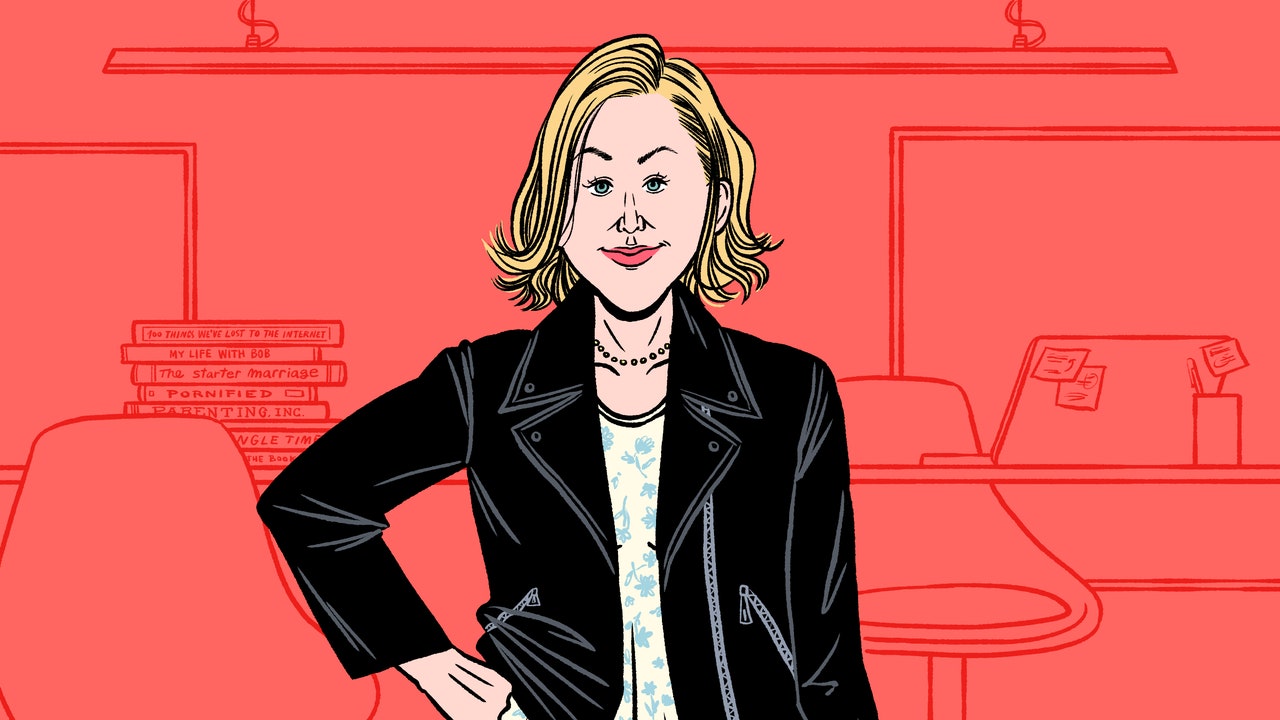
At the Times, Paul often writes on the hazards of shifting norms. But she’s also revealed the fraught position of the opinion columnist.
Pamela Paul | GLAAD
Pamela Paul is a former writer for the New York Times opinion section. Despite not being an expert in transgender people or LGBTQ issues, Paul has used her platform to influence public opinion on these topics, often without consulting LGBTQ people or medical professionals specializing in transgender care, instead citing debunked research from discredited sources.
No Opinion — The New York Times: Boycott, Divest, Unsubscribe
Over the past few years, the Times has increasingly turned to “guest essayists” to help repair its crumbling reputation. Opinion editors recruit respected subject matter experts to lend their diverse — often tokenized — perspectives as a countervailing force to the paper’s in-house conservatism. Without the voices, expertise, and freelance labor of these guest essayists, the Opinion section would be utterly worthless.

'No Politics' Rules | The Paper Pilot
The Paper Pilot's digital garden of thoughts on philosophy, politics, and sociology
Guide to Incrementals/Navigating Criticism | The Paper Pilot
The Paper Pilot's digital garden of thoughts on philosophy, politics, and sociology
How to Change Public Opinion - Niskanen Center
Policy advocates engaged in changing public opinion rarely pay much attention to what the academic literature says about how public opinion is formed and how and why it changes. That’s too bad, because while political scientists disagree about a lot of things, this is not one of them. Several decades of robust empirical tests offer […]

Prejudice on the Left | The Paper Pilot
The Paper Pilot's digital garden of thoughts on philosophy, politics, and sociology
Apoliticism | The Paper Pilot
The Paper Pilot's digital garden of thoughts on philosophy, politics, and sociology
Are newspaper opinion sections embracing AI-written op-eds?
Outside The Wall Street Journal, it appears not.

Can Puck reinvent the news business for the influencer age?
CEO Sarah Personette’s risky bet on journalists as influencers

Ezra Klein’s “Why We’re Polarized” and the Drawbacks of Explainer Journalism
A Darwinian reading of American politics leaves little room for the motivations of conscious, rational agents.

Influencers, Bullshitters, and How We Lost a Shared Reality
A new book explores the ambiguous dominion of those who feign expertise online for clout.
Life is Strange | The Paper Pilot
The Paper Pilot's digital garden of thoughts on philosophy, politics, and sociology
Strange New Rules
Issue #1: A new magazine of stories, studies, and science
Nicky Case | The Paper Pilot
The Paper Pilot's digital garden of thoughts on philosophy, politics, and sociology
Alasdair MacIntyre’s Philosophy in Practice
It is a curious thing when an artist, thinker, or writer gains influence outside the audience he intends or is comfortable with. When a thinker associated with the right becomes popular on the left, or a novelist associated with the progressive left becomes popular among conservative readers, there can be a sort of strain felt between the audience in fact and the “true” audience, or between those who feel themselves to be the authentic recipients of a work’s message and meaning and those who, to the true believers, come across as opportunistic in their enjoyment of works in tension with their own views. The same is true when a writer working within an academic discipline gets picked up by those outside it: Those working within that discipline may find the co-opting of these thinkers misplaced at best or malicious at worst.
Objectivity | The Paper Pilot
The Paper Pilot's digital garden of thoughts on philosophy, politics, and sociology