What lay behind Russia’s interference in the 2016 election—and what lies ahead?
Opinion | Americans keep looking away from the election’s most alarming story
U.S. intelligence agencies determined that Moscow actively interfered before the vote.

Operation InfeKtion: How Russia Perfected the Art of War | NYT Opinion
The Plot to Subvert an Election: Unraveling the Russia Story So Far (Published 2018)
For two years, Americans have tried to absorb the details of the 2016 attack: spies, leaked emails, social media fraud — and President Trump’s claims that it’s all a hoax. The Times explores what we know and what it means.

Russia Aims to Inject Chaos Into Elections, U.S. Intelligence Finds
The Kremlin is once again seeking to undermine confidence in American democracy with online influence campaigns, U.S. officials said.

Russia Aims to Inject Chaos Into Elections, U.S. Intelligence Finds
The Kremlin is once again seeking to undermine confidence in American democracy with online influence campaigns, U.S. officials said.
Exposure to the Russian Internet Research Agency foreign influence campaign on Twitter in the 2016 US election and its relationship to attitudes and voting behavior
There is widespread concern that foreign actors are using social media to interfere in elections worldwide. Yet data have been unavailable to investigate links between exposure to foreign influence campaigns and political behavior. Using longitudinal survey data from US respondents linked to their Twitter feeds, we quantify the relationship between exposure to the Russian foreign influence campaign and attitudes and voting behavior in the 2016 US election. We demonstrate, first, that exposure to Russian disinformation accounts was heavily concentrated: only 1% of users accounted for 70% of exposures. Second, exposure was concentrated among users who strongly identified as Republicans. Third, exposure to the Russian influence campaign was eclipsed by content from domestic news media and politicians. Finally, we find no evidence of a meaningful relationship between exposure to the Russian foreign influence campaign and changes in attitudes, polarization, or voting behavior. The results have implications for understanding the limits of election interference campaigns on social media.
Exclusive: 'It felt like a trap.' How Ukraine was blindsided by Trump's Putin pivot
When U.S. envoys Steve Witkoff and Jared Kushner told Ukraine's delegation on Oct. 9 that President Donald Trump was preparing to lift sanctions on Russian diesel exports, the Ukrainians struggled to believe what they were hearing. The delegation had traveled to the United States to discuss a possible energy ceasefire with Russia. Instead, Kyiv's negotiators found themselves blindsided by a decision they feared would hand Moscow fresh revenue to finance its war against Ukraine while undermining
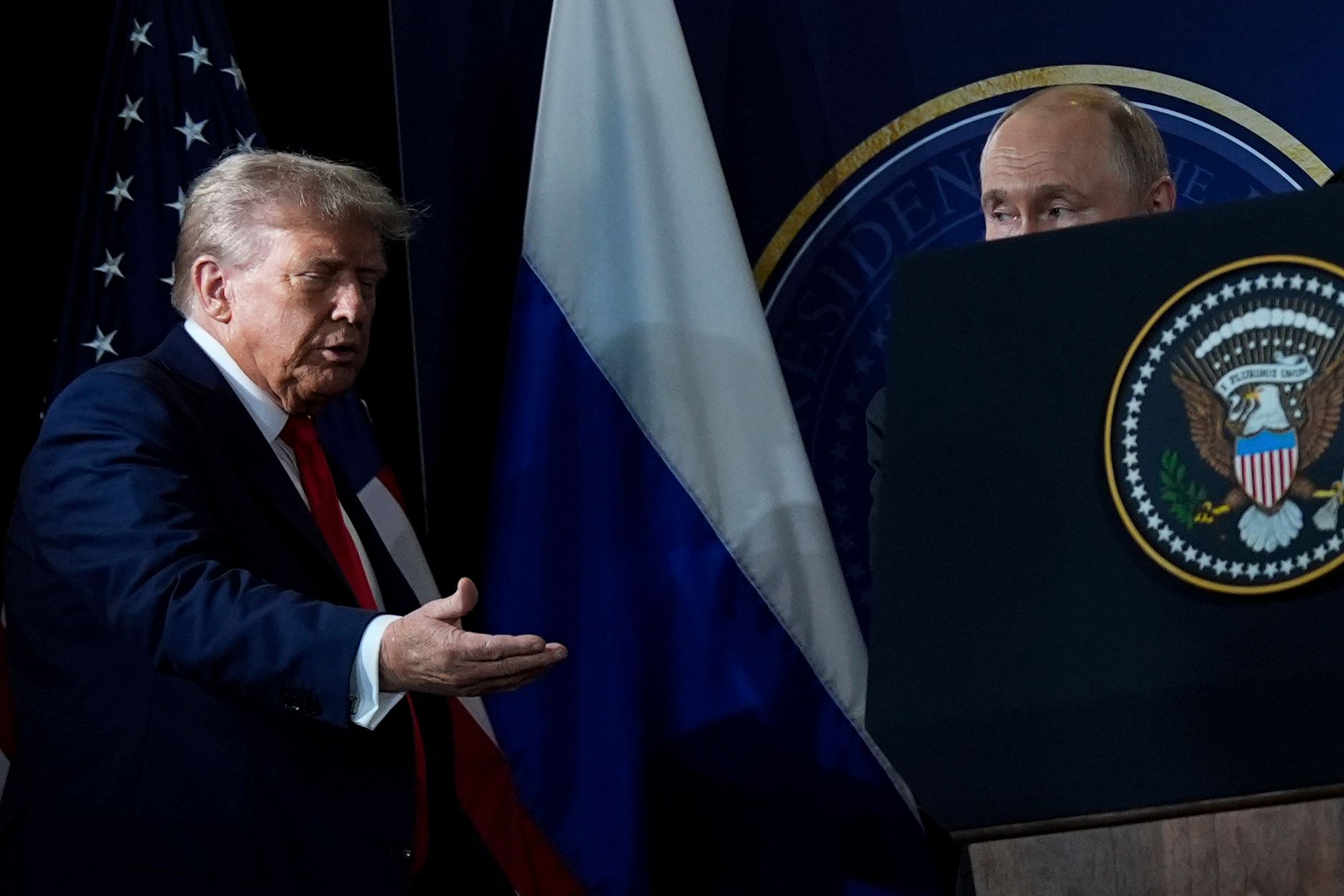
Russian disinformation campaign sets sights on US midterms
A Russian disinformation operation has turned its attention to the US midterm elections, unleashing a series of deepfake videos that depict celebrities attacking Democrats, researchers said, with more…


Putin's Media War - Committee to Protect Journalists
Independent journalism is under siege in Russia, where President-elect Vladimir Putin surfed to victory on a wave of docile press coverage
How Trump Could Interfere With the Midterms on Election Day, and the Days After
Here’s how the Trump Administration could potentially interfere in each step of the election process—and how states are preparing to fight back.
Dispersed, Disguised, and Degradable: The Implications of the Fighting in Ukraine for Future U.S.-Involved Conflicts
Wars reveal new information about warfighting and can spur changes in how foreign observers prepare for future conflicts. In this report, the authors make eight novel or notable observations about the Russia-Ukraine war and forecast how these observations might translate to a potential NATO-Russia or U.S.-China war. The authors also identify broader tactical, operational, and strategic implications for U.S. policymakers.

Putin’s High-Tech Russian Submarines Goad NATO Deep Below the Atlantic
NATO is fighting back against Russia’s submarine threat in cat-and-mouse games reminiscent of the Cold War

Ukraine marks Putin’s scripted election win with assault on Moscow refinery
The air attack hit an oil refinery in Moscow, contradicting President Donald Trump's claim that Ukraine and Russia had agreed to halt strikes on energy targets.

U.S. official: Trump cut deal with Putin after Zelensky ignored his requests
Zelensky "misread the room," the official said.