


From 2018: The trolls are winning. How do we fix life online without limiting free speech?
Reddit and the Struggle to Detoxify the Internet
From 2018: The trolls are winning. How do we fix life online without limiting free speech?
Trolling democracy: anonymity doesn’t cause conflicts, bad site design does
‘Don’t feed the trolls’, people on social media are told. By forcing people to use their real names online, the managers of online forums hope to shame trolls into silence. But, J…

RIP social media. What comes next is messy.
As social media splinters, how can we keep the new online spaces from devolving into toxic pits of despair?

The secret rules of the internet
The murky history of moderation, and how it’s shaping the future of free speech.

The secret rules of the internet
The murky history of moderation, and how it’s shaping the future of free speech.
The Immortal Myths About Online Abuse
After building online communities for two decades, we’ve learned how to fight abuse. It’s a solvable problem. We just have to stop…

Please Let the Internet Die
Online spaces are captured by oligarchs and saturated with slop—and they’re exacerbating humanity’s worst impulses. It’s time to start over.

Play nice! How the internet is trying to design out toxic behaviour
Online abuse can be cruel – but for some tech companies it is an existential threat. Can giants such as Facebook use behavioural psychology and persuasive design to tame the trolls?
It's the (Democracy-Poisoning) Golden Age of Free Speech
At a time when anyone can broadcast live or post their thoughts to a social network, we should be living in a utopia of public discourse. We're not.

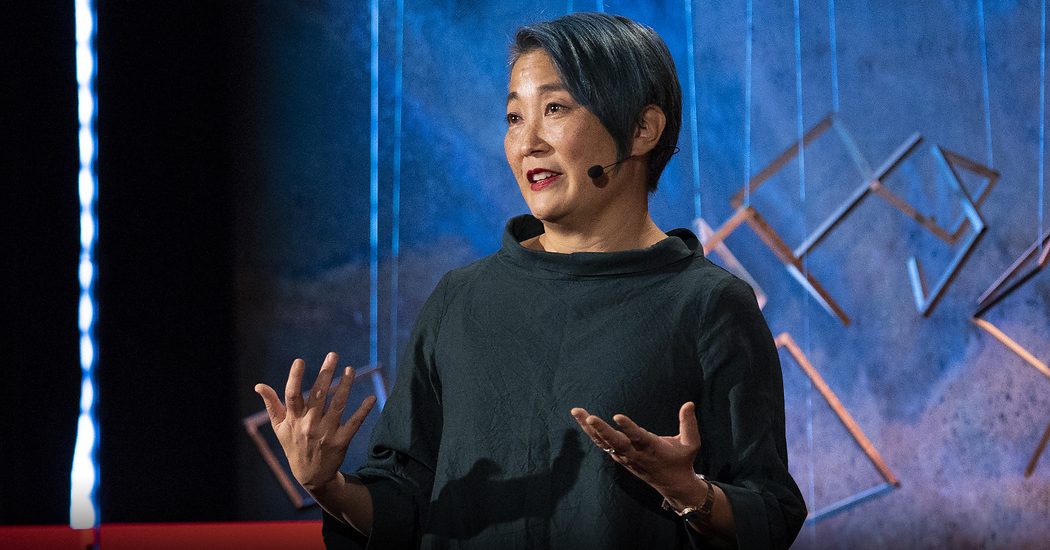
Lisa Nakamura: The internet is a trash fire. Here's how to fix it.
Life on the internet is real life, and we need to stop pretending that what happens online doesn't matter, says digital media researcher Lisa Nakamura. In this timely talk, she explains the steps we can take to correct the toxic behaviors that have become common online -- and help make the internet a place where we all feel safe.
the chronically online will become a new underclass
How to fight lies, tricks, and chaos online
A guide to slowing down and reading up on internet news

How to fix the internet
If we want online discourse to improve, we need to move beyond the big platforms.

Trust: Foundation of Human Knowledge yet online Platforms won't allow | David Karger | TEDxMIT Salon
Platforms Want Centralized Censorship. That Should Scare You
Opinion: Controlling the spread of insidious content online is extremely difficult—but combining efforts across platforms raises serious threats to free expression.

Deliberation and Identity Rules: The Effect of Anonymity, Pseudonyms and Real-Name Requirements on the Cognitive Complexity of Online News Comments
How do identity rules influence online deliberation? We address this question by drawing on a data set of 45 million comments on news articles on the Huffington Post from January 2013 to May 2015. At the beginning of this period, the site allowed commenting under what we call non-durable pseudonyms. In December 2013, Huffington Post moved to regulate its forum by requiring users to authenticate their accounts. And in June 2014, Huffington Post outsourced commenting to Facebook altogether, approximating a ‘real-name’ environment. We find a significant increase in the cognitive complexity of comments (a proxy for one aspect of deliberative quality) during the middle phase, followed by a decrease following the shift to real-name commenting through Facebook. Our findings challenge the terms of the apparently simple trade-off between the goods and bads of anonymous and real-name environments and point to the potential value of durable pseudonymity in the context of online discussion.
