


Midway through his career, the inventor of “cyberspace” turned his attention to a strange new world: the present.
A Declaration of the Independence of Cyberspace
by John Perry Barlow Governments of the Industrial World, you weary giants of flesh and steel, I come from Cyberspace, the new home of Mind. On behalf of the future, I ask you of the past to leave us

Cyberspace to Cyberplace
This post is a broad exploration, it doesn’t have a single central goal or thesis so I will be presenting quotes, resources, and various reflections on these to start circling around the topic from different angles.

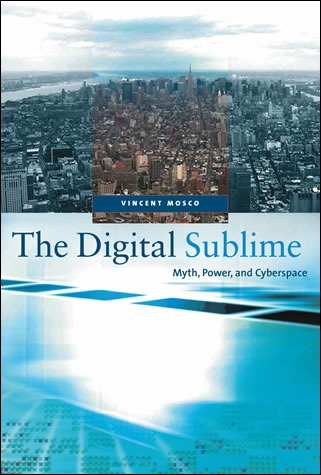
The Digital Sublime: Myth, Power, and Cyberspace
Interpreting the myths of the digital age: why we believed in the power of cyberspace to open up a new world.The digital era promises, as did many other te
Thoughts on Cyberpositionality: The Construction of Digital Communities in Digital Spaces, Damien Patrick Williams
I found Rebecca Monteleone, Martin Perez Comisso, and Elma Hajric’s “Cyberpositionality: Sociotechnical Location in the Digital Age” (2024) to be an extremely timely and important article which can…

An island of reason in the cyberstream – on the life and thought of Joseph Weizenbaum
The juxtaposition between the potential of technology and its actual manifestation can be rather jarring. Tools that promise to make tasks easier are used to automate people out of their jobs, devi…


The Same Old Fantasies Behind AI and New Technology
A review of Adam Becker, “More Everything Forever: AI Overlords, Space Empires, and Silicon Valley’s Crusade to Control the Fate of Humanity” (Basic Books, 2025).

Architecture and the Internet: Designing places in cyberspace
Cyberspace, as the information space is called, has become accessible in the past decade through the World Wide Web. And although it can only be experienced through the mediation of computers, it is quickly becoming an alternative stage for everyday economic, cultural, and other human activities. As such, there is a potential and a need to design it according to place–like principles. Making places for human inhabitation is, of course, what architects, landscape architects, and town planners have been doing in physical space for thousands of years. It is curious, therefore, that Cyberspace designers have not capitalized on the theories, experiences, and practices that have been guiding physical place–making. While most 3D environments closely mimic physical spaces, they are, by and large, devoid of the essential characteristics that differentiate a ‘place’ from mere ‘space.’ And only rarely are they sensitive to, and take advantage of, the peculiarities of Cyberspace. We believe that this state of affairs is temporary, characteristic of early adoption stages of new technologies. As the Web matures, and as it assumes more fully its role as a destination rather than as means of communication, there will be a growing need to design it according to place–making principles. By looking at physical architecture as a case study and metaphor for organizing space into meaningful places, this paper explores the possibility of organizing Cyberspace into spatial settings that not only afford social interaction, but, like physical places, also embody and express cultural values. At the same time, because Cyberspace lacks materiality, is free from physical constraints, and because it can only be ‘inhabited’ by proxy, these ‘places’ may not necessarily resemble their physical counterparts.
Telepath: building a new kind of computer
So, we made a thing: Let’s back up: for as long as I can remember, I’ve been obsessed with computers, fascinated not just by what they can do but what they could become. Like many, I took my early inspiration from science fiction. I dreamed of someday having something like the Enterprise’s computer. And why not? Science fiction has always driven scientists, engineers, and inventors to create real things that change the world.
Steven Spielberg’s ‘Disclosure Day’ Turns Autofiction Into Thrilling Sci-Fi
The Hollywood maestro’s latest is filled with excitement and sentimentality.

Pluralistic: William Gibson vs Margaret Thatcher (17 Mar 2026) – Pluralistic: Daily links from Cory Doctorow
William Gibson is one of history's most quotable sf writers: "The future is here, it's not evenly distributed"; "Don't let the little fuckers generation-gap you"; "Cyberspace is everting"; and the immortal: "The street finds its own uses for things":
Why Science Fiction Is the Most Important Genre
Historian Yuval Noah Harari believes sci-fi has the power to shape public opinion.

i am going to solve the cyberpunk discourse forever, part 2: the punks.
“Cyberpunk 2077,” they said, “isn’t really Punk. It’s a Corporate Product, made out of Corporate Greed. It completely Misses The Point of…

Cybernetics is the science of the polycrisis
What Stafford Beer and Dan Davies say and why you need to read them

Cybernetics is the science of the polycrisis
What Stafford Beer and Dan Davies say and why you need to read them
Cybernetics is the science of the polycrisis
What Stafford Beer and Dan Davies say and why you need to read them