


They shape the world—and offer lessons for how to live in it.
How Do Fungi Keep the Planet Healthy? | Quanta Magazine
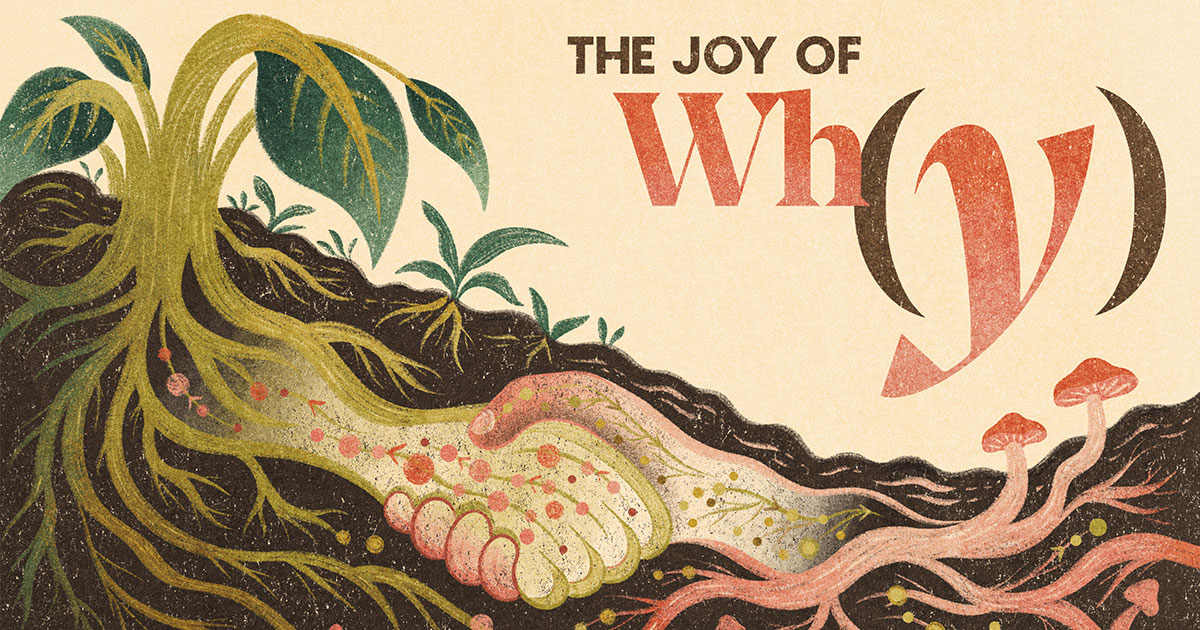
Evolutionary biologist Toby Kiers explains how fungal networks in soil trade nutrients with plants, help keep carbon underground, and strike bargains without having a brain.
The fungal mind: on the evidence for mushroom intelligence | Psyche Ideas
The evidence for fungal intelligence is in: they can operate as individuals, make decisions, learn, and have short-term memory
Let’s Become Fungal!
Inspired by conversations with: Francisca Álvarez Sánchez, Carolina Caycedo, Annalee Davis, Maya Errázuriz, Juan Ferrer, Lilian Fraiji, Giuliana Furci, Sofía Gallisá Muriente, Yina Jiménez Suriel, Patricia Kaishian, Mirla Klijn and Olaf Boswijk, Lola Malavasi and Daniela Morales Lisac, Martina Manterola and Carmen Serra, Camila Marambio, Mariana Martínez Balvanera, Claudia Martínez Garay, Lina Meija and Luciana Fleischman, Tomaz Morgado Françozo and Marília Carneiro Brandão, Marion Neumann, Maria Alice Neves, Tara Rodríguez Besosa, Raquel Rosenberg, Juli Simon, Ela Spalding, Gianine Tabja, Gabriela Flores del Pozo and Lucia Monge, Fer Walüng, Tatyana Zambrano


Very sporish! Why are so many artists mad about mushrooms?
From the film-maker who dresses up as them to the Korean who wants to be devoured by them, we enter the strange and hilarious world of mycology – to meet the artists who are fixated on fungi

Wild About Mushrooms: Contents
Copyright © 1987, 2000 by Louise Freedman and the Mycological Society of San Francisco A MykoWeb and MSSF Page
spores.garden/docs/layouts.md at main · hyphacoop/spores.garden
Tend your corner of the atmosphere. spores.garden turns your AT Protocol records into a personal site with unique themes. Your data never leaves your PDS. Grow something that's truly yours....
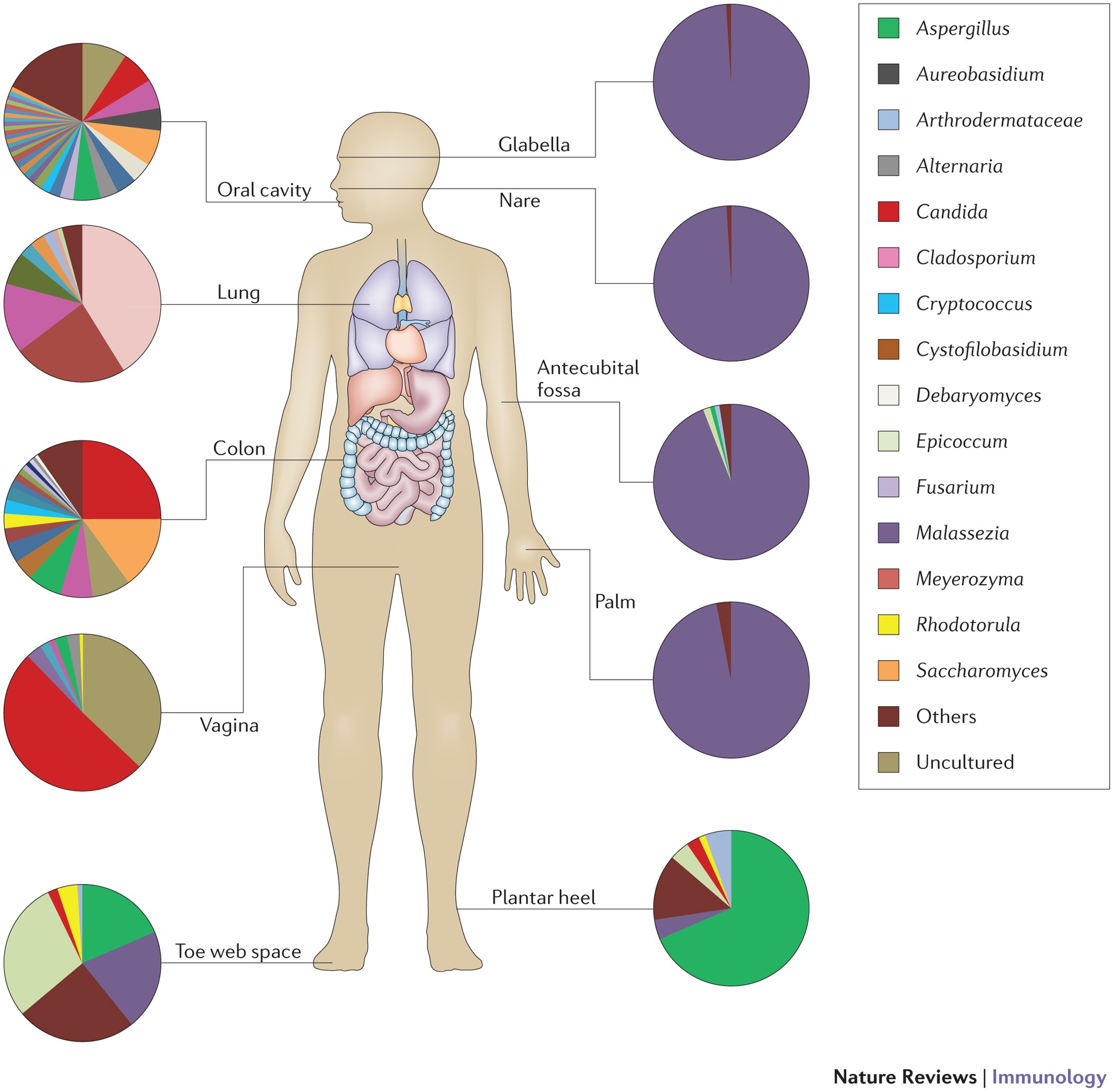
The mycobiota: interactions between commensal fungi and the host immune system
The fungal microbiota, or 'mycobiota', is an understudied component of the microflora that is found on all mucosal surfaces and on the skin.Like other microorganisms, fungi interact with the immune system at these surfaces in ways that are important both for host defence and for regulating the immune system.Investigators who study the mycobiota face both biological and bioinformatic challenges.The study of human genetic disorders and genetic polymorphisms teaches us about the mechanisms by which commensal and pathogenic fungi interact with the immune system.
Tending the Body’s Microbial Garden (Published 2012)
As we learn more about the trillions of microbes we carry around, some scientists want to be like wildlife managers — nurturing the good and weeding out the bad.

hyphacoop/spores.garden
Tend your corner of the atmosphere. spores.garden turns your AT Protocol records into a personal site with unique themes. Your data never leaves your PDS. Grow something that's truly yours.
Controlled Mold
A blog about fermentation, engineering, and cell-ag. We run wild experiments on microbes and try to eat them, all with the help of computers and math.
jsomers.net | I should have loved biology
In biology class, biology wasn't presented as a quest for the secrets of life. The textbooks wrung out the questing.

hypha.coop/spores.garden
Tend your corner of the atmosphere. spores.garden turns your AT Protocol records into a personal site with unique themes. Your data never leaves your PDS. Grow something that's truly yours.
Microbiome interplay: plants alter microbial abundance and diversity within the built environment
The built indoor microbiome has importance for human health. Residents leave their microbial fingerprint but nothing is known about the transfer from plants. Our hypothesis that indoor plants contribute substantially to the microbial abundance and diversity in the built environment was experimentally confirmed as proof of principle by analyzing the microbiome of the spider plant Chlorophytum comosum in relation to their surroundings. The abundance of Archaea, Bacteria, and Eukaryota (fungi) increased on surrounding floor and wall surfaces within 6 months of plant isolation in a cleaned indoor environment, whereas the microbial abundance on plant leaves and indoor air remained stable. We observed a microbiome shift: the bacterial diversity on surfaces increased significantly but fungal diversity decreased. The majority of cells were intact at the time of samplings and thus most probably alive including diverse Archaea as yet unknown phyllosphere inhabitants. LEfSe and network analysis showed that most microbes were dispersed from plant leaves to the surrounding surfaces. This led to an increase of specific taxa including spore-forming fungi with potential allergic potential but also beneficial plant-associated bacteria, e.g., Paenibacillus. This study demonstrates for the first time that plants can alter the microbiome of a built environment, which supports the significance of plants and provides insights into the complex interplay of plants, microbiomes and human beings.

Find home for you and your spikey skillset #FungiFriday #FungiFriends
Little mushroom grows out of bark covered in lichens #FungiFriday #mycology #mushrooms #nature #photography

