


Many observers recommend an incremental reduction in screen time and internet use. But perhaps more drastic changes are required.
Offline First
We live in a disconnected & battery powered world, but our technology and best practices are a leftover from the always connected & steadily powered past.
Offline First
Think You Can Live Offline Without Being Tracked? Here's What It Takes - Fast Company
We asked the most privacy-aware people we could find what it would take to go off the radar. Hint: You're going to need to do more than throw away your laptop.

Service Workers and PWAs: It's About Reliable Performance, Not "Offline" - Infrequently Noted
Alex Russell on browsers, standards, and the process of progress.
Reciprocal Relationships between Trajectories of Loneliness and Screen Media Use during Adolescence
Adolescence is the peak period for loneliness. Now a ubiquitous part of the adolescent landscape, electronic screens may provide avenues for ameliorating feelings of loneliness. Conversely, they may act as risk factors for the development of such feelings. Although cross-sectional studies to date have investigated the relationship between screen use and loneliness, longitudinal studies are needed if causal and directional associations are to be investigated. Utilising an accelerated longitudinal design and online survey we collected four waves of data from 1919 secondary school adolescents aged 10–15 years over two years. Random intercept cross-lagged panel models tested whether changes in five types of screen use (i.e., total screen time, social media use, gaming, passive screen use, and web use) are associated with changes in loneliness in the subsequent time-point, or changes in loneliness are associated with changes in screen use in the subsequent time-point. We found significant reciprocal associations between screen use and loneliness, with the strongest associations between social networking and electronic gaming and quality of friendships. These findings highlight that any significant increase in an adolescent’s screen use may be a potential indicator of changes in quality of friendships or feelings of isolation.

What if the internet stopped working for a day?
For many people, going without the internet even for a few hours is unthinkable. But if it did stop working, the impact might not be what you'd expect.

When, How, and Why to Abandon the Internet
Should we abandon the internet? Voice memos from Douglas Rushkoff, Bridget Todd, Robin Berjon, Janet Vertesi and more on leaving, rebuilding or saving it.

The Offline Club | Offline Community & Events
Join The Offline Club's global movement towards a more humane world. We host offline events and retreats for you to unplug and connect, community-style.

Should we design for iffy internet?
Around 97% of US households have internet access, but bandwidth and latency are likely worse than you expect.
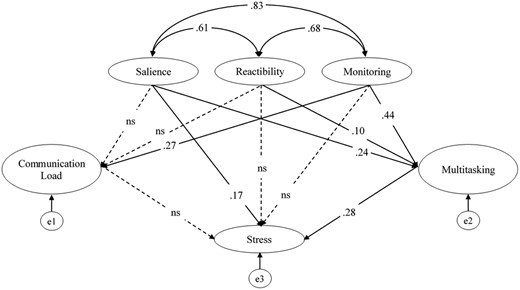
Permanently Online—Always Stressed Out? The Effects of Permanent Connectedness on Stress Experiences
Abstract. Concerns have been expressed that permanent online connectedness might negatively affect media user’s stress levels. Most research has focused on

We Are Hopelessly Hooked
We check our phones 221 times a day—an average of every 4.3 minutes—according to a UK study. This number actually may be too low, since people tend to underestimate their own mobile usage. In a 2015 Gallup survey, 61 percent of people said they checked their phones less frequently than others they knew. Our transformation into device people has happened with unprecedented suddenness.

Asynchronous Communication Is The Future Of Work | I Done This
Whether you fear its impersonal nature or thinks its the best thing since streaming television, asynchronous communication is here to stay Remote work is rising and online education is becoming more accepted and commonplace, both due to changing attitudes and the pandemic. These factors are only going to increase the…

Designing Offline-First Web Apps
We assume our users are like us—with the latest devices, the most recent software, and the fastest connections. And while we may maintain a veritable zoo of older devices and browsers for testing, …

This paper claims to provide evidence offline networks matter more than online for voting preferences, but winds up mistaking noise for signal and seems to forget that some folks online are quite influential. academic.oup.com/pnasnexus/article/4/10/pgaf30…

Physical partisan proximity outweighs online ties in predicting US voting outcomes
academic.oup.com