


During a time when American trust in institutions is at an all- time low, A.I. is poised to accelerate a growing disillusionment with higher education.
What Will It Take to Get A.I. Out of Schools?
“I find myself speaking with my kids about A.I. in the same terms that we might discuss a creepy neighbor who lives down the block,” Jessica Winter writes. Read her report on the push for A.I. in education.

This big university system is embracing AI. Students and faculty aren't all on board
The California State University system offers an early look at what happens when an administration commits to a technology that its own community isn't convinced will improve education.

Texas Tech University Is Using A.I. to Cut Left-Leaning Content
Texas Tech is using A.I. to cut left-leaning content in its curriculum. Some say the effort to ferret out forbidden topics is a dystopian academic nightmare.

AI Is Routine for College Students, Despite Campus Limits
A majority of U.S. college students use artificial intelligence in their coursework at least weekly, yet about half say their schools discourage or prohibit it.

Alternative Universities: Speculative Design for Innovation in Higher Education
Imagining the universities of the future.How can we re-envision the university? Too many examples of what passes for educational innovation today—MOOCs especially—focus on transactions, on questions of delivery. In Alternative Universities, David J. Staley argues that modern universities suffer from a poverty of imagination about how to reinvent themselves. Anyone seeking innovation in higher education today should concentrate instead, he says, on the kind of transformational experience universities enact. In this exercise in speculative design, Staley proposes ten models of innovation in higher education that expand our ideas of the structure and scope of the university, suggesting possibilities for what its future might look like. What if the university were designed around a curriculum of seven broad cognitive skills or as a series of global gap year experiences? What if, as a condition of matriculation, students had to major in three disparate subjects? What if the university placed the pursuit of play well above the acquisition and production of knowledge? By asking bold "What if?" questions, Staley assumes that the university is always in a state of becoming and that there is not one "idea of the university" to which all institutions must aspire. This book specifically addresses those engaged in university strategy—university presidents, faculty, policy experts, legislators, foundations, and entrepreneurs—those involved in what Simon Marginson calls "university making." Pairing a critique tempered to our current moment with an explanation of how change and disruption might contribute to a new "golden age" for higher education, Alternative Universities is an audacious and essential read.


Is ubiquitous A.I. writing "inevitable"?
On a weird few weeks of A.I.-writing scandals

Charlie Kirk had a message for the over 2 million unemployed Gen Z NEET men: You don’t need college to make your dreams happen
From dropout to multimillion-dollar nonprofit leader, Kirk claimed college was overrated—and many Gen Zers share his skepticism.

AI Is Quietly Changing Who Gets to Build Software
What If Universities No Longer Need Edtech Companies?
University science in the US needs a coherent plan
The Trump administration continues to degrade America’s scientific establishment, causing widespread harm to the country’s broader interests and well-being. Last week, the Association of American Universities reported that graduate student enrollment in major research universities, which award half of all doctorate degrees in the United States, is down 15% compared to a year ago. And no wonder, considering the effect of recent immigration policies that deter international students and the financial uncertainties that universities are facing given the unpredictable nature of federal funding. The ability to support new doctoral students depends heavily on research grants, and any responsible administrator would be cautious about making commitments to students they can’t keep. This is discouraging to the scientific community but should be alarming to everyone.

No tuition, no grades, no power grid: why are people flocking to a ‘college’ in the middle of the desert?
Two hundred miles from LA, an off-grid community with roots in Burning Man offers an unorthodox educational experience – is Mars College the future?

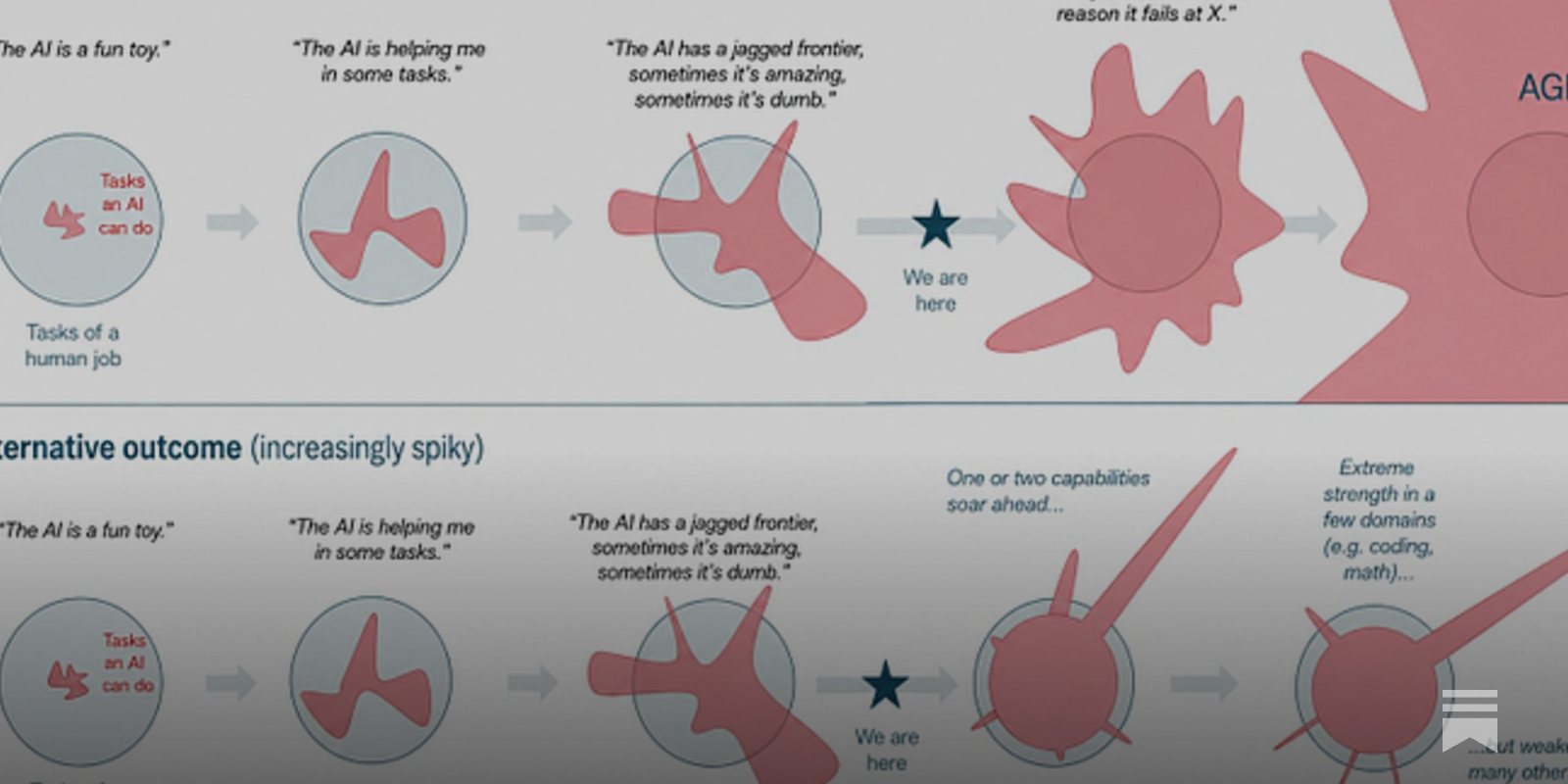
How ‘Jagged Intelligence’ Can Reframe the A.I. Debate
A.I. has always been compared to human intelligence, but that may not be the right way to think about it. What it does well can help predict what jobs it may replace.

Editorial | Penn has an AI problem
The Daily Pennsylvanian Editorial Board argues that Penn’s choice to embrace AI is detrimental to the institution of higher education.
A.I. Should Elevate Your Thinking, Not Replace It - Blog - Koshy John
Read about the hidden divide between self-inflicted irrelevance and real engineering leverage.

Opinion | Michael Bloomberg: Why I’m Giving $1.8 Billion for College Financial Aid (Published 2018)
Let’s eliminate money problems from the admissions equation for qualified students.

When A.I. Comes for Your Purpose in Life
In the span of just a few months, A.I. systems have solved some of the biggest outstanding problems in math — adding mathematicians to the list of those terrified of losing their job to the technology.
