

NGI fosters a vibrant, open Internet that links research, policy and technology for the benefit of society.
FediMod FIRES on building better and decentralised social media applications
Continuing our monthly interview series "Building a Free Internet of the Future", we talked to Emelia Smith, who is a software engineer. “Building a Free Internet of the Future" highlights the experiences and perspectives of individuals and communities supported by the NGI Zero (NGI0) grants, funded by the European Commission.

The Internet Transition
The Internet is allowing us to build a richer, more complex society but the way in which we Internet today is failing to support the governance systems that a more complex world requires. I take a look at why these issues are related, try to develop an intuition for a way forward, and point at the emerging field that is coming together to build that future.

The one and future internet
The internet has become inextricably entangled into our economies, cultural and social lives. We stand on the brink of the next technological revolution, in which the internet of things transforms ...

The Future of the Internet | Jonathan Zittrain | Talks at Google
The Internet is a Global Public Resource | The Mozilla Blog
One of the things that first drew me to Mozilla was this sentence from our manifesto: “The Internet is a global public resource that must remain open and
Built to benefit everyone: our plan
A vision for the future of AI, focusing on access, safety, and shared prosperity as OpenAI works to ensure AGI benefits everyone.

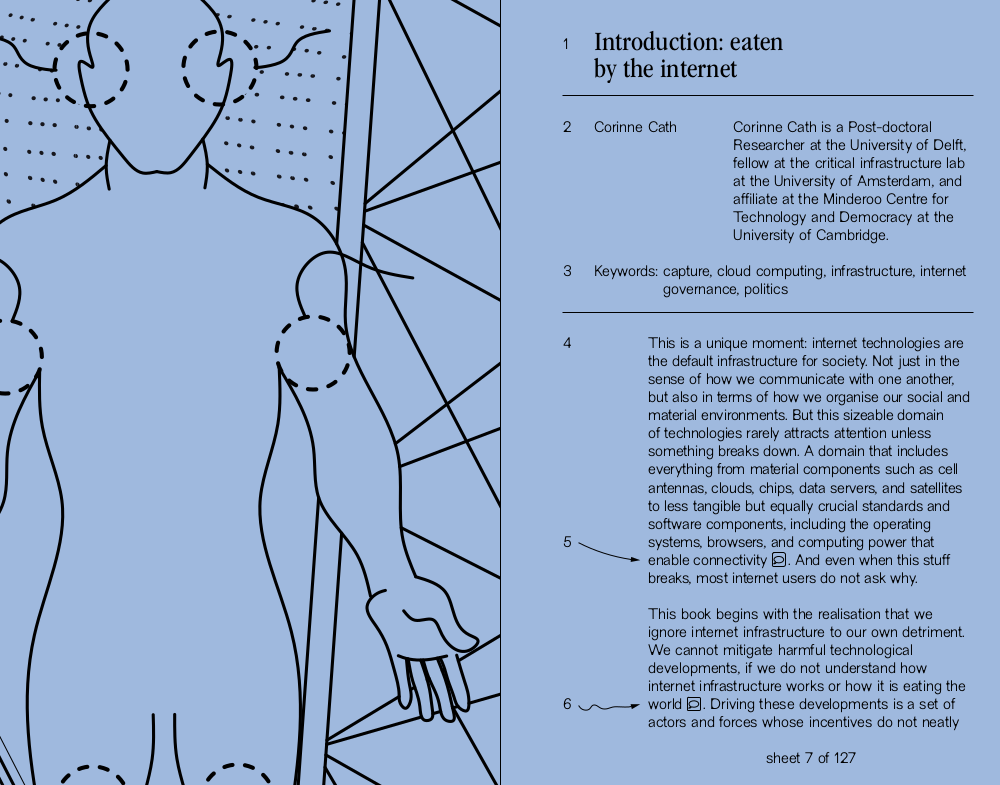
Eaten by the Internet
This book makes internet infrastructure visible as a force of political power, which is transforming the social world, from the bottom up—through fifteen chapters contributed by a global set of researchers, activists, and techies. We are living a unique moment: internet technologies are the default infrastructure for society, not just how we communicate but also how we organise our social life, politics, and economy, all the way down to our material environments, like cities. Our world is eaten by the internet. This means that those who control the internet control the bounds of public speech, economic production, social cohesion, and politics, making its infrastructure a core political terrain in the networked age. The book’s chapters cover a wide set of topics, spanning from the global politics of content moderation by internet infrastructure to the colonialism inherent in the race to plug the moon, from the harms wrought by blockchain companies in rural America to the particularities of online censorship across Asia. The chapters take on thorny topics, discussing power consolidation in the advertisement and cloud industry, the role of internet infrastructure in the war in Ukraine, and tech’s environmental impact—amongst others. In doing so, this book roots contemporary technology debates in the politics of internet infrastructure and urges us to ask how can we ensure our infrastructures sustain us, rather than consume us?
The Internet Is Making You Less Free
Our current age is defined by the internet. The internet—a technology that allows the decentralized, globalized dissemination of information—has become so

India adopts a comprehensive open source policy
The Government of India (GOI) has adopted a comprehensive and supportive open source policy. It builds on their earlier efforts to adopt open standards for procurement.

Institute of Network Cultures | Ben Grosser: Planning the Exodus from Platform Realism
Thinking about the current state of platforms, I’m reminded of Mark Fisher’s articulation of capitalist realism, the idea that we don’t imagine or build alternatives to capitalism because we can no longer envision a world without it. Big tech, in a few short years, has managed to instill within the public a similar state of platform realism. So many are unable to imagine how global communication, media, search, etc. could ever function without the platforms. Despite a growing malaise, it’s become difficult for many to consider a world without big tech platforms as a viable conception of the future.


We’re in the middle of a perfect storm for rollback of the “open web” and burgeoning online surveillance
Looking at fallout of the KOSA hearings today — and subsequent commentary — I remain optimistic for the development of social technology & communication but I’m beginning to think the ope…

Bluesky & Open Social Media Tech
State of AI 2025: 100T Token LLM Usage Study | OpenRouter
Read OpenRouter's 2025 State of AI report — an empirical 100 trillion token study of real LLM usage, model trends, and developer insights.
The State of the Web at Google I/O 2018
The web is a global treasure, and has many strengths we all enjoy. It is a distribution platform like no other, providing people around the ...

🗣️🗣️🗣️ THE OPEN SOCIAL WEB IS THE LONG GAME If we win, it'll be for the next generations. Sit with that thought, move accordingly.

Rudy Fraser
Many builders in the Open Social Web are discouraged by the lack of funding in the ecosystem, slow pace of feature development (e.g. private accounts), and “low” adoption relative to incumbents like Meta. In my keynote I emphasized multi-generational struggle & movement building. People who faced…
