


Prof. Nick Vincent is an Assistant Professor in Computing Science at Simon Fraser University and directs the People- and Data-centric Computing Research Group (
Nicholas Vincent | Data Leverage & Public AI
Prof. Nick Vincent is an Assistant Professor in Computing Science at Simon Fraser University. He studies the content ecosystems and data supply chains that fuel

Collective action strategies in the age of AI w/ Nick Vincent from Data Leverage - The Blockchain Socialist
I spoke to Nick Vincent, assistant professor of computing science at Simon Fraser University and author of the Data Leverage substack, about what it actually means that AI systems are built on the collective output of humanity’s digital labor and what we can do about it. Nick has spent years researching how data functions as a bargaining tool, […]
Collective action strategies in the age of AI w/ Nick Vincent from Data Leverage
Podcast Episode · The Blockchain Socialist · March 4 · 1h 3m

A Short Guide to Data Strikes and Conscious Data Contribution in the Context of 2026 Frontier AI
Back to the basics of data leverage.

Renaissance Philanthropy Fellow: Dario Taraborelli
Alex Komoroske (Common Tools)
Data Leverage: A Framework for Empowering the Public in its...
Many powerful computing technologies rely on implicit and explicit data contributions from the public. This dependency suggests a potential source of leverage for the public in its relationship...

Our Spreadsheet Overlords
Weatherby argues that the current discourse around AI, especially the buzz around “artificial general intelligence,” is a distraction from its actual impact: the expansion of bureaucracy through massive data systems…

Data Leverage: A Framework for Empowering the Public in its Relationship with Technology Companies
Many powerful computing technologies rely on implicit and explicit data contributions from the public. In this paper, we synthesize emerging research that seeks to better understand and help people action this data leverage. Drawing on prior work in areas including machine learning, human-computer interaction, and fairness and accountability in computing, we present a framework for understanding data leverage that highlights new opportunities to change technology company behavior related to privacy, economic inequality, content moderation and other areas of societal concern.
Daily Dose of Data Science on Twitter / X
Claude Code fully dissected!Researchers from UCL reverse-engineered the leaked Claude source. What they found changes how you should think about agent design.Only 1.6% of the codebase is AI decision logic.The other 98.4% is operational infrastructure. Permission gates, tool… https://t.co/5HYH7qV3wQ pic.twitter.com/5SBHQy5wFH— Daily Dose of Data Science (@DailyDoseOfDS_) June 13, 2026

Practical Data Ethics
Free, online course from fast.ai and USF Data Institute covering disinformation, bias & fairness, ethical foundations, practical tools, privacy & surveillance, the silicon valley ecosystem, and algorithmic colonialism
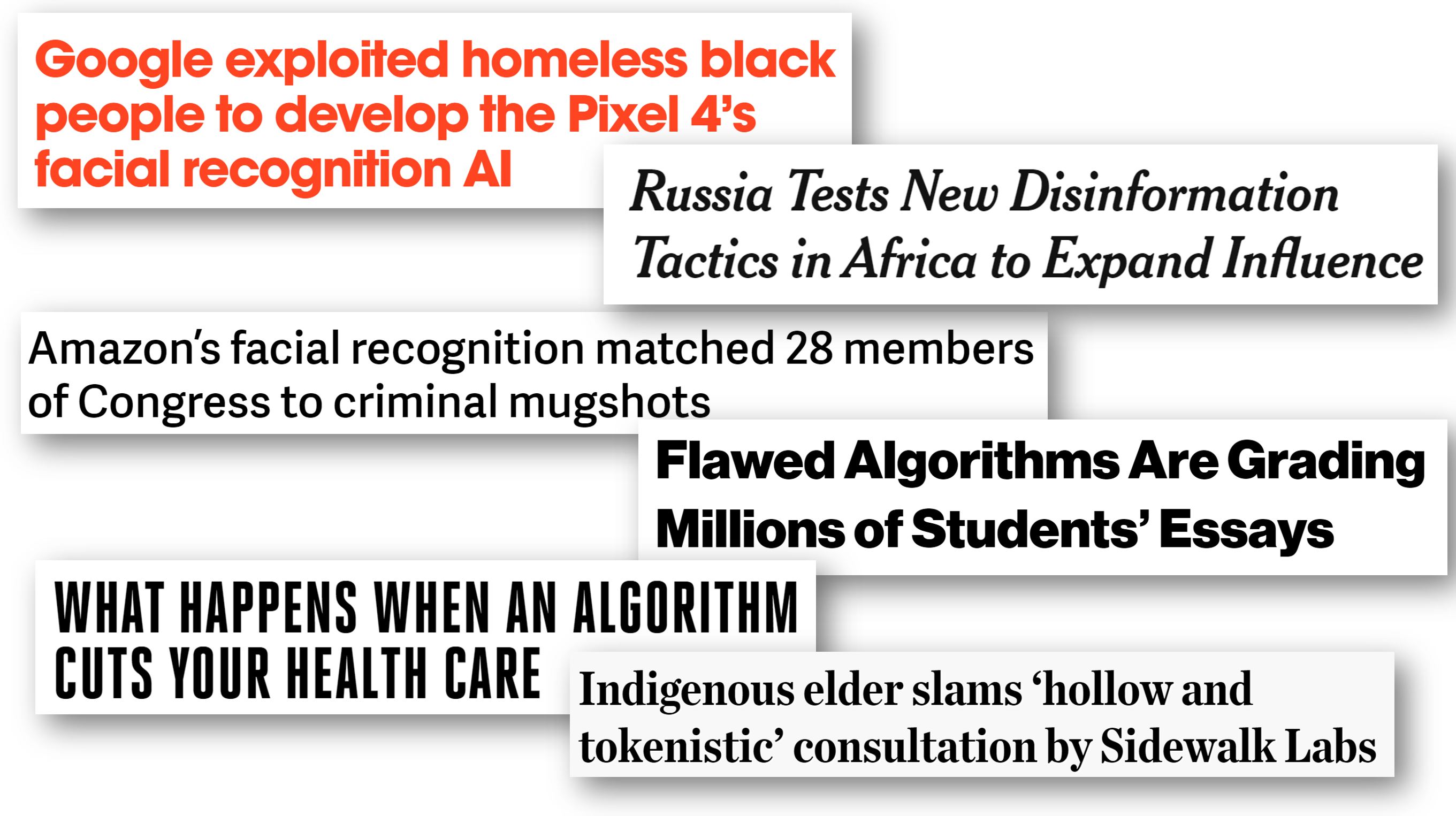
OpenScience | Open-source AI co-scientist for research
OpenScience is the open-source AI co-scientist. Free models included or connect any model from any provider, including Claude, GPT, Gemini and more.
On AI Coding and Its Discontents - Cal Newport
Back in January, I received a note from a senior software engineer in Silicon Valley. He described himself as an AI skeptic who became converted ... Read more

Has AI Changed Work Forever? Not Really... | Cal Newport
After the feed with Eli Pariser, Ben Smith, and Jasmine Sun
A Collectivist, Economic Perspective on AI
Information technology is in the midst of a revolution in which omnipresent data collection and machine learning are impacting the human world as never before. The word ``intelligence'' is being...