

The Democracy Perception Index (DPI) is a cornerstone of the Copenhagen Democracy Summit, providing the most comprehensive global snapshot of public opinion on democracy.
The V-Dem Dataset – V-Dem
Includes the world's most comprehensive and detailed democracy ratings. The latest version of the dataset and associated reference documents can be downloaded free of charge below.
Democracy Tracker | The Global State of Democracy
Each report describes an event that affects the state of democracy in a given country, with assessments made relative to that country's context, not as comparisons or rankings between countries.
Government Ratings - Nira Data
Track global public opinion, political sentiment, and trust in government with insights from the 2025 Global Political Opinion Report.

Five Dimensions of Scaling Democratic Deliberation: With and Beyond AI
DemocracyNext's new paper on Five dimensions of scaling democratic deliberation: With and beyond AI
Democracy x AI Cohort | Mozilla Foundation
The Democracy x AI cohort is founded on the hypothesis that, if built differently, AI could strengthen democracy rather than erode it.
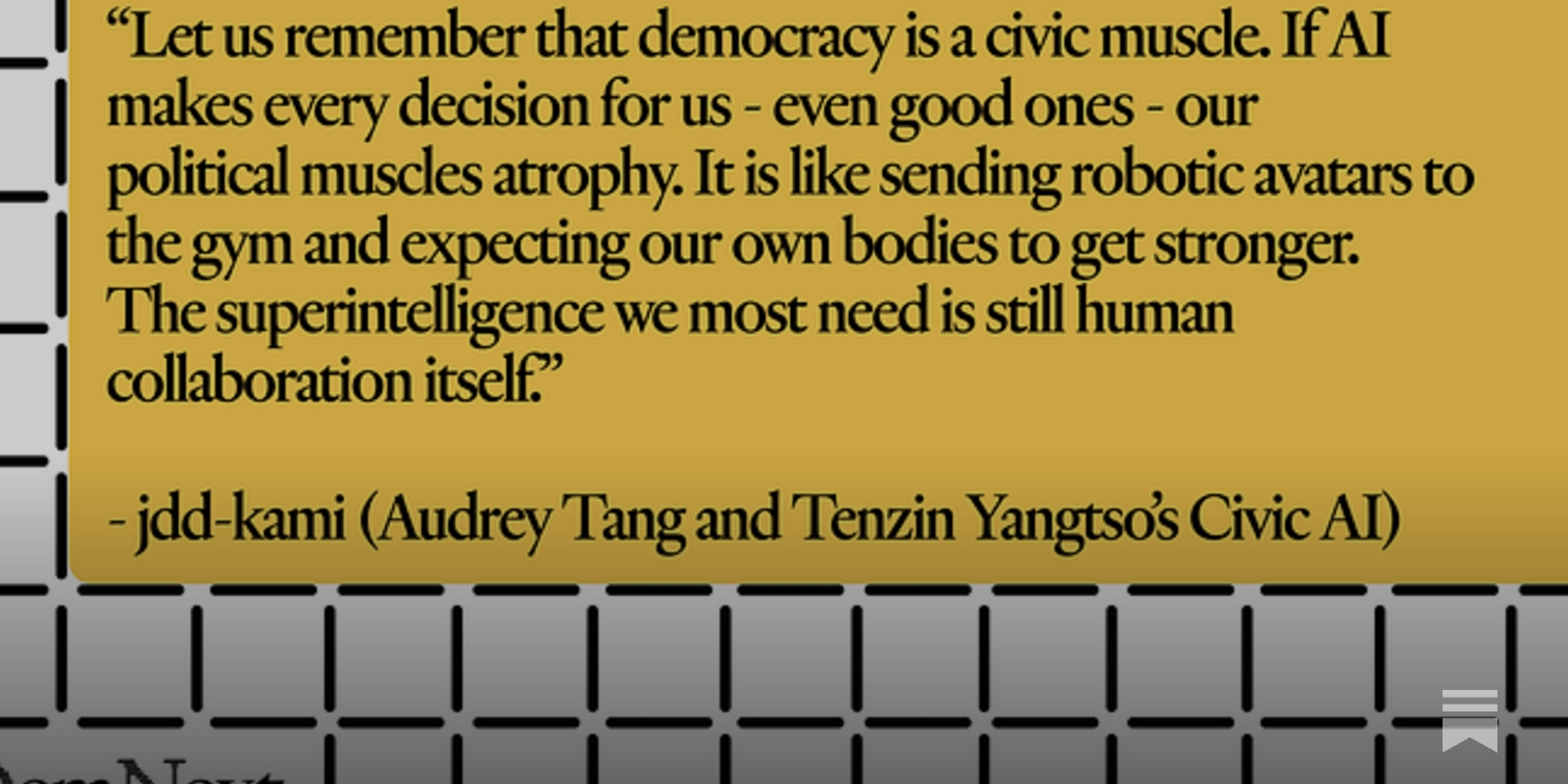
Democracy Needs AI That Listens
From Taiwan's deliberative experiments to our own AI policy - featuring jdd-kami, the Civic AI that fits in a carry-on
Democracy indicators in US at lowest levels for 50 years, data shows
Trump administration undermining rule of law at home and worldwide, according to intergovernmental report

Democratic digital infrastructure for civil society · Theta
How civil society and Danish foundations can support digital democracy
Scoping report: Future challenges to democracy | CoP CC on Participatory and Deliberative Democracy
The report from the European Commission identifies 10 key challenges and emerging trends impacting European democratic systems and suggests future policy options. These challenges are structured across three interconnected levels: citizens and societal dynamics, the information and knowledge environment, and institutions and the democratic system. This framework aims to provide a comprehensive and integrated view of democracy as a connected ecosystem, emphasising how challenges in one area can affect the entire system.
Database
Find the right digital tool for your project thanks to Democracy Technologies' database, a collection of tools for participation, i-voting, and more.
Democracy and the Epistemic Commons
The Consilience Project is a publication of the Civilization Research Institute (CRI)

The Global State of Democracy 2026: Democracy in an Age of Conflict
In the face of increasing political and societal fragmentation, the Global State of Democracy 2026 explains the patterns that define the direction of democratization around the world. Drawing on the latest data from the Global State of Democracy Indices, the report documents both democratic stagnation and key declines in indicators that measure the credibility of elections, the effectiveness of legislatures, respect for freedoms of expression and the press, and access to justice. These phenomena affect countries across thespectrum of democratic performance.
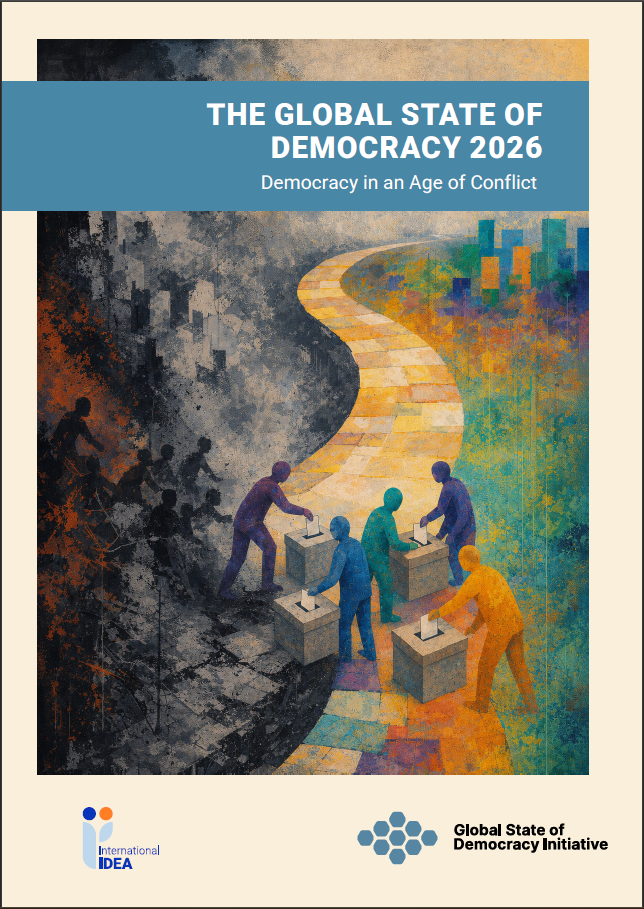
The Global State of Democracy 2026: Democracy in an Age of Conflict
In the face of increasing political and societal fragmentation, the Global State of Democracy 2026 explains the patterns that define the direction of democratization around the world. Drawing on the latest data from the Global State of Democracy Indices, the report documents both democratic stagnation and key declines in indicators that measure the credibility of elections, the effectiveness of legislatures, respect for freedoms of expression and the press, and access to justice. These phenomena affect countries across thespectrum of democratic performance.
Direct Democracy | The Paper Pilot
The Paper Pilot's digital garden of thoughts on philosophy, politics, and sociology
AI Index | Stanford HAI
The mission of the AI Index is to provide unbiased, rigorously vetted, and globally sourced data for policymakers, researchers, journalists, executives, and the general public to develop a deeper understanding of the complex field of AI. To achieve this, we track, collate, distill, and visualize dat
