

Global public opinion on conflict, security, and defense
Drones in the African Battlespaces
C/O Futures Book ReviewLisa J. Campbell22 May 2026Addressing in their book an increasingly prescient topic, the co-editors of Drones in the African Battlespaces, have a background of research in security policy, defense, and global arms concerns. Wayne Stephen Coetzee, a senior lecturer in Political Science at the International Programme in Politics and Economics at the University West in Sweden, has focused his research on security politics, emphasizing the interactions between public and priva

AI, Geopolitics, and National Security (Chapter 8)
Artificial intelligence is reshaping geopolitics by transforming how states generate, interpret, and project power. Rather than producing a single new weapon, AI operates as a general-purpose technology that scales perception, prediction, and decision-making across military, civilian, and informational domains. This chapter argues that AI rivalry increasingly depends on control over material and organizational foundations, including semiconductors, compute infrastructure, data centers, industrial coordination, and institutional adoption. It examines battlefield integration, U.S.–China competition, semiconductor statecraft, cyber operations, information power, and governance. The chapter shows that AI capabilities diffuse rapidly through commercial platforms, open-source ecosystems, and wartime experimentation, while frontier development remains constrained by infrastructure and supply-chain chokepoints. Because AI capability is difficult to measure or verify, governance is shifting away from traditional arms-control models toward export controls, standards, voluntary commitments, and multistakeholder coordination.
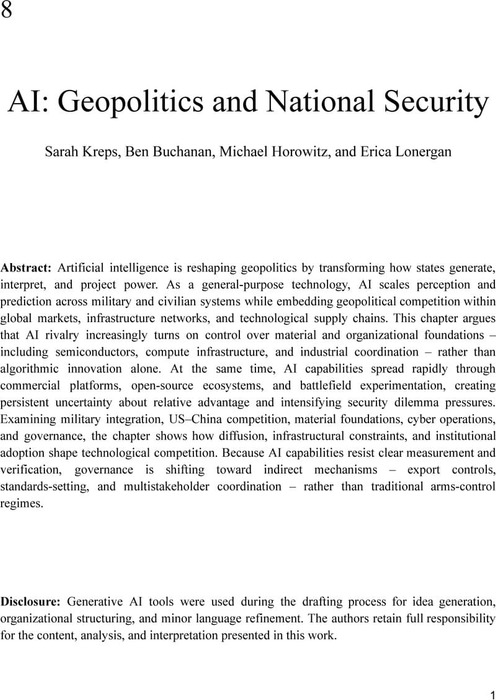
The shifting battlefield: technology, tactics, and the risk of blurring lines in warfare - Humanitarian Law & Policy Blog
The accelerating integration of emerging technologies into armed conflict is transforming not only the tools of war, but its tactics, geography, participants and impact. Technological developments – from commercial drones to artificial intelligence, electronic warfare to the military use of civilian infrastructure – risk undermining boundaries between military and civilian domains. These changes challenge long-held...
Global Safety Research Center
Gallup's Global Safety Research Center measures countries' progress toward achieving the United Nations' goal for peaceful, secure societies.

Mistakes, mistrust and misdirection: 25 years after 9/11, its dark legacy continues to unfold
The world’s most powerful country responded to the worst terrorist attack in its history by inflicting terror of its own – around the world, and at home

How Cartels are Adopting Drone Tactics from Ukraine
This article explores how FPV drone tactics, foreign volunteer forces, and transnational criminal networks reshape global security.

Iran: UN experts alarmed by renewed escalation of hostilities, call for accountability
GENEVA – UN experts* today expressed grave concern over reports of serious violations of international law arising from illegal military operations carried out by the United States and Israel in the Islamic Republic of Iran since 28 February 2026, as well as retaliatory Iranian strikes across the Gulf region against civilians and civilian infrastructure, including civilian shipping.

International relations has a problem with the future
Then, so does everything else
The Return of the Cutting-Off Way
Structural changes are driving us towards a more chaotic world, defined by "neither peace nor war, but conflict."
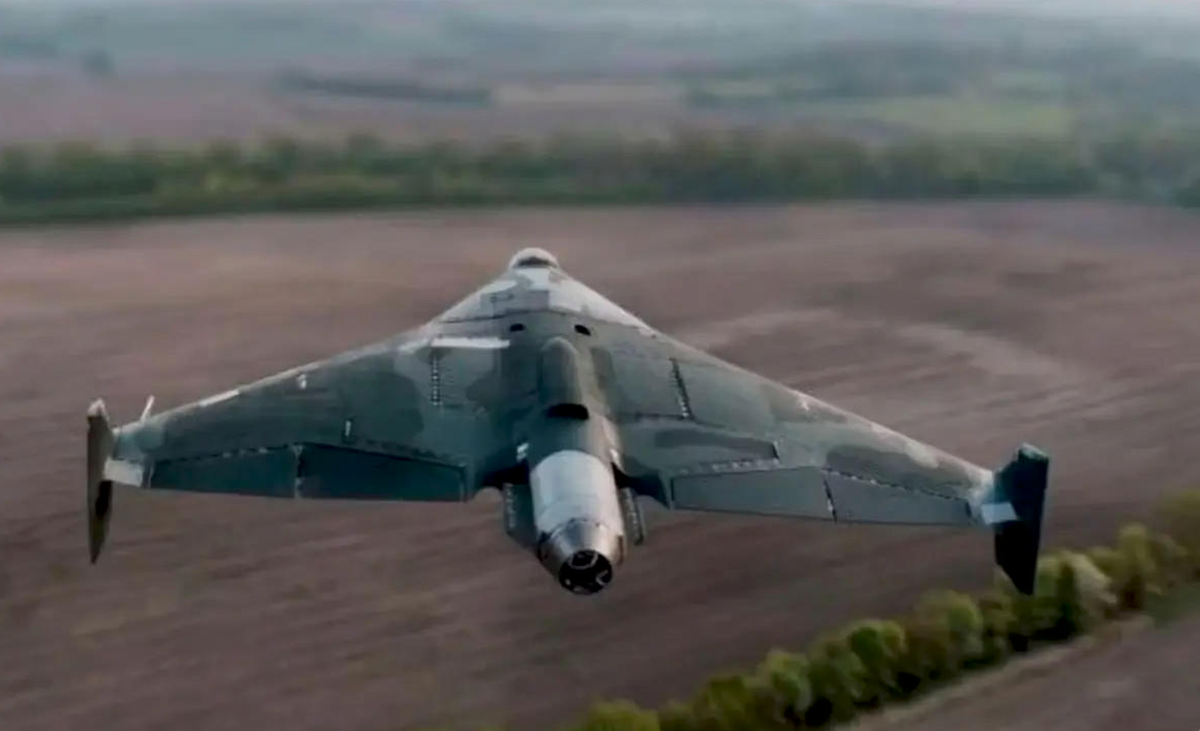
On Western Terrorism: From Hiroshima to Drone Warfare
In On Western Terrorism Noam Chomsky, world renowned dissident intellectual, discusses Western power and propaganda with filmmaker and investigative journalist Andre Vltchek. The discussion weaves together a historical narrative with the two men's personal experiences which led them to a life of activism. The discussion includes personal memories, such as the New York newsstand where Chomsky began his political education, and broadens out to look at the shifting forms of imperial control and the Western propaganda apparatus. Along the way the discussion touches on many countries of which the authors have personal experience, from Nicaragua and Cuba, to China, Chile, Turkey and many more. A blast of fresh air which blows away the cobwebs of propaganda and deception, On Western Terrorism is a powerful critique of the West's role in the world which will inspire all those who read it to think independently and critically.
Opportunities to Improve Military Policies and Practices to Reduce Civilian Harm From Explosive Weapons in Urban Conflict
This research paper seeks to contribute to further thinking and dialogue among States and their militaries that conduct operations in urbanized environments on what more can be done to reduce civilian harm by proposing practical measures in the form of options for consideration. UNIDIR seeks to enhance knowledge on ways to reduce risks and mitigate harm to civilians from the effects of explosive weapons in urbanized environments. This research frames the issue of explosive weapons in the broader context of protection of civilians in urban conflict and focuses on multilateral operations. The research takes a comprehensive approach to civilian protection from a ‘risk reduction’ perspective—that is, seeking to understand where the risks and uncertainties lie in the entire ‘civilian protection life cycle’, recognizing that civilian harm is the cumulative effect of numerous risks and decisions made from formulating mandates, planning, execution, assessment and response to lessons learned and institutional learning. Particular focus is placed on the targeting and weaponeering processes. Citation: Roger Lane, Larry Lewis and Himayu Shiotani (2019) "Opportunities to Improve Military Policies and Practices to Reduce Civilian Harm From Explosive Weapons in Urban Conflict", UNIDIR, Geneva, Switzerland. https://doi.org/10.37559/CAAP/19/PACAV/11 TRANSLATIONS To read the report in French, click here.
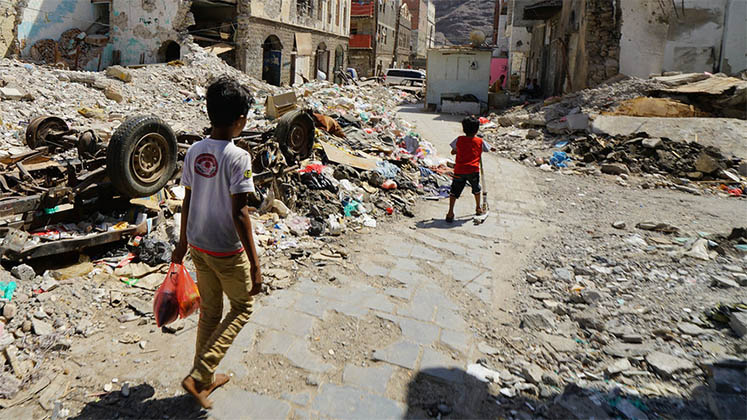
NSPM-7
National Security Presidential Memorandum-7 (NSPM-7), titled "Countering Domestic Terrorism and Organized Political Violence", is a United States National Security Presidential Memorandum (NSPM) issued by President Donald Trump on September 25, 2025. NSPM-7 directs a "comprehensive" law enforcement strategy to "disrupt" entities and individuals purported to be "engaged in acts of political violence and intimidation". NSPM-7 describes such alleged political violence as "sophisticated, organized campaigns" united by anti-fascism, with "common threads animating this violent conduct include anti-Americanism, anti-capitalism, and anti-Christianity; (...) extremism on migration, race, and gender; and hostility towards those who hold traditional American views on family, religion, and morality."

The new right: Anatomy of a global political revolution – European Council on Foreign Relations
The thinkers and ideas of the rising nationalist right merit the political mainstream's attention. Only by understanding them can it build a resilient counter-p
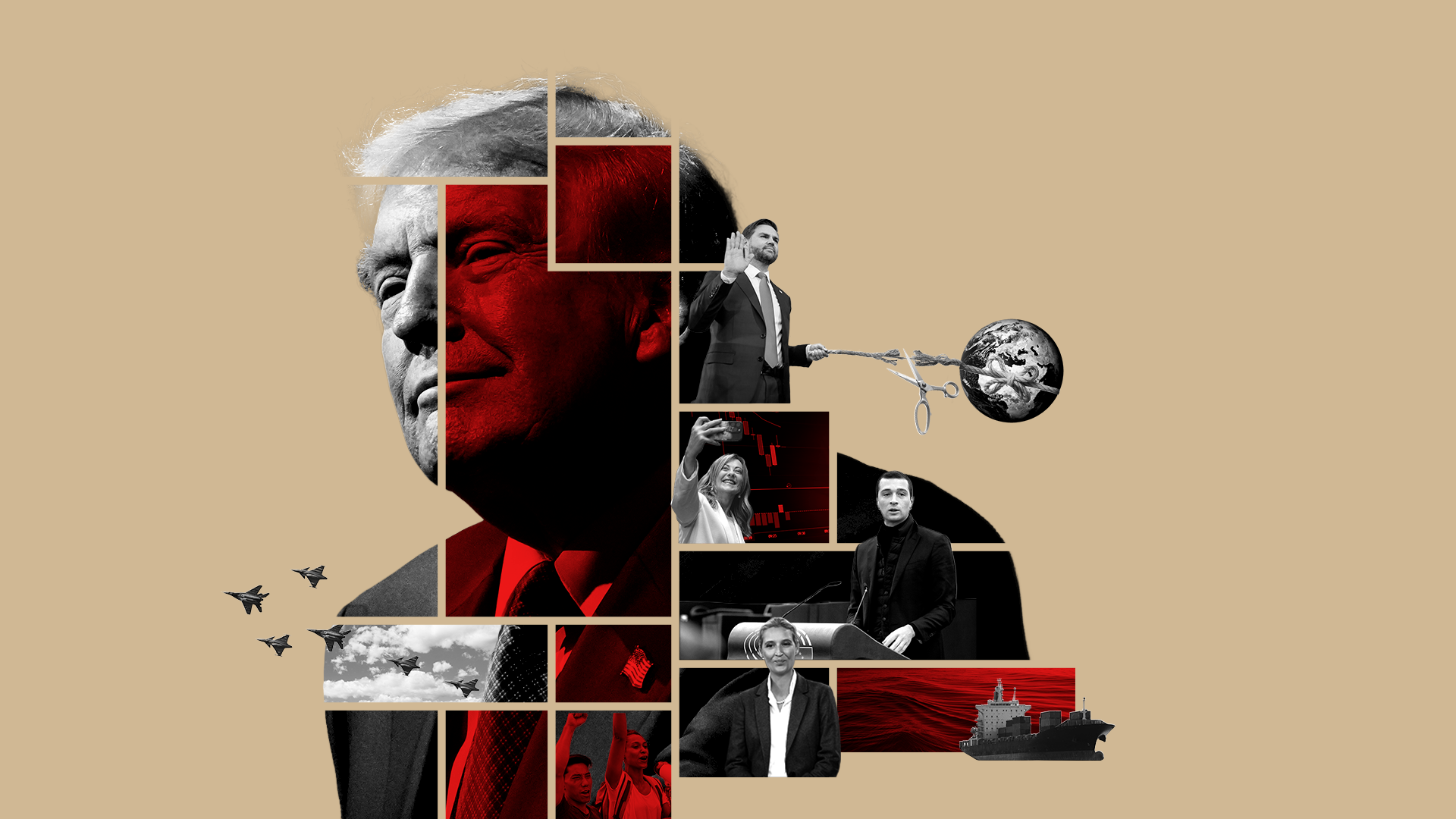
It's Safer in the Front
Faced with intensifying repression and state violence, there is an understandable inclination to seek safety by avoiding confrontation. But this is not always the most effective strategy.

interfluidity » The great game of global public goods provision
War is bad. Excuses should not be made for it. All sides should work to end this and every war as quickly as possible and shift to modes of bargaining and competition that are not profoundly destructive.