

Across 33 rich countries, only 5% of the population has high computer-related abilities, and only a third of people can complete medium-complexity tasks.

Toward People’s Community Control of Technology: Race, Access, and Education
This field review explores how the benefits of access to computing for racialized and minoritized communities has become an accepted fact in policy and research, despite decades of evidence that technical fixes do not solve the kinds of complex social problems that disproportionately affect these communities.

The education of a computer
The Unbearable Slowness of Being: Why do we live at 10 bits/s?
Researchers at Caltech quantify human behavioral information throughput at approximately 10 bits/s across various tasks, highlighting a vast discrepancy with the brain's sensory input capacity,...
What Even Is An OS Now?
Computers now work the way I thought they did when I was 8. What does computing look like when most applications have an audience of 1-2 people? I'm leaving Fly.io to build a phone for that world.
Keyboard Shortcut Usage: The Roles of Social Factors and Computer Experience
Previous research (Lane, Napier, Peres, & Sándor, in press) has shown that despite the fact that it typically takes half as much time to issue a command to a computer application using that command's keyboard shortcut, most people issue a particular command by clicking an icon on a toolbar or by selecting the command from a pull-down menu. This study examined reasons why that might be the case with a web survey that focused on demographic characteristics of people who do and do not use keyboard shortcuts, as well as social factors of computer use that might influence use of keyboard shortcuts. Participants' shortcut usage was influenced by social factors, such as working in an environment with other shortcut users and experiential factors, primarily the hours spent using a computer per week.

A Common Sense Guide to Selection Of A Computer System
A vast amount of computer equipment is being dumped on the Australian landscape. The glossy advertisements illustrate microcomputers everywhere. Hurtling through space. Nestled on the moon's surface. Artfully sharp in a 21st century space home. Peering out from foliage in a contrived jungle setting. Just occasionally they are even depicted in a practical business environment. How does a business person with little appreciation of this new technology go about rationally deciding what is for the best?Is a computer necessary?How should it be evaluated? Is one ‘system’ as good as another? What are the pitfalls? How is a Selection criteria established? The task of selecting an appropriate computer system from the plethora of possibilities is not easy, but it need not be prohibitive. What is needed is common sense information. UnderstandableandobjectiveanswerstothemanyquestionsyounodoubthaveareprovidedinthisCommon Sense Guide to the Selection of aComputer System!

AI, I tried to love you – Writings and rehearsals by Nathan Schneider
Among my peers who study the cultures and economies surrounding technology, I often find myself more tech-positive than most. On the whole I like computers, like the internet, and like in general the emergent human creativity that these things have enabled and revealed. A source of my appreciation is that I expend a lot of effort on the practice of “slow computing,” which is to say, choosing tools and technical communities that I can feel in right relationship with. I tend to approach new socio-technologies (like gig economies, blockchains, and social media) not from a perspective of why is this so bad? so much as asking how could we do this right?
About Us
Around the world, building the internet’s operating system—and a better way to work. In a world of tech companies fighting for growth at any cost, imagine one that gives away its most successful pr…

How WEIRD is CHI?
Computer technology is often designed in technology hubs in Western countries, invariably making it “WEIRD”, because it is based on the intuition, knowledge, and values of people who are Western, Educated, Industrialized, Rich, and Democratic. Developing technology that is universally useful and engaging requires knowledge about members of WEIRD and non-WEIRD societies alike. In other words, it requires us, the CHI community, to generate this knowledge by studying representative participant samples. To find out to what extent CHI participant samples are from Western societies, we analyzed papers published in the CHI proceedings between 2016-2020. Our findings show that 73% of CHI study findings are based on Western participant samples, representing less than 12% of the world’s population. Furthermore, we show that most participant samples at CHI tend to come from industrialized, rich, and democratic countries with generally highly educated populations. Encouragingly, recent years have seen a slight increase in non-Western samples and those that include several countries. We discuss suggestions for further broadening the international representation of CHI participant samples.

The Age Of Artificial Intelligence: Americans' AI Use Increases While Views On It Sour, Quinnipiac University Poll On AI Finds; 7 In 10 Think AI Will Cut Jobs With Gen Z The Most Pessimistic | Quinnipiac University Poll
"The contradiction between use and trust of AI is striking. Fifty-one percent say they use AI for research, and many also use it for writing, work, and data analysis. But only 21 percent trust AI-generated information most or almost all of the time. Americans are clearly adopting AI, but they are doing so with deep hesitation, not deep trust," said Chetan Jaiswal, Ph.D., Associate Professor of Computer Science and Associate Chair, Department of Computing, Quinnipiac University School of Computing and Engineering.
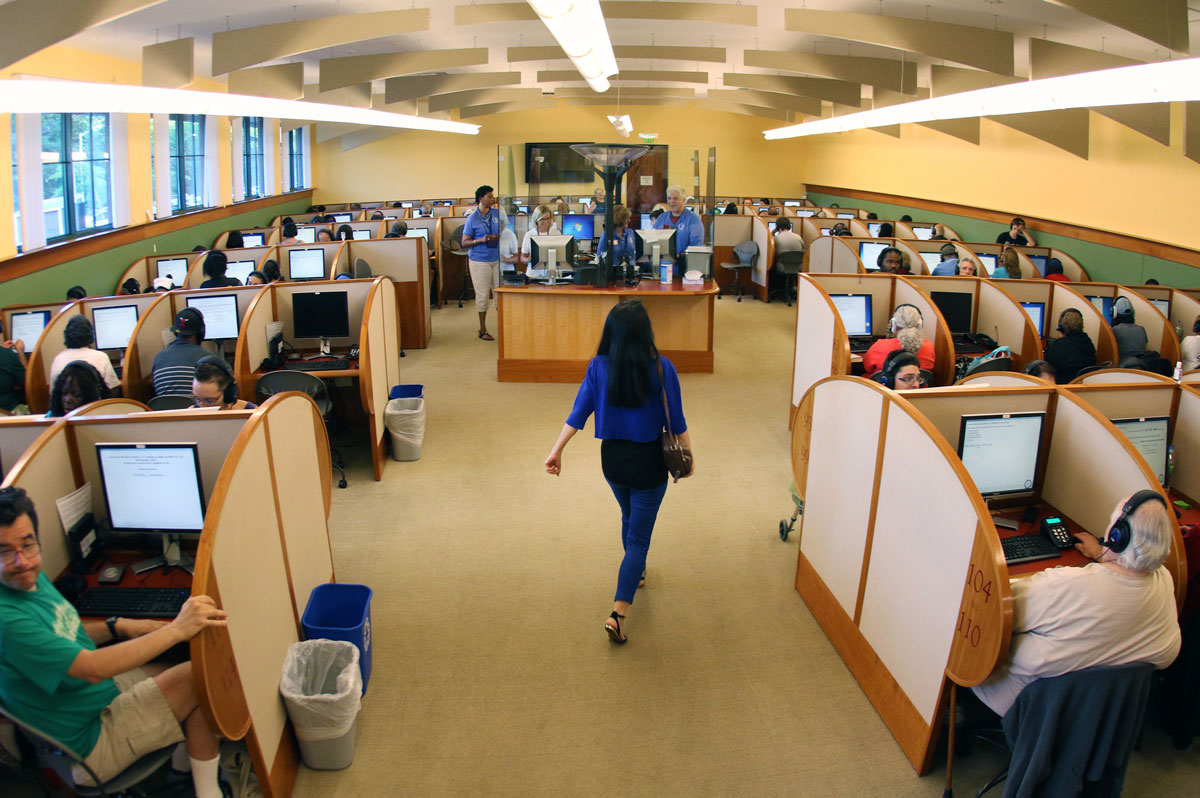
Non-Coding Contributors in Open Source
The tradition of privileging only technical skills triggers imbalance and inequality.

100% Utilization
Since the end of the Second World War, we have come to expect continual growth in computing power and the rapid development of digital technology. This dynam...
”The distinction between programmer and user is reinforced and maintained by a tech industry that benefits from a population rendered computationally passive. If we accept and adopt the role of less agency, we then make it harder for ourselves to come into more agency.”

always-already-programming.md
gist.github.com


