


What users believe they know about a user interface impacts how they use it. Mismatched mental models are common, especially with designs that try something new.
What are Mental Models? — updated 2026
Harness the power of understanding and predicting user behavior with mental models. Simplify systems and enhance decision-making in your designs.

Conceptual Models: The Hidden Structure Behind Your Next Great Interface
Discover the hidden structure behind every great UI. Master how to use conceptual models to design systems that users instantly understand and grow to trust.
Accommodating Both Expert Users and Novice Users in One Interface by Utilizing Multi-layer Interface in Complex Function Products
Rapid development of electronic technology promotes the complex function of a product. Users have to adapt themselves to interface with diverse mental model setting. To improve usability, both resolutions of consistent interface and wizard interface were frequently applied to help novice. However, both of them require as much time for those who are familiar with the system, i.e. expert users. Shneiderman (2000) remarked that Universal Usability requires that software systems accommodate a diverse set of users. Multi-Layer interface might be a solution for complex user interface and satisfy both novice and expert users. The idea of multi-layer interface has been applied to hardware and software interface design. Cases were discussed in which the improved Multi-Layer Interface was analyzed and conclusions made.

How AI Tools Differ from Human Tools
Why the mental models we've built for human interfaces don't work for AI, & how Anthropic's latest guidelines are reshaping tool design for better performance & efficiency.
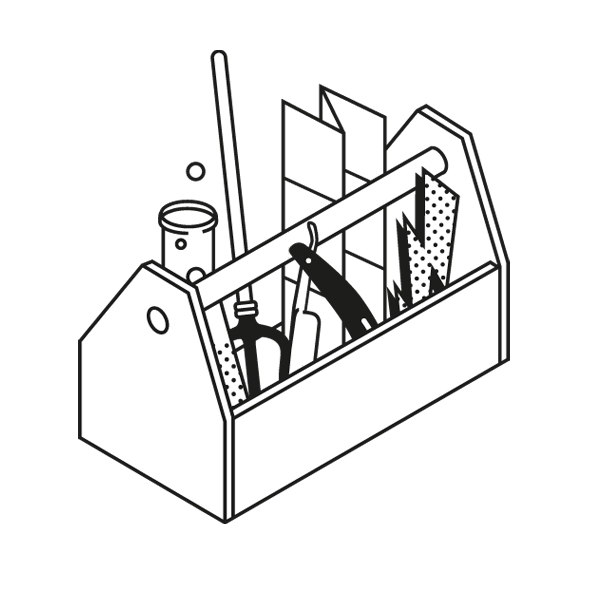
Mental Models: The Best Way to Make Intelligent Decisions (~100 Models Explained)
The smartest people in the world use mental models to make intelligent decisions, avoid stupidity, and increase productivity. Let's take a look at how ...
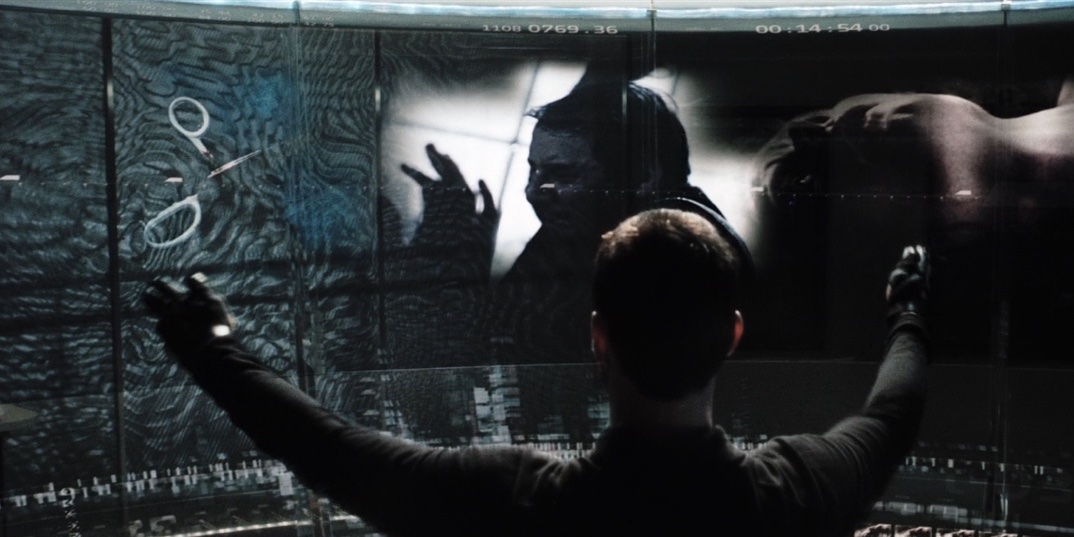
Our interfaces have lost their senses
We programmed them by punching cards, plugging in wires, and flipping switches. Programmers walked among banks of switches and cables, physically choreographing their logic. Being on a computer used to be a full-body experience.
Learning From Terminals to Design the Future of User Interfaces
How we overvalue the wrong technology and novel aspects of interface design at the expense of substantial gains to our productivity.
Webdesign as architecture
An attempt at modelling digital design as a form of psychological architecture, taking the form of a single HTML document.
Design Frictions for Mindful Interactions: The Case for Microboundaries
Design frictions, a term found in popular media articles about user experience design, refer to points of difficulty occurring during interaction with technology. Such articles often argue that these frictions should be removed from interaction flows in order to reduce the risk of user frustration and disengagement. In this paper we argue that, in many scenarios, designing friction into interactions through the introduction of microboundaries, can, in fact, have positive effects. Design frictions can disrupt "mindless" automatic interactions, prompting moments of reflection and more "mindful" interaction. The potential advantages of intentionally introduced frictions are numerous: from reducing the likelihood of errors in data-entry tasks, to supporting health-behaviour change.

Cognitive Load | Laws of UX
The amount of mental resources needed to understand and interact with an interface.

Structural Analogies of User Interfaces with Belidor
10 Usability Heuristics for User Interface Design
Jakob Nielsen's 10 general principles for interaction design. They are called "heuristics" because they are broad rules of thumb and not specific usability guidelines.
When to Use Which User-Experience Research Methods
20 user-research methods: where they fit in the design process, whether they are attitudinal or behavioral, qualitative or quantitative, and their context of use.
Software Design is Knowledge Building
The product of software development is not code but a mental model, a theory: a specific way of explaining the world.

Why Do We Interface?
In this micro book we look at the past, present, and future of interfaces and how they allow us to utilize information in ways that change what it means to be human.
I read Joel Spolske's User Interface Design for Programmers book in 2001. Rewired me forever: When the program model deviates from the user model (me), I am SHOCKED AND HORRIFIED. Been designing to break the law... er, align with the user model ever since. joelonsoftware.com/2001/10/24/user-interface-des…
