


What happens when sprawling online communities fracture into politically homogenous, self-governing communities?
RIP social media. What comes next is messy.
As social media splinters, how can we keep the new online spaces from devolving into toxic pits of despair?

Shifts in U.S. Social Media Use, 2020–2024: Decline, Fragmentation, and Enduring Polarization
The social media ecosystem appears to be in flux. Twitter’s rebranding to X has come to symbolize a broader reorganization of online publics – political reshuffling, user attrition, and uncertainty over the role of legacy platforms. Simultaneously, the shift from text-based, networked feeds toward algorithmically curated, short-form video has accelerated, with TikTok setting the pace for the wider ecosystem [18, 14, 16]. At the same time, everyday communication increasingly migrates from large, open networks to semi-private spaces such as group chats and messaging apps. Commentators describe a digital public sphere in transition: smaller, more fragmented, less dominated by traditional social networking sites, and rise of more broadcast-oriented forms of media – with some even suggesting that we are seeing the beginning of the end of the social media era.
My 2024 thoughts on the state of social media
I see a continued fragmentation of social media as people leave X(Twitter).

Latinsky
Decentralized social media built for community power, culture, and collective freedom.
Decentralized Social Media | The Paper Pilot
The Paper Pilot's digital garden of thoughts on philosophy, politics, and sociology
Shifts in U.S. Social Media Use, 2020–2024: Decline, Fragmentation, and Enduring Polarization
Using nationally representative data from the 2020 and 2024 American National Election Studies (ANES), this paper describes how U.S. social media use has shifted across platforms, demographics, and politics. Overall platform reach declined, driven by growth in the share of Americans — especially the youngest and oldest cohorts — who report using no social media. Visiting and posting activity on Twitter/X and Facebook have fallen by nearly 50% since 2020, with the decline on Twitter/X driven primarily by reduced participation among Democratic users. While Facebook, YouTube, and Twitter/X lost ground, TikTok and Reddit grew modestly, consistent with a more fragmented digital public sphere. Platform audiences aged and became slightly more educated and racially diverse. Politically, most platforms shifted toward Republican users while remaining, on balance, Democratic-leaning. Twitter/X experienced the largest change: among posters, the partisan balance swung over 70 percentage points from Democrats to Republicans. Across platforms, political posting remains closely tied to affective polarization, as the most partisan respondents are also the most active. As casual users disengage while polarized partisans remain vocal, online discourse becomes narrower and more ideologically extreme.
Medsky
Decentralized social media built for community power, culture, and collective freedom.
The Case for Open Sovereignty in a Fragmenting Internet
Once, the Internet promised to dissolve borders. It was humanity’s great experiment in connection — a place where ideas, innovation, and communities could move freely, unburdened by geography or...

Bluesky COO Rose Wang On Building a Better Social Network
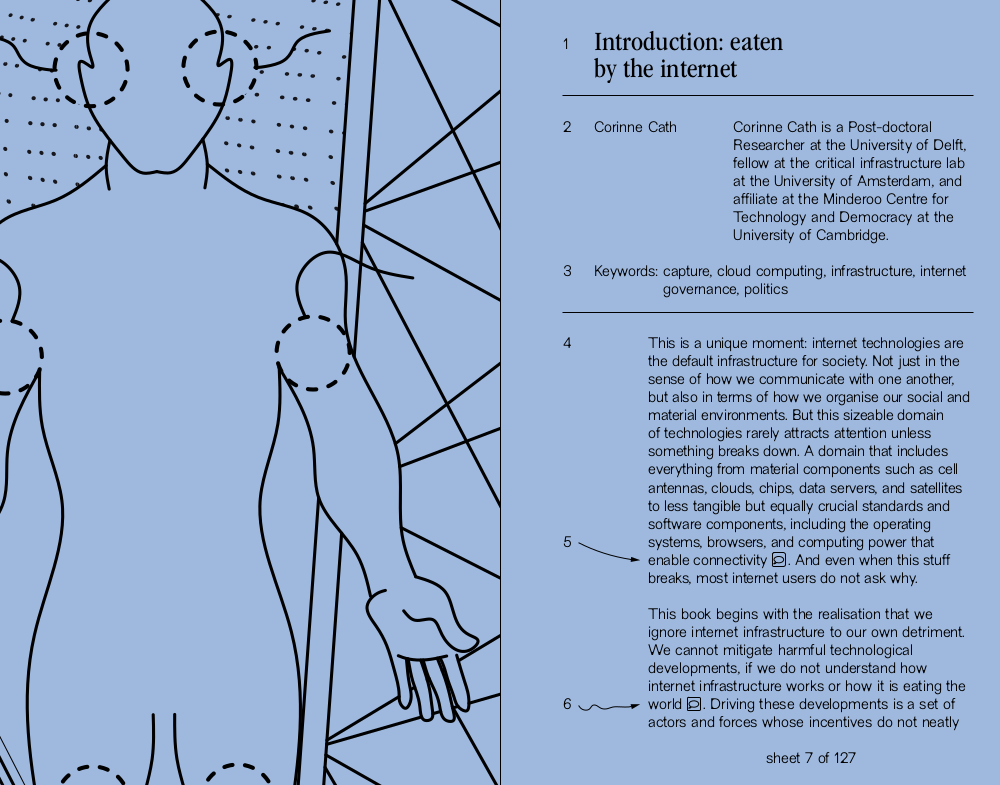
Eaten by the Internet
This book makes internet infrastructure visible as a force of political power, which is transforming the social world, from the bottom up—through fifteen chapters contributed by a global set of researchers, activists, and techies. We are living a unique moment: internet technologies are the default infrastructure for society, not just how we communicate but also how we organise our social life, politics, and economy, all the way down to our material environments, like cities. Our world is eaten by the internet. This means that those who control the internet control the bounds of public speech, economic production, social cohesion, and politics, making its infrastructure a core political terrain in the networked age. The book’s chapters cover a wide set of topics, spanning from the global politics of content moderation by internet infrastructure to the colonialism inherent in the race to plug the moon, from the harms wrought by blockchain companies in rural America to the particularities of online censorship across Asia. The chapters take on thorny topics, discussing power consolidation in the advertisement and cloud industry, the role of internet infrastructure in the war in Ukraine, and tech’s environmental impact—amongst others. In doing so, this book roots contemporary technology debates in the politics of internet infrastructure and urges us to ask how can we ensure our infrastructures sustain us, rather than consume us?
The Weird, Fragmented World of Social Media After Twitter - The Atlan…
archived 7 Aug 2023 02:41:57 UTC

The Weird, Fragmented World of Social Media After Twitter
The common forum that Elon Musk destroyed will never be replaced—and that’s okay.
Governable Stacks against Digital Colonialism
Critics have been converging around the logic of colonialism to describe the Internet economy. If we are serious about the laden language of the colonial, we should be ready to learn from struggles against pre-digital empires and colonial regimes. Although acts of insurrection may attract more attention, one thing leaders and theorists of anticolonial resistance have stressed persistently is the centrality of self-governance in everyday life as both a means and end of their movements. But the dominant platforms for online communities are not well-suited for durable self-governing. Resistance often relies on the same colonial firms it opposes. What would community-governed technologies look like? This paper introduces the concept of “governable stacks”, a framework for self-governing as resistance to digital colonialism.
Towards a Post-Social Media Studies
For two decades, "social media" has been the master lens through which scholars have understood digital communication—an era defined by user-generated content, networked publics, and participatory culture. That era is drawing to a close. This paper argues that three interrelated dynamics are dissolving the social media paradigm: an algorithmic shift from social-graph-based to interest-based recommendation, which is remaking the active "user" into a passive "viewer"; the generative AI revolution, which is replacing user-generated content with synthetic media and decoupling platforms from any dependence on human participation; and an exodus from public platforms toward private, closed spaces. Together, these dynamics are giving rise to three distinct post-social formations: algorithmically governed broadcasting platforms, semi-private spheres and micro-communities, and AI-mediated communication as a new media form in its own right. Understanding this transformation demands a fundamental reorientation of the field—new conceptual tools that move beyond networked publics and participatory culture, new methods suited to synthetic and ephemeral media environments, and renewed attention to the political stakes of communication systems that no longer require human participation.