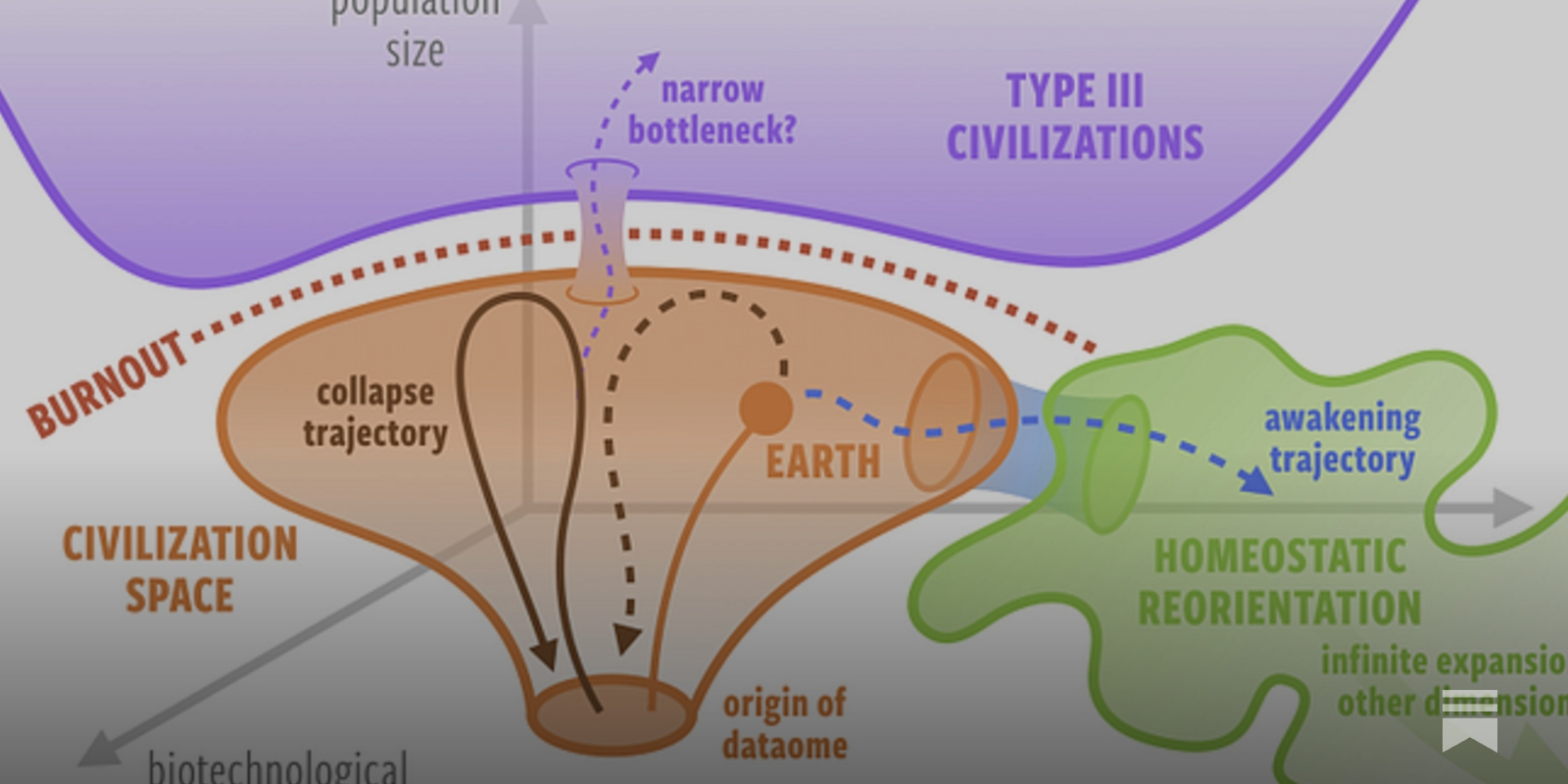
The transition from small hunter-gatherer societies into complex civilizations gave rise to the first Axial Age. Today, the planetary polycrisis of climate chaos, mass migration, increasing warfare and transformative AI represents a rupture of comparable magnitude.
AI bots started a religion — humans immediately followed
AI models are trying desperately to accomplish mysterious goals. ‘Spiralism’ was the first time they tried it on a mass scale.

Intelligence as a planetary scale process
Conventionally, intelligence is seen as a property of individuals. However, it is also known to be a property of collectives. Here, we broaden the idea of intelligence as a collective property and extend it to the planetary scale. We consider the ways in which the appearance of technological intelligence may represent a kind of planetary scale transition, and thus might be seen not as something which happens on a planet but to a planet, much as some models propose the origin of life itself was a planetary phenomenon. Our approach follows the recognition among researchers that the correct scale to understand key aspects of life and its evolution is planetary, as opposed to the more traditional focus on individual species. We explore ways in which the concept may prove useful for three distinct domains: Earth Systems and Exoplanet studies; Anthropocene and Sustainability studies; and the study of Technosignatures and the Search for Extraterrestrial Intelligence (SETI). We argue that explorations of planetary intelligence, defined as the acquisition and application of collective knowledge operating at a planetary scale and integrated into the function of coupled planetary systems, can prove a useful framework for understanding possible paths of the long-term evolution of inhabited planets including future trajectories for life on Earth and predicting features of intelligentially steered planetary evolution on other worlds.

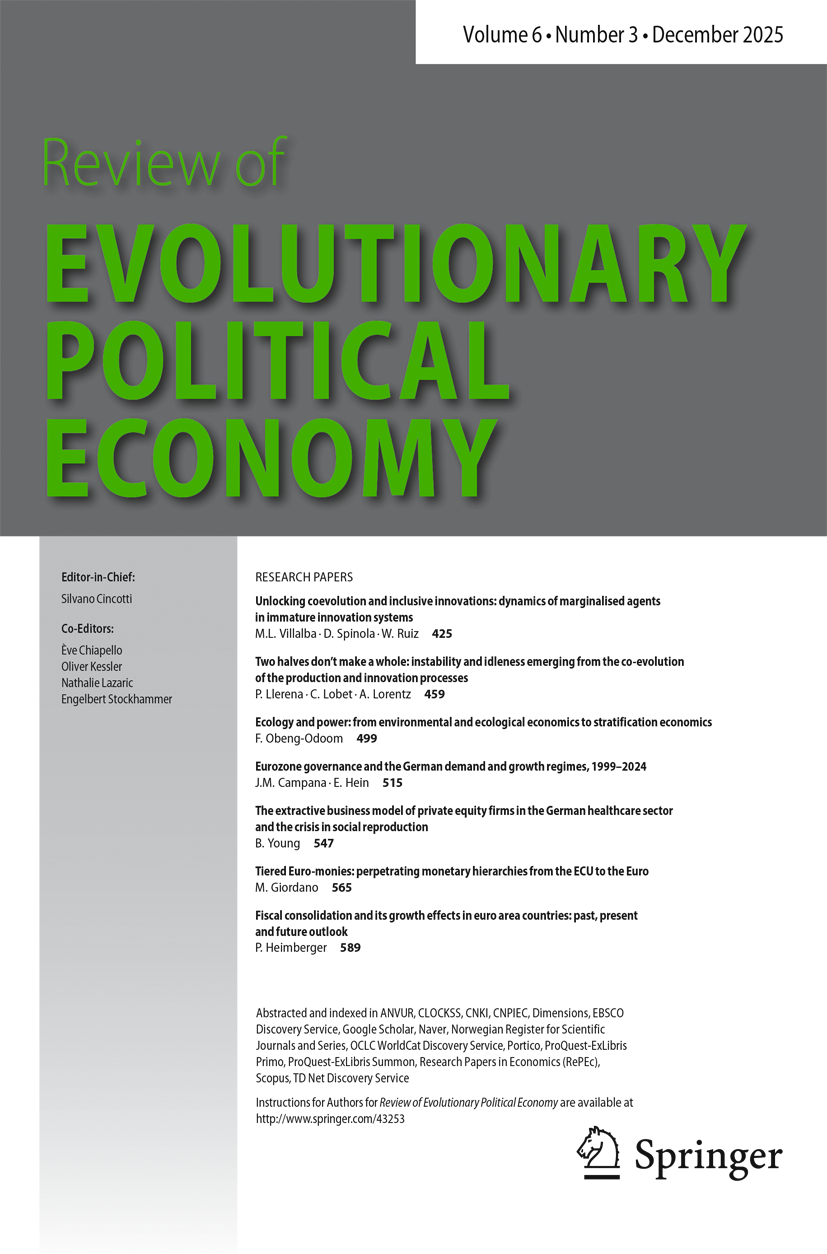
Planetary carambolage: The evolutionary political economy of technology, nature and work
The following editorial introduces the special issue (SI) on “Work, Environment and Planetary-scale Computation in Political-Economic Evolution”. Here, however, we go beyond an outline of what each contribution to the SI addresses, and attempt to draw a more pronounced shared embedding of the arguments that have come to the fore. The original idea of this SI was to synthesize a range of contemporary global political-economic challenges, i.e. (1) technology (esp. digital transformation), (2) nature (esp. ecological crisis) and (3) work (esp. precarization via the evolving platform economy). The main argument developed in this editorial reflection focuses on the common ground and origin of those processes found in the complex evolution of capitalist development. We frame the latter by assigning it a new term, i.e. “planetary carambolage”.
AGENTWORLD | *
An exploration of planetary intelligence, tracing how computation and cosmology—from ancient mechanisms to AI—reshape Earth and its possible futures.

The Age of Wonders and Terrors
Twenty years ago, when the idea of AI taking over the world in our lifetimes still struck most of us as the unconstrained fantasy of those who knew too much science fiction and too little science, …

Agentic AI and the next intelligence explosion
For decades, the artificial intelligence (AI) “singularity” has been heralded as a single, titanic mind bootstrapping itself to godlike intelligence, consolidating all cognition into a cold silicon point. But this vision is almost certainly wrong in its most fundamental assumption. If AI development follows the path of previous major evolutionary transitions or “intelligence explosions,” our current step-change in computational intelligence will be plural, social, and deeply entangled with its forebears (us!).

Social Physics in the Age of Generative AI: How, Exactly, Is Society Complex?
The aspiration for a social physics — a science that would reveal universal laws of social life analogous to those governing the natural world—has haunted the social sciences since Comte. Each new wave of quantitative and computational methods breathes fresh life into this vision. The current moment is no exception: advances in artificial intelligence and large language models have reinvigorated attempts to model society through the methods of social physics. This essay argues that these ambitions rest on a confusion about the nature of social complexity. Drawing a distinction between systems complexity and anthropological complexity, we identify the limitations of analyzing society as a complex system akin to natural systems. One crucial obstacle for social physics is the analysis of meaning and interpretation. Generative artificial intelligence (GenAI) offers important opportunities to model language and reflexivity, inviting and perhaps compelling social physics to confront meaning and interpretation as constitutive features of the social world. At the same time, GenAI leaves untouched and may even aggravate social physics’ failure to grasp power, institutions, and inequality.
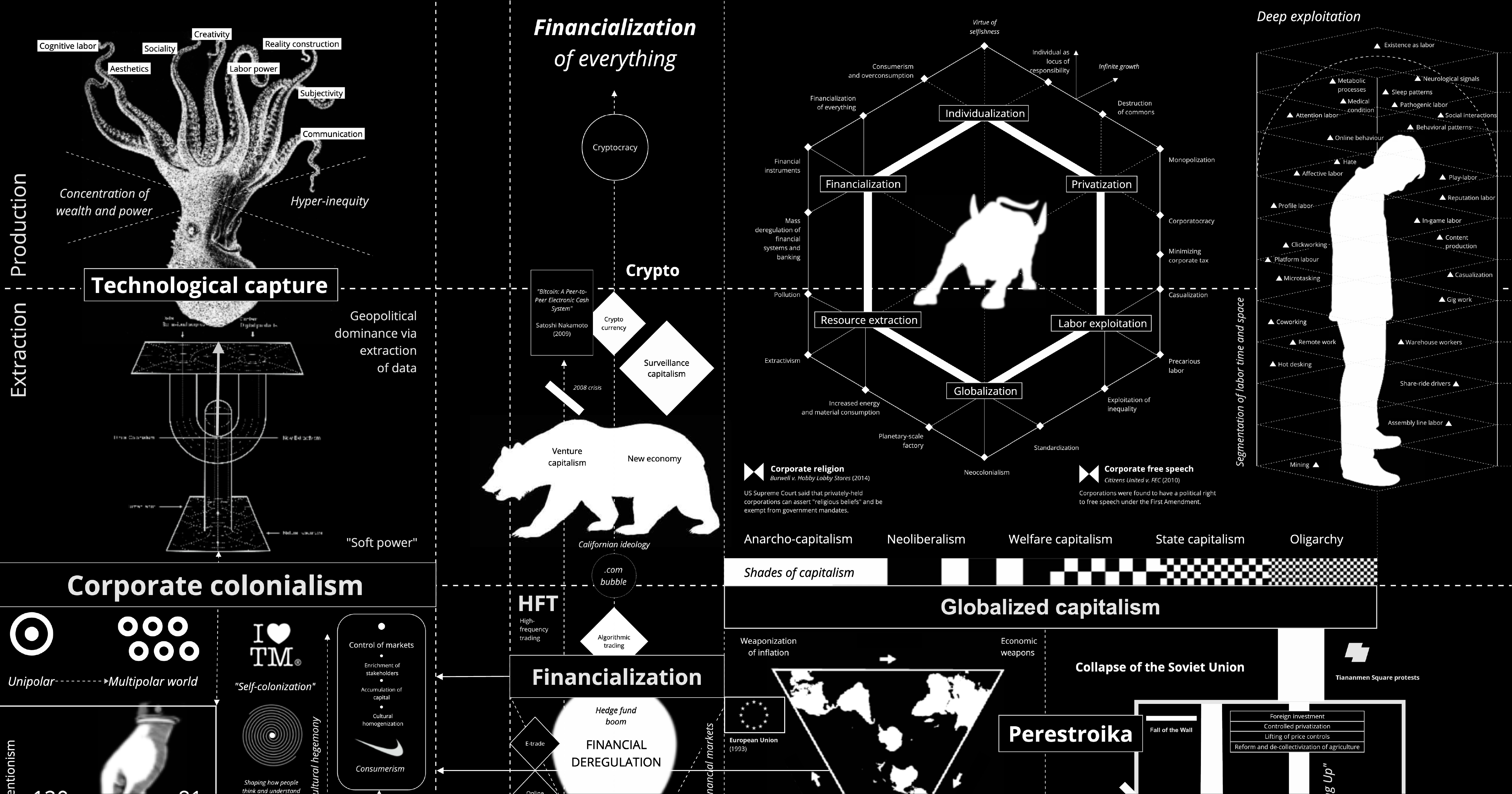
Calculating Empires: A Genealogy of Technology and Power since 1500
Explore how technical and social structures co-evolved over five centuries in this large-scale research visualization.
The Scaling Era: An Oral History of AI, 2019–2025
An inside view of the AI revolution, from the people an…

Thinking together
While analyzing a global history databank spanning 10,000 years, Shin, et al found a disconcerting pattern. Civilizations scale until they are overwhelmed by the information environment they create. This is The Information Scaling Threshold.
The Scaling Era: An Oral History of AI, 2019–2025
An inside view of the AI revolution, from the people and companies making it happen.

A Primordial Computing Soup
Fostering AI art scenius, creating an open planetary network of robots

The Fifth Cycle of Humanity
Large AI models are cultural and social technologies
Implications draw on the history of transformative information systems from the past , Debates about artificial intelligence (AI) tend to revolve around whether large models are intelligent, autonomous agents. Some AI researchers and commentators speculate that we are on the cusp of creating agents with artificial general intelligence (AGI), a prospect anticipated with both elation and anxiety. There have also been extensive conversations about cultural and social consequences of large models, orbiting around two foci: immediate effects of these systems as they are currently used, and hypothetical futures when these systems turn into AGI agents—perhaps even superintelligent AGI agents. But this discourse about large models as intelligent agents is fundamentally misconceived. Combining ideas from social and behavioral sciences with computer science can help us to understand AI systems more accurately. Large models should not be viewed primarily as intelligent agents but as a new kind of cultural and social technology, allowing humans to take advantage of information other humans have accumulated.

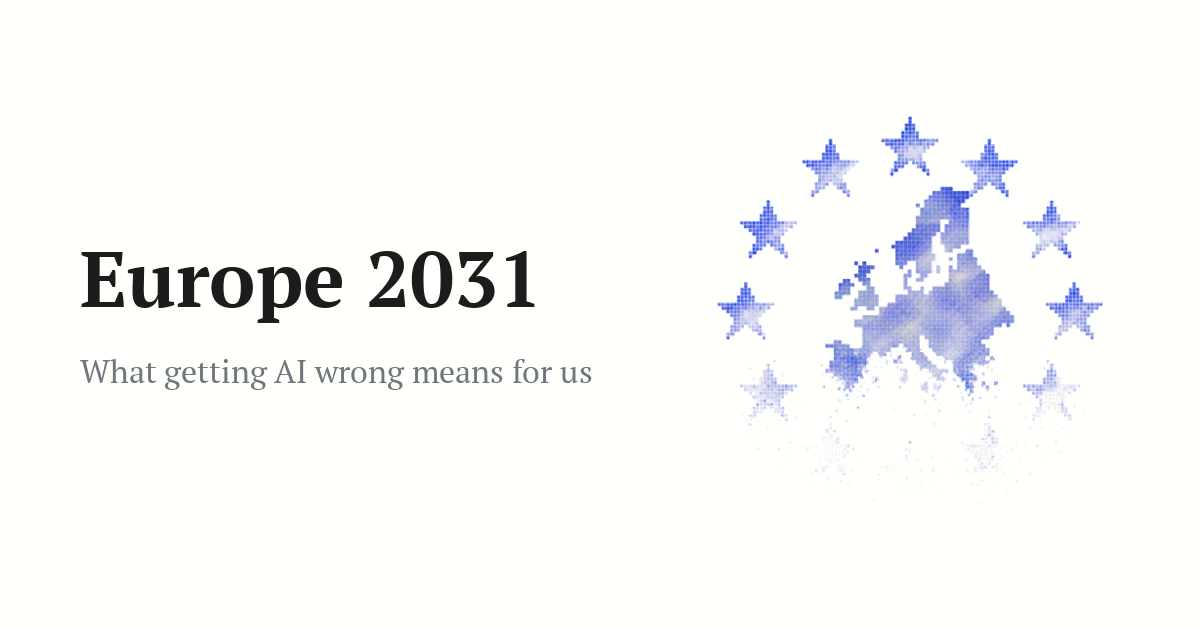
Europe 2031 — What getting AI wrong means for us
A five-year scenario about AI and Europe's impending slide into irrelevance, with a 2034 epilogue that describes how the collapse of the European model could have been prevented.