A long-forgotten German economist argued that society and the economy would be better off if money was a perishable good. Was he an anarchist crank or the prophet of a better world?
Q&A: Robert Reich on the ‘Vicious Cycle of Wealth and Power’ He Says Threatens Capitalism
Former Labor Secretary Robert Reich's new book argues "the increasing concentration of political power in a corporate and financial elite " helps drive inequality.

What is Money, Anyway?
Editor’s Note: This topic is now comprehensively covered in my book, Broken Money. Money is a surprisingly complex subject. People spend their lives seeking money, and in some ways it seems so straightforward, and yet what humanity has defined as money has changed significantly over the centuries. How could something so simple and so universal, […]

Economic Possibilities for our Grandchildren- John Maynard Keynes
We are suffering just now from a bad attack of economic pessimism. It is common to hear people say that the epoch of enormous economic progress which characterised the nineteenth century is over; that the rapid improvement in the standard of life is now going to slow down—at any rate in Great Britain; that a decline in prosperity is more likely than an improvement in the decade which lies ahead of us.
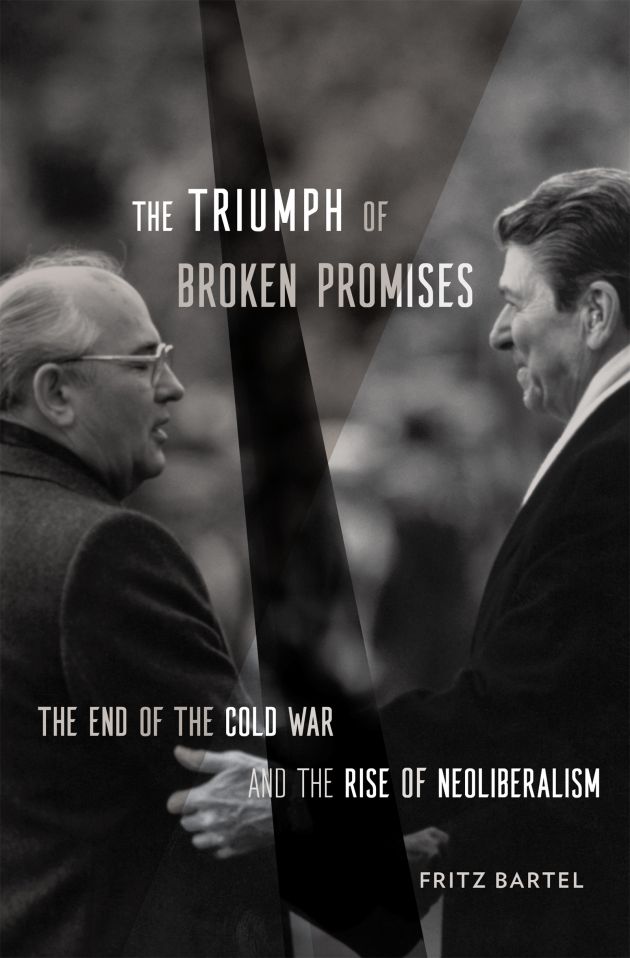
The Triumph of Broken Promises — Harvard University Press
A powerful case that the economic shocks of the 1970s hastened both the end of the Cold War and the rise of neoliberalism by forcing governments to impose austerity on their own people.Why did the Cold War come to a peaceful end? And why did neoliberal economics sweep across the world in the late twentieth century? In this pathbreaking study, Fritz Bartel argues that the answer to these questions is one and the same. The Cold War began as a competition between capitalist and communist governments to expand their social contracts as they raced to deliver their people a better life. But the economic shocks of the 1970s made promises of better living untenable on both sides of the Iron Curtain. Energy and financial markets placed immense pressure on governments to discipline their social contracts. Rather than make promises, political leaders were forced to break them.In a sweeping narrative, The Triumph of Broken Promises tells the story of how the pressure to break promises spurred the end of the Cold War. In the West, neoliberalism provided Western leaders like Ronald Reagan and Margaret Thatcher with the political and ideological tools to shut down industries, impose austerity, and favor the interests of capital over labor. But in Eastern Europe, revolutionaries like Lech Walesa in Poland resisted any attempt at imposing market discipline. Mikhail Gorbachev tried in vain to reform the Soviet system, but the necessary changes ultimately presented too great a challenge.Faced with imposing economic discipline antithetical to communist ideals, Soviet-style governments found their legitimacy irreparably damaged. But in the West, politicians could promote austerity as an antidote to the excesses of ideological opponents, setting the stage for the rise of the neoliberal global economy.
Technofeudalism: What Killed Capitalism — Livtet
In his boldest and most far-reaching book yet, world-famous economist Yanis Varoufakis argues that capitalism is dead and a new economic era has begun. Insane sums of money that were supposed to re-fl

Robert Reich: The Reagan revolution is killing America's middle class
The former secretary of labor explains why the economy will never benefit from the rich having more money

Milton Friedman
Milton Friedman was an American economist and statistician who received the 1976 Nobel Memorial Prize in Economic Sciences for his research on consumption analysis, monetary history and theory and the complexity of stabilization policy. With George Stigler, Friedman was among the intellectual leaders of the Chicago school of economics, a neoclassical school of economic thought associated with the faculty at the University of Chicago that rejected Keynesianism in favor of monetarism before shifting their focus to new classical macroeconomics in the mid-1970s. Several students, young professors and academics who were recruited or mentored by Friedman at Chicago went on to become leading economists, including Nobel laureates Gary Becker (1992), Robert Fogel (1993), and Robert Lucas Jr. (1995).

Why Germans pay cash for almost everything
As banks, technology giants and would-be disruptors such as Square scrummage over the payment system of the future, German consumers seem perfectly happy with the payment system of the past. Germany remains one of the most cash-intensive advanced economies on earth.

Has the time come for a quantum revolution in economics? | Aeon Essays
Money and brains are both quantum phenomena – so it’s not surprising that economics is overdue for a quantum revolution

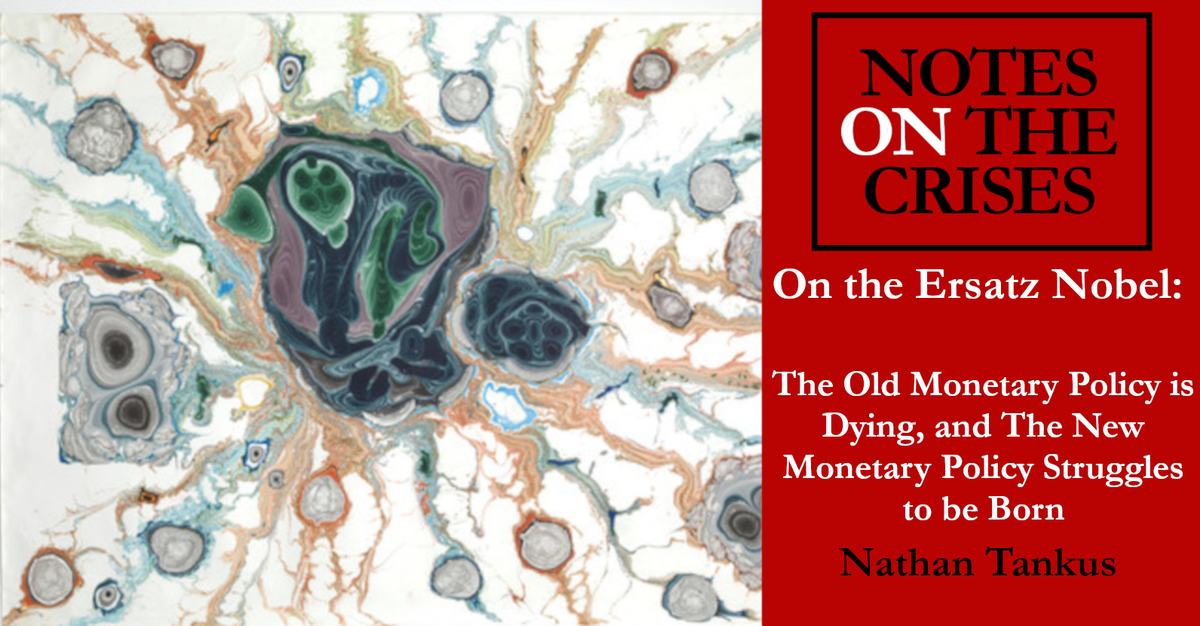
On the Ersatz Nobel: The Old Monetary Policy is Dying, and The New Monetary Policy Struggles to be Born
Yesterday the Nobel Prize fake Nobel Prize the Sveriges Riksbank Prize in Economic Sciences in Memory of Alfred Nobel was again awarded. For the unique and bizarre history of this prize, see the piece I wrote five years ago pointing out that this prize was a form of “central bank
Marc Mulholland on Twitter / X
We just might be living in an era which will put Ernest Mandel's third proof of the Marxist 'labour theory of value' -- 'proof by reduction to the absurd' -- to a real-world test. pic.twitter.com/er5qxdtBdr— Marc Mulholland (@katheder) November 18, 2026

Le capitalisme de la finitude : pessimisme et bellicisme
Traduction française de « Capitalism of finitude: pessimism and bellicosity. Review of Arnaud Orain’s "Le Monde Confisqué" » de Branko Milanovic

Three views on economic power
We investigate the concept of economic power in the three main paradigms of economic thinking in the 20th century: neoclassical, marxist and institutionalist. We propose a reconstruction, based on a new taxonomy, of the various forms of power conceptualized by each of them. In particular, we claim that the neoclassical paradigm contains a consistent although often implicit theory of power. We then show that many controversies between these paradigms were debates on power and that some shifts in mainstream economics in the 1970s and 1980s are a reaction to the criticisms leveled against the neoclassical conceptualization of power.
What if We’re Thinking About Inflation All Wrong?
Isabella Weber’s heterodox ideas about government price controls are transforming policy in the United States and across Europe.

A Theory of the Consumption Function, with and without Liquidity Constraints
This paper argues that the modern stochastic consumption model, in which impatient consumers face uninsurable labor income risk, matches Milton Friedman's (1957) original description of the Permanent Income Hypothesis much better than the perfect foresight or certainty equivalent models did. The model can explain the high marginal propensity to consume, the high discount rate on future income, and the important role for precautionary behavior that were all part of Friedman's original framework. The paper also explains the relationship of these questions to the Euler equation literature, and argues that the effects of precautionary saving and liquidity constraints are often virtually indistinguishable.