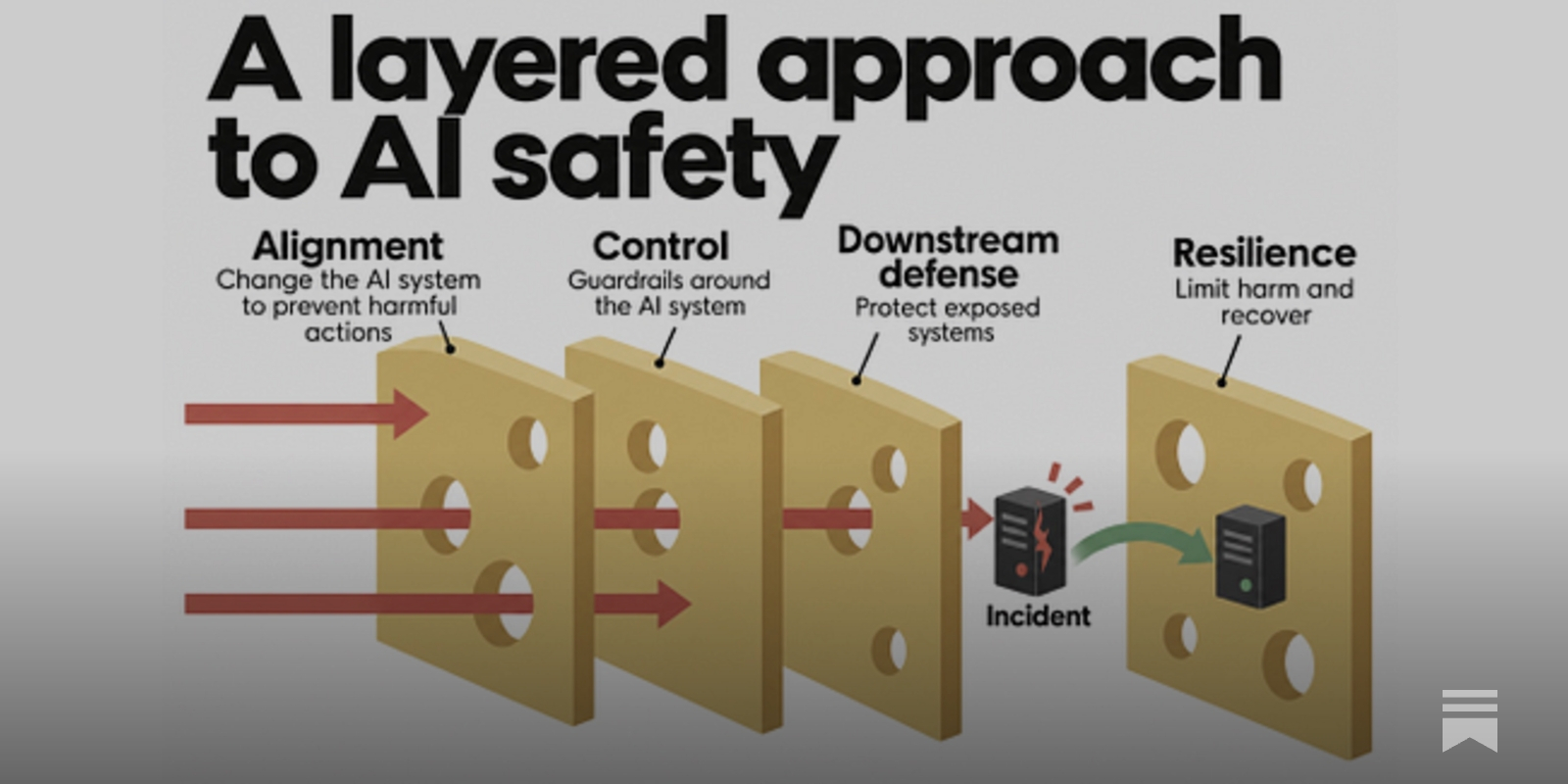
A middle ground between the cybersecurity and AI safety communities
Safety isn’t safety without a social model (or: dispelling the myth of per se technical safety) — AI Alignment Forum
As an AI researcher who wants to do technical work that helps humanity, there is a strong drive to find a research area that is definitely helpful so…

Rethinking security for the age of AI - The Official Microsoft Blog
Editor’s note: Updates with additional details on the model’s crash score. Why security needs a new cyber stack — Introducing Project Perception The physics of cybersecurity are changing. Autonomous systems can now reason, adapt and operate continuously. At the same time, the cost of offense is falling, while the volume, velocity and complexity of what...

Top AI Security Incidents of 2025 Revealed | Adversa AI
Discover how AI systems are being hacked in the wild — from prompt injection to agent abuse — with real breaches, lessons, and defenses in Adversa AI’s 2025 report.

Cybersecurity Looks Like Proof of Work Now
The UK's AI Safety Institute recently published Our evaluation of Claude Mythos Preview’s cyber capabilities, their own independent analysis of Claude Mythos which backs up Anthropic's claims that it is …
Cybersecurity Looks Like Proof of Work Now
The UK's AI Safety Institute recently published Our evaluation of Claude Mythos Preview’s cyber capabilities, their own independent analysis of Claude Mythos which backs up Anthropic's claims that it is …
As the Federal Government Rushes Toward AI, Here Are Three Cautionary Tales — ProPublica
We’ve been reporting on cybersecurity for years. As President Donald Trump and his Cabinet say artificial intelligence will transform the nation, the messaging isn’t new. It follows a familiar pattern.

Artificial Intelligence Safety and Security License Requirements
Artificial Intelligence Safety and Security License Requirements Artificial Intelligence (AI) is now broadly capable, which can produce both benefits and dangers. AI will hasten the design and proliferation of bioweapons, cyberweapons, nuclear weapons, progressively more general intelligence,...

Safety Co-Option and Compromised National Security: The Self-Fulfilling Prophecy of Weakened AI Risk Thresholds
Risk thresholds provide a measure of the level of risk exposure that a society or individual is willing to withstand, ultimately shaping how we determine the safety of technological systems. Against the backdrop of the Cold War, the first risk analyses, such as those devised for nuclear systems, cemented societally accepted risk thresholds against which safety-critical and defense systems are now evaluated. But today, the appropriate risk tolerances for AI systems have yet to be agreed on by global governing efforts, despite the need for democratic deliberation regarding the acceptable levels of harm to human life. Absent such AI risk thresholds, AI technologists-primarily industry labs, as well as "AI safety" focused organizations-have instead advocated for risk tolerances skewed by a purported AI arms race and speculative "existential" risks, taking over the arbitration of risk determinations with life-or-death consequences, subverting democratic processes. In this paper, we demonstrate how such approaches have allowed AI technologists to engage in "safety revisionism," substituting traditional safety methods and terminology with ill-defined alternatives that vie for the accelerated adoption of military AI uses at the cost of lowered safety and security thresholds. We explore how the current trajectory for AI risk determination and evaluation for foundation model use within national security is poised for a race to the bottom, to the detriment of the US's national security interests. Safety-critical and defense systems must comply with assurance frameworks that are aligned with established risk thresholds, and foundation models are no exception. As such, development of evaluation frameworks for AI-based military systems must preserve the safety and security of US critical and defense infrastructure, and remain in alignment with international humanitarian law.

AI Cybersecurity After Mythos: The Jagged Frontier
Why the moat is the system, not the model

The AI shift in cyber risk: why leaders must act now
Five Eyes cyber security agencies urge organisations to act on rapidly transforming cyber risk.

Safety cases at AISI | AISI Work
As a complement to our empirical evaluations of frontier AI models, AISI is planning a series of collaborations and research projects sketching safety cases for more advanced models than exist today, focusing on risks from loss of control and autonomy. By a safety case, we mean a structured argument that an AI system is safe within a particular training or deployment context.
People know AI is risky. They just don’t know what to do about it. | TrendLife Blog
New international research from TrendLife reveals a wide gap between AI adoption and awareness of AI-powered threats.

AI CVE Slop: The Crisis Drowning Open Source Security
The proliferation of AI-generated vulnerability reports — commonly termed “AI slop” — has emerged as one of the most significant…
Misuse of AI is brands’ top reputational threat, new survey says
The findings come after warnings from tech leaders that AI placed in the wrong hands could trigger larger threats such as nuclear war or bioweaponry destruction
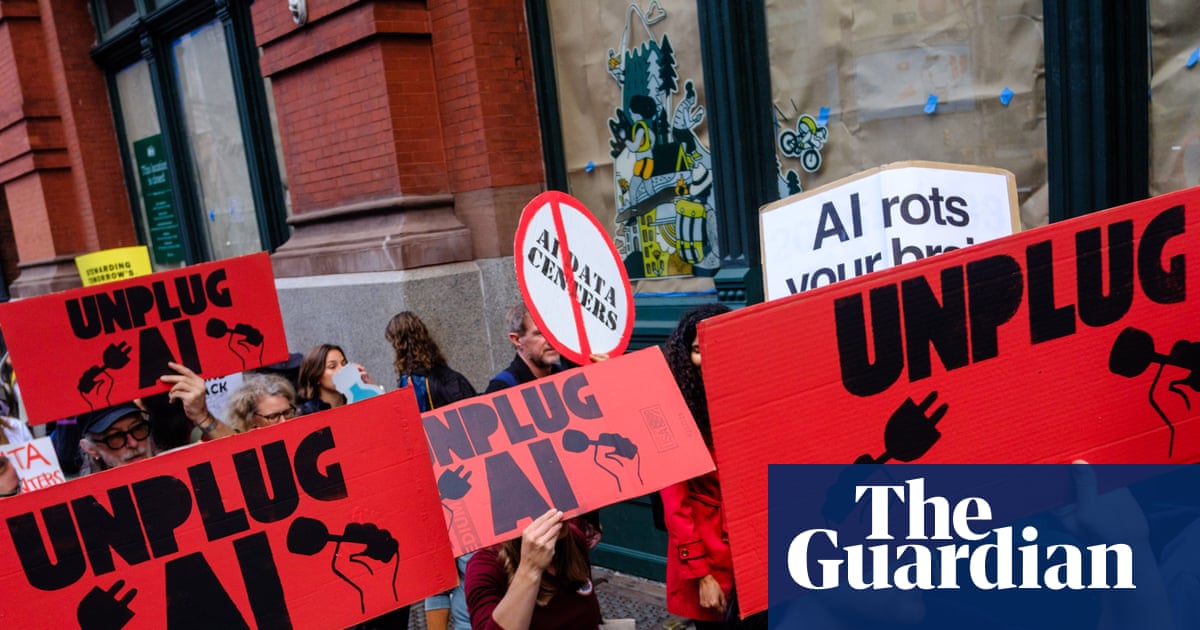
AI-powered hacking has exploded into industrial-scale threat, Google says
Criminal groups and state-linked actors appear to be using commercial models to refine and scale up attacks