

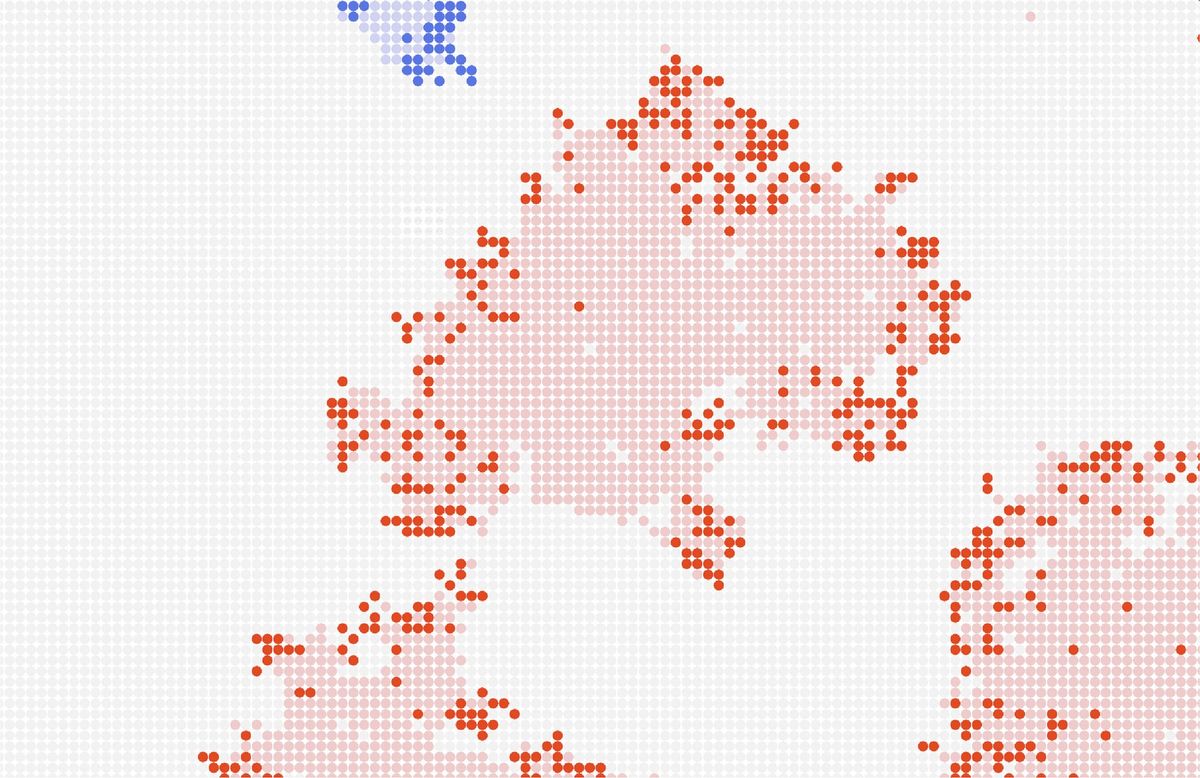
The spread of misinformation has become an epidemic, but information hygiene can help.
How to Responsibly Report on Hacks and Disinformation
The run-up to the 2016 U.S. presidential election illustrated how vulnerable our most venerated journalistic outlets are to a new kind of information warfare. Reporters are a targeted adversary of foreign and domestic actors who want to harm our democracy. And to cope with this threat, especially in an election year, news organizations need to prepare for another wave of false, misleading, and hacked information. Often, the information will be newsworthy. Expecting reporters to refrain from covering news goes against core principles of American journalism and the practical business drivers that shape the intensely competitive media marketplace. In these cases, the question is not whether to report but how to do so most responsibly. Our goal is to give journalists actionable guidance.
Capturing our Attention
What are the harms of misinformation? It’s widely believed that it causes false belief, including false beliefs in quite bizarre claims. I argue that this threat is greatly exaggerated: while plaus...

We're getting the social media crisis wrong
The bigger problem isn't disinformation. It's degraded democratic publics

We're getting the social media crisis wrong
The bigger problem isn't disinformation. It's degraded democratic publics
Fake news spreads like an epidemic. Here’s how to stop it.
Researchers study fake news the same way they study the spread of disease. When misinformation “goes viral”, it is not just a metaphor. It is what’s actually happening. via @straits_times str.sg/viz-misinformation
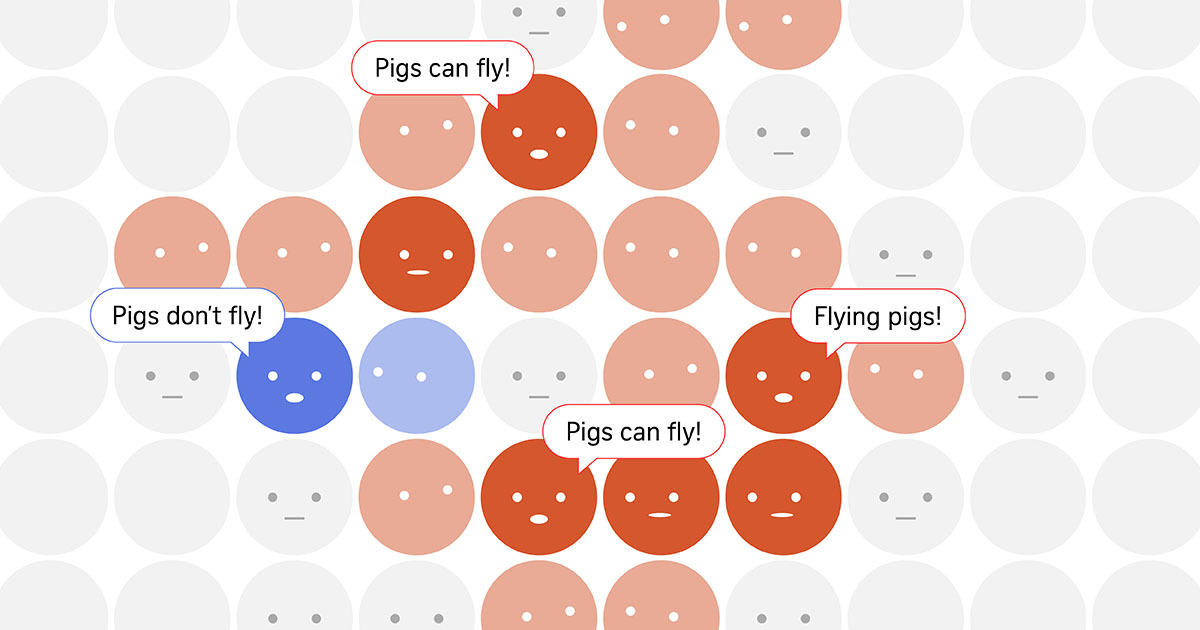
Fakebook: Using Data Science to Spot Fake News
Verification Handbook | DataJournalism.com
This book equips journalists with the knowledge to investigate on disinformation and media manipulation.
Fakebook: Using Data Science to Spot Fake News
As fake news permeates throughout social media outlets (like Facebook), it's more important than ever to identify what is fact vs. fiction. This is especially true in the age of COVID where the spread of misinformation can impact the spread of the virus. Data scientists are emerging on the front lines of this fight, using programs to help them identify fake news sources. Led by Dr. Teon Brooks, Josh Modeste, and Steven Azeka from the Gotham Data Clinic (fka CiELabs), this workshop will explore the “life cycle” of scientific research and how scientists come to consensus about how we interpret data. We’ll examine what to look for in credible news sources, and the consequences of leaning on not-so-trusty pseudoscientific sources. Then you’ll put that knowledge to work by developing a rubric for identifying fake news. No experience necessary! https://www.eventbrite.com/e/fakebook-using-data-science-to-spot-fake-news-tickets-137833492687
interfluidity » Consensus not censorship
We’ve become obsessed over the past few years with the problem of misinformation. And for good reason. “Flood the zone with shit” is now standard operating procedure for a variety of interests and factions. Groups who pretend to be above that kind of thing let confirmation bias do the same work, elevating conjectures they find convenient to believe far beyond the evidentiary basis for believing them, and transmuting concurrence among prestigious groups whose biases are aligned into “authority” to which they demand deferrence. Casual information consumers become divided into two camps, the “do your own research” types who imagine, mistakenly, that they are capable of seeing through all this (and so succumb to their own confirmation bias), and those who more accurately understand that they cannot reliably distinguish truth from bullshit (and so opt out of democratic deliberation with a shrug, other than perhaps to vote for the candidates whose political party they distrust less).
Facts and Myths about Misperceptions
Misperceptions threaten to warp mass opinion and public policy on controversial issues in politics, science, and health. What explains the prevalence and persistence of these false and unsupported beliefs, which seem to be genuinely held by many people? Though limits on cognitive resources and attention play an important role, many of the most destructive misperceptions arise in domains where individuals have weak incentives to hold accurate beliefs and strong directional motivations to endorse beliefs that are consistent with a group identity such as partisanship. These tendencies are often exploited by elites who frequently create and amplify misperceptions to influence elections and public policy. Though evidence is lacking for claims of a “post-truth” era, changes in the speed with which false information travels and the extent to which it can find receptive audiences require new approaches to counter misinformation. Reducing the propagation and influence of false claims will require further efforts to inoculate people in advance of exposure (for example, media literacy), debunk false claims that are already salient or widespread (for example, fact-checking), reduce the prevalence of low-quality information (for example, changing social media algorithms), and discourage elites from promoting false information (for example, strengthening reputational sanctions).
Research, Attention, and Manipulation
Questionable articles can quietly move into Wikipedia and news outlets without notice.
Disinformation and grievance narratives
Synthese - Disinformation is often defined as misleading content intended to instill false beliefs. But this definition is too narrow. We need to focus instead on its broader epistemic effects....

Google Researchers Say AI Now Leading Disinformation Vector (and Are Severely Undercounting the Problem)
It’s much easier to produce AI-generated disinformation than it is to fact check it.

Election Disinformation in Different Languages is a Big Problem in the U.S.
And it’s driving a wedge between voters in non-English communities Mis- and disinformation about elections predate the endless scroll of modern social media services. [1] Yet easy access to online information channels and amplification tools enable false narratives to spread at a massive scale. When false narratives are combined with data voids and unique cultural […]
Value and vulnerability: a framework for understanding the complexity of misinformation use
Why does misinformation influence some and not others? Vulnerability is often mischaracterized as personal weakness or deficiency, or as susceptibility to “infection” or “pollution”—dehumanizing descriptions that highlight supposed shortcomings of media consumers. We propose a broader perspective that focuses on the value of misinformation to persons, groups, and platforms that adopt or share it. The Vulnerability and Value (VV) framework conceptualizes vulnerability as arising from interconnected scales and systems of valuation. Using a complex adaptive systems framing, we describe how misinformation can generate value for individuals, groups, and platforms. When misinformation spreads successfully, it often does so because it serves purposes that extend beyond veracity. Its spread indicates something significant is at stake for those who believe or facilitate it. A key contribution of the VV framework is to formalize the tradeoff individuals face: whether to question and evaluate misinformation or to accept and share it.
Elena Rossini on GoToSocial ⁂ (@elena@aseachange.com)
[3 media attachments] Dear friends, Please gather around for a long post about #WSocial and how they are responding to critiques. I have noticed a trend: W Social leaders and staunch supporters are describing any critical posts about the company as "targeted disinformation." Its CEO said they will soon have a technical solution in place for this. Oh?!? 🔗: https://mu.social/profile/anna.wsocial.eu/post/3mtqufy6g4s2r I suppose the "targeted disinformation" claims are about recent posts by the likes of me and @pallenberg about troubling hate speech that is allowed on W Social. Claims backed by hard evidence, in the form of screenshots and video captures. (I am increasingly doing screen recordings of problematic posts and interactions by W Social people because they have a tendency to delete evidence - like an infamous comment on a video by the Instutute for Remigration). ⬇️ ⬇️ ⬇️ Discrediting sources, renaming evidence as "disinformation" and creating a victim narrative has a long, storied history. ⬆️ ⬆️ ⬆️ But I'm digressing. I speak up about W Social because: - Mainstream media runs PR fluff about them; - Horrid hate speech on the platform is completely unmoderated. W Social is currently showing the limits of free speech absolutism. Its CEO wrote: "We don’t need W to become another echo chamber." Reminds you of something? Atmosphere user @echna.bsky.social astutely remarked that "W Social is on an X speedrun, without ever having been like Twitter." 🔗: https://mu.social/profile/echna.bsky.social/post/3mtqlknzork2t Bluesky, #Blacksky, and #Northsky have mechanisms in place to report hate speech - and I am super thankful for that. As of today, I cannot report to W Social posts by their users that contain hate speech. The W Social moderation list's only purpose is to make a distinction between verified users and bots. Compare it with Blacksky's moderation list and be amazed (see screenshots). What's the big deal about the lack of content moder…
