


With Congress increasingly polarized, there are growing calls to replace the winner-take-all approach for House elections with a system that advocates say could better reflect the country's diversity.
Proportional Representation Would Fix That
We can change the structure of elections in America to make them more free, more democratic, and more fair to every voter.
Proportional Representation Can Reduce the Impact of Gerrymandering
Implementing multimember districts is one possible response to partisan gerrymandering.
Proportional representation & competitiveness
How a more proportional electoral system would increase political competition.
Proportional Representation Could Reduce the Risk of Political Violence in the U.S.
There is no single cause of political violence in democracies. But one critical source is often overlooked: electoral system design.
PR Library: How Proportional Representation Would Finally Solve Our Redistricting and Gerrymandering Problems - FairVote
By Douglas J. AmyDepartment of PoliticsMount Holyoke College This piece is part of the Proportional Representation Library. (This piece is...

Reimagining American Elections to Combat Gerrymandering
Read the latest by Democracy Docket.

More Housing is Possible: a National Town Hall · Burhan for State Senate
Join Vice Mayor Burhan Azeem and the people behind the Montana Miracle, California’s SB79, and the ROAD to Housing Act to discuss recent wins and what comes next for the housing movement. Speakers will dig into the policy that's moving the needle, the campaigns and organizing that got us here, and how local leadership can turn big ideas into more homes. Expect sharp takes, lively panels, and the collective brainpower of the country's most effective housing advocates in one (virtual) room.

Disrupting Democracy | TechCrunch
You have to grudgingly admire the black-hat political hackers who have pwned the American electoral system. First, entrench a two-party system; second, gerrymander districts into tortuous shapes; third, cultivate an electorate so polarized that no matter how much voters dislike their incumbent, they hate the alternative worse; fourth, profit! It's elegant, horrifying brilliance.

What Calling Congress Achieves
It’s said to be the most effective way to petition the government, but does it really make a difference?

One Nation is soaring in polls. Winning power is much harder.
The nationalist party is riding high, but will struggle to convert its poll leads into parliament seats
What If “Affordability” Can’t Be Fixed?
What if the politics of affordability are less like the politics of health care and more like the politics of crime?

Voters Handed Congress a Mandate to Confront Corporate Power and Technofascism
Courtney C. Radsch asks, will a Democratic majority in Congress confront concentrated corporate power, or simply oversee its continued expansion?
An Examination of Ranked Choice Voting in the United States, 2004-2022
From the perspective of social choice theory, ranked-choice voting (RCV) is known to have many flaws. RCV can fail to elect a Condorcet winner and is susceptible to monotonicity paradoxes and the spoiler effect, for example. We use a database of 182 American ranked-choice elections for political office from the years 2004-2022 to investigate empirically how frequently RCV's deficiencies manifest in practice. Our general finding is that RCV's weaknesses are rarely observed in real-world elections, with the exception that ballot exhaustion frequently causes majoritarian failures.

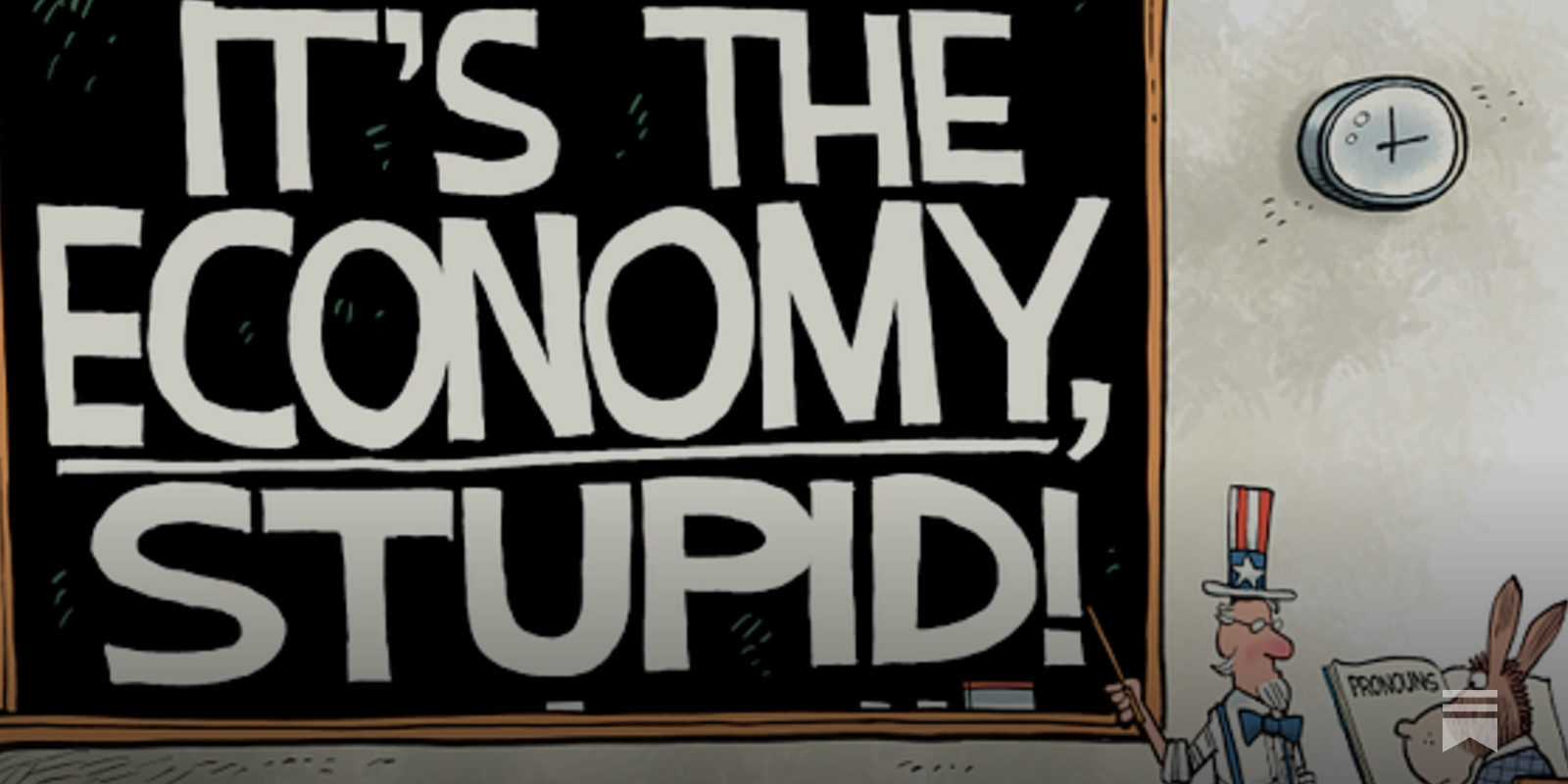
Contextualizing the 2024 Election: It's the (Knowledge) Economy, Stupid
The urban v. rural divide, the gender divide and the diploma divide are all proxies for the most fundamental division in contemporary U.S. politics
The housing crisis is no longer shaping big-city politics. Why not?
In both Vancouver and Toronto, debates about planning and housing have been blunted by a lull in the market and rising housing supply. But experts say that is a temporary reprieve

