

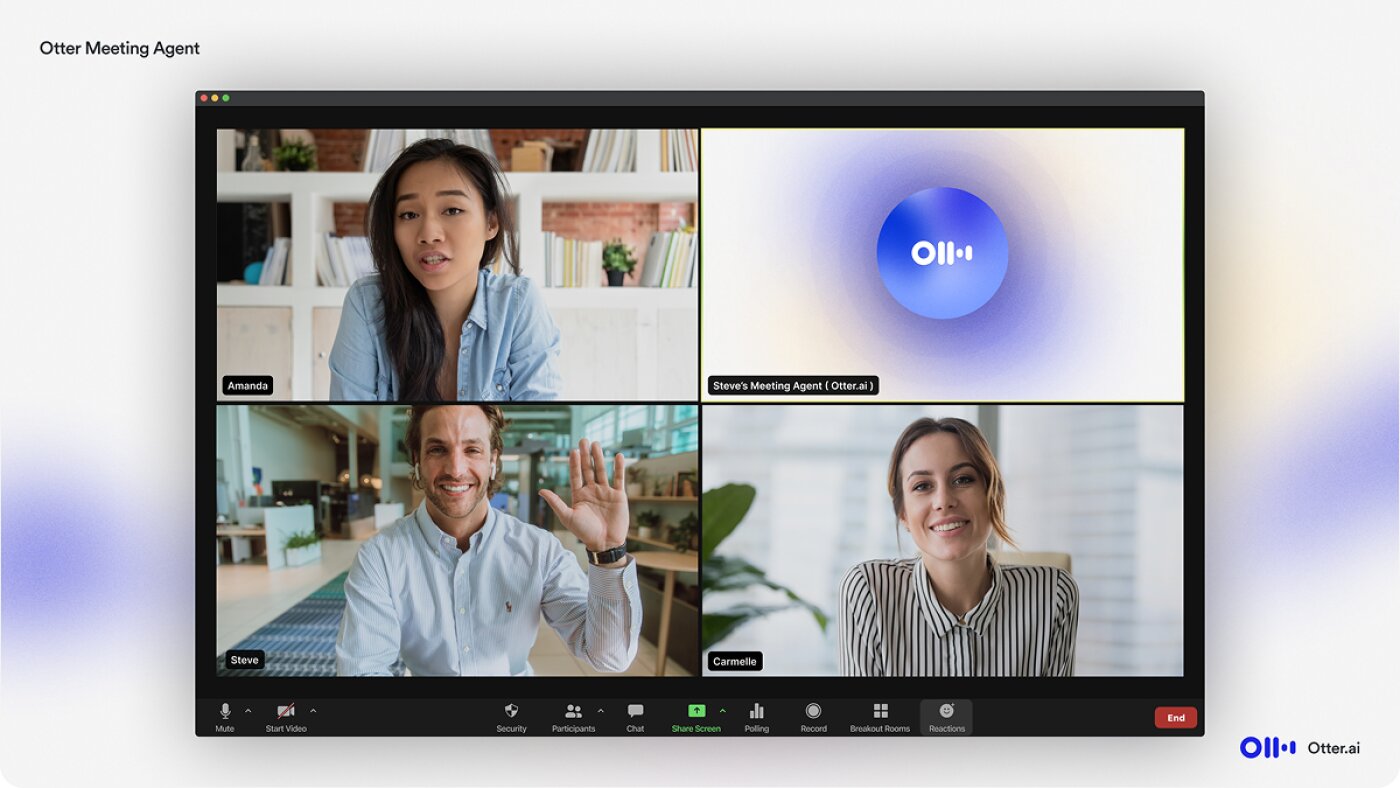
The suit claims the popular service may be recording and processing millions of users' private conversations without consent.
AI Meeting Recording Laws by State: Complete Guide (2026)
Are AI meeting recorders like Otter.ai and Fireflies legal? State-by-state consent laws, penalties, and compliance guide for AI transcription tools in 2026.

Otter Voice Meeting Notes
Otter.ai uses artificial intelligence to empower users with real-time transcription meeting notes that are shareable, searchable, accessible and secure.

AI Exec: We May Have Pulled Off “The Largest Theft of Labor in Human History”
Documents from our lawsuit reveal how tech leaders talk when they think no one is listening.

Microsoft Director Privately Admitted AI Was the “Largest Theft of Labor in Human History,” Unsealed Court Documents Show
Newly unredacted court documents reveal damning statements by two AI executives in a landmark case about intellectual property.

Meta sued over AI smart glasses' privacy concerns, after workers reviewed nudity, sex, and other footage | TechCrunch
Lawyers say Meta's marketing materials promised privacy and user control over sharing footage. But an investigation found that subcontractors are reviewing footage from customers' glasses.

AI ruling prompts warnings from US lawyers: Your chats could be used against you
As people increasingly turn to artificial intelligence for advice, some U.S. lawyers are telling their clients not to treat AI chatbots like trusted confidants when their freedom or legal liability is on the line.

When Private AI Chats Become Public: Lessons from Grok’s Privacy Spill
Understand the implications of the Grok breach where hundreds of thousands of private chats were leaked to the public.
Docs in A.I. copyright suit reveal startling admission by Microsoft exec over ‘astonishing theft’
The admission appeared in a newly unredacted filing in the landmark copyright infringement legal battle playing out between newspapers like the Orlando Sentinel and tech companies Microsoft and OpenAI.

The MyPillow guy’s lawyers got fined for using false AI-generated citations.
The attorneys defending MyPillow founder Mike Lindell in a defamation case (which he lost) were ordered to pay $3,000 each for putting AI-generated misquotes and “citations of cases that do not exist” in a brief submitted in February, as reported by ArsTechnica. More and more lawyers are getting caught — and punished — for including AI hallucinations in their work, and this trend will likely only continue to grow. [Link: Why do lawyers keep using ChatGPT? | https://www.theverge.com/policy/677373/lawyers-chatgpt-hallucinations-ai | The Verge]

This Conversation Is Being Recorded. They All Are.
People in tech use AI apps to record and transcribe meetings, workplace chats and even dates—all in the name of productivity.

User Privacy and Large Language Models: An Analysis of Frontier Developers' Privacy Policies
Hundreds of millions of people now regularly interact with large language models via chatbots. Model developers are eager to acquire new sources of high-quality training data as they race to improve model capabilities and win market share. This paper analyzes the privacy policies of six U.S. frontier AI developers to understand how they use their users' chats to train models. Drawing primarily on the California Consumer Privacy Act, we develop a novel qualitative coding schema that we apply to each developer's relevant privacy policies to compare data collection and use practices across the six companies. We find that all six developers appear to employ their users' chat data to train and improve their models by default, and that some retain this data indefinitely. Developers may collect and train on personal information disclosed in chats, including sensitive information such as biometric and health data, as well as files uploaded by users. Four of the six companies we examined appear to include children's chat data for model training, as well as customer data from other products. On the whole, developers' privacy policies often lack essential information about their practices, highlighting the need for greater transparency and accountability. We address the implications of users' lack of consent for the use of their chat data for model training, data security issues arising from indefinite chat data retention, and training on children's chat data. We conclude by providing recommendations to policymakers and developers to address the data privacy challenges posed by LLM-powered chatbots.

User Privacy and Large Language Models: An Analysis of Frontier Developers' Privacy Policies
Hundreds of millions of people now regularly interact with large language models via chatbots. Model developers are eager to acquire new sources of high-quality training data as they race to improve model capabilities and win market share. This paper analyzes the privacy policies of six U.S. frontier AI developers to understand how they use their users' chats to train models. Drawing primarily on the California Consumer Privacy Act, we develop a novel qualitative coding schema that we apply to each developer's relevant privacy policies to compare data collection and use practices across the six companies. We find that all six developers appear to employ their users' chat data to train and improve their models by default, and that some retain this data indefinitely. Developers may collect and train on personal information disclosed in chats, including sensitive information such as biometric and health data, as well as files uploaded by users. Four of the six companies we examined appear to include children's chat data for model training, as well as customer data from other products. On the whole, developers' privacy policies often lack essential information about their practices, highlighting the need for greater transparency and accountability. We address the implications of users' lack of consent for the use of their chat data for model training, data security issues arising from indefinite chat data retention, and training on children's chat data. We conclude by providing recommendations to policymakers and developers to address the data privacy challenges posed by LLM-powered chatbots.
WhatsApp class action alleges Meta, third parties accessed private messages without consent
A new class action lawsuit alleges WhatsApp messages are not private.

Privatemode AI - The always encrypted AI service
Privatemode is the first AI service that protects the confidentiality of your data end-to-end. Use AI without security and privacy worries.
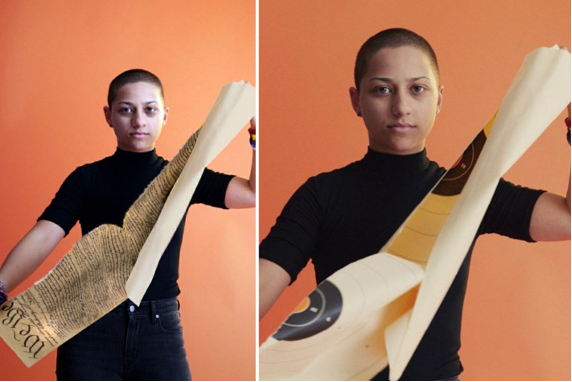
Deep Fakes: A Looming Challenge for Privacy, Democracy, and National Security — California Law Review
Harmful lies are nothing new. But the ability to distort reality has taken an exponential leap forward with “deep fake” technology. This capability makes it possible to create audio and video of real people saying and doing things they never said or did. Machine learning techniques are escalating th
A Microsoft exec called AI scraping ‘theft of unprecedented proportions.’
In court documents unredacted Thursday, lawyers for the NYT in its copyright infringement case against Microsoft and OpenAI cited Microsoft’s Director of Applied Science, Brent Hecht, saying that “millions of people around the world will soon consider large models ‘hoovering up’ all their work to be an astonishing theft of unprecedented proportions… almost no one intended for content they created to be used in this fashion, nor are they compensated for its use.” The Orlando Sentinel, which is also part of the suit, reports a Microsoft filing “framed Hecht as someone on the payroll to play a contrarian.”
